Teachers initiate nearly two thirds of classroom changes
South Korea recorded 575 homeroom teacher replacements during school terms at public elementary, middle and high schools in 2023 to 2025, up from 415 in 2020 to 2022. The 38.6% increase points to growing difficulty keeping one teacher responsible for a class throughout the school year.
Contents
- Teachers initiate nearly two thirds of classroom changes
- A class changes teachers six times
- Earlier figures show growth, with some discrepancies
- Elementary schools carry much of the disruption
- What students lose when the teacher changes
- The Supreme Court says other remedies should come first
- Complaints and school leadership both come under scrutiny
- Protests focus on abuse laws and protection
- More homeroom duties fall to teachers on annual contracts
- Key Points
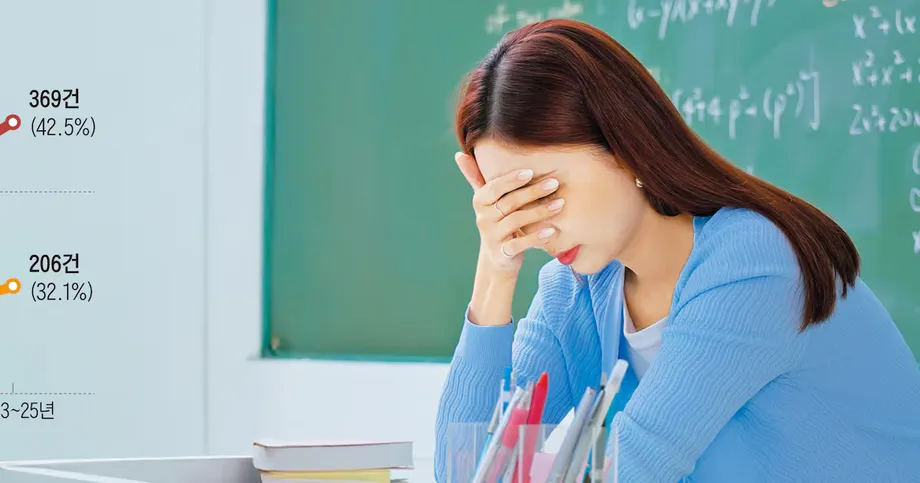
The Ministry of Education figures, submitted to People Power Party lawmaker Jeong Seong-guk, show that teachers themselves requested 369 of the recent replacements, or 64.2%. That category rose 42.5% from 259 in the preceding three years. Replacements requested by parents increased from 156 to 206, a rise of 32.1%.
The distinction matters. Although demands from parents are increasing, the larger part of the recorded growth comes from teachers asking to leave their homeroom responsibilities. Of the 160 additional replacements between the two periods, 110 were initiated by teachers and 50 by parents. Teachers therefore accounted for 68.8% of the increase.
These figures count changes in classroom responsibility, not necessarily resignations from teaching. A teacher who stops serving as a homeroom teacher may continue working at the school. The data also do not establish that every replacement resulted from a malicious complaint.
Two classroom accounts illustrate the pressure behind some departures. In Jeonju, a fifth grade class reportedly experienced six homeroom teacher changes in one year. At an elementary school in southern Gyeonggi Province, a teacher asked to step down after repeated accusations of discrimination and favoritism. Both cases show how a dispute involving one family can affect the continuity of education for an entire class.
A class changes teachers six times
At the Jeonju elementary school, parents complained that a teacher was glaring at a child or leaving the child unattended. Further complaints followed the arrival of replacement teachers, and the class continued changing homeroom teachers.
Two parents reportedly made 113 and 61 complaint calls respectively, a combined 174 calls. The account does not establish that those allegations were substantiated. It does show the volume of contact the school faced while students repeatedly adjusted to new teachers.
The Gyeonggi teacher faced continuing complaints from a parent alleging that their child was being treated unfairly while other children received preferential treatment. The teacher denied discriminating against students, but the complaints continued. After experiencing severe stress, the teacher relinquished homeroom duties at the end of the first semester.
These examples describe different routes to the same outcome. In one, successive replacements failed to end the complaints. In the other, the teacher requested relief. Neither account supports treating a change of teacher as proof that a complaint was justified or that the underlying disagreement was resolved.
Earlier figures show growth, with some discrepancies
An earlier release of Ministry of Education data recorded 203 homeroom replacements in 2023, including 124 requested by teachers and 79 by parents. Teacher requests were more than double the 54 recorded in 2020. The earlier figures also recorded 55 teacher requests and 33 parent requests between January and July 2024, a partial year that cannot be compared directly with a full year.
The reported sequence was:
- 2020: 71 replacements, comprising 54 teacher requests and 17 parent requests.
- 2021: 142 replacements, comprising 90 teacher requests and 52 parent requests.
- 2022: 206 replacements, comprising 118 teacher requests and 88 parent requests.
- 2023: 203 replacements, comprising 124 teacher requests and 79 parent requests.
- January to July 2024: 88 replacements, comprising 55 teacher requests and 33 parent requests.
- 2023 to 2025: The newer aggregate records 575 replacements, including 369 teacher requests and 206 parent requests.
There is a discrepancy between the releases. The earlier annual totals for 2020 to 2022 add up to 419, while the newer comparison gives 415. The earlier teacher request figures total 262 rather than 259, and the parent request figures total 157 rather than 156. No explanation for those differences is given. The newer aggregate supports the reported 38.6% increase, but the two releases should not be treated as one fully consistent dataset.
Elementary schools carry much of the disruption
Of the 203 replacements recorded in 2023, 125 occurred at elementary schools, accounting for 61.6% of the total. Middle schools recorded 36 and high schools 42.
The difference is especially pronounced for parent requests. In 2023, those requests resulted in 65 replacements at elementary schools, five at middle schools and nine at high schools. Elementary schools therefore accounted for 65 of 79 parent requested replacements, or about 82.3%.
A separate account divides the 125 elementary replacements into 65 requested by parents and 60 involving teachers stepping down. That account also describes 124 voluntary departures in 2023 as an elementary school figure, although the earlier release identifies 124 as the total across elementary, middle and high schools. Those descriptions conflict. The 60 figure fits the stated elementary total; the 124 figure cannot simultaneously describe the same elementary subset.
The concentration at elementary level matters because the homeroom role is broader there. One teacher typically teaches several subjects while also handling classroom life and student guidance. At middle and high schools, subject teachers deliver lessons while a designated homeroom teacher manages the class and provides pastoral support. Losing an elementary homeroom teacher can therefore disrupt both daily instruction and the relationship through which student needs are understood.
What students lose when the teacher changes
South Korea's homeroom system became established as its modern school system developed in the 1950s. The role extends beyond attendance and classroom administration. Teachers follow academic progress, friendships, behavior and emotional changes, while maintaining contact with families. In secondary schools, they also provide guidance on careers and further education.
That work depends on accumulated knowledge. A replacement teacher must learn which students need additional support, how relationships within the class function and what concerns have already been discussed with parents. Students must build trust again, sometimes repeatedly within the same year.
Yang Jeong-ho, an education professor at Sungkyunkwan University, identified students as the people who ultimately suffer from these changes. He said parents should not treat replacing a homeroom teacher as a routine way to resolve complaints, while teachers who accept the role should seek to maintain responsibility for their students.
Continuity, however, does not mean retaining a teacher regardless of circumstances. The issue is whether replacement is necessary, or whether a school can resolve a disagreement without removing the person responsible for the class. That distinction also appears in the Supreme Court's approach to demands for a new homeroom teacher.
The Supreme Court says other remedies should come first
In a 2023 ruling concerning demands to replace a homeroom teacher, South Korea's Supreme Court held that repeated requests without a legitimate reason can amount to improper interference in educational activities.
The court's reasoning was that even where a teacher's methods present a problem, a school should first consider whether changing those methods could resolve it. Replacement should serve as a supplementary measure in exceptional circumstances where the teacher cannot properly perform the job.
This approach does not dismiss complaints about classroom practice. It separates the need to address a problem from the assumption that changing the teacher is the immediate solution. A concern may warrant investigation or a change in teaching methods without requiring the removal of the homeroom teacher.
Regional education office regulations also allow substitution when an unavoidable situation related to education arises. The growing number of requests from teachers puts another issue before school leaders: how to preserve classroom stability when the teacher says the existing situation has become intolerable.
Complaints and school leadership both come under scrutiny
Kim Dong-seok, head of the Teachers' Authority Division at the Korea Federation of Teachers' Associations, attributed many voluntary departures to pressure arising during student guidance or investigations into school violence. He described the association's view of why teachers step down:
External factors, rather than personal circumstances, account for the vast majority of cases.
Kim also said teachers can face false accusations of child abuse while handling those duties. That is his assessment of the pressures teachers encounter, rather than a finding that all complaints or abuse reports are unfounded.
A survey by the South Gyeongsang branch of the Korean Teachers and Educational Workers' Union suggests that parents are not the only source of workplace pressure. It found that 74.1% of surveyed teachers reported bullying during the preceding three years. Among those respondents, 87.3% cited a principal or vice principal, while 19.8% cited parents. Those percentages should not be added together as mutually exclusive categories, and a provincial survey does not establish a national prevalence rate.
Separate ministry figures recorded 748 reported cases of bullying against teachers from January 2020 to September 2023. Of those, 523, about 69.9%, led to no action against the alleged perpetrators. The figures do not explain the outcome of each case, but they show that reporting did not usually produce disciplinary action.
Teachers in Gyeonggi and South Gyeongsang also described avoiding discipline for fear of complaints and receiving inadequate help from administrators. These accounts place school leadership at the center of the response: passing a complaint directly to a teacher without resolving it can leave both the dispute and the classroom disruption intact.
Protests focus on abuse laws and protection
The 2023 death by suicide of a 24 year old teacher at Seoul's Seoi Elementary School became a rallying point for nationwide demonstrations over teachers' rights. Allegations of excessive parental interference formed part of the public debate surrounding the death.
The police findings require careful distinction from those allegations. Investigators established that several parents had communicated with the teacher about an incident involving one student attacking another with a pencil. Police did not find evidence of verbal abuse or illegal parental influence over the investigation, and the case closed without charges. That outcome did not end the wider protests over working conditions.
At a later demonstration outside the National Assembly, tens of thousands of teachers called for changes to the Child Welfare Act and the Act on Special Cases Concerning the Punishment of Child Abuse Crimes. Organizers argued that the statutory meaning of emotional abuse is too vague and can expose legitimate student guidance to retaliatory complaints. They said complaints persisted despite the implementation of five laws intended to protect teachers following the Seoi case.
Song Su-yeon, president of the Korean Teachers and Education Workers Union Federation, described teachers as vulnerable to reports alleging emotional abuse when they discipline students and neglect when they refrain. The protest also called for teachers' political rights and opposed ending the link between local education grants and domestic tax revenue.
The accounts give no date for a vote on the requested legal amendments and do not establish whether the proposals will be adopted. The immediate demand is for clearer boundaries between legitimate educational activity, genuine child protection concerns and complaints used to pressure teachers.
More homeroom duties fall to teachers on annual contracts
A separate staffing trend shows that teachers described in ministry figures as part time are taking a growing share of homeroom assignments. Data made public by Democratic Party lawmaker Jin Seon-mi put their share at 15.6% in 2023, compared with 14.8% in 2022 and 11.1% in 2021.
That is an increase of 4.5 percentage points in two years. Busan recorded the highest regional share at 21.3%, followed by North and South Gyeongsang Provinces at 18.5% each.
These teachers commonly work on annual contracts and may not receive incentives or pay increases available to permanent teachers. The reported category concerns employment arrangements, so it should not be read as proof that every teacher in it works fewer classroom hours. The Educational Officials Act is described as restricting their assignment to supervisory positions carrying substantial responsibility, although the staffing figures alone do not establish that a particular homeroom assignment violates that provision.
The staffing data do not show that contract status caused the increase in replacements. They do indicate that a growing share of the responsibility for classroom continuity is being carried by teachers with less secure employment arrangements.
Other systems offer different approaches to continuity. Japan is reportedly making greater use of several teachers sharing responsibility for students across a grade, while some British secondary schools keep a form tutor with the same student group for several years. No figures establish whether either approach would reduce replacements in South Korea. Jeong Seong-guk has called for protective measures so that malicious complaints do not force teachers to abandon homeroom duties, but no specific implementation timetable is given.
Key Points
- Public schools recorded 575 homeroom replacements in 2023 to 2025, compared with 415 in the previous three years.
- Teachers requested 369 of the recent changes, accounting for 64.2% of replacements and 68.8% of the increase between periods.
- Elementary schools accounted for 125 of 203 replacements recorded in 2023 and 65 of 79 parent requested changes.
- Earlier annual figures differ slightly from the newer aggregate totals, with no explanation given for the discrepancy.
- The Supreme Court said schools should try other remedies before replacing a homeroom teacher where those remedies can resolve the problem.
- Teachers are seeking clearer abuse laws and stronger protection from malicious complaints; no date for a legislative vote is specified.
- The share of homeroom duties assigned to teachers described as part time rose from 11.1% in 2021 to 15.6% in 2023.