A deadly outbreak exposes gaps in reaching children
Bangladesh recorded about 202,000 suspected measles cases between mid-March and October 9, 2026, including 22,000 confirmed by laboratory tests, according to the World Health Organization. The agency reported 1,147 deaths, with children younger than five accounting for 94% of recorded fatalities.
Contents
- A deadly outbreak exposes gaps in reaching children
- Vaccination coverage fell below the protection target
- In Sylhet, families describe help arriving too late
- How the emergency response unfolded
- Counting children became a critical weakness
- Preparation was compressed into four weeks
- August records showed persistent gaps
- Young children face the greatest danger
- The next campaign must reach missed households
- Key Points
The country had more suspected measles cases than any other nation during that period. An emergency vaccination campaign reached almost 20 million children in April and May, yet a later health programme identified four million more children in the same age group than appeared on the measles campaign's target list.
Those figures capture the central problem in a country of 178 million people: delivering millions of vaccine doses still left large numbers of children without protection. Incomplete population lists, shortages of health workers and failures to tell parents about vaccination sessions weakened the response after routine immunisation declined in 2025.
September brought an average of 1,198 new measles cases a day, the highest level since May. The government began another campaign at the end of September to reach 3.4 million children missed previously, while hospitals faced pressure from both measles and dengue.
Mark Jit, a WHO vaccine adviser and professor at New York University's School of Global Public Health, said the experience carried a message beyond Bangladesh:
This is a real warning to every country.
Jit said preventing an outbreak through vaccination was easier, cheaper and safer than mounting an emergency response. Bangladesh's experience shows how quickly falling routine coverage can become a crisis that a large vaccination drive struggles to contain.
Vaccination coverage fell below the protection target
WHO and UNICEF estimated that Bangladesh's coverage with the first measles vaccine dose fell from 96% in 2024 to 90% in 2025. Coverage with the second dose dropped from 93% to 86%.
The declines were six percentage points for the first dose and seven for the second. By 2025, coverage was five points below the WHO's 95% target for the first dose and nine points below it for the second.
Measles spreads so easily that very high vaccination coverage is needed to prevent outbreaks. When enough people are protected, the virus has fewer opportunities to pass from person to person. This shared protection is often called herd immunity.
The second dose protects the small proportion of children who do not develop immunity after their first injection. Reaching a child once is therefore only part of completing protection against measles.
Bangladesh's decline followed political turmoil after the 2024 protests that ended Sheikh Hasina's 15 years in power. Health workers went on strike, vaccine orders were delayed and follow-up vaccinations were interrupted. Together, those disruptions weakened a programme previously regarded as a vaccination success.
In Sylhet, families describe help arriving too late
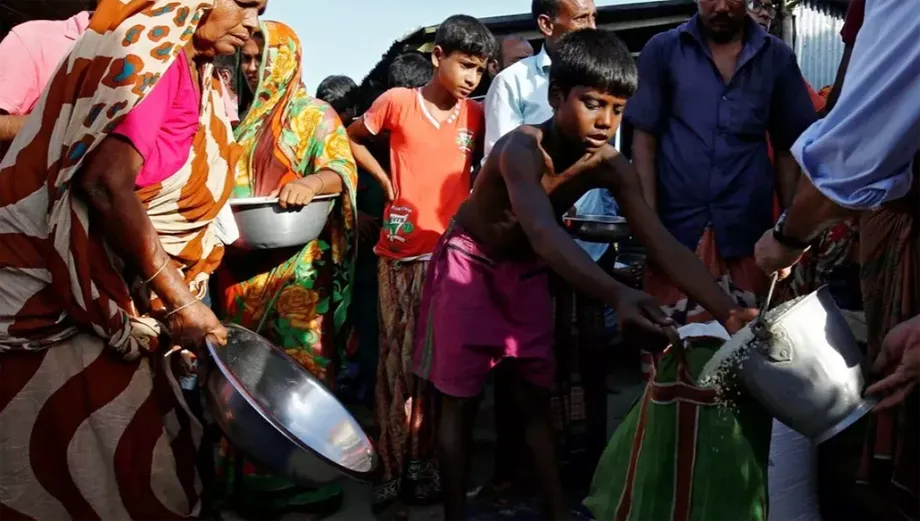
Sylhet, in northeastern Bangladesh, was among the regions hit hardest. Official records showed 180 child deaths there. Families described children falling ill before vaccination teams reached their communities.
Arman Hossain, two, died in July, about 24 hours after admission to hospital. His family sold their auto rickshaw to pay for treatment. Arman had not been vaccinated. His sister, four, also developed measles without having received a vaccine, but survived.
His father, Amin Mia, 26, said health workers had not visited their remote village to offer vaccination before his son became ill:
They came only after I buried my son.
In Chhatak, also in the Sylhet region, Labiba Akter died in June at nine months old. The emergency programme had lowered the minimum vaccination age from nine months to six months, allowing younger babies to receive protection.
Labiba's father, Humayun Rashid, a carpenter aged 30, said the family had not been told about the campaign:
No health worker came to tell us.
Among 16 families interviewed in Sylhet in September, eight said they had not seen health workers offering vaccinations. At least six said workers visited only after a child in their community had died of measles. Their experiences describe failures of access and communication at the point where a national programme needed to reach individual homes.
How the emergency response unfolded
Bangladesh moved quickly after the outbreak began, and new infections initially slowed following the April and May vaccination drive. The government said it had reached every child in its target group, from six months to five years old.
The following months brought evidence of missed children and renewed transmission:
- Mid-March 2026: The measles outbreak began.
- April and May: Almost 20 million children received vaccinations through the emergency programme.
- May: Health Minister Sardar Md Sakhawat Husain said the outbreak was under control.
- June: Another health programme listed four million more eligible children in the same age group than the measles campaign.
- August: Meeting records showed that unvaccinated children still accounted for most laboratory-confirmed cases among children.
- September: New cases averaged 1,198 a day, the highest level since May.
- Late September: A further campaign began, targeting 3.4 million previously missed children.
- October 9: The cumulative suspected case count reached about 202,000.
Ziauddin Hyder, special assistant on health affairs to Prime Minister Tarique Rahman, acknowledged a coverage gap on September 14. He attributed missed vaccinations partly to parental reluctance and children being ill when vaccination teams visited.
Counting children became a critical weakness
The four million difference between the measles campaign's target list and the June programme's list exposed a basic planning problem. Both programmes covered the same age group, yet they were working with substantially different estimates of how many children needed services.
A vaccination coverage rate depends on two counts: how many children received a dose and how many children were eligible. If the eligible population is underestimated, officials can reach their numerical target while children remain outside the programme.
A WHO and UNICEF report published in July questioned the quality of official vaccination data for measles and other diseases during 2023 to 2025. Some preliminary figures showed vaccination totals exceeding 100% of the target population, pointing to errors in counting doses or estimating the number of eligible children.
Birth registration presents another difficulty. UNICEF and the Bangladesh Bureau of Statistics estimated that as many as 40% of children were unregistered. Missing records make it harder to identify eligible children, plan local vaccination sessions and track who still needs a dose.
For families in remote villages, an inaccurate target list can have a direct consequence: a vaccination team may be assigned too few children to reach, or parents may never receive information about when and where vaccines are available.
Preparation was compressed into four weeks
Minutes from an April 19 meeting involving the government, WHO and health partners recorded that officials conducted one round of readiness checks before the emergency campaign, rather than the usual four, because of time constraints.
Readiness checks cover practical requirements such as vaccine refrigeration, staffing and estimates of how many children need vaccination. The single round suggested that most districts were ready, but some were not.
Hyder said the April campaign was organised within four weeks. Tajul Islam Abdul Bari, who led Bangladesh's immunisation programme until 2017, said such campaigns normally required months of planning.
Mahmudur Rahman, an epidemiologist and chair of Bangladesh's National Verification Committee for Measles and Rubella Elimination, described who was most likely to suffer when preparation fell short:
When preparedness checks are not done properly, it is often the poorest and hardest-to-reach children who miss out on vaccination and pay the price.
Government data also showed that about one-third of health worker posts were vacant. That shortage reduced the workforce available to identify missed children, explain the campaign to parents, deliver vaccines and return to households where a child was absent or ill.
August records showed persistent gaps
By an August meeting, officials had evidence that unvaccinated children continued to dominate confirmed infections. Among children with laboratory-confirmed measles, the proportion who had not been vaccinated was 82% before the emergency campaign and 85% afterward.
Despite almost 20 million vaccinations, the children still developing confirmed measles were overwhelmingly those without a recorded vaccination. The figures directed attention toward reaching children who had remained outside the campaign.
September's renewed rise followed the health minister's statement in May that cases in the worst affected areas had fallen almost to zero. The early slowdown had brought relief, but continued transmission left families exposed months later.
Rajesh Narwal, WHO's deputy representative in Bangladesh, said the agency remained committed to supporting the government in vaccinating every child at risk. He also called for stronger routine services:
Routine immunisation must become more effective and resilient so that these gaps do not develop again.
Regular vaccination and emergency campaigns serve connected purposes. The emergency drive seeks to close accumulated gaps quickly; routine services need to keep protecting each new group of children as they become eligible.
Young children face the greatest danger
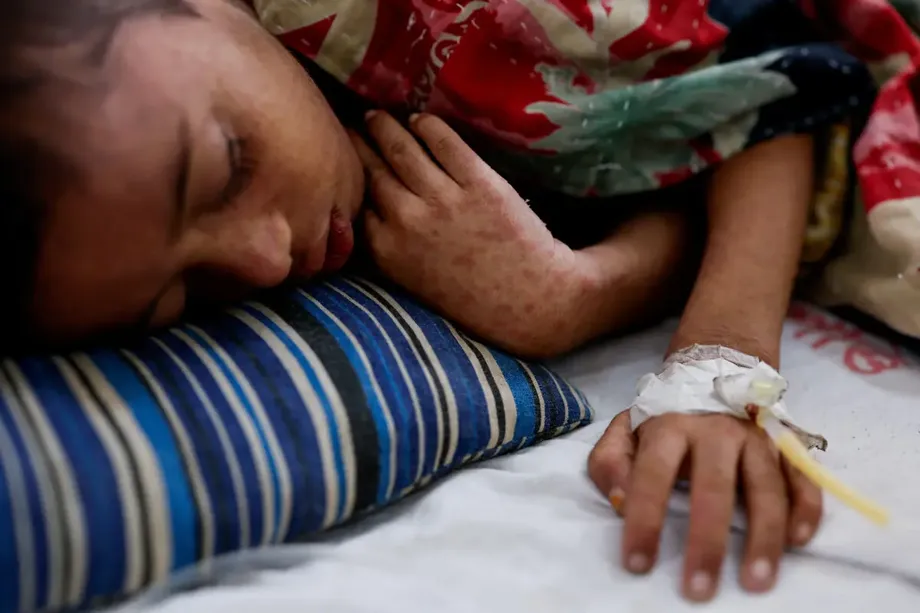
Measles causes high fever, cough and a characteristic rash. WHO says it usually kills two or three people in every 1,000 cases, with factors such as malnutrition making it more deadly in poorer countries.
Children younger than five accounted for 94% of recorded deaths in Bangladesh. Older children also formed a substantial part of the outbreak: WHO data showed that children above five accounted for about one-third of measles cases.
Health specialists have urged the government to extend vaccination efforts to that older group. The emergency programme's focus on children from six months to five years left the authorities facing transmission across a wider age range.
Scientists in Bangladesh were also investigating why antibodies appeared to decline faster than expected in babies up to around six months old. Babies in that age group are generally expected to retain some protection from antibodies passed on by their mothers. The reason for the faster decline had not been determined.
Prompt diagnosis and treatment were another priority identified by WHO. Bangladesh's simultaneous dengue epidemic placed further demands on health services already treating large numbers of measles patients.
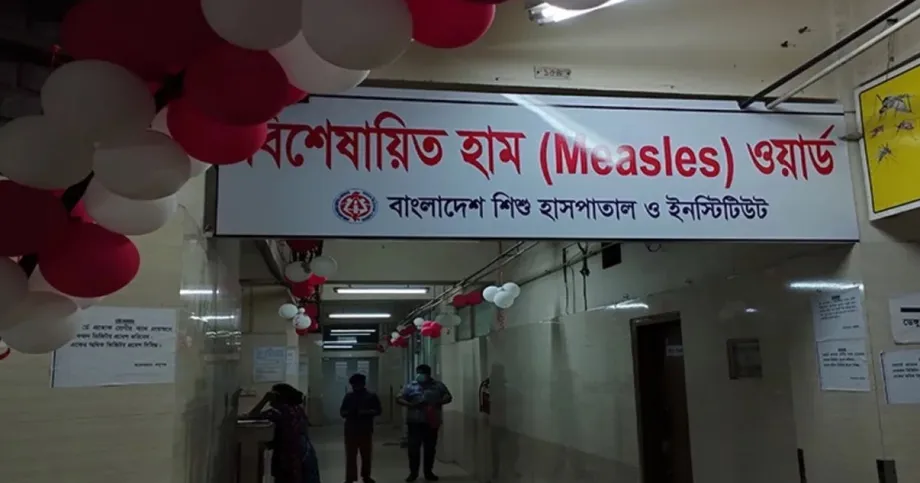
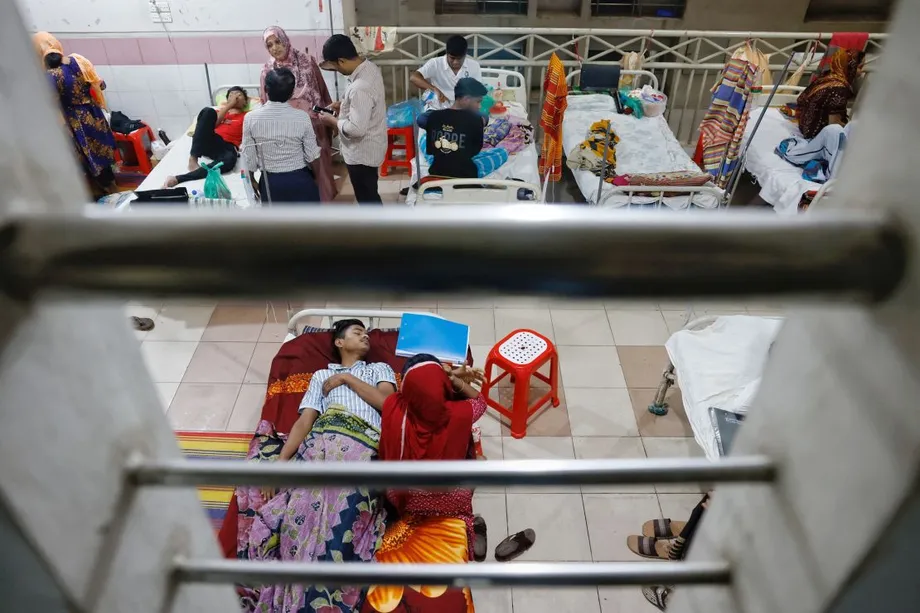
At Shahid Shamsuddin Ahmed Hospital in Sylhet, a facility with 100 beds treating measles patients, 178 patients were admitted on a day in September. That was 78 more patients than its stated bed capacity, illustrating the pressure on care during the outbreak.
The next campaign must reach missed households
The campaign launched at the end of September aimed to reach 3.4 million previously missed children. Its success depended on finding those children, informing their families and delivering doses in places earlier efforts had failed to reach.
Health Minister Sardar Md Sakhawat Husain said village participation would be part of the response:
We will involve people across villages so that no child is left behind.
Hyder said in September that the government was doing everything possible to end the outbreak. The government did not respond to further questions sent in October. No completion date for the new campaign was given.
Bangladesh's challenge is both immediate and continuing: vaccinate children missed during the emergency response while restoring reliable routine services. The families in Sylhet described the practical measure of that effort, whether a health worker reaches a household with information and a vaccine before a child becomes seriously ill.
Key Points
- WHO recorded about 202,000 suspected measles cases through October 9, 2026, including 22,000 laboratory-confirmed cases.
- The reported death toll reached 1,147, with 94% of recorded deaths among children younger than five.
- First dose vaccination coverage fell from 96% in 2024 to 90% in 2025; second dose coverage fell from 93% to 86%.
- Almost 20 million children were vaccinated in April and May, but later population lists exposed major gaps.
- Incomplete records, limited outreach, compressed preparation and health worker vacancies complicated the response.
- A campaign launched in late September targeted 3.4 million previously missed children.