Vaccine decisions face scrutiny as children continue to die
Bangladesh has ordered an investigation into delays and alleged failures in buying and distributing measles vaccines as the Directorate General of Health Services recorded 1,269 confirmed and suspected deaths this year. The Cabinet Division issued the notification on November 4, 2026, giving a commission 60 working days to identify what went wrong and who was responsible.
Contents
- Vaccine decisions face scrutiny as children continue to die
- What the commission has been asked to investigate
- A change in vaccine purchasing is central to the story
- UNICEF described repeated warnings about shortages
- How the outbreak and inquiry unfolded
- What the health figures show
- Who can be questioned, and who will support the inquiry?
- The outbreak continues under the successor government
- Key Points
The inquiry will examine decisions during the interim administration led by Prof Muhammad Yunus, which held office from August 8, 2024, to February 17, 2026. Its formation follows warnings about vaccine shortages, a change in the way vaccines were purchased and months of deaths during an outbreak affecting children across the country.
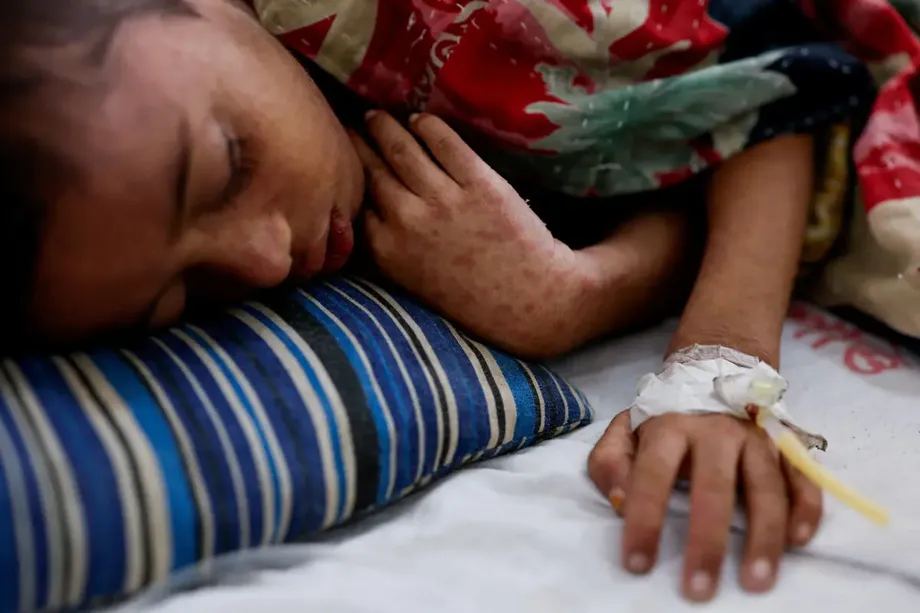
Six more children died with measles symptoms in the 24 hours ending at 8am on November 4. The national death count comprised 105 confirmed measles deaths and 1,164 suspected deaths. Children younger than five have been the most affected by the outbreak.
Former High Court Division Justice Mamnoon Rahman will chair the commission. Its other members are Prof Dr Moudud Hossain Alamgir, president of the Bangladesh College of Physicians and Surgeons, and ANM Moinul Islam, additional secretary of the Health Services Division.
The investigation brings together two urgent issues: accountability for earlier vaccine decisions and the continuing need to protect children. The outbreak has persisted under the government that succeeded the interim administration, despite an emergency vaccination programme.
What the commission has been asked to investigate
The government formed the commission under Section 3 of the Commissions of Inquiry Act, 1956. Its main task is to trace the causes of delays, irregularities and administrative failures in vaccine procurement and distribution, and to identify the responsibilities of those involved.
The Cabinet Division's notification describes the commission's first task as:
identifying the causes and liabilities for delays, irregularities, and administrative failures in measles vaccine procurement and distribution.
Procurement means the process of arranging money, selecting a supplier and buying vaccines. Distribution is the next stage: getting those vaccines to the places where children receive them. The commission's mandate covers both, allowing it to examine decisions before an order was placed as well as problems in delivering supplies.
The inquiry must also recommend measures to prevent similar events and may propose other related changes it considers necessary. The stated period under review ends on February 17, 2026, although February 3 also appears as the endpoint in a published description of the notification.
The commission has yet to determine responsibility. Its task is to establish the sequence of decisions and failures behind the allegations, then submit findings and recommendations to the government.
A change in vaccine purchasing is central to the story
Until 2024, Bangladesh obtained vaccines through direct procurement via UNICEF, with donor assistance providing the main source of funding. In 2025, the interim government moved towards purchasing through open tenders paid for from the revenue budget.
An open tender invites suppliers to compete for a government contract. Moving the expense to the revenue budget also changes the funding arrangement, placing the purchase within regular government spending rather than relying primarily on donor support.
Those changes give the inquiry a concrete sequence to examine: how the new purchasing arrangement was introduced, when money and approvals became available, and how orders matched the country's vaccine needs. Buying vaccines and delivering them are connected steps, so a delay early in the process can leave vaccination services waiting for supplies.
Vaccination activities also faced disruption during the unrest surrounding the July uprising and prolonged protests by workers involved in the immunisation programme. The commission's broad mandate gives it room to consider how administrative decisions, supply arrangements and interruptions to services affected vaccine availability.
UNICEF described repeated warnings about shortages
Rana Flowers, UNICEF's representative in Bangladesh, said at a May 20 news conference that UNICEF had sent the health ministry five or six letters about vaccine shortages and held at least 10 meetings. Her account places repeated warnings within the period now facing scrutiny.
A letter dated February 10 warned then health adviser Nurjahan Begum of an impending vaccine shortage. It was sent two days before the national election and one week before the interim administration left office on February 17.
The warning matters because vaccines require decisions before supplies run out. Officials must arrange purchases and deliveries early enough for vaccination services to continue. The commission can examine when warnings reached the responsible offices, what action followed and where the process slowed.
Public criticism intensified in April and May as vaccine shortages became widely discussed and children continued to die. Protests targeted the interim administration and health authorities over allegations that vaccines had not been obtained in time.
How the outbreak and inquiry unfolded
Measles activity was described as beginning in January 2026, with infections increasing in March. The Directorate General of Health Services uses March 15 as the starting point for the cumulative hospital figures cited in its latest update.
The key dates connect changes in vaccine purchasing, warnings to officials and the eventual decision to investigate:
- August 8, 2024: The interim administration led by Muhammad Yunus took office.
- 2025: The administration moved towards open tendering for vaccines under the revenue budget, replacing the earlier arrangement centred on UNICEF and donor funding.
- February 10, 2026: UNICEF sent then health adviser Nurjahan Begum a warning about an impending vaccine shortage.
- February 17: The interim administration's tenure ended.
- March 15: The starting date for the hospital admission totals in the latest national update.
- May 20: UNICEF representative Rana Flowers publicly described repeated letters and meetings about shortages.
- November 4: The Cabinet Division issued the notification establishing the inquiry commission.
The commission was formed about eight and a half months after the interim administration left office. Its reporting period begins on the notification date and lasts 60 working days, rather than 60 calendar days.
What the health figures show
The Directorate General of Health Services recorded 1,325 new suspected measles cases in the 24 hours ending on November 4, bringing the cumulative suspected case count to 234,148. Another 77 infections were confirmed through laboratory testing, taking the confirmed total to 24,150.
Suspected cases are patients whose symptoms lead health workers to consider measles. Laboratory confirmation provides a more specific diagnosis through testing. The health update lists the two categories separately, so readers should follow each series as reported rather than combine them into a new case total.
The same care is needed with deaths. The combined figure of 1,269 includes 105 confirmed deaths and 1,164 suspected deaths. All six newly recorded deaths were among children with measles symptoms; the confirmed death total remained unchanged.
Since March 15, hospitals nationwide had admitted 208,634 patients with suspected measles, of whom 199,894 had recovered. That is approximately 95.8% of the reported admissions. The calculation leaves 8,740 admissions outside the recorded recovery total, but the update does not give a breakdown of their status.
The scale of hospital admissions shows how heavily the outbreak has drawn on health services. For affected families, the investigation concerns a practical chain of events: whether vaccines were ordered in time, whether supplies reached vaccination services and whether children could receive protection before infection spread.
Who can be questioned, and who will support the inquiry?
The commission may visit any place in Bangladesh and summon and question any person as part of its investigation. Those powers allow it to seek explanations from people involved in purchasing decisions, administrative approvals and vaccine distribution.
The Health Services Division will provide secretarial and other necessary assistance. It must also meet the commission's expenses and assign officials from the division or its subordinate organisations to support the work.
That arrangement gives the commission access to administrative support within the health system whose vaccine decisions it is examining. The notification sets out the inquiry's powers and resources, while leaving the commissioners to carry out the investigation and prepare their findings.
The reporting deadline is tied to November 4, but no calendar date for submitting the findings or publicly releasing them was given. The next formal step is delivery of the report to the government within the prescribed 60 working days.
The outbreak continues under the successor government
The government led by Tarique Rahman, which took over after the national election, launched an emergency vaccination programme. Deaths nevertheless continued, with the combined confirmed and suspected total reaching 1,269 by November 4.
The inquiry's focus is on the interim administration's period in office, while the current government remains responsible for the continuing response. These are connected tasks: tracing earlier decisions can help identify changes needed in purchasing and distribution, while children still need access to vaccination and treatment.
The commission's recommendations will therefore matter beyond assigning responsibility. Its mandate explicitly calls for steps to prevent a repeat, making the reliability of future vaccine supplies part of the investigation alongside the decisions that preceded this outbreak.
Key Points
- Bangladesh established a commission on November 4, 2026, to investigate alleged delays, irregularities and administrative failures in measles vaccine procurement and distribution.
- Former High Court Division Justice Mamnoon Rahman will lead the three member inquiry.
- The investigation focuses on the interim administration led by Muhammad Yunus and must report within 60 working days of the notification.
- The Directorate General of Health Services recorded 105 confirmed and 1,164 suspected measles deaths, a combined total of 1,269.
- UNICEF representative Rana Flowers said the organisation sent five or six shortage warning letters and held at least 10 meetings with the health ministry.
- The commission can visit locations nationwide, summon individuals and recommend changes to prevent future vaccine failures.