A new source of kidneys for patients waiting years
Thailand is developing genetically modified pigs as a possible source of transplant kidneys, with an 18 month target for a medical pig production facility at Mahidol University's Kanchanaburi campus and a conditional goal of reaching human trials within about five years.
Contents
- A new source of kidneys for patients waiting years
- How the project became a national priority
- Why pigs need genetic changes
- How researchers plan to produce the pigs
- Infection control begins before transplantation
- What animal studies still need to answer
- Five years is a research target
- The cost of waiting and building an alternative
- A medical project within a larger economic plan
- Key Points
The Thailand Xenotransplantation Hub, or T-Xeno Hub, brings together Mahidol University, Betagro, New Zealand biotechnology company NZeno Limited and the Ministry of Higher Education, Science, Research and Innovation. Xenotransplantation means transferring living cells, tissue or organs from one species to another. Here, the immediate research goal is to produce pigs whose kidneys could eventually help people with kidney failure.
The need is substantial. Mahidol president Professor Piyamitr Sritara said about 23,000 people in Thailand met the criteria for kidney transplantation in 2024, but only 989 received a kidney that year. Those figures put the number of transplants at about 4.3% of the number eligible, or roughly one transplant for every 23 eligible patients.
Some patients wait more than five years, and some die before receiving an organ, Piyamitr said. For people whose kidneys can no longer keep their bodies functioning, the wait often means continuing dialysis, a treatment that removes waste and excess water from the blood.
The project combines several tasks that must succeed together: producing pigs with the intended genetic changes, raising them under strict infection controls, checking how their organs function and securing permission for clinical research. Researchers plan to assess pig quality and conduct safety studies in nonhuman primates before moving into human trials and registration procedures.
How the project became a national priority
Thailand's Committee on the Promotion and Development of Thailand's Wellness Economy approved advancing T-Xeno Hub on 4 November 2026. The National Higher Education Science Research and Innovation Policy Council's wellness economy statement identifies it as a Mahidol and Betagro collaboration under Siam Medica and the Thailand²: Nation of Master programme.
Deputy Prime Minister and Higher Education Minister Professor Yodchanan Wongsawat chaired the meeting. Siam Medica is intended to build domestic capabilities in medicines, vaccines, medical devices, advanced treatments and healthcare services, including clinical trials.
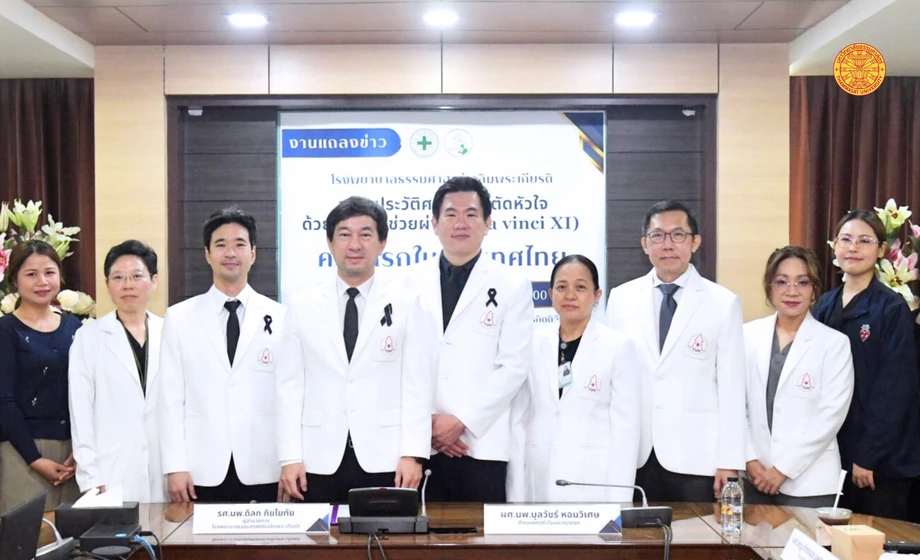
The partners also presented their collaboration on 16 November at Prince Mahidol Hall on Mahidol University's Salaya campus. Mahidol's Ramathibodi Hospital Faculty of Medicine, Siriraj Hospital Faculty of Medicine and Faculty of Veterinary Science are involved in developing the research platform.
The main milestones described by the partners and government are:
- 31 March 2026: Mahidol described its pig organ research partnership with Betagro and NZeno, with investment exceeding 1 billion baht and a target of human clinical trials within five years.
- 4 November 2026: The national wellness economy committee approved advancing T-Xeno Hub under Siam Medica.
- 16 November: The partners presented the collaboration at Mahidol's Salaya campus.
- Within 18 months: The project aims to complete its designated pathogen free production centre and move its technology readiness from TRL 4 to TRL 5.
- Within about five years, if development and testing succeed: Researchers hope to progress to transplantation research in humans.
Why pigs need genetic changes
Pig kidneys are attractive to researchers because their size and structure resemble human kidneys. NZeno says its pigs have body weights similar to adult humans, making their organs a useful size for transplantation research.
A suitable size solves only part of the problem. The human immune system recognises foreign biological material and attacks it. Antibodies, proteins that identify targets for immune attack, can recognise molecules on pig cells immediately. Other defence systems can then damage the organ, disrupt blood clotting and trigger inflammation.
A review titled Pig kidney xenotransplantation, published online in November 2020 and in the January 2021 issue of Clinical Transplantation, describes two main genetic strategies. Researchers remove pig cell surface sugars targeted by existing human antibodies and add human proteins that help regulate immune reactions and blood clotting.
Gene editing changes selected instructions in DNA. Removing, or knocking out, a gene can stop a pig from producing a molecule that provokes rejection. Adding a human gene can help the transplanted organ interact more safely with human blood and immune defences.
NZeno describes both approaches in its scientific programme. The exact set of genetic changes planned for the Thai project's donor pigs, the eventual human trial protocol and the price or public reimbursement arrangements for a future treatment have not been announced.
How researchers plan to produce the pigs
Assistant Professor Sasithorn Rungarunlert, associate dean for research and innovation at Mahidol's Faculty of Veterinary Science, described a process beginning with donor cells supported by NZeno. Researchers remove the nucleus from a pig egg cell and replace it with a nucleus from a selected donor cell.
The nucleus contains most of a cell's genetic instructions. Transferring it allows an embryo to develop using the selected donor cell's nuclear DNA. The embryo is grown in the laboratory and, once it reaches the appropriate stage, transferred into a surrogate sow.
Piglets born through this process would then enter a designated pathogen free system, known as DPF. Staff would control their environment and test systematically for specified infectious organisms.
Piyamitr has also described experiments involving reproduction outside the body in Thai pigs, working with Siriraj and veterinary researchers. He said genetically edited cells from New Zealand would support production in Thailand, where he considered the climate more suitable.
The detailed nucleus transfer procedure explains how researchers intend to reproduce pigs carrying selected genetics. Genetic modification and embryo production are connected tasks: the first determines the desired DNA changes, while the second produces animals that carry them.
Infection control begins before transplantation
NZeno says its medical pigs descend from a herd originating in the subantarctic Auckland Islands, isolated for about 200 years. In its scientific basis statement, the company says the pigs have been bred in a designated pathogen free facility on mainland New Zealand for 25 years.
The company describes the herd as negative for pCMV/pRV, a pig virus that is a concern in transplantation. It also says animals are selected to be negative for PERV-C and PERV A/C recombinant viruses. PERV refers to porcine endogenous retroviruses, viral genetic sequences carried within pig DNA.
NZeno says many of the PERV sequences in its herd are incomplete and that PERV gene editing is unnecessary for its clinical approach. These are the company's stated characteristics and scientific position. The Thai programme's next steps include checking the quality of the pigs it produces and testing their safety.
DPF means animals are managed and screened against a defined set of pathogens. Maintaining that status requires controlled housing and repeated testing throughout breeding and production. The planned Kanchanaburi facility would provide that environment for the Thai research programme.
NZeno also says its pigs are blood group O and that the breed has more than 10 years of experience supplying tissue for human xenotransplantation. A whole kidney adds further demands: it must sustain blood flow, filter waste, manage water and salts, and remain functional under continuing immune treatment.
What animal studies still need to answer
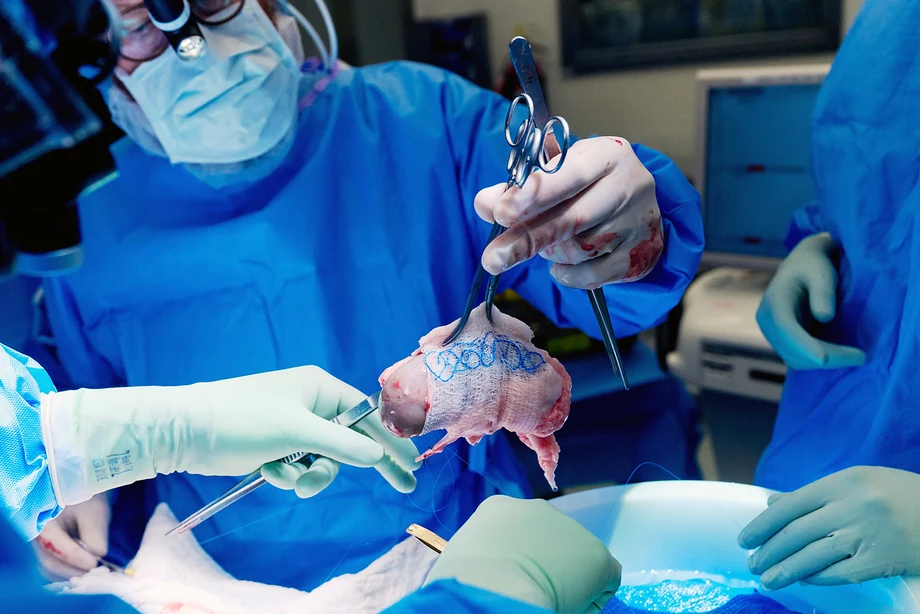
The Clinical Transplantation review reported that genetically engineered pig kidneys had survived for months in nonhuman primates receiving drugs to suppress immune activity. That finding provides a research foundation for testing organs over time while examining rejection and organ function.
The review also identified a difficulty with drug treatment. Conventional immunosuppressive therapies approved by the US Food and Drug Administration had been unsuccessful at preventing the adaptive immune response to pig cells in the studies discussed. Adaptive immunity is the body's ability to develop a targeted response against a particular threat.
Blocking a signalling pathway called CD40:CD154 was effective in those studies. This pathway helps immune cells communicate and activate an attack. Interrupting that signal is one way researchers try to protect a transplanted pig organ.
Kidney function creates further challenges. The review discusses hypovolemia, meaning too little circulating blood volume, and rapid growth of pig kidneys after transplantation. NZeno says its pigs are suitably sized without editing the growth hormone receptor gene. The Thai testing programme will need to examine how organs from its selected pigs behave after transplantation.
The 2021 review also identifies infection, public attitudes, ethics, regulation and finance as issues for clinical development. Its authors suggest that people facing a very long wait for a deceased human donor kidney might be considered first for kidney xenotransplantation research.
Five years is a research target
Mahidol research leader Chagriya Kitiyakara has described a goal of human clinical trials within five years, tied to construction of the DPF facility. At the collaboration announcement, the university presented the possibility of progressing to transplantation in humans within about five years if each development and testing stage meets its goals; Piyamitr has also described a broader period of five to 10 years for results.
The nearer target is to move from technology readiness level 4 to level 5 within 18 months. Technology readiness levels, abbreviated TRL, describe how far a technology has progressed from an idea toward practical use. At these stages, work moves from laboratory validation toward testing in conditions closer to its intended application.
Mahidol's stated sequence places pig quality checks and safety tests in nonhuman primates before clinical testing and registration. Each stage supplies information needed for the next, from confirming the animals' genetics and infection status to assessing organ function.
The national committee also approved proposals to revise laws and regulations covering human research, advanced therapy medicinal products and herbal products. The Strategic Transformation Office and relevant agencies are to carry out that work. For T-Xeno Hub, progress toward patients therefore depends on research results and the rules governing clinical studies.
The cost of waiting and building an alternative
Piyamitr cited more than 110,000 people with chronic kidney disease and annual spending of about 36.678 billion baht on kidney replacement treatment under Thailand's Universal Coverage Scheme. He has also cited more than 100,800 dialysis patients and government kidney care spending above 20 billion baht, while the programme's March 2026 presentation cited around 120,000 dialysis patients and costs exceeding 16 billion baht annually.
Those figures describe different patient groups and spending categories. Chronic kidney disease covers a wider range of illness than kidney failure requiring dialysis. The Universal Coverage Scheme figure is tied to a particular public healthcare scheme, while the other estimates were presented in broader terms.
For patients, dialysis also carries a time cost. Piyamitr described people attending haemodialysis three days a week or performing peritoneal dialysis every night. Haemodialysis uses a machine to filter blood; peritoneal dialysis uses the lining inside the abdomen as a filter.
Mahidol has described investment exceeding 1 billion baht for the pig organ programme, with a planning horizon of roughly 10 years. The university and Betagro have established MU BioGro Co., Ltd. to drive T-Xeno Hub. The partnership brings university medical and veterinary research together with commercial experience in pig production.
A medical project within a larger economic plan
Thailand's government places T-Xeno Hub inside a wellness economy strategy targeting 3.5 trillion baht in economic value by 2032. NXPO president Surachai Sathitkunarat said the sector was valued at 2.11 trillion baht in 2025, with projected average annual growth of 7.7%.
The 2032 target is about 66% above the 2025 value, an increase of 1.39 trillion baht. The strategy spans healthcare, prevention, tourism, agriculture and industry. Within that wider programme, T-Xeno Hub is intended to develop domestic medical technology and support Thailand's ambition to become a regional centre for xenotransplantation.
Yodchanan, the deputy prime minister and higher education minister, described the intended connection between medical capability and domestic technology development in the government's statement:
We need to harness science and innovation to connect these strengths into an integrated system spanning agriculture, industry, and services.
Surachai identified workforce development, research infrastructure, technology transfer and public procurement as priorities for implementation. For T-Xeno Hub, the immediate work is concrete: build the controlled production facility, produce and assess the pigs, and generate the safety evidence needed to seek clinical testing.
Key Points
- T-Xeno Hub joins Mahidol University, Betagro, NZeno and Thailand's higher education ministry to develop genetically modified pigs for organ research.
- Mahidol cited about 23,000 people eligible for kidney transplantation in 2024, compared with 989 transplants that year.
- A designated pathogen free pig production centre is planned at Mahidol's Kanchanaburi campus, with an 18 month completion target.
- Researchers plan pig quality checks and safety studies in nonhuman primates before human trials and registration.
- Human trials are targeted within about five years, depending on successful development and testing.
- The programme involves investment exceeding 1 billion baht and forms part of Thailand's national medical innovation strategy.