A complex heart operation through tiny openings
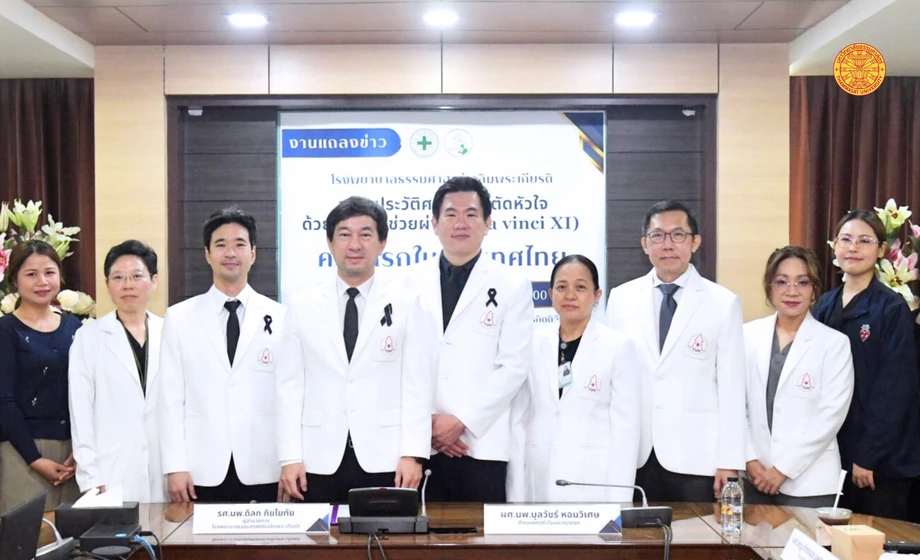
Thammasat University Hospital has completed 50 heart operations using the Da Vinci XI robotic system since starting the programme on January 9, 2026. In an update dated November 13, the hospital described its latest patient as a Thai man around 50 years old who needed treatment for an enlarged blood vessel near the base of his heart as well as narrowed coronary arteries.
Contents
- A complex heart operation through tiny openings
- From 10 patients to the annual target
- What happened in the 50th case?
- How the surgeon controls the robot
- Why avoiding the breastbone matters
- Which conditions can be treated?
- Who may still need open surgery?
- A year of preparation before treating patients
- The cost of reaching more patients
- Key Points
Surgeons treated the enlarged vessel and performed a coronary bypass through small openings rather than cutting through his breastbone. The hospital said he went home after four days and could resume ordinary daily activities. His case brings together the programme's central promise: carrying out complicated work inside the chest while reducing the injury caused by reaching the heart.
The hospital describes its total of 50 robotic heart operations as the highest in Southeast Asia. Its earlier robotic surgery announcement, published by Thammasat University, described the launch as Thailand's first use of robotic assistance for patients with heart disease.
The machine remains under a surgeon's control throughout the operation. The team says it does not use artificial intelligence to decide what to cut, stitch or repair. Its purpose is to give doctors small, flexible instruments and a detailed view of places that are difficult to reach with conventional tools.
From 10 patients to the annual target
The programme reached 50 operations within its first calendar year, meeting the minimum target discussed at its February launch. Cardiac and thoracic surgeon Assistant Professor Dr. Boonlawat Homvises had also described an ambition to perform more than 50 operations during 2026.
The milestones show how the service developed:
- January 9, 2026: The hospital performed its first heart operation using the Da Vinci XI system.
- February 17, 2026: The team announced its first 10 completed cases and a target of at least 50 during the year.
- November 13, 2026: The hospital's update said the programme had reached 50 patients, including the man discharged four days after treatment for an enlarged vessel and coronary artery narrowing.
The hospital usually performs about 300 to 350 operations involving an open chest each year, according to Boonlawat. For scale, 50 procedures equal roughly 14% to 17% of that annual workload. The comparison shows the size of the new programme alongside the hospital's established surgical service.
What happened in the 50th case?
The latest patient had two problems requiring treatment during the same operation. An aneurysm is a section of blood vessel that has widened abnormally because its wall has weakened. Narrowed coronary arteries restrict the blood supply to the heart muscle.
A coronary bypass creates another route for blood to travel around a narrowed or blocked section. Combining that work with treatment of an enlarged vessel near the heart makes the operation more demanding because the team must address both the vessel problem and the heart muscle's blood supply.
Boonlawat, who also teaches surgery at Thammasat University's Faculty of Medicine, said the team completed the combined procedure without opening the patient's breastbone. The hospital described it as an especially complex case and said a first successful example of this type of combined approach had been reported internationally in August 2026.
The patient's four days in hospital are the clearest individual recovery result in the update. The hospital did not give a full breakdown of complications, recovery times or longer follow-up for all 50 patients, or identify the international publication behind the August milestone.
How the surgeon controls the robot
The operating room has two control consoles and a robotic unit with four arms. At a console, the surgeon looks at a detailed three dimensional image and moves controls with their fingers. Those movements guide instruments inside the patient's chest, while foot controls operate the camera and equipment used to cut or seal tissue.
Two consoles allow two surgeons to work together and support teaching. An experienced surgeon can guide another doctor during training, while the wider surgical team assists with the operation and watches the procedure on screens.
Boonlawat described instruments about 8 millimetres wide, with joints capable of movement through 360 degrees. Their flexibility helps surgeons stitch and handle tissue in confined spaces where straight instruments are harder to position. Thammasat University's announcement also describes detailed three dimensional imaging and movement beyond the limits of a human wrist.
The small access openings, described as less than 1 centimetre across, let instruments enter the chest without the broad opening used in conventional surgery. The surgeon still performs the operation, with the robot translating movements made at the console into movements inside the body.
Why avoiding the breastbone matters
Conventional open heart surgery often requires the breastbone to be divided so the team can reach the heart. Healing that bone takes time, and patients may face restrictions on lifting and other activities for around three months. The February explanation from the team put the period before bone healing and a return to normal life at three to four months.
Robotic surgery uses small openings instead. Thammasat University's announcement says the approach can reduce incision size and blood loss and allow faster recovery than conventional open heart surgery. The clinical team also describes less pain because the breastbone remains intact.
Going home and completing recovery are different stages. The 50th patient left hospital after four days and was reported to have resumed everyday activities. In its earlier explanation of surgery through small openings, the team described discharge within three to four days and a return to normal life over about two to four weeks.
The practical benefit for a suitable patient is less time spent recovering from a large chest wound. The heart treatment remains substantial surgery, and the patient's condition and the procedure performed still shape what they can do after discharge.
Which conditions can be treated?
The hospital's programme covers several kinds of heart disease. Its first 10 patients underwent five types of procedure: replacement or repair of the mitral valve, replacement of the aortic valve, repair of a hole present from birth, and preparation of a blood vessel for coronary bypass surgery.
Heart valves act like gates, keeping blood moving in the correct direction. A leaking valve lets some blood flow backwards, while a narrowed valve makes blood harder to push through. Repairing or replacing a valve aims to restore that movement. Closing a hole in the wall between heart chambers treats an abnormal passage that allows blood to cross between them.
The team also lists removal of heart tumours, bypass surgery in selected patients and operations involving major blood vessels near the heart among the possible uses. By November, the hospital was describing a service extending from valve procedures to replacement of the large vessel at the heart's base.
At the February announcement, the team reported no deaths and no repeat operations among its first 10 patients. That group included a patient aged 86, showing that the early programme included older people as well as technically demanding cases.
Who may still need open surgery?
Patients needing emergency treatment, or those whose hearts have severely reduced pumping ability, may still require conventional open surgery. The team described these higher risk cases as a group accounting for less than 10% in its discussion of the service's limitations.
Doctors must choose an approach that suits the patient's condition and the work needed inside the chest. Open surgery remains part of the hospital's treatment options, particularly when a patient's urgency or heart function makes it the appropriate route.
Children present another practical limit. The current robotic equipment is designed for adult bodies, so a child may be too small for it to be used. The team said body size, rather than a fixed age limit, determines whether the system can fit and operate safely.
The programme's early target group included many patients aged about 60 to 80. For older patients who qualify, reducing pain and the recovery burden of a divided breastbone is a major reason the hospital wants to expand the service.
A year of preparation before treating patients
The surgical team underwent approximately a year of preparation, including practice with simulation systems and examinations for certification before operating on patients. The hospital describes this training as a requirement for using the robotic platform.
Boonlawat said surgeons also need progressive experience with operations through small openings. He described training levels from one to four, moving towards techniques performed through tiny access points without cutting bone. The most advanced stage provides a foundation for robotic heart surgery.
The hospital wants to become a regional training centre for surgeons from Thailand and other countries. Its two consoles support that goal by allowing teaching within the operating setup rather than limiting training to watching a screen.
At the February announcement, the team linked the 50 case target to its ambition to teach other surgeons. It described plans to begin courses with robotic lung surgery and later expand into heart surgery. Completing the target gives the team more clinical experience to use in developing that programme.
The cost of reaching more patients
Robotic equipment remains expensive. Boonlawat estimated that Thailand had about six or seven Da Vinci XI systems, concentrated in large teaching hospitals, with many located in the Bangkok area. He put the machine's price in the hundreds of millions of baht, alongside substantial equipment and maintenance costs.
For patients, the February estimate for additional robotic equipment charges was 100,000 to 200,000 baht. The hospital said it wanted to bring that extra amount below 100,000 baht, with a target range of about 50,000 to 100,000 baht.
Basic heart surgery can be reimbursed under eligible treatment rights, including Thailand's universal coverage programme, social security and the civil servant scheme, according to the team. The additional robotic equipment charge is the expense the hospital wants to reduce and eventually bring within broader public reimbursement.
The team plans to use its treatment results to support a national proposal for robotic heart surgery to be covered under the universal coverage programme, commonly called the gold card or 30 baht scheme. The hospital has also sought donations to help patients who cannot afford treatment. No approval date or timetable for the proposed coverage expansion was announced.
The potential need reaches far beyond 50 operations. Thailand's Health Data Center recorded about 260,000 accumulated cardiovascular disease patients in 2025, while health figures for October 2024 through September 2025 recorded more than 33,261 deaths. At Thammasat, the heart outpatient clinic sees patients numbering in the tens of thousands each year. Expanding access will depend on trained teams and affordable treatment as well as equipment.
Key Points
- Thammasat University Hospital completed 50 robotic heart operations after beginning the programme on January 9, 2026.
- The 50th patient underwent treatment for an enlarged vessel near the heart and coronary artery narrowing, then went home after four days.
- Surgeons control every stage through consoles connected to the Da Vinci XI system.
- Small access openings can avoid cutting the breastbone, reducing the burden of recovery for suitable patients.
- Some emergency patients, people with severely weakened heart function and children whose bodies are too small may need another approach.
- Additional robotic equipment charges were estimated at 100,000 to 200,000 baht in February, with lower charges and wider public coverage among the hospital's goals.