A larger population, with sharply different regional patterns
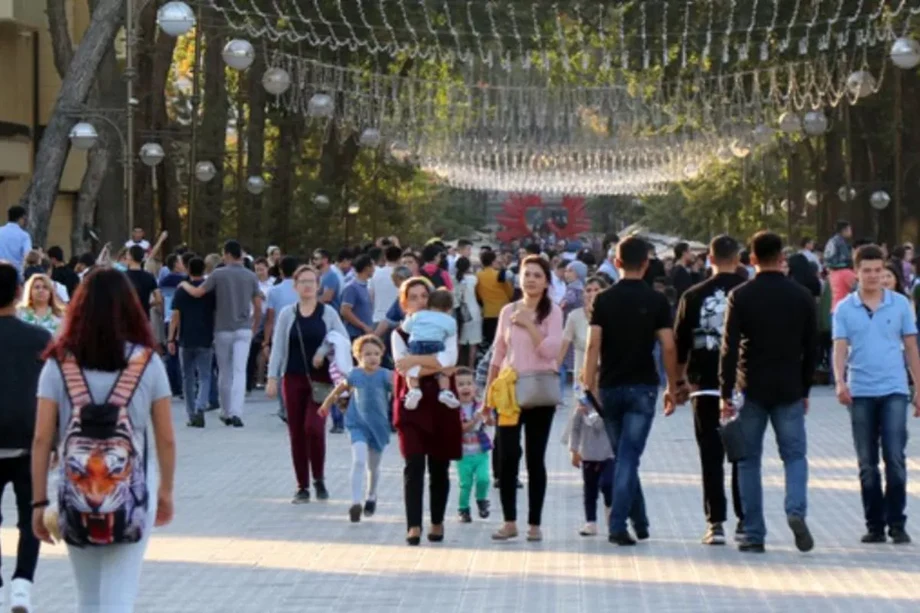
Uzbekistan's 2026 census counted 39,047,321 residents, including 189,557 born abroad, and revealed a country where 54.5% of people live in urban areas but 85.3% live in individual houses. Tashkent was the only region where apartment residents outnumbered people living in individual homes.
Contents
- A larger population, with sharply different regional patterns
- Where residents were born
- Nearly 600,000 Tashkent residents were born elsewhere
- Ethnic communities have distinct regional centres
- The capital concentrates Russian residents
- Language use follows a different map
- Individual houses dominate, including in urban Uzbekistan
- Why the urban share and population estimates changed
- A young population with growing demands at both ends of life
- How the count was checked and what comes next
- Key Points
The National Statistics Committee's preliminary census results also show how ethnic identity and everyday language vary across the country. Ethnic Uzbeks numbered 34,901,261, or 89.4% of residents, while 35,654,647 people, or 91.3%, named Uzbek as their main language of communication.
The population and agriculture census ran from January 15 to February 28, 2026, measuring the population as of January 15. It was Uzbekistan's first census since 1989, when the population stood at about 20 million. The new count is almost twice that figure and 810,617 people above the previous statistical estimate.
Tashkent stands out across several tables. Almost one in five capital residents was born outside the city. It contains about half the country's ethnic Russians and half the people naming Russian as their main language. Karakalpakstan has a different pattern, with large Uzbek, Karakalpak, Kazakh and Turkmen communities.
The committee describes the detailed compilation as preliminary, with further processing and refinement still to come. Its tables provide a picture of where people live, how they identify themselves and what languages they use, alongside a broader revision of the country's population statistics.
Where residents were born
Uzbekistan itself was the birthplace of 38,857,764 residents. The 189,557 people born abroad represented about 0.5% of the population. Tajikistan was the largest foreign birthplace, accounting for 50,895 residents, followed by Russia with 38,024, Kazakhstan with 29,400 and Kyrgyzstan with 25,326.
Another 11,603 residents were born in Turkmenistan, 3,104 in Ukraine and 1,574 in Azerbaijan. Other countries accounted for 29,631 people.
Tashkent contained 51,604 residents born abroad, about 27% of the national total. Tashkent Region, the administrative region surrounding the capital, had another 35,595. Together, the city and region accounted for about 46% of all residents born outside Uzbekistan.
The capital's pattern differed from the national ranking. Russia was the birthplace of 13,385 Tashkent residents and Kazakhstan of 11,909, compared with 3,807 born in Tajikistan. Fergana, Surkhandarya and Syrdarya regions also had substantial populations born abroad, numbering approximately 15,700, 14,300 and 13,800 respectively.
Birthplace and citizenship are separate census characteristics. A resident born abroad may have Uzbek citizenship and may have lived in Uzbekistan for decades. Jahongir Qambarov, a department head at the National Statistics Committee, said the census separately recorded about 56,900 foreign nationals who had lived in the country for more than a year.
Nearly 600,000 Tashkent residents were born elsewhere
Tashkent had 3,224,838 residents, of whom 2,628,672 were born in the capital. The remaining 596,166, or 18.5%, were born in another Uzbek region or another country.
People born elsewhere in Uzbekistan accounted for 544,562 capital residents, more than ten times the city's population born abroad. Tashkent Region was the largest domestic birthplace, with 118,873 people, followed by Kashkadarya with 81,196 and Samarkand with 59,027.
Bukhara accounted for another 43,577 residents, Surkhandarya for 38,132 and Fergana for 35,185. Across Uzbekistan, comparing regions of birth and residence produces an estimate of about 1.25 million people, or 3.2% of the population, living outside their birth region.
That comparison measures the difference between two places at the census date. People who moved away and later returned appear in their birth region. The tables give no dates or reasons for those moves.
Ethnic communities have distinct regional centres
Ethnic Uzbeks formed the largest population group, followed by Tajiks with 1,276,941 people, Karakalpaks with 841,397, Kazakhs with 707,329 and Russians with 606,526. The census also counted 219,091 Kyrgyz, 194,757 Turkmens and 300,019 residents in other ethnic groups.
Khorezm had the highest Uzbek share, at 98.7%, followed by Bukhara at 97.5%, Andijan at 96.1% and Samarkand at 96%. Uzbeks accounted for 84.4% of Tashkent's population and 80.8% of Tashkent Region's.
Karakalpakstan had the lowest Uzbek share, 47.6%, although Uzbeks remained its largest ethnic group at about 1.02 million people. The republic also contained approximately 772,300 Karakalpaks, 236,600 Kazakhs and 102,900 Turkmens.
About 91.8% of Uzbekistan's ethnic Karakalpaks lived in Karakalpakstan, where they represented 35.9% of residents. Outside the republic, their largest communities were in Navoi Region, with about 17,800 people, Tashkent with 13,500 and Tashkent Region with 6,600.
Tajik communities were largest in Surkhandarya, with about 273,700 people, Namangan with 254,700 and Fergana with 210,200. Those three regions together contained about 58% of Uzbekistan's ethnic Tajiks. Tajiks represented 9.2% of Surkhandarya's population and 8.1% of Namangan's.
The capital concentrates Russian residents
Tashkent contained about 299,700 ethnic Russians, representing 49.4% of the country's Russian population. Russians were the capital's second largest ethnic group, at 9.3% of its residents. Another 148,700 lived in Tashkent Region, taking the combined share to roughly 74% of Uzbekistan's ethnic Russians.
The largest Russian communities outside that area were in Samarkand Region, with about 28,300 people, Navoi with 27,100, Fergana with 24,900 and Syrdarya with 15,400. Women accounted for 53.3% of ethnic Russians, compared with 49.3% of ethnic Uzbeks.
Tashkent Region also had the country's largest Kazakh community, about 335,700 people, or 8.9% of its population. Together with the 236,600 Kazakhs in Karakalpakstan, these two regions contained approximately 81% of Uzbekistan's ethnic Kazakhs.
Andijan, Fergana and Jizzakh contained nearly 80% of ethnic Kyrgyz, with about 76,400, 57,700 and 40,700 respectively. Karakalpakstan contained 52.8% of the country's ethnic Turkmens, while Kashkadarya had about 37,900 and Surkhandarya 24,600.
Ethnicity was recorded through participants' own identification. Citizenship and language were recorded as separate characteristics, allowing the census to describe different aspects of the same population.
Language use follows a different map
Uzbek was named as the main language of communication by 35,654,647 people. Karakalpak followed with 910,462, Tajik with 851,326, Russian with 787,493 and Kazakh with 561,316. Turkmen accounted for 114,274 people, Kyrgyz for 79,559 and other languages for 88,244.
The committee labels this category main language of communication, with mother tongue in parentheses. It records a person's principal language rather than a list of every language they can speak.
Russian was the main language for 180,967 more people than the number identifying as ethnic Russian: 787,493 compared with 606,526. Uzbek likewise had 753,386 more main language respondents than ethnic Uzbek respondents.
Tajik showed the reverse pattern. The census counted 1,276,941 ethnic Tajiks and 851,326 people naming Tajik as their main language, a difference of 425,615. Regional rankings also differed: Namangan had the second largest ethnic Tajik population, while Samarkand ranked second for people naming Tajik as their main language.
Karakalpakstan's language distribution reflected its diverse population. About 1.04 million residents, or 48.5%, named Uzbek; 844,000, or 39.3%, named Karakalpak; 167,200 named Kazakh; and 82,700 named Turkmen. The republic contained 92.7% of all people in Uzbekistan naming Karakalpak as their main language.
Tashkent had 394,100 residents naming Russian, or 12.2% of the city. Tashkent Region had another 187,400. Kazakh language respondents were also concentrated in Tashkent Region and Karakalpakstan, which together accounted for about 79.2% of the national total.
Individual houses dominate, including in urban Uzbekistan
Individual houses accommodated 33,293,641 people, or 85.3% of Uzbekistan's population. Apartments in buildings containing multiple homes accommodated 4,826,476, or 12.4%. These figures count residents, rather than the number of properties or their owners.
Tashkent was the only region where apartment residents formed the larger group: about 1.66 million people, or 51.3%, compared with 1.44 million, or 44.7%, in individual houses. Outside the capital, Navoi had the highest apartment share at 25.4%, followed by Tashkent Region at 16.1% and Syrdarya at 15.6%.
More than 93% of residents in Namangan and Surkhandarya lived in individual houses. The shares were 92.6% in Kashkadarya, 92.1% in Andijan and 90.3% in Samarkand. Urban residence therefore includes a large population living in houses rather than apartments.
Other accommodation included dachas, or country houses, housing 394,966 people; dormitories other than student accommodation, housing 62,960; student dormitories, housing 61,377; and family guest houses, housing 3,546. Another 346,665 people lived in other dwelling types.
The census recorded 57,690 people living in premises designated for nonresidential use. Tashkent had the largest number, about 10,400, followed by Kashkadarya and Samarkand with roughly 6,500 each. The publication gives no details about the buildings, living conditions or reasons people used them as homes.
Why the urban share and population estimates changed
Urban residents numbered about 21.28 million on January 15, compared with 17.77 million rural residents. The committee revised the urban share from 50.9% to 54.5%, an increase of 3.6 percentage points, explaining that the change came from more accurate measurement of where people lived.
Earlier population accounting relied on permanent residence registration. Some people lived in towns while remaining registered in villages, and moves from a village to a town within the same district were absent from migration statistics. The census recorded actual residence.
The committee subsequently recalculated population estimates for January 1 of every year from 2010 through 2026, with methodological assistance supported by the United Nations Population Fund and the International Organization for Migration. The recalculation incorporated 19 administrative boundary changes.
The revised January 1, 2026 population was 39,023,600, which was 786,900 above the previous estimate. The census measured 39,047,321 on January 15, an increase of about 23,700 over those two weeks. The larger correction of 810,617 compares the January 15 census total with the earlier statistical estimate.
Registered births, deaths, arrivals and departures were kept unchanged. Rates calculated per resident changed because the population used in those calculations changed. Life expectancy at birth for 2025 was consequently revised from 75.4 to 76.4 years, as a larger population in relevant age groups reduced calculated mortality rates.
A young population with growing demands at both ends of life
Residents below working age numbered about 12.52 million, or 32% of the population. Those of working age accounted for 21.74 million, or 55.7%, while 4.79 million, or 12.3%, were above working age.
The statistical definition covers men aged 16 to 59 and women aged 16 to 54. Based on those age groups, Uzbekistan had about 79.6 children and older residents for every 100 people of working age. The ratio describes age structure, while actual employment depends on whether people work.
The recalculated series shows that the population above working age grew from about 2.13 million in 2010 to 4.79 million in 2026, roughly 2.3 times as large. The working age population grew by 21.6% over the same period. Schools and training systems must serve a large younger generation while health and social services face a growing older population.
The average resident was 29.6 years old, compared with 27 in 2010. Tashkent had the highest average age at 33.6, while Surkhandarya had the lowest at 27.4. Among residents aged 15 and above, 90.7% had at least general secondary education and 12% had higher education.
About 2.09 million residents were temporarily away from their permanent homes during the census, mainly for work or study. Family patterns also changed: the share of women who had given birth to five or more children fell from 35.7% in 1989 to 8.8%.
How the count was checked and what comes next
National Statistics Committee chairman Behzod Hamrayev said 82.3% of participants completed the census online, compared with an initial expectation of 20%. Spending was nearly 56 billion soums, below the original estimate of 140 billion to 150 billion soums.
A survey conducted after the census estimated that 97.3% of the population had been enumerated. Administrative databases were used to identify the remaining 2.7%. Hamrayev said records from more than 30 government organisations were compared and each additional person was confirmed through at least two independent sources.
The combined census also recorded 4.826 million hectares used for agriculture, including an additional 985,400 hectares absent from previous statistical records. Publication and statistical reforms have followed several stages:
- January 15 to February 28, 2026: the population and agriculture census took place.
- June 30, 2026: officials presented initial findings, costs and coverage checks.
- September 10, 2026: Presidential Decree PF-190 provided for a population register by the end of 2027.
- November 13, 2026: officials presented updated results, and recalculated population estimates for 2010 to 2026 became official.
- July 1, 2027: the announced deadline for publishing the remaining census information in stages.
The National Statistics Committee sets out the status of the detailed compilation in the publication itself:
This publication contains preliminary data. Upon completion of all stages of statistical processing, the information will be refined in accordance with the established national and international statistical standards.
Further releases are planned through the committee's website and a dedicated Aholi.uz portal. The planned population register would provide a continuously updated record between censuses, replacing part of the long reliance on estimates built from the 1989 count.
Key Points
- Uzbekistan counted 39,047,321 residents on January 15, 2026, about 2.1% above the previous estimate.
- Ethnic Uzbeks represented 89.4% of residents; 91.3% named Uzbek as their main language.
- About 189,600 residents were born abroad, with 27% living in Tashkent.
- Individual houses accommodated 85.3% of residents, while apartments accommodated 12.4%.
- The urban population share was revised from 50.9% to 54.5% after residence patterns were measured more accurately.
- Detailed tables remain preliminary, with further publication scheduled through July 1, 2027.