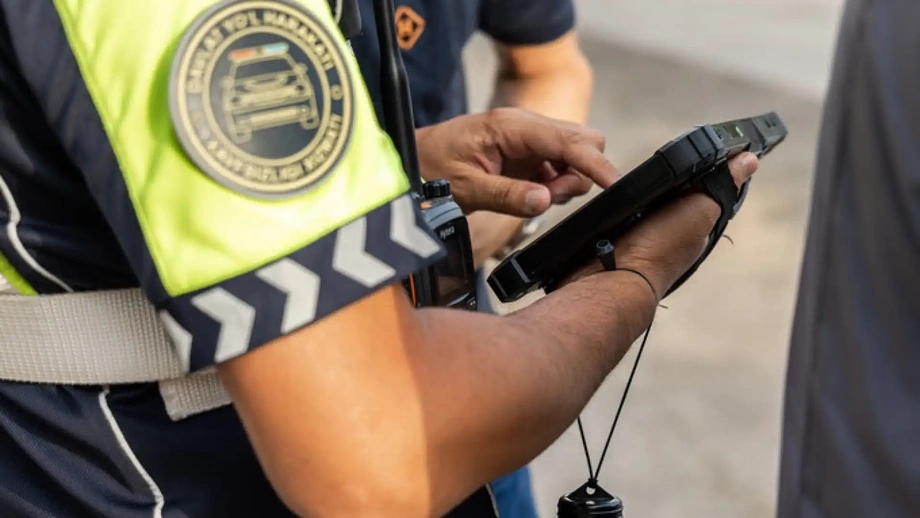
A 60 day payment deadline can lead to impoundment
Uzbekistan will begin applying a new procedure on January 7, 2027, allowing traffic officers to impound vehicles when traffic fines remain unpaid for 60 days. Drivers will have one final opportunity to keep their cars during an enforcement stop: pay the outstanding fine in full through an approved payment channel and have that payment confirmed in the electronic system.
Contents
- A 60 day payment deadline can lead to impoundment
- What changes in January 2027?
- How an overdue fine reaches an officer's tablet
- Paying during a stop and recovering an impounded car
- Early payment discounts remain, with exceptions
- Electronic records become the normal procedure
- Hearings and appeals have separate deadlines
- Camera cases face a 48 hour evidence limit
- Penalty points can send a case to court
- Key Points
The procedure forms part of Interior Minister Aziz Tashpulatov's Order No. 502, registered by the Ministry of Justice on November 5 under number 3969. The order replaces instructions that have governed the handling of traffic violation cases since 2011.
For drivers, the practical change connects three steps: an unpaid fine, an automatic alert on an officer's tablet and the detention of the vehicle without a separate administrative protocol. A protocol is the formal record of an alleged violation. Officers will use the existing fine and electronic debt information to carry out the detention.
The instruction also covers electronic case records, appeals, camera evidence, payment discounts and penalty points. Officers are prohibited from collecting fines directly from drivers, even though drivers may use approved services to settle their debt during a stop.
What changes in January 2027?
Article 291 of the Administrative Liability Code has allowed vehicle detention for traffic fines unpaid for 60 days since 2019. An amendment in February 2025 made information automatically entered into authorised electronic systems the basis for detention. The new instruction sets out how officers and administrative centres will apply that power.
The approval and implementation sequence spans several dates:
- 2019: Article 291 provides authority to detain vehicles over traffic fines unpaid for 60 days.
- February 2025: The provision is updated to use information automatically entered into authorised electronic systems.
- September 4: The minister approves the new instruction.
- November 5: The Ministry of Justice registers the order.
- November 6: The order is officially published, with entry into force specified as two months after publication.
- January 7, 2027: The stated implementation date for the new procedure.
The rules bring debt enforcement into the same Administrative Practice system used to process traffic cases. This means an unpaid decision can move electronically from the traffic authorities to the body responsible for compulsory collection.
How an overdue fine reaches an officer's tablet
Drivers normally have 60 days from the date of the fine decision to pay. When that deadline passes without payment, the vehicle's details automatically appear on tablets used by Road Safety Service officers and in other relevant information systems.
Officers must then detain the vehicle and send it to a designated impound lot, unless the driver settles the debt through the permitted procedure. They do not need to prepare another administrative protocol specifically for the detention.
The unpaid decision also goes through the Administrative Practice system to the Bureau of Compulsory Enforcement under the Prosecutor General's Office. Compulsory enforcement is the process by which the state collects a debt after the voluntary payment period has expired.
A different payment clock applies after an unsuccessful appeal. A driver whose complaint or protest is rejected has 30 days to pay from receipt of notification of that outcome. Keeping track of when the notification arrives therefore matters as much as knowing when the original fine was issued.
Paying during a stop and recovering an impounded car
A driver can avoid impoundment by paying the outstanding fine in full during the enforcement stop through an electronic payment system, a mobile application or a bank counter. The payment must be confirmed automatically in the electronic system before the vehicle is allowed to continue.
Traffic officers cannot accept the money themselves. Approved payment routes also include the public services portal, my.gov.uz. The process separates the officer's enforcement role from the collection of the fine.
Electronic confirmation is central to this procedure. Submitting a payment and having it registered in the government system are separate steps. The instruction ties the decision to release the vehicle at the stop to confirmation in that system.
For a car already taken to an impound lot, the debt must be paid before recovery. Staff at the territorial administrative practice centre check the payment and issue electronic authorisation for the vehicle's return. The vehicle may remain at the lot until enforcement proceedings are concluded. No specific payment verification or release turnaround time is given.
Early payment discounts remain, with exceptions
Drivers eligible for voluntary payment discounts can settle a fine for half its face value within 15 days of receiving the decision. Paying 70% within 30 days clears the remaining 30%. These are existing incentives retained in the new procedure.
The difference between the two options is 20 percentage points of the original fine. For every 100 units of a qualifying penalty, payment during the first 15 days costs 50 units, compared with 70 units within 30 days. At the overdue enforcement stage, the procedure requires full settlement of the outstanding debt to avoid impoundment.
Discounts are unavailable in several circumstances. They exclude decisions that are appealed, a repeat of the same violation within a year after an administrative penalty, and fines imposed under Articles 131, 136 and 140 of the Administrative Liability Code.
Article 131 concerns driving while intoxicated, while Article 136 concerns refusal to undergo testing. The exceptions mean the 50% and 70% payment options will not appear on every fine, even when a driver is ready to pay quickly.
Electronic records become the normal procedure
Road Safety Service officers will prepare most violation records on tablets or computers through the Administrative Practice module. Biometric systems can establish a driver's identity, while an electronic signature or fingerprint confirms the protocol.
Paper records remain available in specified situations, including when a driver denies the violation, a case begins with a victim's complaint or a network connection is unavailable. Staff must later scan those documents into the electronic system.
Officers must explain a driver's procedural rights when preparing the case. These include examining the case materials, providing explanations and additional evidence, obtaining legal assistance and appealing a decision.
The instruction also addresses the recording of a refusal to take a sobriety test. If the officer has an active body camera, witnesses are no longer required for that step, and the video recording is attached to the protocol. Drivers may also approach any traffic police centre in Uzbekistan, regardless of their residence or registration.
Hearings and appeals have separate deadlines
Administrative traffic cases must be considered within 15 days. Notification of the hearing's time and place goes to the person's account on the Unified Portal of Interactive Public Services or through its mobile application.
A driver has 10 days from receiving a copy of the decision to appeal to a higher authority or a court. Enforcement is suspended while the appeal is being considered. If the challenge fails, the 30 day payment period begins when the driver receives notice of the outcome.
The deadlines measure different stages. The 15 day period concerns the authority's consideration of the case, the 10 day period concerns the driver's opportunity to challenge the decision, and the payment periods govern when the money must be paid.
A driver contesting a fine also loses access to the voluntary payment discount under the stated exceptions. The rules therefore make the decision to challenge a penalty relevant to both the appeal process and the amount eventually payable.
Camera cases face a 48 hour evidence limit
Information from automated cameras must reach the authorised body within 48 hours of the recorded violation. If it arrives later, the administrative case is terminated. A case must also be closed if accurate information identifying the vehicle owner is unavailable.
Camera cases can proceed without a separate administrative protocol or the alleged offender's participation. Responsibility generally rests with the owner or a person legally authorised to use the vehicle. Owners can submit applications through the public services portal so camera fines are directed to the person who was actually driving.
The stated deadline for imposing a camera penalty is one month, but its starting point is described differently: from the incident itself or from receipt of the violation information. That leaves uncertainty over the exact final date in an individual case. The 48 hour deadline for transmitting the evidence is consistent across the descriptions of the procedure.
The instruction also specifies that repeat offences captured by cameras are not taken into account in the penalty calculation. Camera processing therefore has its own rules alongside the procedures used when an officer records a violation directly.
Penalty points can send a case to court
Certain traffic offences carry up to two penalty points each, alongside the main punishment. Points expire after one year. When a driver accumulates more than 12 points within 12 months, the system automatically sends the case materials to court for consideration of an additional penalty.
The threshold is more than 12, rather than 12 exactly. The court then considers what additional punishment to impose. This makes the points record another consequence to track alongside the financial balance of a fine.
Penalty points already operate in stages. Initially, they were assigned on the basis of protocols prepared by Road Safety Service officers. From April 1, 2026, points also began to apply to violations detected through automated photography and video recording.
For minor offences, the instruction permits an administrative warning no more than once a year. Together, the warning, points and debt enforcement provisions create different responses depending on the offence and the driver's record. For someone with an overdue fine, the most immediate consequence remains the possible loss of access to the vehicle until payment and release approval are completed.
Key Points
- The new traffic case procedure is scheduled to take effect on January 7, 2027.
- Vehicles can be impounded when traffic fines remain unpaid for 60 days.
- After an unsuccessful appeal, payment is due within 30 days of notification.
- Full payment during an enforcement stop can prevent impoundment if the electronic system confirms it.
- Officers cannot collect fines directly; approved payment services must be used.
- Eligible drivers can pay 50% within 15 days or 70% within 30 days, subject to exceptions.
- Camera evidence must reach the authorised body within 48 hours.
- More than 12 penalty points within 12 months triggers referral to court.