Germany's unfilled demand drives a migration overhaul
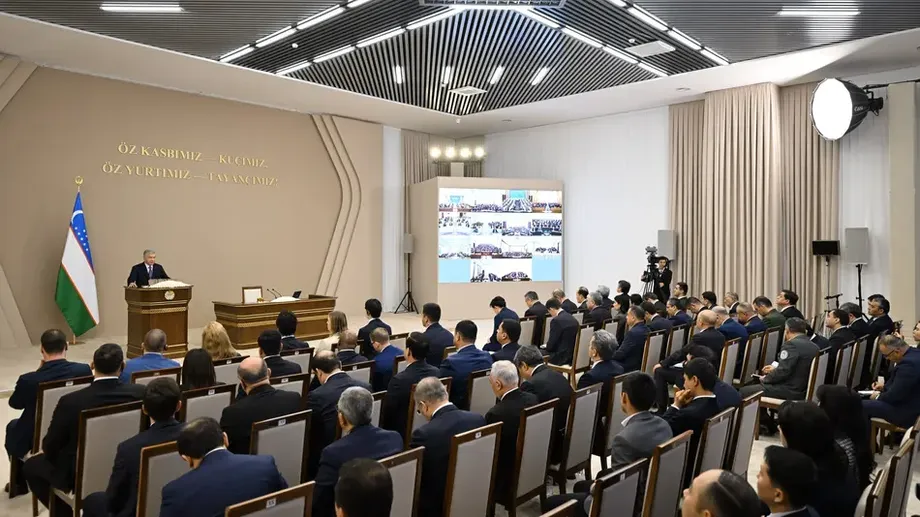
Germany requested 45,000 specialists from Uzbekistan in 2026, yet only 2,000 Uzbek citizens secured jobs there, President Shavkat Mirziyoyev told a November 2 meeting on labor migration. The shortage of workers with German language skills has prompted a plan to combine language lessons, vocational training and recruitment for specific jobs.
Contents
- Germany's unfilled demand drives a migration overhaul
- Why earnings differ so sharply between regions
- German lessons will accompany professional training
- Regional centers and employers will shape courses
- Private agencies face a difficult starting point
- Recruiters would receive space and tax support
- Britain and other destinations need different arrangements
- Online Mahalla will connect neighborhoods and embassies
- Returning workers need jobs and pension recognition
- The timetable for implementation
- Key Points
Uzbekistan plans to transfer responsibility for arranging overseas employment to reliable private employment agencies from 2027, paying them 1.5 million soums for every citizen placed in a job with high pay. Regional migration centers will receive 8 billion soums each, while officials have been tasked with training 10,000 people in German and professional skills for subsequent employment in Germany.
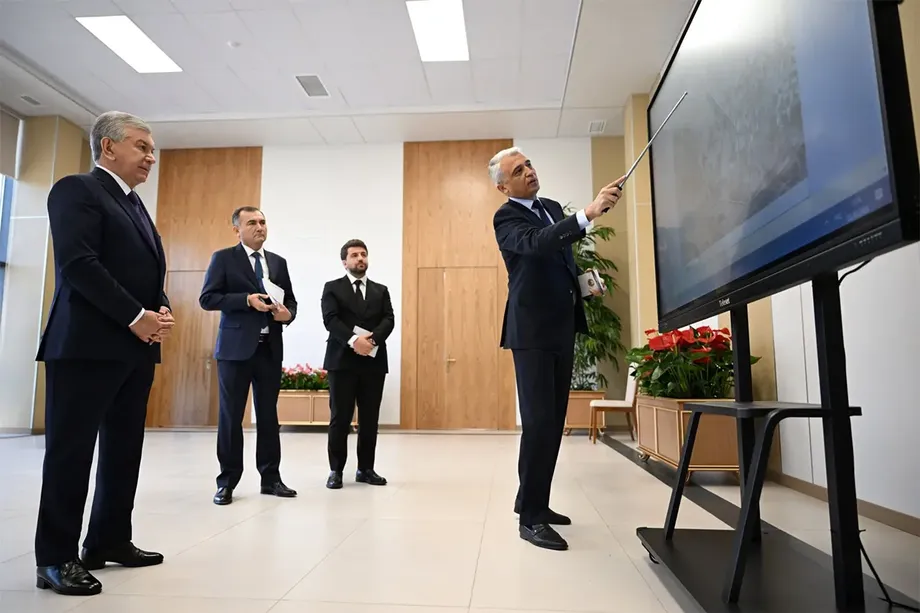
The meeting, held at the Intil International Language and Vocational Training Center in Tashkent's Uchtepa district, covered the full journey of a migrant worker: finding a vacancy, preparing for it, obtaining permission to work, receiving protection abroad and finding employment after returning home.
The presidential administration's labor migration statement puts available employment opportunities at 287,000 across 34 countries this year. Mirziyoyev said residents were receiving too little information about those opportunities and instructed neighborhood officials, governors, ambassadors and training institutions to work together.
For someone preparing to leave Uzbekistan, the intended change is practical. Before departure, they should know where they will work, how much they will earn and who will protect their employment rights. Recruitment agencies would arrange placements, while public officials would retain responsibilities for preparation, diplomatic support and assistance to families.
Why earnings differ so sharply between regions
Fergana region receives an average of $1,850 a month in remittances per person working abroad, according to the presidential administration. In Karakalpakstan and Tashkent region, the figure is below $400. Remittances are the money workers send home to relatives.
The regional breakdown discussed around the meeting puts Syrdarya at about $500, Jizzakh and Navoi at $600, and Surkhandarya and Khorezm at about $700 or less. Fergana's figure is therefore more than 4.6 times the level in regions receiving below $400 per worker. Families in different parts of Uzbekistan receive very different amounts of support from overseas employment.
Over the past decade, the number of Uzbek citizens working abroad has halved while the amount they send home has quadrupled, the presidential administration said. Those two changes together imply an eightfold increase in remittances per worker, using the figures presented at the meeting. The government is seeking to build on that change through jobs requiring stronger qualifications.
Organized migration partnerships have expanded from three countries to 27, a ninefold increase. The presidential administration said the number of cooperating major foreign employers had increased by nearly 400; another published figure put the total near 400. Governors, ambassadors and technical school heads were instructed to revise training so that more workers can qualify for better paid vacancies.
German lessons will accompany professional training
Germany's 2,000 placements amount to about 4.4 percent of the 45,000 specialists requested. The administration identified insufficient German language skills as one reason for the gap. Its response is to teach the language alongside a profession, with courses shaped by what foreign employers require.
Two or three technical schools in every region will introduce German alongside vocational instruction. Telc is already participating in the training of 100 German teachers at Intil, and those teachers are expected to begin work in regional technical schools in early 2027.
Another 500 native German speakers are to be recruited for schools and technical colleges in 2027. The state quota for university training of German teachers will double from the next academic year, expanding the number of teachers Uzbekistan prepares itself.
Existing programs offer examples of how the combined instruction can work. Globogate and 20 medical technical schools train 1,500 nurses annually. German instructors teach language and professional skills at the Advanced Vocational Training College in Karshi. In Andijan, an entrepreneur has restored an unused technical school and brought in a German teacher for a program described as preparing 1,500 specialists a year.
The target of training and placing 10,000 people in Germany in 2027 is five times the 2,000 placements reported for 2026. Reaching it would require language instruction to lead into suitable vacancies, alongside the visas and recognition of qualifications that ambassadors have been instructed to pursue.
Regional centers and employers will shape courses
Each of Uzbekistan's 14 regions is to have a unified labor migration center in 2027. First deputy regional governors must study Intil's approach before establishing the centers. The allocation of 8 billion soums per region would amount to 112 billion soums across 14 regions.
Foreign employers are also expected to play a larger role inside technical schools. Companies from Germany, Japan and South Korea have expressed interest in helping develop courses and investing in equipment. Officials were given one month to select 20 technical schools and adapt their programs to foreign employer requirements for instruction beginning in 2027.
Another plan would place two or three technical schools in each region under the management of major entrepreneurs for 15 years. Together, these institutions are expected to prepare at least 30,000 specialists annually. Graduates would receive qualification certificates recognized by the Uzbek state.
The Tashkent Pipe Plant in Sergeli has proposed training 2,500 welders, electricians and fitters a year using its own skilled staff. That proposal illustrates the intended connection between instruction and actual industrial work: businesses would help teach the skills they need rather than leave schools to design courses alone.
Planned financial support includes deductions from taxable income for spending on training and technical school equipment. The presidential statement also envisages grants for graduates who successfully obtain jobs abroad. These measures are intended to encourage investment in preparation as well as recruitment.
Private agencies face a difficult starting point
Private employment agencies have expanded rapidly since licensing procedures were simplified. Their number has tripled in two years, while the number of citizens placed abroad through them has increased fivefold, according to the presidential administration.
The proposed transfer of overseas placement functions in 2027 would give reliable agencies a central role. Agencies would receive 1.5 million soums for each person placed in a job with high pay. Officials must submit a draft resolution regulating their activities within one month. The division of responsibilities between private agencies and the state Migration Agency has not yet been specified.
Recent performance assessments show how much improvement is required. In the Migration Agency's assessment for the third quarter of 2026, 40 of 47 agencies received an unsatisfactory rating, four were satisfactory and three were good. None reached the exemplary category. About 85 percent of the assessed agencies therefore fell into the lowest category.
The assessment used 11 indicators, including placements, contract registration, preparation before departure, compliance with legal requirements and complaints. On October 12, Migration Agency officials discussed complaints about delayed services, unfulfilled contracts and difficulties recovering money when employment arrangements failed.
Uzbekistan's law of October 16, 2018 regulates private employment agencies. Legislation adopted in November 2025 expanded their powers to organize professional and language courses and attract foreign employers. It also required a deposit equivalent to 4,000 base calculation units in a special bank account to compensate citizens for losses. The base calculation unit is a government reference amount used to calculate certain legal payments.
The next reforms envisage a public rating focused on actual employment, pay, protection of rights and social guarantees. An agency rating system has operated since 2025; the new proposals would put those outcomes at the center of the expanded private recruitment system.
Recruiters would receive space and tax support
Private agencies are to be offered free use of parts of technical school buildings for vocational and language courses. The proposals also include a social tax rate of 1 percent for teachers and experts recruited from abroad, along with customs duty exemptions for equipment needed for instruction.
Mirziyoyev proposed treating recruitment activity as a social service and simplifying its taxation accordingly. The intended arrangement would allow recruitment businesses to prepare candidates in Uzbekistan and connect them directly with overseas employers.
The payment of 1.5 million soums would go to the agency for a successful placement. Worker pay, contract fulfillment and social protection would be assessed separately through the proposed performance criteria. For applicants, the practical promise is a recruitment process judged by the job they actually obtain and the conditions they receive.
Britain and other destinations need different arrangements
The United Kingdom has demand for 33,000 workers, according to figures presented at the meeting. Uzbek citizens currently travel there mainly for seasonal agricultural employment. Officials were instructed to negotiate concrete vacancies in healthcare, logistics and industry.
Seasonal recruitment already operates on a substantial scale. Migration Agency figures from July 2026 put placements through HOPS Labour Solutions and Pro-Force Limited at 7,664 Uzbek citizens, with average monthly income reported at $2,500.
Uzbekistan also wants to participate in Britain's Youth Mobility Scheme, which allows eligible young citizens of participating countries to live and work temporarily in the United Kingdom. Participation remains a matter for negotiation. Officials were also told to make fuller use of labor migration cooperation with Italy.
The presidential administration said the European Union had included recruitment of Central Asian specialists in its migration strategy for the first time. Mirziyoyev instructed ambassadors to turn such opportunities into specific jobs and training programs, citing existing cooperation involving Germany, Türkiye, Slovakia and Qatar.
About 200,000 young people in Uzbekistan hold English language certificates, according to the administration. Officials were urged to expand employment opportunities for them in the United States, Canada, Australia and New Zealand, with Sweden and Denmark also identified as destinations to pursue. Ambassadors must work on recruitment quotas, work visas and recognition of qualifications alongside employer agreements.
Online Mahalla will connect neighborhoods and embassies
Online Mahalla is intended to bring vacancy information and assistance closer to residents. A mahalla is a neighborhood community. Its local team, known as the Mahalla Seven, will register people seeking overseas work and help communicate available opportunities.
Residents are to receive information about destination countries, professions, required qualifications, language skills and training. Governors and responsible organizations will oversee preparation and subsequent placement. Regional governors must review progress monthly, while district governors must do so twice a month.
Workers facing difficulties abroad will also be able to submit appeals through the platform. Ambassadors are expected to intervene personally when necessary, including visiting citizens to help resolve problems. Governors were instructed to support migrants' families, parents and children at home.
President Mirziyoyev described protection abroad as a continuing state responsibility. The presidential administration quoted him saying:
Not a single compatriot working abroad should be left alone with their problems.
The administration described personal ambassadorial intervention as necessary in some cases. Descriptions of the ten day instruction varied: some called for proposals to establish an effective assistance system within that period, while others described a deadline to launch it. The one month deadlines for agency regulation and school selection were more consistently stated.
Returning workers need jobs and pension recognition
Since the beginning of 2026, 1,116,000 people have returned to Uzbekistan from labor migration, according to the presidential administration. They include people with experience in industry, construction, logistics and services.
Officials were instructed to find suitable jobs for 250,000 returnees before the end of the year and support those wishing to start businesses. That employment target covers about 22 percent of the recorded returnees. A new platform will record their previous workplaces, professions and work experience to help match them with jobs.
Pension rights are another part of the return process. Uzbek citizens legally work and pay pension contributions in more than 40 countries. Uzbekistan signed agreements with Kyrgyzstan, Azerbaijan and Türkiye during 2026 concerning recognition of work experience and pension rights.
Officials were told to negotiate similar arrangements elsewhere. Countries and regions identified for further talks include Russia, Germany, Japan, South Korea, the Baltic states and the Balkans, with results to be reported by the end of the year. Such agreements address how work and contributions accumulated abroad can count toward pension entitlements.
Inside Uzbekistan, the number of foreign nationals staying for extended periods is approaching 250,000. Of these, 36,000 have work permits and 24,000 are students. Officials were instructed to clarify the employment status and income sources of the remaining foreign residents, while giving Uzbek citizens priority for new jobs.
The timetable for implementation
The November 2 meeting set several deadlines, ranging from immediate administrative work to changes planned for 2027. The main steps are:
- Within ten days: prepare or launch the proposed system for responding to citizens seeking help abroad, with differing descriptions of the precise instruction.
- Within one month: submit a draft resolution on private agency reform and select 20 technical schools for courses aligned with foreign employers.
- By the end of 2026: find suitable jobs for 250,000 returning migrants and report progress on further pension agreements.
- From early 2027: deploy the 100 German teachers being trained at Intil to regional technical schools.
- During 2027: establish regional migration centers, expand private recruitment, recruit 500 native German speakers and train 10,000 people for employment in Germany.
- From the next academic year: double the state quota for university training of German teachers.
The main test will be whether preparation and recruitment lead to the promised employment conditions. The government's own figures show both the opportunity and the work required: Germany requested 45,000 specialists but hired 2,000, while 40 of 47 assessed private agencies received unsatisfactory ratings just before the proposed expansion of their responsibilities.
Key Points
- Reliable private employment agencies are to take over overseas placement functions from 2027.
- Agencies would receive 1.5 million soums for each citizen placed in a job with high pay.
- Regional migration centers will receive 8 billion soums each, with 10,000 people targeted for training and employment in Germany.
- German instruction will expand through technical schools, teacher training and recruitment of 500 native speakers.
- Online Mahalla will register candidates, distribute vacancy information and accept requests for help abroad.
- Officials must find suitable jobs for 250,000 returning migrants before the end of 2026.
- The allocation of duties between private recruiters and the state Migration Agency still needs to be specified.