Investment commitments reach their highest level since 2009
Vietnam registered $54.85 billion in foreign investment in the first 10 months of 2026, up 74% from a year earlier, while investment actually put into projects grew at a slower pace. The National Statistics Office put estimated disbursements at $24.08 billion, an increase of 13.1%, with factories receiving nearly 83% of that money.
Contents
- Investment commitments reach their highest level since 2009
- New projects are attracting much larger commitments
- Factories dominate spending, while logistics attracts new capital
- Singapore leads a concentrated investor ranking
- Ho Chi Minh City leads, with different project tallies
- Ports, packaging and semiconductor projects broaden the pipeline
- Domestic suppliers are central to investment quality
- A government plan connects investment with 2030 goals
- Public investment and local business show a mixed picture
- Key Points
The figures, covering the period through October 31, show two parts of Vietnam's investment story: a sharp rise in commitments for new projects and continued spending on production already being developed. Registered investment reached its highest level since 2009. Disbursements were the highest for the corresponding 10 months in five years, according to the Foreign Investment Agency under the Ministry of Finance.
The government's investment figures, citing the National Statistics Office, divide the $54.85 billion into three channels: $30.73 billion for newly licensed projects, $16.13 billion added to existing projects, and $7.99 billion in capital contributions and share purchases. Together, expansions and ownership transactions supplied about 44% of the total.
Ho Chi Minh City emerged as the largest destination for new project capital, while Singapore led the investor rankings. Manufacturing remained the main recipient of money being spent, even as transportation, warehouses, property and technology projects broadened the investment pipeline.
For Vietnam, the next task is turning those commitments into operating factories, ports and services, then helping domestic businesses win more of the work around them. Ministry of Finance figures put local content in foreign investment production chains at only 20% to 25%, making the connection between incoming capital and Vietnamese suppliers a central policy concern.
New projects are attracting much larger commitments
Vietnam licensed 3,478 new projects involving foreign investment between January and October. Their combined registered capital of $30.73 billion was 2.2 times the amount recorded in the same period of 2025, while the number of projects increased by just 4.7%.
Those figures mean that the average capital registered per new project rose substantially. Dividing $30.73 billion by 3,478 gives about $8.8 million per project. Using the reported growth rates, the comparable average a year earlier was approximately $4.2 million. The average therefore more than doubled, although individual projects can vary greatly in size.
Existing investors also increased their commitments. Across 1,079 projects, they registered another $16.13 billion, up 33.2%. Foreign investors completed 2,616 capital contribution and share purchase transactions worth $7.99 billion, an increase of 49.6%.
Foreign direct investment, or FDI, includes building or expanding a business and acquiring an ownership interest in one. Registered capital records commitments; disbursement records money put into projects. Spending during 2026 can include projects approved in earlier years, so the two totals follow different investment timelines.
Factories dominate spending, while logistics attracts new capital
Manufacturing and processing received $14.61 billion, or 47.5%, of capital registered for new projects. Transportation and warehousing followed with $5.15 billion, accounting for 16.7%. Other sectors together attracted about $10.98 billion.
Including additional capital for existing projects, manufacturing attracted $24.19 billion, or 51.6% of the combined $46.86 billion in new and expanded project commitments. Subtracting its $14.61 billion in new registrations indicates that about $9.58 billion went toward expanding existing manufacturing projects.
Manufacturing was even more dominant in actual spending. It received $19.96 billion, or 82.9%, of disbursed FDI. Real estate followed with $1.76 billion, or 7.3%, while electricity, gas, steam, hot water and air conditioning supply received $785.2 million, or 3.3%.
The sector figures reveal different stages of development. Factories account for most current investment spending, while the $5.15 billion registered for transportation and warehouses points to a substantial pipeline of supporting infrastructure. Manufacturers need storage, cargo handling and reliable transport to move materials into plants and finished goods to customers.
Singapore leads a concentrated investor ranking
Singapore supplied $9.52 billion in newly registered project capital, representing 31% of the total from 80 countries and territories. South Korea ranked second with $5.81 billion, or 18.9%, followed by Luxembourg with $4.99 billion, or 16.2%.
Hong Kong contributed $3.57 billion, or 11.6%, and mainland China supplied $2.77 billion, or 9%. Japan followed with $1.58 billion, representing 5.1%, while the Netherlands registered $438.5 million, or 1.4%.
The five largest investor economies together accounted for $26.66 billion, roughly 87% of new project capital. That concentration means a large part of the new investment pipeline is registered through a small group of jurisdictions.
The ranking records where the direct investing entity is based. A company registered in Singapore or Luxembourg may itself have owners elsewhere, so the figures describe the immediate route of investment into Vietnam. They also cover newly licensed projects rather than every form of foreign investment.
Ho Chi Minh City leads, with different project tallies
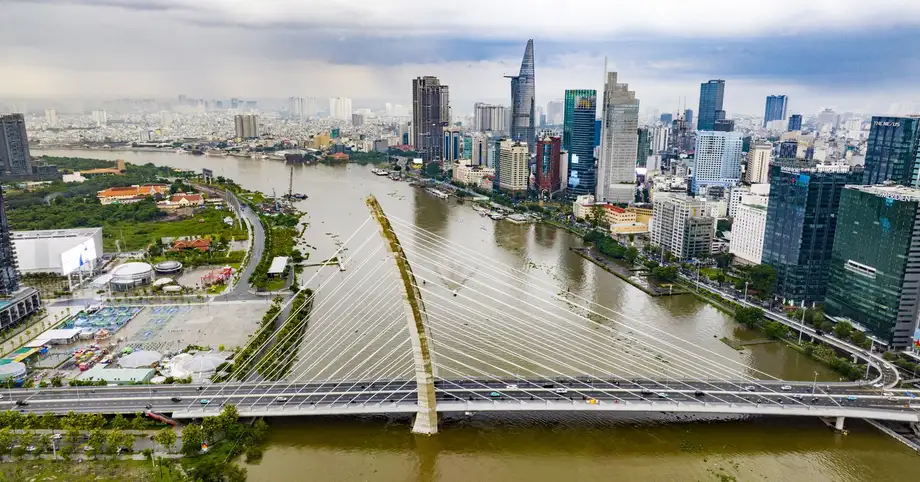
The national figures place Ho Chi Minh City first with more than $10.3 billion in newly registered capital across 1,761 projects. Thai Nguyen Province ranked second, attracting more than $5.8 billion in new project commitments.
Ho Chi Minh City's statistics agency gave a different new project tally: nearly $9.8 billion across 1,726 projects. It put total registered foreign investment at $19.1 billion, including $5.7 billion added to existing projects and more than $3.6 billion in capital contributions and share purchases. The reason for the difference between the national and city new project figures was not explained.
The city's $19.1 billion total was 4.2 times its level a year earlier and represented about 34.8% of Vietnam's $54.85 billion. Following its merger with Binh Duong and Ba Ria-Vung Tau, the enlarged city region has more than 14 million people and contributes approximately 23.5% of national gross domestic product.
Nguyen Loc Ha, vice chairman of the Ho Chi Minh City People's Committee, identified major projects including the Can Gio international transshipment port, valued at more than $4.9 billion, and an AI Factory data centre valued at $2.1 billion. A transshipment port transfers cargo between ships, helping connect regional trade with major international shipping routes.
Ports, packaging and semiconductor projects broaden the pipeline
Ho Chi Minh City announced 12 projects with combined registered capital of $13 billion at the Autumn Economic Forum 2026. They included a $2.29 billion smart complex in Functional Zone 2A of the Thu Thiem New Urban Area, developed by Lotte Properties HCMC and Phat Dat Real Estate Development Corporation.
Other major commitments included the $770 million Gemalink Port project by Cai Mep Gemadept-Terminal Link and the Swift Logistics project by Singapore's Tokgistic, with registered capital of approximately $987.4 million.
Samsung Electro-Mechanics planned an investment of about 2.51 trillion won, or $1.88 billion, in its Vietnam subsidiary to expand production of flip-chip ball grid array semiconductor substrates. These substrates provide the connections between advanced chips and the circuit boards used in electronic equipment.
Thailand's Siam Cement Group announced a separate 604 billion dong, or $23.6 million, investment in May 2026 to expand packaging production capacity in Ho Chi Minh City. Thammasak Sethaudom, SCG's president and chief executive, described a regional strategy built around closer production links, technology sharing and products with greater value.
Terauchi Mikito, a corporate officer at Japan's OJI Holdings, described Vietnam as an increasingly strategic production base in Southeast Asia. He said local production would help the paper and packaging group serve Vietnamese customers and expand across the wider Asia Pacific region.
Domestic suppliers are central to investment quality
Foreign investment generates more than 70% of Vietnam's export turnover, according to the investment assessment. Yet the Ministry of Finance puts local content in FDI production chains at only 20% to 25%. Local content measures how much production relies on goods and services supplied within Vietnam.
A factory can export large amounts while buying many of its parts abroad. Vietnamese suppliers gain more business when they can provide components, materials, maintenance or other services that meet the factory's requirements. That makes supplier capability important alongside the value of investment entering the country.
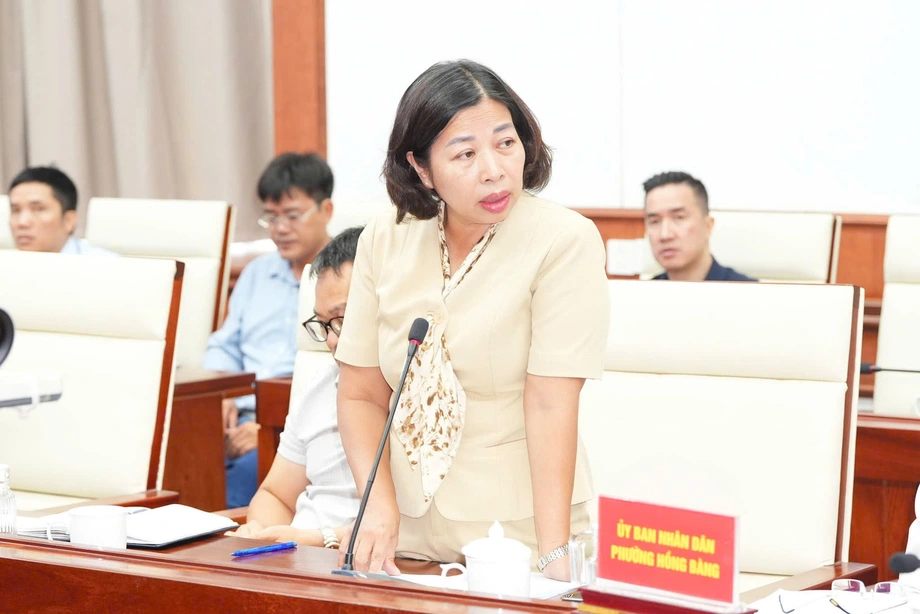
Finance Minister Ngo Van Tuan called for foreign investment to generate more value within Vietnam, transfer technology and bring domestic enterprises further into global supply chains. National Assembly deputy Le Huu Tri of Khanh Hoa also urged stronger supporting industries, workforce development and closer links between foreign and domestic businesses.
Deputy Tran Thi Hong Thanh of Ninh Binh cited local content of around 40% in several key industries, a narrower measure than the ministry's figure for FDI production chains. She urged the government to connect incentives with measurable commitments on technology transfer, staff training, Vietnamese suppliers and domestic value creation.
Bui Minh Thanh, vice chairman of the Ho Chi Minh City People's Committee, similarly identified technology, workforce skills and the position of Vietnamese enterprises in global production networks as priorities. Those goals focus attention on what businesses can make and supply locally, alongside the amount of capital registered.
A government plan connects investment with 2030 goals
On September 22, 2026, the government issued Resolution No. 280/NQ-CP to implement Politburo Resolution No. 10-NQ/TW on developing the sector involving foreign investment. The stated goals for 2030 are $200 billion to $300 billion in registered FDI and $150 billion to $200 billion in disbursed FDI.
The action plan directs provinces to identify priority projects and asks the Ministry of Finance to study support for strategic investments. Potential support would be linked to commitments such as technology transfer, workforce training, research and development, and the development of local suppliers.
The year's investment developments span several stages:
- May 2026: SCG announced its packaging capacity investment in Ho Chi Minh City.
- September 22, 2026: The government issued Resolution No. 280/NQ-CP.
- First nine months of 2026: Registered FDI exceeded $50.36 billion, while disbursements reached nearly $21.2 billion.
- October 31, 2026: Registered investment reached $54.85 billion and estimated disbursements reached $24.08 billion.
- 2030: Vietnam's investment strategy sets its registered and disbursed FDI goals.
Prime Minister Le Minh Hung presented the first nine months' registered total to the National Assembly. The Ministry of Finance estimated disbursements for the full year at around $31 billion. Against that estimate, the October total left approximately $6.92 billion to be disbursed in November and December.
Public investment and local business show a mixed picture
Vietnam's public investment spending was rising alongside foreign investment. State budget investment disbursement reached 121.6 trillion dong in October, up 23.7% from a year earlier. The total for the first 10 months was 783.9 trillion dong, equivalent to 69% of the annual plan and up 19.8%.
Vietnamese companies were also investing abroad. Outward investment reached $3.41 billion, 3.1 times the level a year earlier. That comprised $1.87 billion across 132 newly licensed projects and $1.54 billion in additional capital across 34 existing projects.
Ho Chi Minh City's industrial production index rose 11%, exports increased 10.9%, and public investment disbursement exceeded 114.4 trillion dong, reaching 77.5% of its plan. Retail sales and consumer services increased 14.7%, while average consumer price inflation over the 10 months was 4.78%.
Local business formation was weaker. By October 20, the city had licensed more than 44,700 new businesses with registered capital of 365.185 trillion dong. Business numbers fell 6% and their registered capital dropped 58.1% from a year earlier. The contrast places strong foreign investment growth alongside a more difficult environment for new domestic enterprises.
Key Points
- Vietnam registered $54.85 billion in foreign investment through October 2026, up 74% and the highest level since 2009.
- Estimated disbursements reached $24.08 billion, up 13.1%, with manufacturing receiving $19.96 billion.
- New projects attracted $30.73 billion, while existing project expansions and ownership transactions supplied the remaining $24.12 billion.
- Singapore led new project investment with $9.52 billion. The five largest investor economies supplied roughly 87% of new capital.
- Ho Chi Minh City's statistics agency recorded $19.1 billion in total registered investment, about 35% of the national total.
- Government policy is focusing on converting commitments into operating projects, increasing local supply and strengthening technology and workforce skills.