A 600 MW export project puts regional ambitions into practice
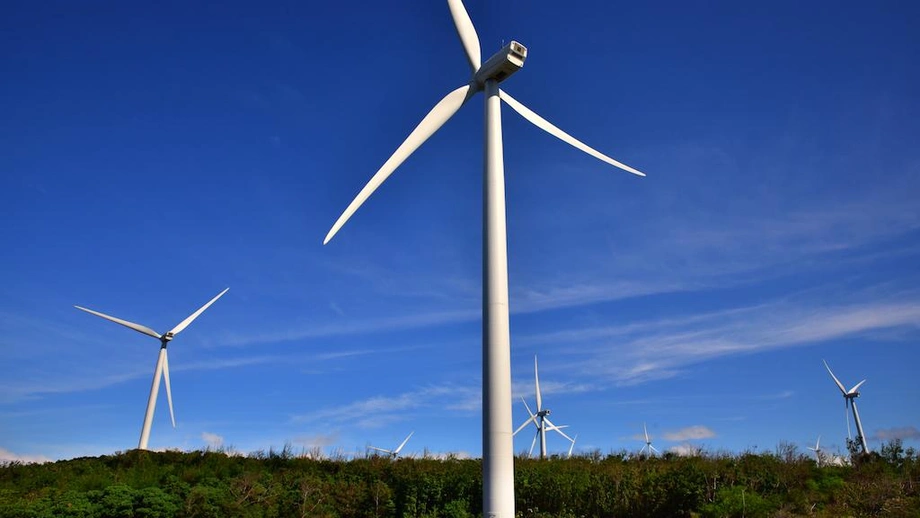
On mountain ridges in southern Laos, 133 wind turbines are supplying Vietnam under a power purchase agreement lasting 25 years. The US$950 million Monsoon Wind Power project began commercial operations in August 2025, giving Southeast Asia its largest wind farm and a working example of electricity trade that crosses national borders.
Contents
- A 600 MW export project puts regional ambitions into practice
- How electricity moves from Lao ridges to Vietnam
- The agreements took years to become electricity
- Why lenders needed protection against restricted output
- Wind fills part of the dry season gap
- ASEAN needs networks and dependable rules
- A separate Singapore proposal shows the next steps
- Jobs and roads reach villages, but outages persist
- Land and compensation remain part of the project
- Key Points
The project's most useful lesson for the proposed ASEAN Power Grid may lie in its financing. The Asian Development Bank (ADB) helped arrange US$692.55 million in loans and a grant, including a financial reserve designed to keep lenders receiving repayments when technical restrictions prevent the wind farm from selling enough electricity.
Monsoon combines a renewable resource in one country, a customer in another and financing from institutions across the region. Its experience also exposes the work still needed: transmission agreements, protection against supply disruptions, compensation for farmers and investment in local electricity networks.
Narut Boakajorn, Monsoon Wind Power's general manager, wants the project to reach beyond its current Vietnamese customer if surplus electricity becomes available.
"If we have surplus, we want to support the ASEAN Power Grid through our existing system to Thailand, Malaysia, Singapore as well," he said.
Electricity from Monsoon currently goes exclusively to Vietnam through dedicated transmission infrastructure. Deliveries to other countries would require cooperation over transmission access, commercial arrangements and the capacity of the networks carrying the power. No starting date for those wider exports has been announced.
How electricity moves from Lao ridges to Vietnam
Monsoon stretches across Sekong and Attapeu provinces, at elevations of about 1,200 to 1,600 metres. Its 133 turbines each have a rated capacity of 4.51 megawatts, giving the project approximately 600 MW in total.
The project's expected annual production is 1.7 terawatt hours, equivalent to 1.7 billion kilowatt hours. Capacity measures how much power equipment can produce at a particular moment; annual generation measures how much electricity it produces over time as wind conditions change.
A transmission line running 71 kilometres connects the project to Vietnam's Thanh Mi substation. About 27 kilometres are in Laos and 44 kilometres in Vietnam. The system operates at 500 kilovolts, a high voltage used to carry large amounts of electricity over distance.
The Asian Infrastructure Investment Bank (AIIB), in its Monsoon project summary, identifies the wind farm, substation and transmission line as parts of the same investment. The buyer is Vietnam Electricity, known as EVN, the Vietnamese state utility.
The project was initiated by Thai developer Impact Electrons Siam. Its sponsors include ACEN Renewables International, BCPG, Mitsubishi Corporation and SMP Consultation. Power Construction Corporation of China built the project under an engineering, procurement and construction contract.
The agreements took years to become electricity
Monsoon reached commercial operation after years of government agreements, grid studies and financing negotiations. A development agreement dates to 2015, while the electricity purchase contract was signed in 2021 and amended in January 2022.
The main steps show how much preparation was needed before construction could deliver power:
- 2015: Laos granted exclusive development rights for the project.
- September 2019: Vietnam Electricity and Vietnam's Ministry of Industry and Trade approved a grid impact study.
- 2021: The developer signed the electricity purchase agreement with EVN for 25 years.
- November 2022: ADB and AIIB approved financing.
- 1 March 2023: ADB announced the signing of the US$692.55 million financing package.
- February 2025: The project was energised, with turbine installation completed in April.
- August 2025: Commercial operations began, followed by an official ceremony in November.
ADB Vietnam country director Scott Roberts said Monsoon shows how governments can solve technical problems across borders and coordinate electricity development plans through trust and political cooperation.
"It's easier for countries to plan alone, it's harder for them to plan jointly. We are delighted to see that there is momentum around this and that momentum builds year after year as test cases like Monsoon Wind come to market," he said.
AdvertisementWhy lenders needed protection against restricted output
ADB's March 2023 financing announcement described the transaction as the largest syndicated financing for a renewable energy project among ASEAN countries at that time. Syndication means several lenders join together to finance one project.
The US$692.55 million package comprised a US$100 million ADB loan, US$150 million in syndicated lending, US$50 million in concessional financing, US$382.55 million in parallel loans and a US$10 million grant. Concessional financing offers more favourable terms than ordinary commercial lending, helping attract private investment to projects with unfamiliar risks.
The financing package sits within the broader US$950 million project investment. Some descriptions put the project cost at US$692.55 million, but ADB identifies that figure specifically as the financing package.
AIIB approved US$150 million in November 2022. ADB's subsequent financing announcement listed US$72.55 million from AIIB among the parallel loans. Those figures describe the approved amount and the contribution listed in that package, respectively.
The central risk was curtailment: a requirement to reduce electricity production for technical reasons, even when wind is available. Lower sales can leave a wind farm short of money to repay its loans.
ADB's project data sheet, updated on 16 October 2026, lists Monsoon as operational and explains the solution. A grant of up to US$10 million supports a debt service reserve account, a pot of money available to cover part of loan repayments during extreme curtailment. The sheet also gives an ordinary capital resources loan ceiling of US$150 million, while the March 2023 package listed a US$100 million ADB loan.
Monsoon therefore offers a financing lesson alongside its engineering example. Investors needed an agreed way to manage lost revenue before they would commit money to this unfamiliar export model.
Wind fills part of the dry season gap
Laos has built much of its electricity export industry around hydropower and now hosts about 90 hydropower plants. Wind offers another source of income and a different seasonal pattern of generation.
AdvertisementADB Laos country director Shanny Campbell said the country's strongest wind generation comes during the dry season, when hydropower output generally falls. She described the value of combining the two resources:
"So in terms of complementing the power mix, it's fantastic," she said.
Vietnam experienced severe electricity shortages in 2023 when drought reduced hydropower supply. Buying Lao wind power gives it another source of electricity as demand grows, while Laos gains a broader mix of export generation.
ADB's 2023 financing announcement projected annual avoided emissions of at least 748,867 tonnes of carbon dioxide equivalent, a measure that expresses different greenhouse gases on a common scale. Later project estimates put annual savings at about 1.3 million tonnes and lifetime savings at more than 32.5 million tonnes over 25 years. The assumptions behind the different annual estimates have not been explained publicly.
Thomas Jakobsen, managing director at Indochina Energy Partners, estimated that EVN pays about six US cents per kilowatt hour, compared with eight to ten cents for wind electricity bought locally in Vietnam. That would make Monsoon power roughly 25% to 40% cheaper on those figures. Monsoon, EVN and ADB declined to disclose the contract tariff.
ASEAN needs networks and dependable rules
ASEAN's electricity demand is growing by about 4% a year, increasing the need for both generating plants and transmission networks. The region has more than 680 million people, but many national grids still have relatively few connections to neighbouring countries.
The ASEAN Power Grid memorandum of understanding was signed in 2007 and implemented in 2009. Electricity trading has developed further in the Greater Mekong area, especially among Laos, Thailand and Vietnam, than across much of the wider region.
ADB is working with development partners to mobilise financing for a fully integrated regional grid by 2045. Singapore's Energy Market Authority has conditionally approved 9.25 gigawatts of low carbon electricity imports from Australia, Cambodia, Indonesia, Malaysia and Vietnam. Singapore and Malaysia are also strengthening their grid connections.
Shobhakar Dhakal, a professor at Thailand's Asian Institute of Technology, described Monsoon as a regional milestone while warning that heavy dependence on bilateral agreements leaves electricity trade exposed to diplomatic friction and measures that prioritise domestic supplies. He called for strong regulatory protections and a regional framework.
AdvertisementIndonesia's reduction of natural gas supplies to Singapore by 31 billion British thermal units a day on October 24 illustrates the pressures surrounding regional energy trade. Singapore Prime Minister Lawrence Wong said on October 25 that he expected parties to honour commercial commitments. Dhakal's comments addressed regional risks generally rather than that incident.
Mirza Sadaqat Huda, a senior research fellow at ODI Global and an associate fellow at the ISEAS – Yusof Ishak Institute, identified practical ways to protect trading relationships:
"Continued dialogue, predictable long-term agreements and regional dispute resolution mechanisms will be important in maintaining confidence among trading partners and sustaining regional energy cooperation," he said.
A separate Singapore proposal shows the next steps
Tuas Power, Electricité du Laos and Phongsupthavy Group signed a memorandum of understanding on October 30 to explore supplying Singapore with up to 500 MW of renewable electricity. The proposal is separate from Monsoon's existing exports to Vietnam.
The companies envisage a contract lasting five to 15 years, starting with 100 MW in the first year, rising to 300 MW in the second and reaching 500 MW thereafter. They aim to advance arrangements with buyers, regulatory requirements and certification by 2027.
The Lao PDR–Thailand–Malaysia–Singapore Power Integration Project already provides a route for regional trade. It began in 2022 with permission for Singapore to import up to 100 MW of Lao hydropower; its current permitted capacity is 200 MW. The proposed 500 MW arrangement would be 2.5 times that amount.
Phongsupthavy Group managing director Somlath Mek Akath identified agreements allowing electricity to cross borders as a major challenge. Transmission capacity and commercial approvals are also necessary. Combining hydropower with wind and solar could help the proposed supply adjust to seasonal changes.
Laos already sends much of its generation abroad. Figures presented to its National Assembly for 2021–2025 put electricity generation at 251,052 million kilowatt hours and exports at 195,602 million kilowatt hours. Those totals mean approximately 78% of generation was exported.
Jobs and roads reach villages, but outages persist
Monsoon created at least 1,600 jobs, including more than 1,000 for Lao nationals. Nearby communities have gained improved roads and support for education, healthcare, agriculture and infrastructure through a programme with an annual budget of US$1.1 million.
AdvertisementADB says about 2,800 households, or nearly 16,000 residents, have benefited. Local worker Sunsamone Saypanya said stable construction work with Monsoon paid US$10 a day, compared with US$6 from previous casual jobs, an increase of about 67%.
The community programme also supplies coffee seedlings, encouraging another income source alongside rice farming that can involve clearing and burning vegetation. Resident Amy Saychai welcomed better roads and suggested they could help attract visitors.
Residents near the turbines still report electricity outages during heavy storms. Laos has ageing electricity infrastructure and a heavily indebted state utility, while Monsoon's existing output travels directly to Vietnam. Improving nearby households' power supply requires investment in the domestic network.
Narut says the company plans to add 1,000 MW and is working to direct some additional electricity to Laos. That would bring total capacity to 1,600 MW, more than 2.6 times the current level. The expansion remains a plan rather than an operating source of domestic electricity.
Land and compensation remain part of the project
Monsoon's turbines occupy about 25 hectares, while the wider project area extends across roughly 708 square kilometres; another estimate puts it at about 680 square kilometres. The larger area includes the landscape across which turbines, roads and transmission infrastructure are distributed.
The company says no villages were relocated. Narut also said around 1,600 grievances, mainly from farmers seeking compensation for construction damage to crops, had been resolved.
AIIB classified Monsoon as Category A, its category for projects with potentially substantial environmental and social risks. Its assessment identified possible effects on birds, bats, amphibians, spiritual forests and cemeteries, alongside losses of agricultural land and access to forest products.
The assessment also identified construction safety risks involving unexploded ordnance and soils potentially contaminated by defoliating chemicals. Women and ethnic minorities were identified as groups that could experience disproportionate effects.
ADB's Safeguard Policy Statement governs the project's environmental and social requirements under the joint financing arrangements. AIIB describes grievance mechanisms for communities and workers, annual supervision after construction and environmental and social monitoring reports every six months during operation.
AdvertisementNarut estimates that Laos will receive US$180 million over the contract's 25 years through taxes and community development and environmental protection funds. For villages around Monsoon, the lasting value will depend on how those payments, compensation arrangements and local services accompany the electricity exported across the border.
Key Points
- Monsoon's 600 MW wind farm began commercial operations in August 2025 and supplies Vietnam under an agreement lasting 25 years.
- ADB arranged a US$692.55 million financing package within the broader US$950 million project investment.
- A reserve backed by a grant helps cover loan repayments when technical restrictions sharply reduce electricity sales.
- Lao wind generation is strongest in the dry season, helping balance seasonal declines in hydropower.
- Wider ASEAN electricity trade requires transmission access, dependable contracts and regional rules for resolving disputes.
- Monsoon brought jobs, roads and community funding, while nearby residents still face domestic electricity outages.
- A proposed 1,000 MW expansion could include supply for Laos, while a separate partnership is exploring exports of up to 500 MW to Singapore.