A proposed sales shift puts buyers' money at the centre
Vietnamese lawmakers are weighing restrictions on the sale of unfinished homes, including a ban on reselling purchase contracts and a gradual move towards selling homes only after construction is complete. Alongside those proposals, they want tighter controls over deposits, bank guarantees and the money buyers pay before receiving ownership documents.
Contents
- A proposed sales shift puts buyers' money at the centre
- Why lawmakers want to stop repeated contract resales
- Why buyers may need a way out
- Deposits would face controls beyond a 5% ceiling
- How much could developers collect before handover?
- A bank's project approval is not the buyer's guarantee letter
- The final 5% raises questions about control and refunds
- Who checks the project, and who bears responsibility?
- Changing the financing model could change payment pressure
- Key Points
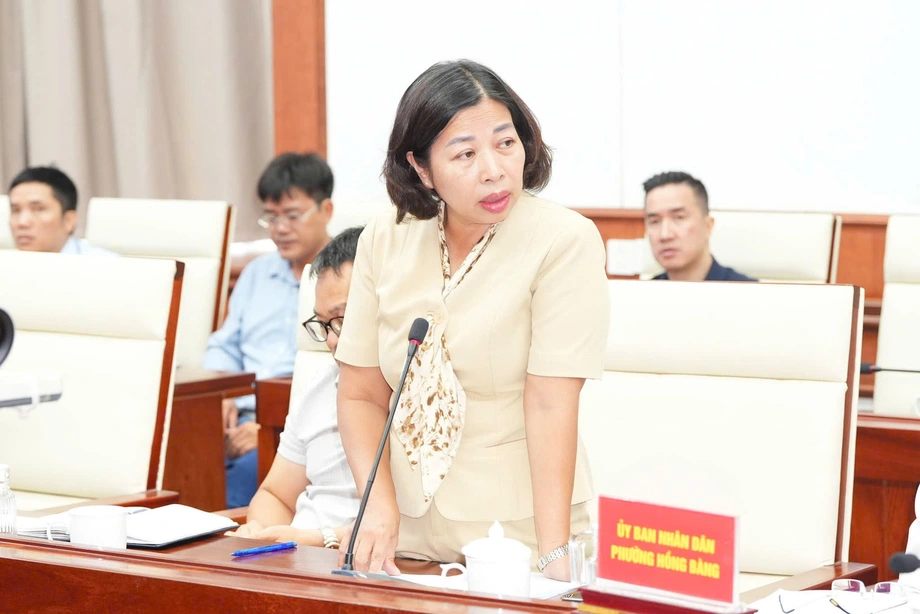
At the National Assembly debate on October 30, 2026, Thanh Hoa delegate Le Thanh Hoan proposed banning transfers of contracts for homes still under construction. Hai Phong delegate Nguyen Ngoc Son offered a different approach: keep transfers possible, but record every transaction in a property information system connected to electronic identification and verified legal data.
For families waiting for homes, the debate concerns both their savings and their ability to escape a stalled purchase. Buyers affected by delays at Roxana Plaza in Ho Chi Minh City, and by delayed handovers in Da Nang and Hanoi, have paid towards properties while continuing to carry loan debt.
The proposals remain under discussion. Construction Minister Tran Hong Minh said the draft amendments to the Law on Real Estate Business would be reviewed and refined; no final vote or implementation date was given.
Two different restrictions are being considered. Banning contract transfers would stop a buyer from passing a purchase agreement to someone else. Selling only completed homes would change when developers could first sell a property and obtain money from customers. Either measure would change how housing construction is financed, but they would affect buyers at different stages.
Why lawmakers want to stop repeated contract resales
Hoan argued that repeated transfers can turn a housing agreement into a vehicle for speculation. Before a home is completed and handed over, the buyer transferring the contract is passing on contractual rights and payment obligations rather than delivering a finished property.
An initial buyer can pay a deposit or a small instalment, then transfer the agreement when prices rise. Hoan said returns on that initial outlay could reach 50% or 100%, while repeated transfers and brokerage charges could push the eventual handover price to as much as twice the original price.
A return on the money initially paid is different from a rise in the price of the whole home. Because the first buyer has paid only part of the purchase price, a relatively small increase in the home's price can produce a much larger percentage gain on that buyer's cash contribution.
Hoan's proposed response goes beyond restricting individual speculators. He called for studying a transition towards selling homes after construction is complete, reducing the period during which purchase agreements could circulate before a property is ready.
Son acknowledged that transfers can meet genuine needs and help keep transactions within the legal system. His proposal would instead require each transfer to be recorded, making the chain of buyers and actual transaction prices easier to track. He also called for a workable rollout so incomplete databases would not interrupt lawful transactions.
Why buyers may need a way out
Huynh Thanh Dien, an economist at Nguyen Tat Thanh University, said a transfer ban could reduce speculation but leave genuine homebuyers stranded when their finances change. He described projects lasting one to three years, a period during which a buyer could lose a job, suffer business losses or face a family emergency.
A buyer unable to continue paying may need to transfer the agreement to recover money already committed. Without that option, the remaining choices could include cancelling the contract or ending it unilaterally, potentially triggering disputes over penalties, compensation and refunds.
Le Trung Phat, director of Le Trung Phat Law Firm and a member of the Ho Chi Minh City Bar Association, opposed a blanket ban. He argued that rights arising from a lawful housing contract are protected property rights, invoking Article 32 of the 2013 Constitution. That is his legal argument against the proposal, rather than a court ruling on it.
Phat favoured regulation through taxation and legal checks. He warned that a ban could drive transactions into informal arrangements, including broad powers of attorney, private written agreements and promises to buy or sell. Such transactions could leave authorities with less information, reduce tax collection and increase disputes or fraud.
Deposits would face controls beyond a 5% ceiling
The draft limits deposits for unfinished properties to 5% of the sale or lease purchase price, with collection permitted only once the property meets the conditions for business. Can Tho delegate To Ai Vang proposed placing that money in a blocked account at the bank guaranteeing the project.
A blocked account would prevent the developer from freely withdrawing the deposit. Under Vang's proposal, access would depend on the property meeting the required conditions and the buyer and developer signing the formal purchase contract.
Lam Dong delegate Duong Khac Mai warned that developers or distributors could collect money under other names, such as reservation payments, registrations of interest or priority fees. Thanh Hoa delegate Luong Thi Hoa likewise called for the law to judge a payment by its purpose rather than its label.
The practical test would be whether the money secures a future agreement or advances part of the purchase price. Calling it a priority fee would not change that function. Ho Chi Minh City delegate Tran Anh Tuan also wanted responsibility assigned to both the developer and whoever directly receives the money, including intermediaries, with refunds and compensation addressed under the Civil Code.
A project on National Highway 13 in the former Binh Duong area illustrates the practice under scrutiny. Buyers were asked to pay 100 million dong to reserve an apartment, with a purchase contract expected about a month later and a refund offered if they chose not to sign.
How much could developers collect before handover?
Son described draft ceilings of 30% for the first payment and 70% for total payments before handover, alongside the 5% deposit limit. His concern was that buyers would still advance a large amount without being able to supervise how the developer used it.
Hoan proposed keeping collections before handover at no more than 70%, with the remaining 30% payable only when the buyer both receives the home and obtains the ownership certificate. Linking the final payment to both events would give buyers financial protection beyond the physical completion of the building.
The competing figures reveal a substantial policy choice. A 30% balance tied to handover and certification is six times the 5% final balance discussed elsewhere in the draft. The two approaches would leave very different amounts outside the developer's immediate control.
Son also proposed monitoring payments against actual construction progress, particularly where a buyer proceeds without a bank guarantee. In practical terms, the release of money would follow verified work completed rather than relying only on payment dates written into a contract.
A bank's project approval is not the buyer's guarantee letter
Tuan focused on the steps needed to give an individual buyer bank protection. A bank's agreement to provide guarantees for a developer is one stage; issuing a guarantee letter for a particular customer is another. The customer's letter identifies the protection attached to that transaction.
For buyers choosing a guarantee, Tuan proposed allowing developers to accept contract payments only after customers have received their individual letters. He also sought clear rules on issuance deadlines, procedures and fees so buyers would know when protection begins and what it costs.
The draft allows buyers to choose whether to have a bank guarantee. Son proposed making protection the default, with a buyer able to decline only through a separate written confirmation after receiving a full explanation.
Son's concern was that a refusal could otherwise become a standard clause presented as part of the purchase contract. His approach would require a more deliberate choice, while adding payment monitoring where no guarantee is taken. These proposals address the period when buyers have paid money but are still waiting for the developer to fulfil its obligations.
The final 5% raises questions about control and refunds
The draft also addresses the final 5% of the contract value while a buyer awaits the ownership certificate. This is a different payment from the initial deposit, even though both are expressed as 5%.
Mai asked for rules identifying who controls the account, what documents permit the money to be released, who receives any interest and what happens if the developer can no longer pay its debts. He wanted the money managed separately and released on a clear legal basis.
Vang proposed an alternative where certification is delayed by objective problems involving state agencies, such as unfinished land valuation or approval of planning changes. In those circumstances, the developer could replace the blocked 5% with an unconditional bank guarantee of equal value, freeing cash while maintaining financial protection.
Lawmakers also sought clarity about account ownership, payment timing and fees. Where buyers undertake the certificate application themselves, transferring the retained money to the developer should be voluntary, while the developer would remain responsible for providing the necessary documents.
Hai Phong delegate Vu Van Tien cited families at some Muong Thanh projects who had waited years for certificates. Their experience puts ownership paperwork alongside construction progress as a central part of the debate: receiving the keys can be followed by a much longer wait for formal documentation.
Who checks the project, and who bears responsibility?
Tien called for authorities to compare apartments offered for sale with approved planning and designs before transactions proceed. He also wanted developers required to compensate buyers and remedy the consequences of violations, including cases where construction must be demolished.
Can Tho delegate Dao Chi Nghia argued that trading platforms and brokers should have duties matched to the checks they can perform. They can examine documents and compare accessible data, he said, but cannot replace state agencies in certifying a property's entire legal position.
Nghia proposed requiring intermediaries to check whether supplied records are complete and consistent, disclose information they cannot verify and bear responsibility when they knowingly permit transactions using false information. Hung Yen delegate Nguyen Van Huy called for missing or inconsistent records to be clarified and services refused where problems remain.
Tuan also sought clearer obligations when a project changes hands. The outgoing developer's documents and money already collected would need to be accounted for, and agreements between developers should preserve customers' lawful rights.
Vang raised a related concern about requiring land financial obligations to be completed before a project transfer. She argued that this could block acquisitions intended to rescue stalled developments, leaving buyers tied to the financial crisis of the original developer.
Changing the financing model could change payment pressure
A representative of the project on National Highway 13 defended advance sales as useful to both sides. The representative said customers commonly pay 20% to 30% initially, while customer funds help developers assess demand and reduce borrowing pressure. Contract transfers at the project carried a processing fee of 3 million to 5 million dong per file.
The representative argued that selling only at handover would require buyers to pay 95% of the apartment's value at that point. That was the developer's description of the payment pressure under such a model. A move to completed homes would shift construction financing away from buyers' staged payments and towards funds developers must obtain before selling.
For buyers, the choice therefore involves more than inspecting a finished apartment. Paying during construction spreads payments over time but exposes money to delays. Buying after completion brings the home closer to immediate use but can concentrate the financing needed at purchase.
Ho Chi Minh City's certificate problems also show why the length of restrictions matters. The city created Task Force 5013 on November 5, 2024, later reorganised as Task Force 1645, to address certification obstacles. A restriction lasting until certification could affect households long after they have moved in.
The main dated developments are:
- November 5, 2024: Ho Chi Minh City established Task Force 5013 to address property certification difficulties.
- October 30, 2026: National Assembly delegates debated contract transfers, advance payments and guarantees in amendments to the Law on Real Estate Business.
- At the close of the debate: Construction Minister Tran Hong Minh committed to further review and refinement of the draft.
Minh said draft Article 5 prohibits unlawful use of customers' deposits and advance payments. The remaining policy choices concern how that protection would operate: who controls the money, when it can be released, how guarantees reach individual buyers and whether a household can transfer its contract when circumstances change.
Key Points
- Lawmakers proposed banning transfers of unfinished home purchase contracts and studying sales only after construction is complete.
- An alternative would retain transfers while recording each transaction through verified market data.
- Proposed safeguards include blocked deposit accounts, guarantees for individual buyers and payments linked to construction progress.
- Delegates debated both a final 5% retention and a proposal to withhold 30% until handover and certification.
- Critics warned that a transfer ban could trap buyers facing financial emergencies and encourage informal transactions.
- The proposals remain under review, with no final vote or implementation date announced.