A €4.8 Billion Trading Relationship Gets a New Framework
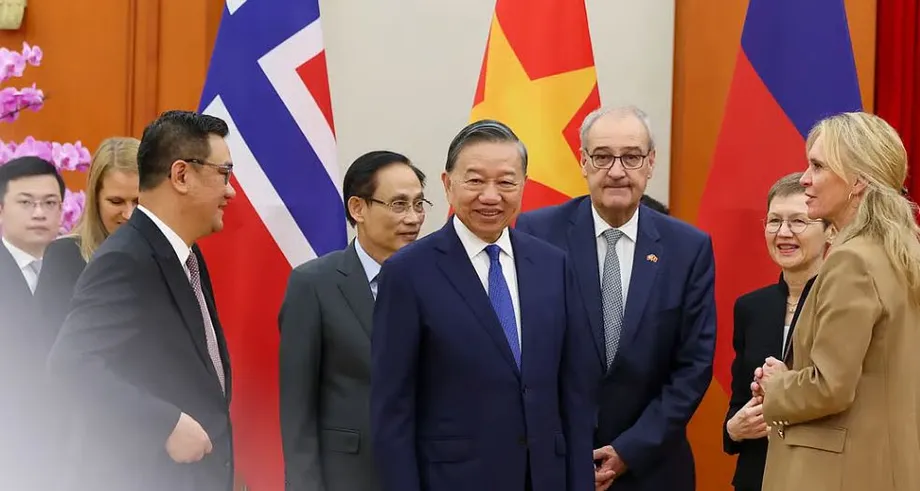
Vietnam and the four members of the European Free Trade Association signed a free trade agreement in Hanoi on October 18, 2026, opening a route to closer industrial cooperation as Vietnamese exporters face new US tariffs. The agreement connects Vietnam with Switzerland, Norway, Iceland and Liechtenstein, building on trade worth €4.8 billion in 2025.
Contents
- A €4.8 Billion Trading Relationship Gets a New Framework
- What the Agreement Covers
- From Years of Negotiations to Business Planning
- Why Vietnam Wants More Export Options
- Precision Orders Require More Than Lower Tariffs
- Better Machines Could Change What Factories Can Make
- Norwegian Shipbuilding Shows the Scale of Existing Ties
- Seafood, Energy and Recycling Broaden the Opportunity
- Turning Market Access Into Work for Local Firms
- Key Points
The commercial opportunity extends beyond selling more clothing, footwear and seafood. Vietnamese manufacturers are looking to supply microchips, specialised electronics, medical devices and precision components to demanding European customers, while gaining access to machinery that could help them produce more valuable goods at home.
Those ambitions come with exacting requirements. Nguyễn Đức Trung, chairman of Vietnam HBT Precise Mechanical JSC, says Swiss partners require precise manufacturing tolerances, records showing where materials originated and data on carbon emissions from machining. For a supplier, winning an order can therefore depend on documenting how a component was made as well as making it accurately.
The signing followed negotiations that began in 2012. Vietnam and EFTA had been preparing the trade agreement while Norway also sought to raise the detention of one of its citizens during the diplomatic visit.
The agreement now gives both sides a framework for expanding trade and investment. An entry into force date and detailed product schedules have not been announced in the accounts of the signing, leaving businesses awaiting the timing and precise conditions for individual tariff benefits.
What the Agreement Covers
EFTA is a trading association whose four members are outside the European Union. The agreement establishes a relationship between those countries and Vietnam, covering reductions or elimination of customs duties on industrial goods, fish and agricultural products, alongside services, intellectual property, trade remedies and sustainable development.
Customs duties are taxes charged when products cross a border. Cutting a duty can reduce the cost of importing a machine or selling a Vietnamese component abroad. Transport expenses, certification costs and business pricing still affect what the customer ultimately pays.
EFTA currently supplies Vietnam with electrical and mechanical machinery, pharmaceuticals and fish. Vietnam sells machinery, footwear and apparel to the four European countries. The agreement is expected to expand those established flows while creating opportunities for more specialised production.
For Vietnamese companies, preferential access means qualifying products can receive more favourable customs treatment. Rules of origin determine which goods qualify, including products made with materials or parts imported from elsewhere. A factory must meet those rules and keep the necessary records to claim the benefit.
From Years of Negotiations to Business Planning
Vietnam and EFTA reached the signing after a lengthy negotiating process interrupted by a prolonged pause. The sequence also shows how quickly business discussions followed the diplomatic agreement:
- 2012: Formal negotiations began.
- 2018: Talks stalled.
- September 2025: Negotiations resumed.
- July 2026: Negotiations concluded.
- October 18, 2026: Vietnam and EFTA signed the agreement in Hanoi.
- October 29, 2026: More than 100 business representatives, policymakers and experts gathered at the Nordic Business Summit in Ho Chi Minh City.
The summit brought the discussion closer to investment projects, supplier relationships and employment. NordCham Vietnam, which organised the event with Nordic embassies and Vietnamese partners, has a network of 196 member companies.
Thue Quist Thomasen, chairman of NordCham Vietnam, said businesses had a role in turning diplomatic commitments into economic results. His examples included investment projects, cooperation agreements, stronger supply chains and new jobs.
The Nordic business network is broader than EFTA. Denmark, Finland and Sweden participated in the summit alongside Norway, while EFTA also includes Switzerland, Iceland and Liechtenstein. The event connected the new trade agreement with a wider discussion of cooperation between Vietnam and northern Europe.
Why Vietnam Wants More Export Options
Vietnam is pursuing the agreement as new US tariffs put pressure on exports to the American market, despite continuing bilateral negotiations. Expanding access elsewhere gives manufacturers more potential customers and reduces dependence on any single destination.
A Vietnamese government statement described the shared aim of Vietnam and its EFTA partners:
reinforce the rules-based trading system amid continued volatility in the global economy.
For a factory, a trading system based on agreed rules offers a framework for calculating customs costs, organising shipments and resolving disputes. Greater predictability can make it easier to decide whether to buy equipment, train workers or negotiate a supply contract.
Vietnam also wants a larger role in the production chains that connect factories across countries. Its ambition is to move from assembling goods designed elsewhere towards making specialised components and developing stronger domestic engineering capabilities. Access to additional markets and better equipment supports that goal, while US tariff pressure adds urgency.
Precision Orders Require More Than Lower Tariffs
EFTA markets offer opportunities in products where accuracy and reliability carry substantial value. Microchips, medical devices, specialised electronic equipment and engineered components demand consistent production rather than simply large volumes at low cost.
Specialists at the Centre for WTO and International Trade under the Vietnam Chamber of Commerce and Industry identify tariff reductions as a potential cost advantage for Vietnamese industrial goods. They also point to strict origin rules and technical standards, including requirements for precision measured in micrometres. A micrometre is one thousandth of a millimetre.
Nguyễn Đức Trung describes the practical demands facing a company exporting aluminium profiles and machine components. Swiss customers may ask for tightly controlled dimensions, transparent material records and emissions data from the machining process. Each requirement adds work in measurement, record keeping or production management.
Trung says gaining approval as a supplier can help a business face less pressure to compete mainly on price. Once a customer depends on a component meeting an exact specification, dependable quality becomes a central part of the commercial relationship.
For Vietnamese firms, the opportunity is therefore tied to preparation. Equipment must produce the required dimensions repeatedly, workers must verify the results, and records must allow customers to trace materials through production.
Better Machines Could Change What Factories Can Make
Trương Thị Chí Bình, vice chairwoman and secretary general of the Vietnam Association for Supporting Industries, identifies access to core manufacturing technologies as a major potential benefit. She singles out advanced computer numerical control machining systems, commonly called CNC systems.
CNC machines use programmed instructions to cut and shape materials accurately. More capable systems can help a factory make complex components consistently, expanding the range of orders it can accept. Skilled programmers, operators and maintenance workers are needed to turn that equipment into reliable production.
High import tariffs have made European machinery expensive for some Vietnamese suppliers, contributing to reliance on older equipment or machinery bought through secondary markets. Expected tariff removal on specialised machinery and other technologies could make newer systems more affordable.
Bình argues that mastering production with advanced equipment is essential if Vietnamese companies are to gain more control over manufacturing. She also expects modern production lines and EFTA investment in automation and greener logistics to increase competition, pushing suppliers to standardise processes from incoming materials to final machining.
Vietnam is pursuing industrial learning through other European partnerships too. A separate metro train assembly plan involving Vingroup and France's Alstom envisages assembling 117 of 200 trains in Vietnam with technology and equipment support. Both initiatives place practical manufacturing skills at the centre of industrial development.
Norwegian Shipbuilding Shows the Scale of Existing Ties
VARD, a Norwegian maritime group operating in Vietnam since 2006, provides a concrete example of industrial cooperation already under way. It employs more than 2,500 people in Vietnam, including contractors, and expanded capacity at its Vung Tau shipyard in 2024.
The yard increased its capacity from four vessels to seven at any given time. That is an increase of three vessels, or 75%, in the number it can accommodate simultaneously. VARD also established a design and engineering centre in Ho Chi Minh City and plans to expand its team to more than 40 engineers.
Norwegian Ambassador to Vietnam Stein Iversen cited VARD when discussing the conditions needed for sustained investment:
The experience of companies such as VARD illustrates the importance of a stable and supportive business environment for long-term investment,
Iversen identified transparent regulations, predictable licensing and approval procedures, consistent policy implementation, skilled workers and reliable partners as factors influencing investment decisions. Improved market access can help a company plan, while those local conditions shape whether a project is commercially workable.
For Vietnamese suppliers, maritime cooperation can include components, fabrication, engineering and maintenance. Meeting technical specifications, quality requirements and delivery dates would allow more local businesses to participate in the work surrounding a shipyard.
Seafood, Energy and Recycling Broaden the Opportunity
Iversen identified seafood and aquaculture, maritime industries, renewable energy and the circular economy as areas where Norwegian capabilities could complement Vietnam's development priorities. The circular economy means keeping materials in use through collection, reuse and recycling rather than discarding them after one use.
Seafood cooperation could stretch from processing fish to producing feed, managing fish health, supplying aquaculture technology and operating refrigerated transport and storage. Vietnam could also process Norwegian mackerel before exporting the finished products to other markets.
Such arrangements link several businesses around one product. Refrigerated storage protects the fish, processing adds value, and transport connects the finished goods with customers. Vietnamese firms could compete for roles at several points rather than relying on a single export transaction.
Iversen described his view of the opportunity:
I believe the real opportunity is to build value chains together, combining Norwegian technology and expertise with Vietnamese industrial capacity, skills and local knowledge. That can help Vietnamese companies move further into higher-value activities while making Norwegian operations in Viet Nam more locally integrated and competitive.
The ambassador also cited TOMRA's deposit return system as technology relevant to resource use and waste management. These systems attach a refundable deposit to packaging, encouraging people to return it for collection. Cooperation could involve adapting such technology to Vietnamese operating conditions and developing services around it.
Turning Market Access Into Work for Local Firms
Ho Chi Minh City Vice Chairman Bui Minh Thanh told the Nordic Business Summit that Vietnam wanted growth supported by stronger technology, a more capable workforce and greater participation in international production networks. He called for cooperation that includes technology transfer, knowledge sharing and local capability development.
For city authorities, that means looking beyond the amount of investment announced. Local businesses need opportunities to supply projects, workers need relevant training, and approval procedures need to function predictably if investment is to support the wider economy.
Đỗ Phước Tống, a representative of the HCM City Association of Mechanical - Electrical Enterprises, sees potential for component suppliers to earn margins that support their own research and development. He describes EFTA business relationships as an opportunity to compete through quality in a transparent commercial environment.
The agreement brings those ambitions together: more customers for Vietnamese products, better access to specialised machinery, and closer relationships with companies that need dependable local suppliers. The next practical work lies in customs preparation, production upgrades, worker training and contracts that turn those possibilities into orders.
Key Points
- Vietnam and EFTA signed a free trade agreement in Hanoi on October 18, 2026, following negotiations that began in 2012.
- EFTA comprises Switzerland, Norway, Iceland and Liechtenstein. Trade with Vietnam reached €4.8 billion in 2025.
- The agreement covers goods, services, intellectual property, trade remedies and sustainable development.
- Vietnamese suppliers see opportunities in precision components, electronics, medical devices and access to advanced machinery.
- Origin records, technical accuracy, quality control and emissions information are important requirements for prospective suppliers.
- Norwegian cooperation could expand across shipbuilding, seafood, renewable energy and recycling technologies.
- Businesses are awaiting an entry into force date and detailed conditions for individual tariff benefits.