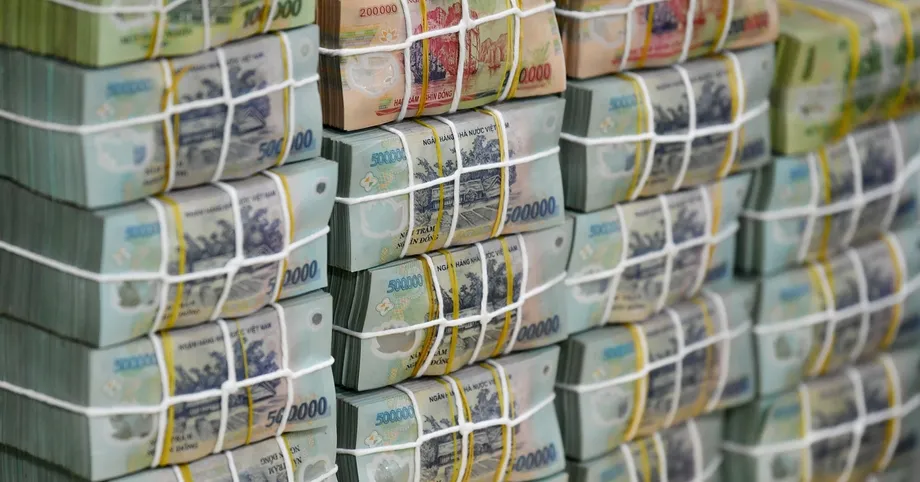
A bigger budget built around faster growth
Vietnam's Ministry of Finance projects state budget revenue of 3,334.3 trillion dong and spending of 4,074.3 trillion dong in 2027, with development investment taking about 43% of expenditure. The planned deficit of roughly 740 trillion dong, equivalent to 4.5% of gross domestic product, would help finance a push for economic growth of at least 10%.
Contents
- A bigger budget built around faster growth
- Where the 2027 revenue would come from
- The 2026 figures need careful comparison
- Investment gains a larger share
- Railways and airports lead the infrastructure agenda
- Local budgets would handle more than half of spending
- A larger deficit means greater borrowing pressure
- Growth assumptions leave little room for delays
- Spending the money is a major test
- Savings, reserves and the budget timetable
- Key Points
The proposed shift is substantial: development investment would receive about 1,756 trillion dong, while regular spending, including salary reform, would total 2,061.3 trillion dong. Investment would gain a larger share of the budget even as the government seeks savings to fund urgent projects and social welfare.
Finance Minister Ngo Van Tuan presented the budget proposals to the second session of the 16th National Assembly. The plan combines higher infrastructure spending with continued tax support for businesses, while parliamentary scrutiny has focused on whether revenue forecasts are realistic and whether agencies can spend their allocations effectively.
The central challenge is practical. Vietnam plans to collect more money, borrow more and accelerate construction, yet officials have identified delays involving procedures, land clearance and rising material prices. Parliament's Economic and Finance Committee has also questioned revenue expectations tied to land and the large amount of spending left to complete late in 2026.
The figures remain budget proposals rather than completed results. No final approval date is specified. Several headline figures for the 2026 comparison also conflict, making the detailed revenue breakdown and the distinction between an original budget and an updated estimate especially important.
Where the 2027 revenue would come from
Domestic revenue is forecast at 2,949.5 trillion dong, up 10% and accounting for 88.5% of total revenue. This would make taxes and other receipts collected within Vietnam the main foundation of the budget, consistent with the government's aim to reduce dependence on external revenue sources.
Revenue from imports and exports is projected at 531 trillion dong, up 6%. Crude oil would contribute 52 trillion dong, based on an assumed oil price of about $75 per barrel and planned production of 8.5 million tonnes. Aid revenue is forecast at 9 trillion dong.
Value added tax refunds are estimated at 207.2 trillion dong. A refund returns tax money to eligible businesses, so it reduces the amount the government keeps. Adding domestic revenue, trade revenue, crude oil receipts and aid, then subtracting those refunds, produces the ministry's total of 3,334.3 trillion dong.
The revenue plan reflects current tax policies and continued exemptions and reductions intended to support production and business. The government says approximately 360 trillion dong in tax exemptions, reductions and payment extensions were implemented in 2026. Payment extensions give taxpayers more time to pay, while exemptions and reductions lower the amount owed.
The 2026 figures need careful comparison
The ministry's projected 9.1% revenue increase is consistent with an estimated 2026 total of 3,055.7 trillion dong, the figure cited in Deputy Prime Minister Pham Gia Tuc's presentation. Finance Minister Ngo Van Tuan's parliamentary presentation gives a conflicting 2026 estimate of more than 3,450 trillion dong, alongside the same claims that revenue exceeded the original budget by 20.8% and rose 14% from 2025.
The difference matters: 3,334.3 trillion dong represents growth from 3,055.7 trillion dong, but a decline from more than 3,450 trillion dong. The presentations leave that discrepancy unresolved.
The ministry's forecast puts the increase in 2027 spending over the original 2026 budget at 915.2 trillion dong, while the parliamentary presentation gives 925.2 trillion dong. Both describe a large expansion, but the precise comparison requires reconciliation.
For 2026 expenditure, the government estimates nearly 3,680 trillion dong, or 116.4% of the original budget, and an increase of 11% from 2025. An original budget is the amount planned before the year begins; an estimated result is an updated assessment of what will actually be collected or spent. Keeping those measures separate helps explain why different comparisons can produce different growth rates.
Investment gains a larger share
Development investment is projected to rise from 35.5% of total spending in the 2026 budget to about 43% in 2027, an increase of 7.5 percentage points. Regular spending would fall from 57.3% to 50.6% of the total.
Regular spending pays for continuing public services and government operations, including salaries. Development investment finances assets and projects intended to serve the economy over time. The proposed change directs more of each budget dong toward investment while retaining a large allocation for services, welfare, security and salary reform.
Central budget development investment would total 757.2 trillion dong, an increase of 287.2 trillion dong from the 2026 budget. Within that amount, public investment would receive 690 trillion dong, up 260 trillion dong from a baseline of 430 trillion dong. That is an increase of about 60.5%.
The remaining 67.2 trillion dong in central development investment would cover other purposes. Tuan identified investment support, subsidies for the Nghi Son project, additional charter capital for certain enterprises and banks, and related tasks. Charter capital is the money owners commit to an enterprise or bank to support its operations.
Railways and airports lead the infrastructure agenda
The government's named infrastructure priorities include the Lao Cai-Hanoi-Hai Phong railway, the North-South high-speed railway, and the Long Thanh and Gia Binh international airports. Completing the expressway network is another priority within the development agenda for 2026 to 2030.
These projects connect the budget to a concrete economic goal: improving the movement of people and goods. The 690 trillion dong central public investment allocation is intended to concentrate resources on nationally important projects and tasks that support growth.
Deputy Prime Minister Pham Gia Tuc also warned against local authorities pursuing similar projects without sufficient coordination. Describing the government's concern about duplication and waste, he said:
We must resolutely address the situation where localities invest in airports, seaports, data centers, and free trade zones based on trends, leading to duplication, dispersion, and waste of resources,
Parliament's Economic and Finance Committee has asked the government to review the project list against national strategy, planning and development priorities. It called for funding to go only to projects that meet the required conditions, with allocations following the prescribed criteria and order of priority.
Local budgets would handle more than half of spending
Local budget expenditure is projected at 2,118.6 trillion dong, compared with central budget spending of 1,955.7 trillion dong. Local budgets would therefore account for about 52% of the combined total, placing much of the responsibility for delivering the spending plan with provinces and cities.
Local development investment would receive 998.8 trillion dong, while local regular expenditure would total 1,080.3 trillion dong. At the central level, regular expenditure is projected at 980.9 trillion dong, an increase of 120.5 trillion dong from 2026.
The government has also proposed sharing four taxes across four groups of localities: corporate income tax, personal income tax, special consumption tax and environmental protection tax. The proposal is framed around the State Budget Law and Central Committee Conclusion No. 18, with the aim of preserving central resources for national tasks while giving local governments room to manage development.
Phan Van Mai, chairman of the National Assembly's Economic and Finance Committee, said central budget revenue remained below 50% of total state revenue, with no improvement from the 2021 to 2025 period. His committee requested an explanation of the proposed sharing rates and an assessment of how they would affect local financial independence, transfers to the centre and central support for local budgets.
A larger deficit means greater borrowing pressure
The projected deficit of about 740 trillion dong is the gap between the planned revenue and spending totals. The ministry's more detailed breakdown assigns 588.8 trillion dong to the central budget and 150.8 trillion dong to local budgets.
At 4.5% of GDP, the planned deficit would exceed the government's estimated 2026 result of 4.1%, or 598.8 trillion dong, by 0.4 percentage points. Against the separate 2026 budget assumption of 4.2%, the increase would be 0.3 percentage points. The cash increase from the estimated 2026 result would be about 141.2 trillion dong.
Public debt is projected at 34% to 35% of GDP by the end of 2027, compared with 33% to 34% at the end of 2026. Government debt is forecast at 33% to 34%, while national external debt would be 30% to 31%. National external debt measures borrowing owed abroad across the economy, a different category from public debt.
The government plans to manage borrowing risks, repay obligations on time and improve the use of borrowed funds. It has also identified a financing constraint: borrowing needs are rising while the ability to borrow from state treasury funds is limited and the domestic capital market remains small. That puts greater weight on both financing arrangements and the economic returns from new investment.
Growth assumptions leave little room for delays
The budget assumes GDP growth of at least 10%, GDP per person of about $6,100 and inflation of around 4.5%. Revenue would equal approximately 20.2% of GDP, compared with an estimated 20.8% in 2026.
Deputy Prime Minister Tuc said the Central Committee had agreed on 45 key targets for 2027. They include export growth of 15%, import growth of 12%, growth in retail sales and consumer service revenue of 14%, social investment equivalent to 36% to 38% of GDP, and labour productivity growth of 8.6%.
Social investment includes investment across the economy, beyond government spending. Labour productivity measures how much output workers produce. The targets link the budget's construction push to broader expectations for business activity, consumption and more productive work.
Vietnam's economy grew 9.01% in the first nine months of 2026, while inflation reached 4.52%, close to the 4.5% annual objective. During that period, 24 of 34 localities recorded growth below their annual targets. For 2027, 30 of the 34 localities are targeting growth of at least 10%.
The government has identified high lending interest rates, difficulty obtaining credit for smaller businesses and external pressure on currency markets as challenges. Tuc's presentation also tied the growth agenda to Resolution No. 57-NQ/TW on science and technology and Resolution No. 71-NQ/TW on education and training.
Spending the money is a major test
Public investment disbursement reached 62.9% of the annual allocation by the end of September 2026. Although the government described that performance as stronger than in comparable periods of earlier years, its objective remained to use the full allocation by year end.
Total budget spending presented a sharper timing challenge. Expenditure after nine months stood at 59.3% of the original budget, while the estimated result for the whole year was 116.4%. Reaching that estimate would require another 57.1% of the original annual budget to be spent in the final quarter, almost as much as in the first nine months combined.
The Economic and Finance Committee asked officials to explain why substantial central funds remained without detailed allocations or had not yet been assigned. It called for faster allocation, stronger expenditure control and a closer connection between funding and actual results.
Land revenue is another concern. Mai said receipts from land use charges were expected to exceed the 2026 budget by about 35%, making an important contribution to local spending. With the property market showing signs of weakness, the committee requested a careful review of those forecasts. Local authorities relying on that income could face pressure if receipts fall short.
Savings, reserves and the budget timetable
The proposed budget includes about 30 trillion dong in reserves to protect national financial security. Agencies are also instructed to set aside savings when allocations are first made: 5% of public investment spending for key and urgent projects, and 10% of regular spending for social welfare, apart from savings designated for salary reform.
For public workers, salary reform remains part of regular expenditure. The 2026 policy account includes an 8% basic salary increase from July 1 and an increase in the stated allowance rate for commune officials and civil servants from 25% to 55%. The government has acknowledged continuing differences in salary and allowance payments among public sector groups and agencies.
The main stages described in the budget process are:
- July 1, 2026: The basic salary increase takes effect under the policies described for 2026.
- End of September 2026: Public investment disbursement reaches 62.9%, while total budget spending reaches 59.3% of the original budget.
- October 16, 2026: Deputy Prime Minister Pham Gia Tuc presents the development and budget outlook at a national conference on the Central Committee resolution.
- December 17, 2026: Finance Minister Ngo Van Tuan presents the budget and public investment proposals to the National Assembly.
- End of 2027: The government projects public debt at 34% to 35% of GDP.
For residents and businesses, delivery will depend on whether those allocations become completed transport links, reliable public services and timely welfare support. The parliamentary review focuses on the immediate requirements: credible revenue estimates, projects ready for funding and tighter control over spending.
Key Points
- Vietnam projects 2027 revenue of 3,334.3 trillion dong and expenditure of 4,074.3 trillion dong.
- Development investment would receive about 1,756 trillion dong, or 43% of spending, up from 35.5% in the 2026 budget.
- Central public investment would rise to 690 trillion dong, an increase of 260 trillion dong.
- The planned deficit is about 740 trillion dong, equivalent to 4.5% of GDP.
- Public debt is forecast at 34% to 35% of GDP by the end of 2027.
- The plan assumes economic growth of at least 10% and inflation of around 4.5%.
- Parliamentary scrutiny centres on revenue forecasts, land receipts, allocation delays and the readiness of investment projects.
- Conflicting 2026 revenue totals and spending comparisons require reconciliation.