A pension proposal reaches workers outside standard employment
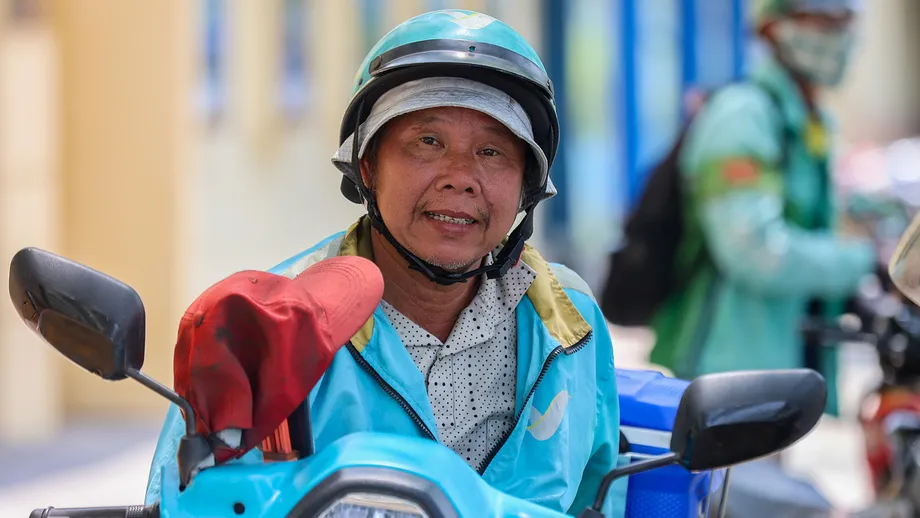
Vietnam is considering mandatory social insurance for workers outside conventional employment relationships, including drivers working through digital platforms, as authorities confront a striking gap in retirement protection. Social insurance figures cited by Ho Chi Minh City authorities put the number of app drivers nationwide at about 600,000, with only around 700 participating in voluntary social insurance.
Contents
- A pension proposal reaches workers outside standard employment
- What would change for platform workers?
- Why drivers worry about the bill
- Long hours and road risks sharpen the debate
- How many workers could be affected?
- Why the parliamentary committee wants clearer rules
- The legislative dates and wider reform package
- A wider plan also examines sharing the cost
- The bill also changes where pension funds can be deposited
- Key Points
Those figures suggest participation of roughly 0.12%, or about one driver in every 860. For workers who spend much of their day carrying passengers or delivering goods, the proposal could create a route toward pension coverage. The central financial question is how contributions would be divided among drivers, platform companies and the state.
The government presented the proposed amendment to the Law on Social Insurance to the National Assembly on October 21. It would allow mandatory coverage to extend to people without standard employment relationships who have stable, regular work and income. The draft leaves eligibility, contribution amounts, responsibility for payment and the starting date unsettled.
Lawmakers examining the bill support wider protection in principle, but want a clearer definition of the workers affected and a workable timetable. Drivers, meanwhile, face an immediate concern: a pension contribution can be difficult to sustain when fuel, platform charges, taxes and other expenses already consume a substantial part of their earnings.
What would change for platform workers?
Most app drivers currently sign cooperation agreements with platform operators and are treated as partners rather than employees. Under those arrangements, they generally remain outside mandatory social insurance and must join voluntarily to build eligibility for a pension.
The proposed change to Clause 6 of Article 2 of the 2024 Law on Social Insurance would give the National Assembly Standing Committee authority to decide on mandatory participation for workers without conventional employment relationships, including people working through digital platforms. The government would submit proposals, with implementation adjusted to socioeconomic conditions.
Social insurance works by collecting contributions during working life to finance benefits under the rules of the scheme. A pension provides income after retirement. Making participation compulsory would bring eligible workers into a required contribution system, rather than leaving enrollment entirely to their individual choice.
The government's proposed test of stable and regular work matters because platform work covers different circumstances. Some drivers depend on it as their main occupation, while others use it for additional income. Defining that test would determine who must contribute and which workers continue to rely on voluntary arrangements.
Why drivers worry about the bill
Voluntary social insurance contributions currently equal 22% of the income a participant selects as the contribution base. That base is the amount used to calculate the payment, rather than necessarily the person's actual monthly earnings.
A survey involving labor organizations and Oxfam found that app motorbike drivers earned an average of about 7 million dong a month, although most worked between six and 12 hours a day. Drivers also said that platform charges, taxes and fees took about 25% to 35% of revenue, before fuel costs.
A contribution calculated on a base of 7 million dong would be 1.54 million dong a month under the voluntary scheme's 22% rate. This is an illustration using the stated rate and income figure; drivers choose their contribution base under the applicable rules. The draft has yet to set a rate for the proposed mandatory coverage.
Drivers say they want pension protection but worry about paying for it without a contribution from platform operators. Their concern is especially pressing when income changes from month to month while essential household expenses continue.
Tran Thi Dieu Thuy, deputy head of the Ho Chi Minh City National Assembly deputy delegation, has proposed a contribution arrangement involving three parties: drivers, platform operators and the state. Such an arrangement would distribute the cost across the worker, the business connected to the work and public funds.
Long hours and road risks sharpen the debate
A survey of 141 drivers working for Grab, Green SM and BEE found that 93.6% considered app driving their main job. Some 46.1% worked eight to 10 hours daily, while 35.5% regularly worked more than 10 hours. Together, those groups accounted for 81.6% of respondents.
The same survey found that 73.8% had experienced at least one traffic collision or accident. More than 65% said they had encountered scams, robbery or harassment while working. These experiences make social protection a concern during working life as well as after retirement.
Phung Thai Quang, vice president of the Ho Chi Minh City Federation of Labour, said 92.9% wanted their occupation and legal status defined more clearly. Another 87.9% wanted a mechanism allowing access to social insurance and financial or other support.
Insurance arrangements were also limited. Some 73.4% relied only on household health insurance or trade union support, while many lacked insurance coverage. Health insurance helps with medical expenses; social insurance provides income benefits under its own eligibility rules. Drivers can therefore have help with healthcare while still lacking a pension contribution record.
Nguyen Duc Loc, director of the Institute for Social Life Studies, cited a separate survey of 400 drivers, divided equally between car and motorbike drivers. It found working hours rising without a corresponding increase in income. He also called for greater transparency in payment and expense arrangements between drivers and platforms.
How many workers could be affected?
A workshop in Ho Chi Minh City heard an estimate of about 400,000 drivers and delivery workers operating through technology platforms in the city. The nationwide figure cited by city authorities was about 600,000 app drivers. The city estimate includes delivery workers, giving it a broader occupational description than the national driver count.
The Ho Chi Minh City Social Security Agency has called for research into driver numbers, working arrangements, incomes and participation in social, health and unemployment insurance. Those details would help authorities identify eligible workers and calculate a contribution structure that people can sustain.
Nguyen Quoc Thanh, the agency's deputy director, described the policy task as preserving the flexibility of platform work while expanding access to protection. The agency also urged closer coordination among public authorities, platform companies and organizations representing workers.
For a driver, the practical result would depend on the rules adopted: whether their work meets the eligibility test, how the contribution is calculated and how much of the payment they personally owe. Those decisions would turn a broad promise of coverage into a specific monthly obligation and entitlement.
Why the parliamentary committee wants clearer rules
The National Assembly's Committee on Culture and Social Affairs broadly supports expanding coverage to protect labor and social welfare rights. Its chairman, Nguyen Dac Vinh, presented the committee's assessment on October 21, warning that the proposed category of workers was too broad for practical implementation without further assessment.
The committee asked the government to follow Conclusion No. 276 of the National Assembly Standing Committee and specify both the people covered and the implementation date. It also called for careful consideration of the effects on the workers expected to participate.
If eligibility and timing cannot be defined, or agreement with affected groups cannot be reached, the committee recommended addressing the issue during a comprehensive revision of the Law on Social Insurance. It said existing provisions already covered cases raised by the government, making the purpose and scope of the amendment another issue requiring explanation.
Interior Minister Nguyen Tien Hai said the Government Party Committee was preparing a new resolution on wages and social insurance. Detailed provisions on expanding coverage would be developed after the Party Central Committee approved that resolution. The proposal therefore involves both parliamentary scrutiny and a wider policy process.
The legislative dates and wider reform package
The driver proposal sits within a broader effort to amend the 2024 Law on Social Insurance. Government Submission No. 865/TTr-CP, dated October 7, 2026, sets out 11 principal areas of proposed changes concerning insurance and pension policies, intended to improve consistency and implementation.
The legislative schedule identifies several stages:
- October 7, 2026: The government submission setting out the proposed amendment package was dated.
- October 21: The draft amendment and the parliamentary committee's assessment were presented to the National Assembly.
- November 9: The bill was scheduled for National Assembly debate.
- November 21: The bill was scheduled for consideration for passage.
The November dates concern parliamentary consideration of the bill. The date on which drivers would begin participating would depend on the implementation arrangements eventually adopted, including decisions about eligible workers and contributions.
For workers and platforms, the most consequential part of the process is the move from broad coverage language to precise payment rules. A requirement to join would affect household budgets and platform operating costs, so the division of responsibility is central to the committee's request for a more workable proposal.
A wider plan also examines sharing the cost
A government action plan signed by Deputy Prime Minister Pham Thi Thanh Tra also calls for research into dividing social insurance contributions among the state, workers and digital platform companies, including businesses providing ride booking and app taxi services.
The plan seeks a largely comprehensive social protection system by 2030, combining several layers of support and using digital administration. By 2045, it aims to approach the standards of developed countries with high incomes, including sustainable financing, transparent management and the ability to respond quickly to new risks.
For people with low incomes, the plan calls for more flexible insurance packages, contribution levels, payment periods and participation methods, alongside suitable financial support. It also raises extending occupational accident insurance and maternity benefits to workers in the informal economy, where many people work outside standard employment arrangements.
The plan connects protection during working life with care in old age. It calls for trials of insurance for long term care in selected localities, with financial assessments before wider expansion. Healthcare attention for older people would initially focus on those aged 75 and above, then gradually extend to those aged 65 and above.
These measures place the driver contribution debate within a larger effort to protect people when earnings stop or care needs rise. The practical priorities include essential healthcare, basic income security, help during unemployment or disability, and support for older people.
The bill also changes where pension funds can be deposited
The draft amendment would expand the banks eligible to receive deposits from the social insurance fund. It would include joint stock commercial banks in which the state, state owned enterprises, or both hold more than 50% of charter capital. Banks under special control would be excluded.
Changes to Article 122 would leave the government responsible for detailed criteria and procedures for assessing, selecting and monitoring eligible banks, as well as controlling risk. These provisions concern how accumulated social insurance money is managed while it is held to meet benefit obligations.
The parliamentary committee requested clearer responsibility for the Social Insurance Management Council and the social insurance agency. It wants their roles specified in deciding the fund's investment portfolio, the distribution of money among investments and the methods used, with accountability to the government.
The Standing Committee's principles put safety first, require preservation of the fund, and demand efficiency, transparency and accountability. For contributors, careful fund management matters alongside affordable payments: money collected during working life must remain available to finance benefits when they become due.
Key Points
- Vietnam is considering mandatory social insurance for platform workers and others outside conventional employment relationships who have stable, regular work and income.
- About 700 of an estimated 600,000 app drivers participate in voluntary social insurance, according to figures cited by Ho Chi Minh City authorities.
- The draft leaves worker eligibility, contribution rates, responsibility for payment and the implementation date unsettled.
- A proposal from Tran Thi Dieu Thuy and a wider government action plan both address sharing costs among drivers, platforms and the state.
- The parliamentary committee wants clearer coverage rules and timing, or further consideration during a comprehensive revision of the law.
- The bill was scheduled for debate on November 9 and consideration for passage on November 21.
- Related amendments would expand eligible banks for social insurance deposits while requiring safeguards and clearer accountability for fund management.