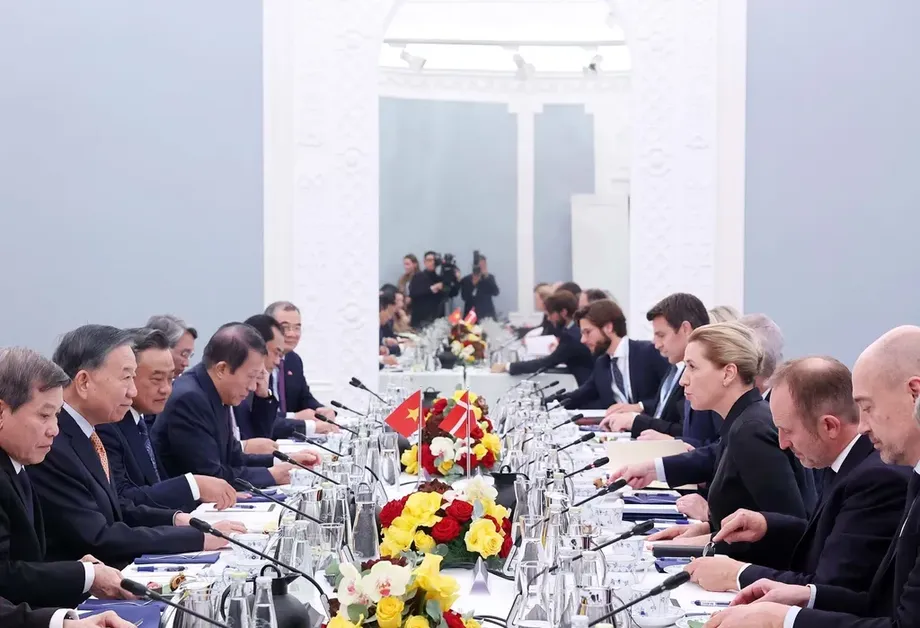
Copenhagen agreement broadens cooperation beyond green energy
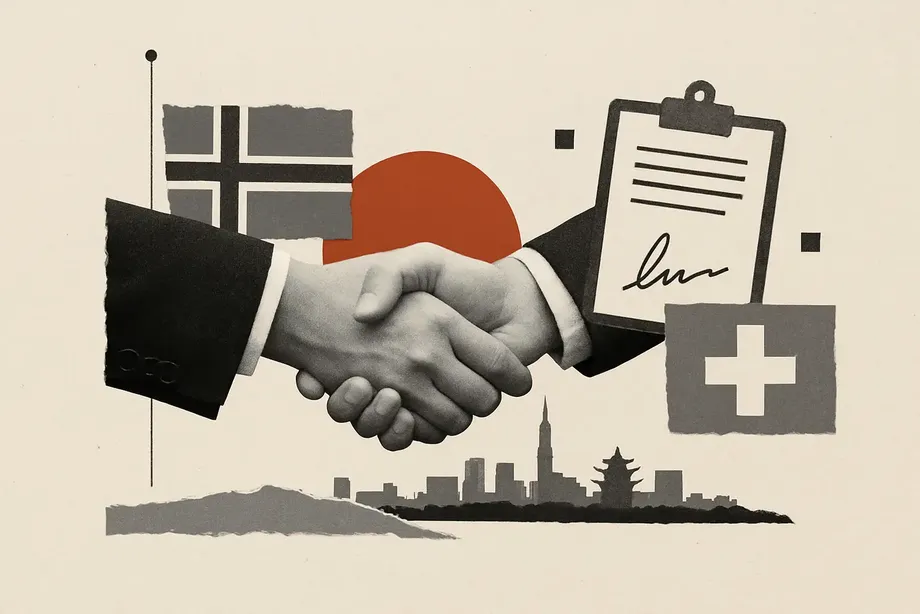
Vietnam and Denmark established a Comprehensive Strategic Partnership in Copenhagen on October 20, 2026, setting out cooperation ranging from offshore wind and artificial intelligence to maritime security, diabetes care and vocational training. Denmark becomes the second European Union member, after France, and the first Nordic country to establish this level of partnership with Vietnam.
Contents
- Copenhagen agreement broadens cooperation beyond green energy
- From diplomatic recognition to a wider partnership
- Trade plans focus on market access and local suppliers
- Danish companies provide a base for further investment
- Offshore wind and finance anchor the energy agenda
- Ports, shipping and possible direct flights
- Maritime security becomes part of the wider relationship
- Research, healthcare and training gain specific priorities
- Community ties and follow-up visits support implementation
- Key Points
Vietnamese Communist Party General Secretary and State President To Lam and Danish Prime Minister Mette Frederiksen agreed to the upgrade during Lam's state visit from October 19 to 21, at the invitation of King Frederik X. Their joint statement took effect upon adoption, in the year marking 55 years of diplomatic relations.
The economic ambitions extend beyond diplomatic language. Danish Foreign Minister Lars Lokke Rasmussen said Denmark aims to become Vietnam's second largest European investor. Lam said more than 10 cooperation documents had been signed, covering areas including science and technology, energy, infrastructure, logistics and industries producing goods and services of greater value.
The partnership brings together several practical goals: helping Vietnamese suppliers join international production networks, attracting more Danish investment, improving transport connections and supporting Vietnam's transition to cleaner energy. It also creates a wider political framework for government agencies, universities, businesses and local authorities to work together.
For residents and companies, the most tangible changes would come through individual projects and agreements: renewable electricity, more efficient ports, training opportunities, stronger healthcare cooperation and easier commercial connections between Southeast Asia and Europe. The leaders directed their ministries and agencies to turn the commitments into concrete work.
From diplomatic recognition to a wider partnership
Vietnam and Denmark established diplomatic relations on November 25, 1971. Vietnamese Foreign Minister Le Hoai Trung recalled that Denmark was among the first Western countries to establish those ties while Vietnam was still at war.
The relationship subsequently moved from traditional development cooperation toward a partnership centred on investment, technology and shared economic interests. The new agreement builds on two earlier frameworks, rather than starting cooperation from scratch.
- November 25, 1971: Vietnam and Denmark established diplomatic relations.
- 2013: The countries established a Comprehensive Partnership.
- 2023: They established a Green Strategic Partnership.
- October 19 to 21, 2026: Lam made a state visit to Denmark.
- October 20, 2026: Lam and Frederiksen adopted the Comprehensive Strategic Partnership in Copenhagen.
The 2023 framework concentrated cooperation on the green transition. The 2026 agreement keeps energy and climate action at its centre while extending the relationship across security, science, health, education and government cooperation.
Political contacts will also expand. The statement calls for more senior visits, continued consultations between the foreign ministries and stronger parliamentary exchanges. Legislators are expected to share experience on laws, monitor bilateral agreements and maintain contacts through committees and parliamentary friendship groups.
Trade plans focus on market access and local suppliers
Vietnam and Denmark identified trade and investment as a central pillar of the partnership. They pledged to remove barriers, increase commercial flows in both directions and support an open international trading system with the World Trade Organization at its centre.
The EU-Vietnam Free Trade Agreement, known as EVFTA, remains the main trade framework. Both governments welcomed its implementation and called on the remaining EU member states to ratify the EU-Vietnam Investment Protection Agreement. That agreement addresses protections for investment, while EVFTA governs trade relations.
Vietnamese supplier networks are a specific priority. A supplier network links the companies providing materials, components and services needed to make and deliver a product. Helping local firms meet the needs of international manufacturers could allow more of the work and income associated with foreign investment to stay in Vietnam.
The countries also want businesses to gain better access to EU and Association of Southeast Asian Nations markets, including for green technologies and environmentally friendly products. Their plans connect research, workforce training and supply chains, rather than treating investment simply as the construction of new factories.
Danish companies provide a base for further investment
LEGO, Maersk, Pandora, Carlsberg and Vestas were named among the Danish companies already operating in Vietnam. Their presence gives the investment agenda a base across manufacturing, shipping, consumer products and renewable energy.
Frederiksen supported Danish businesses expanding their presence through projects using advanced technology, environmentally friendly methods and activities that generate greater economic value. Lam called for stronger policy dialogue and investment promotion to turn the partnership into projects.
Rasmussen's ambition for Denmark to become Vietnam's second largest European investor adds a measurable direction to that agenda. The announcement gave no deadline or investment amount for reaching that position. It also set no numerical target for bilateral trade and no opening dates for new transport routes.
The proposed approach combines foreign investment with stronger Vietnamese businesses. Research partnerships, skills training and supplier development would help connect incoming projects to the wider economy. For companies considering investment, cooperation between ministries and local authorities will be part of putting those plans into practice.
Offshore wind and finance anchor the energy agenda
Denmark pledged to share experience and technology to help Vietnam develop renewable energy, use energy more efficiently and pursue its target of net zero emissions by 2050. Net zero means balancing the greenhouse gases released into the atmosphere with the amount removed.
Lam requested Danish support for improving Vietnam's policy framework, raising green finance and developing large renewable energy projects, particularly offshore wind. Green finance means funding directed toward activities such as clean power, lower emissions and adaptation to climate change.
The discussion links technology to the conditions needed to use it. Offshore wind requires equipment, suitable rules and financing for projects at sea. Cooperation on ports, shipping and workforce skills connects directly to that ambition, because wind projects need transport, installation and maintenance services.
Vietnam also sought support for implementing its Just Energy Transition Partnership, or JETP. A just transition aims to make the move to cleaner energy workable for the people and communities affected by changes in energy production and employment.
The broader cooperation framework identifies the Denmark-Vietnam Energy Partnership Programme and P4G among the mechanisms supporting work on energy and green growth. Both governments also committed to climate adaptation and the circular economy, which seeks to keep materials in use through reuse, repair and recycling.
Ports, shipping and possible direct flights
Vietnam's ports and logistics network form another major part of the agreement. The leaders backed cooperation on seaports, logistics centres, transport infrastructure, greener shipping and corridors connecting production sites with markets.
Logistics is the organisation of moving and storing goods. For a manufacturer, it includes getting components to a factory, keeping stock and delivering finished products to a customer. Better connections could help Vietnamese suppliers participate more effectively in the international production networks targeted by the trade agenda.
The countries agreed to explore cooperation across maritime, air, road and rail transport. They will also encourage airlines to establish direct routes between Vietnam and Denmark, alongside convenient connections to other destinations in Northern Europe.
Those transport plans serve different groups. Freight links matter to exporters and manufacturers, while air connections would serve business travellers, tourists and families. Greener shipping brings the commercial transport agenda together with the countries' climate commitments.
Maritime security becomes part of the wider relationship
The joint statement calls for a bilateral maritime security dialogue and recognises the ASEAN Coast Guard Forum as a platform for regional cooperation. It also supports exchanges on search and rescue, humanitarian assistance and disaster response.
Vietnam and Denmark reaffirmed support for freedom of navigation and overflight, maritime safety and security, and unimpeded trade, including in the South China Sea. They cited the 1982 United Nations Convention on the Law of the Sea, known as UNCLOS, as the legal framework governing activities at sea.
Both governments supported peaceful settlement of disputes without threats or the use of force. They also backed full implementation of the 2002 Declaration on the Conduct of Parties in the South China Sea and progress toward an effective code of conduct consistent with international law.
Denmark expressed readiness, where possible, to support ASEAN efforts on maritime connections and security. Vietnam, meanwhile, offered to serve as a bridge for closer Denmark-ASEAN cooperation. The statement places these commitments alongside stronger coordination at the United Nations, respect for human rights treaties and support for the annual Vietnam-EU Human Rights Dialogue.
Research, healthcare and training gain specific priorities
Artificial intelligence, quantum technology, biotechnology, biomedicine and digital technologies were identified as fields for joint research, practical applications and technology transfer. The countries want universities, research institutes, innovation centres and businesses to develop closer links.
Technology transfer means sharing knowledge and methods so that another organisation can use them in practice. The emphasis on training connects that goal to the people needed to operate new equipment, carry out research and develop products.
Healthcare cooperation includes noncommunicable diseases such as diabetes and hypertension, or high blood pressure. These conditions often require continuing care rather than a single course of treatment. The agreement therefore gives the health agenda specific subjects around which institutions can organise cooperation.
Antimicrobial resistance is another priority. It occurs when microbes become harder to treat with medicines, making infections more difficult to control. The framework identifies the International Centre for Antimicrobial Resistance Solutions, known as ICARS, among the relevant mechanisms for cooperation.
Education commitments include technical and vocational training, alongside the development of highly skilled personnel. Danida Fellowship Centre grants are also identified within the cooperation framework. Agriculture, statistics, smart urban development and exchanges between local governments extend the agenda into the work of public institutions beyond foreign affairs ministries.
Community ties and follow-up visits support implementation
More than 18,000 Vietnamese people live in Denmark. Frederiksen praised the community's integration and contributions to Danish society and to relations between the countries. During the visit, Lam met representatives of the Denmark-Vietnam Friendship Association, embassy staff and Vietnamese communities from Denmark, Iceland and southern Sweden.
Travel arrangements also appear in the statement. The countries will explore an agreement exempting holders of diplomatic passports containing biometric data from visa requirements. They welcomed Denmark's Consulate General in Ho Chi Minh City as another part of their expanding bilateral presence.
A friendship concert in Copenhagen on the evening of October 20 marked the anniversary, with King Frederik X and Queen Mary among those attending. Lam and his delegation also visited the Ny Carlsberg Glyptotek, a museum holding more than 10,000 artworks and historical objects.
Frederiksen accepted Lam's invitation to visit Vietnam. Follow-up work now falls to the ministries, agencies, businesses and other institutions charged with implementing the agreement. The combination of energy projects, supplier development, research links and public services gives them several concrete areas in which to turn the diplomatic upgrade into results.
Key Points
- Vietnam and Denmark adopted a Comprehensive Strategic Partnership on October 20, 2026, in Copenhagen.
- Denmark becomes Vietnam's second EU partner at this level, after France, and its first in the Nordic region.
- Trade priorities include implementing EVFTA, strengthening Vietnamese suppliers and encouraging investment in advanced technology and green industries.
- Energy cooperation focuses on renewable power, offshore wind, green finance and Vietnam's net zero target for 2050.
- The agreement extends to ports, maritime security, research, healthcare and vocational training.
- Lam said more than 10 cooperation documents had been signed, while Denmark expressed an ambition to become Vietnam's second largest European investor.