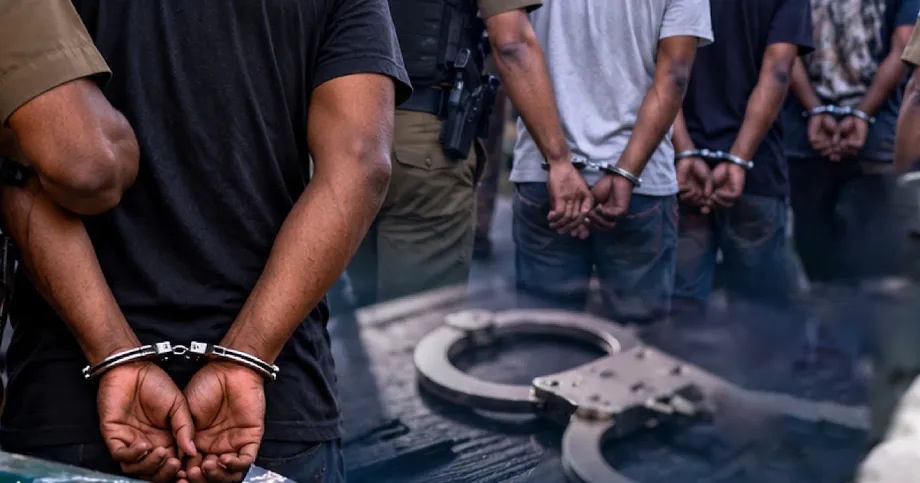
Nearly a year of raids brings arrests, asset probes and rehabilitation referrals
Sri Lankan authorities arrested 300,218 suspects and conducted 303,017 raids between October 30, 2025, and October 18, 2026, Cabinet spokesperson and Health Minister Nalinda Jayatissa said in an update on the nationwide A Nation United campaign. The operation targets drug trafficking, organised crime and illegal firearms, while also pursuing suspected criminal wealth.
Contents
- Nearly a year of raids brings arrests, asset probes and rehabilitation referrals
- How the campaign expanded
- What officers seized and where raids were concentrated
- Why the reporting periods matter
- Children and young adults among those arrested
- Tracing money as well as drugs
- Illegal weapons form another part of the crackdown
- Public tips and efforts to return suspects
- Rehabilitation and legal safeguards
- Key Points
Jayatissa's detailed breakdown included 2,485.1 kilograms of heroin, 3,302.07 kilograms of crystal methamphetamine and 297.1 kilograms of cocaine. Authorities also reported 11,146 kilograms of cannabis, 16.7 million cannabis plants and about 4.5 million narcotic tablets.
The minister put arrests at 300,218 and raids at 303,017; another account of his briefing gave 303,017 as the arrest total. The detailed breakdown, which identifies arrests and raids separately, provides the main figures used here.
Authorities opened investigations into suspected illegal assets involving 449 people, obtained detention orders for 3,749 suspects and referred 2,580 people for rehabilitation. For people caught up in the campaign, those measures involve different processes: police investigation, continued custody or referral for treatment.
Children and young adults also feature in the police figures. A separate update covering the period through October 1 recorded 9,105 arrests among people aged eight to 21, including 11 children aged eight to 14. Human Rights Watch has raised concerns about due process and military involvement in Sri Lanka's drug enforcement, making safeguards for those detained a central part of the story.
How the campaign expanded
A Nation United began on October 30, 2025. Police described its aims as disrupting drug supply, reducing demand and encouraging public participation against narcotics. Successive updates show how the campaign's recorded activity grew:
- October 30, 2025: The nationwide operation began.
- At an earlier update covering nine months: Police reported 239,384 arrests, including 995 people they identified as major drug traffickers.
- October 1, 2026: The police tally for people aged eight to 21 reached 9,105 arrests.
- October 16, 2026: A police media division statement recorded 299,775 arrests and 300,569 searches.
- October 18, 2026: The period covered by Jayatissa's detailed tally ended with 300,218 arrests and 303,017 raids.
The October 16 police update, issued on the Inspector General of Police's instructions, also listed 3,730 people held under detention orders and 2,577 rehabilitation referrals. The later ministerial tally raised those figures to 3,749 and 2,580 respectively. Asset investigations remained at 449.
The difference between the two October updates was 443 arrests and 2,448 recorded searches or raids. Those figures describe activity across the country, with police saying the operation would continue.
What officers seized and where raids were concentrated
Heroin accounted for 97,074 raids, while 18,710 operations targeted crystal methamphetamine, commonly called Ice. Methamphetamine is a powerful stimulant, a drug that speeds up activity in the brain and body and can cause dependence.
Authorities reported another 261 raids involving cocaine and 65,765 operations involving cannabis and cannabis plants. A further 21,323 raids targeted Kush, hashish, narcotic tablets and Mawa. These named categories totalled 203,133 operations, compared with the campaign's stated total of 303,017 raids.
Heroin operations alone represented about 32% of the total raids, calculated from 97,074 out of 303,017. Cannabis operations accounted for roughly 22%. This shows where much of the recorded enforcement activity was concentrated.
Alongside heroin, methamphetamine, cocaine and cannabis, Jayatissa listed 1,723 kilograms of Kush and 416 kilograms of hashish. Kush generally refers to cannabis varieties, while hashish is a product made from cannabis resin. The October 16 police update gave a more precise tablet count of 4,524,927, close to the rounded 4.5 million in the later briefing.
The seizure totals involve different units. Kilograms measure the weight of drugs recovered; plant counts record cultivation; tablet counts record individual pills. Each describes a different part of the supply authorities targeted.
Why the reporting periods matter
Jayatissa also presented drug seizures for January 1 to October 16, 2026, a period beginning two months after the campaign started. Those figures were 1,469 kilograms of heroin, 7,703 kilograms of cannabis, 272 kilograms of cocaine, 857 kilograms of hashish and 1,649 kilograms of crystal methamphetamine.
The minister gave 416 kilograms of hashish for the campaign period and 857 kilograms for January to October 2026, even though the latter falls within the campaign dates. The October 16 police update also listed more than 1,276 kilograms of methamphetamine and more than 515 kilograms of cannabis separately from its larger Ice and cannabis totals. Officials did not explain the scope or classification behind these entries.
Keeping the two reporting periods separate helps readers follow the announcement. The campaign tally covers October 30, 2025, to October 18, 2026, while the calendar year drug figures cover January 1 to October 16, 2026. Adding them would count activity from overlapping months twice.
Children and young adults among those arrested
Police spokesperson Assistant Superintendent F. U. Wootler said 9,105 people aged eight to 21 had been arrested between the campaign's launch and October 1, according to an update published on October 2. The group comprised 8,932 males and 173 females.
Within that total, police recorded 11 children aged eight to 14. The age range is striking because it places very young children within an operation whose stated targets also include major traffickers and organised criminal networks.
An earlier update covering nine months listed 7,866 arrests among people aged 18 to 21 and 743 among children aged 14 to 18. Together, those categories amounted to 8,609 arrests. The later figure covers a broader age range and a longer period.
Families face different needs depending on the circumstances of an arrest. A child taken into custody needs protection and an appropriate legal process; a person experiencing drug dependence may also need medical care. The police age figures bring both issues into focus alongside the campaign's enforcement targets.
Tracing money as well as drugs
Police expanded asset investigations from 378 people in the earlier nine month update to 449 in October, an increase of 71, or about 19%. These inquiries examine whether property or wealth came from suspected unlawful activity.
Authorities said legal proceedings had begun during the first months of 2026 to transfer properties worth approximately 772 million Sri Lankan rupees to the state. Such proceedings seek to take control of assets through the legal system, extending the campaign beyond the drugs found during individual raids.
Wootler's earlier update identified 995 of the 239,384 people arrested as major drug traffickers and said legal action had begun against them. That was about 0.42% of the arrests recorded at that stage. The much larger arrest total covered a wider range of alleged drug offences.
Police valued the earlier heroin seizures, weighing 2,253 kilograms and 834 grams, at approximately 49.584 billion rupees. They valued 2,640 kilograms and 695 grams of Ice at approximately 42.251 billion rupees. Together, the police estimates amounted to 91.835 billion rupees.
The asset inquiries and the identification of major traffickers show two distinct strands of the operation: investigating alleged offences and pursuing the money associated with suspected narcotics networks.
Illegal weapons form another part of the crackdown
Law enforcement agencies seized 987 firearms between January 1 and October 15, 2026, according to Jayatissa. The total comprised 16 T-56 assault rifles, 42 pistols, 28 revolvers and 901 other firearms.
Authorities recovered 2,604 firearms during the full year of 2025, including 74 T-56 rifles and 90 pistols. The figures cover different lengths of time, so the 2026 count represents a partial year alongside a complete year for 2025.
Jayatissa said the government was continuing efforts to recover illegal weapons, arrest armed suspects and drug traffickers, freeze criminal assets and support rehabilitation. The weapons figures place the drug campaign within a broader effort against organised crime.
Public tips and efforts to return suspects
Police said the dedicated hotline 1818 had generated information from the public that helped direct raids and investigations. Wootler said information received through the service was handled confidentially.
The Illegal Assets Investigation Division also invited information about suspected unlawfully acquired wealth through its telephone number, 0112 121 942. The separate contact reflects the division between reporting suspected drug activity and reporting property or money that may be linked to crime.
Authorities said arrangements had been made to secure the return of 35 people to Sri Lanka through efforts involving Interpol Red Notices issued during 2025 and 2026. Further action was being pursued concerning another 94 people. A Red Notice asks police internationally to locate and provisionally arrest a person pending extradition or another legal process.
Police also said 4,553 kilograms and 379 grams of illicit narcotics had been destroyed between 2024 and 2026. That disposal period began before A Nation United, placing the destruction figures within a longer span of enforcement work.
Rehabilitation and legal safeguards
The October briefing recorded 2,580 rehabilitation referrals alongside 3,749 detention orders. Rehabilitation is intended to help people address dependence, while detention orders concern continued custody during a legal process. A referral records entry into a process; treatment completion and recovery require further follow up.
Human Rights Watch's World Report 2026, reviewing events in 2025, recorded more than 120,000 arrests for drug possession between January and August that year. Those arrests preceded the October launch of A Nation United.
The organisation described the government's broader organised crime crackdown as involving drug and weapon seizures and the extradition of prominent suspects. It also raised concerns about military involvement in law enforcement and due process in arrests for drug possession. Due process means that authorities must follow fair legal procedures when investigating and holding someone.
Jayatissa's update concentrated on arrests, seizures, detention orders, asset investigations and rehabilitation referrals. It gave no totals for convictions, completed asset transfers or completed treatment. Those outcomes would show what happened after police action and referral, including how cases ended and whether people received sustained care.
Key Points
- Jayatissa's detailed tally recorded 300,218 arrests and 303,017 raids from October 30, 2025, to October 18, 2026.
- The campaign reported seizures including 2,485.1 kilograms of heroin, 3,302.07 kilograms of crystal methamphetamine and about 4.5 million narcotic tablets.
- Authorities opened asset investigations involving 449 people, obtained 3,749 detention orders and made 2,580 rehabilitation referrals.
- Police recorded 9,105 arrests among people aged eight to 21 through October 1, including 11 children aged eight to 14.
- Authorities reported 987 firearms recovered from January 1 to October 15, 2026.
- Human Rights Watch raised concerns about due process and military involvement in drug enforcement.