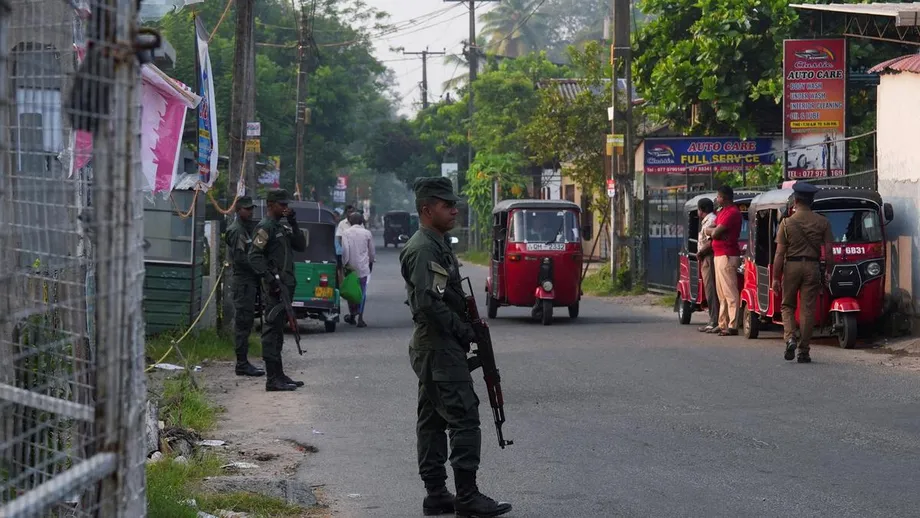
Seventeen Years After War, Land and Livelihoods Remain Restricted
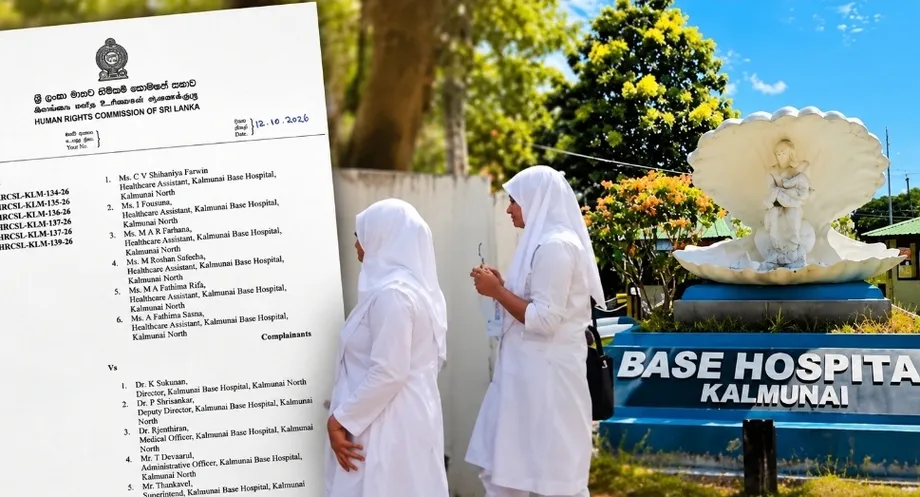
Sri Lanka's Human Rights Commission has called for the faster return of land occupied by the military in the Tamil majority north and east, saying militarisation continues 17 years after the civil war ended in 2009. Its findings describe a military presence that still affects where people can live, how they earn money and their dealings with civilian authorities.
Contents
- Seventeen Years After War, Land and Livelihoods Remain Restricted
- Why Ownership Documents Have Become a Dispute
- National Security and the Reach of State Agencies
- Military Roles Extend Into Farms and Preschools
- Surveillance Shapes the Search for Justice
- Mass Graves and Displacement Remain Unresolved
- How the Commission Reached Its Findings
- A Dispute Spanning Decades
- Key Points
The commission's report, The Human Rights Situation of the Northern and Eastern Provinces of Sri Lanka, identifies continuing land appropriation, restrictions on traditional livelihoods and intimidation. It urges the government to restore property rights and people's ability to support themselves, alongside releasing occupied land.
The Human Rights Commission of Sri Lanka, the national rights body, describes the conduct affecting communities in the former conflict zone in these terms:
sustained pattern of land appropriation, denial of access to traditional livelihoods, and intimidation of local populations
The findings sit alongside a government account of substantial progress. Defence Ministry representative Brigadier Franklin Joseph said more than 90% of land previously controlled by the military had been returned. Tamil lawmaker Thurairasa Ravikaran, who represents Mullaitivu for Ilankai Tamil Arasu Kadchi, said significant areas remained under the military and other state agencies.
The two positions leave residents facing a practical problem: even after extensive releases, families whose property remains occupied still need a way to recover it. The commission's recommendations address both the land itself and the wider role of security institutions in civilian life.
Why Ownership Documents Have Become a Dispute
President Anura Kumara Dissanayake, who also serves as defence minister, instructed security forces in August 2026 to accelerate the return of land occupied during the war that was no longer needed for security purposes. Tamil speaking residents have expressed concern about the pace of implementation.
Joseph said some cases remained under review because owners had not been identified or documents establishing ownership were missing. Ravikaran objected that requiring land documents from families who fled during the war was unfair. Displacement can leave a family separated from both its home and the records needed to reclaim it.
The figures given here do not include a total area for the military's former holdings, the acreage still occupied or a deadline for completing returns. Joseph's percentage concerns land previously controlled by the military, while Ravikaran's objection also covers property controlled by other state bodies, including the departments of archaeology and wildlife conservation.
The commission calls for full restoration of property rights and livelihoods. For an affected household, that means being able to use the land again, rather than having a claim remain caught between security reviews and demands for paperwork.
National Security and the Reach of State Agencies
The commission recommends that national security should not serve as a blanket justification for acquiring land. It places particular attention on cases where minority communities bear a disproportionate burden or where acquisitions allow religious encroachments.
Land acquisition means the state takes control of property. In the north and east, disputes can involve several authorities, each with different responsibilities. A military release programme therefore addresses one part of a broader problem when residents also face restrictions imposed by civilian departments.
Concerns about that wider pattern appear in the UK Parliament's Human Rights in Sri Lanka briefing. It records a British recommendation that Sri Lanka address land expropriation by government departments in the north and east, including the Archaeological Department, and related restrictions on access.
The briefing also reproduces a statement issued on 4 March 2024 by the Sri Lanka Core Group, comprising the United Kingdom, Canada, Malawi, Montenegro, North Macedonia and the United States. The group welcomed commitments to release land while expressing concern about developments on the ground:
We welcome the government's stated commitments on land releases but note with concern reports of increased tensions around land seizures in the north and, particularly, the east of the country.
Accounts of events during 2025 also describe government agencies, military personnel and police participating in the appropriation of Hindu temples and adjoining land. For worshippers and nearby residents, control of these places connects property rights with the freedom to practise their religion.
Military Roles Extend Into Farms and Preschools
The commission calls for concrete measures to end military involvement in civilian economic sectors, including agriculture and education. It identifies activity through the Department of Civil Security and a role in administering preschool educators.
These responsibilities bring security institutions into everyday activities far beyond guarding military installations. Farming concerns access to land and income. Preschool administration concerns the people teaching young children and the authorities overseeing their work.
The commission says Sri Lanka lacks a comprehensive plan for security sector reform that would reduce the military presence in the north and east and restore civilian governance. Security sector reform means changing the roles, rules and oversight of institutions such as the armed forces so their responsibilities are defined and subject to public accountability.
The report's recommendations therefore reach beyond the return of individual plots. They seek a clearer separation between military duties and the administration of ordinary community life. The commission considers military involvement in civilian affairs, including economic activity, an obstacle to reconciliation after the war.
Surveillance Shapes the Search for Justice
The commission examines surveillance and intimidation alongside land disputes. Its study also covers enforced disappearances, mass graves and memorialisation, meaning the ways families and communities remember people who died or went missing.
The United Nations human rights office's annual assessment of Sri Lanka described a surveillance structure that continued to affect the north and east. The office stated:
the surveillance apparatus, especially in the north and east, has remained largely intact, with minimal oversight or direction from the central government
Families campaigning for justice, human rights defenders and civil society members continued to face monitoring and intimidation during 2025. Counterterrorism police summoned Tamil journalist and rights defender Kanapathipillai Kumanan for questioning in August that year.
A woman in Trincomalee who had given information to the UN Sri Lanka Accountability Project described police questioning at her home for three hours in June 2025. Her identity was not disclosed. She described the pressure on her family:
The monitoring is tighter now," she said. "Sometimes [police] even approach our children to get information about us. That is a type of threat.
The project collects evidence of abuses connected to the conflict. Participation gives victims a route to share information, while the questioning described by the woman shows the personal pressure that can accompany that process.
Mass Graves and Displacement Remain Unresolved
Investigations during 2025 brought renewed attention to people who disappeared during the conflict. At Chemmani, near Jaffna, a fresh investigation of a mass grave uncovered the remains of more than 200 people, including children. They are believed to have been victims of extrajudicial killings by the Sri Lankan army in the 1990s.
A court ordered the excavation of another mass grave at Kurukkalmadam in Batticaloa district in August 2025. At least 20 mass graves have been discovered across Sri Lanka over several years, often during construction work.
Investigations face shortages of technical capacity. Earlier failures to preserve evidence and identify remains have left many families without answers. The commission's inclusion of mass graves and enforced disappearances places the search for missing relatives alongside demands for land, housing and freedom from intimidation.
The study also addresses the resettlement of northern Muslims expelled by the Liberation Tigers of Tamil Eelam in 1990. Their displacement forms another part of the region's unresolved claims to homes, land and community life. By examining their situation alongside concerns affecting Tamil communities, the commission addresses the rights of different populations harmed by the conflict.
How the Commission Reached Its Findings
The Human Rights Commission says its study draws on field visits and consultations with government officials, civil society organisations, human rights defenders and affected communities. It also reviewed relevant reports and research.
The study identifies continuing barriers to equality, access to justice, secure livelihoods, land, housing and public services. Its scope includes religious freedom and development projects, as well as the conduct of security institutions.
The commission calls for accountability and meaningful community participation in decisions affecting the region. In practical terms, residents would have a role in discussions about their land, resettlement and development, rather than simply being informed of decisions made by state agencies.
The recommendations connect recovery after war with daily needs: a secure home, access to work, public services and a way to challenge unfair treatment. They also put responsibility on the government and relevant authorities to address historical injustices and persistent inequalities.
A Dispute Spanning Decades
The latest findings follow years of displacement, government promises and international scrutiny. Several dates show how the present disputes connect to earlier events:
- 1990: The LTTE expelled northern Muslims, whose resettlement is among the issues examined by the commission.
- 2009: Sri Lanka's civil war ended, leaving unresolved questions about occupied land, missing people and civilian governance.
- 2023: British government statements called for action on land expropriation and restrictions in the north and east.
- 4 March 2024: The Sri Lanka Core Group expressed concern about increased tensions around land seizures, particularly in the east.
- 2025: Mass grave investigations continued, while victims' families and rights defenders faced surveillance and intimidation.
- August 2026: Dissanayake instructed security forces to accelerate the return of land no longer needed for security purposes.
International accountability work has continued alongside those domestic disputes. The UK parliamentary briefing explains that UN Human Rights Council resolution 51/1 renewed the UN human rights office's mandate to report on Sri Lanka and preserve evidence of past abuses for future accountability processes. In October 2025, the council renewed the Sri Lanka Accountability Project's mandate for another two years.
The commission's central demand is action inside Sri Lanka: returning occupied property, restoring livelihoods, reducing military involvement in civilian affairs and giving affected communities a meaningful voice. For families still waiting to recover land, the next measure of progress is access to their own homes and livelihoods.
Key Points
- Sri Lanka's Human Rights Commission says militarisation persists in the north and east, 17 years after the civil war ended.
- The commission urges faster land returns and an end to military involvement in civilian sectors, including agriculture and education.
- The Defence Ministry says more than 90% of land previously controlled by the military has been returned.
- Lawmaker Thurairasa Ravikaran disputes document requirements for displaced families and says substantial areas remain under state control.
- The study also addresses surveillance, disappearances, mass graves, religious freedom and the resettlement of northern Muslims.
- The commission calls for accountability, restored civilian governance and meaningful participation by affected communities.