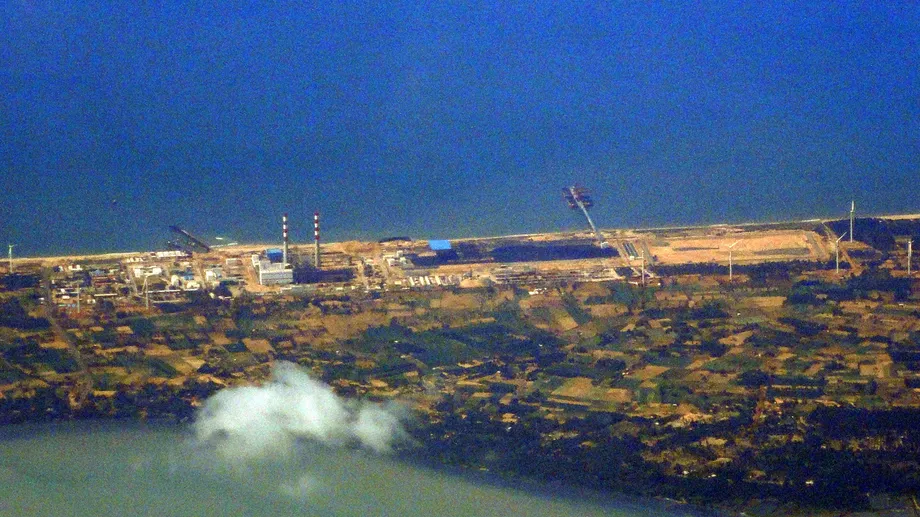
One hour without power across four rotating groups
Sri Lanka's Public Utilities Commission has approved one hour of rotational power cuts per day for October 19, 20 and 21 after a breakdown left the Lakvijaya Power Station unavailable. The Ceylon Electricity Board (CEB) released schedules dividing the country into four groups, with interruptions falling between 4:30 p.m. and 9:00 p.m.
Contents
- One hour without power across four rotating groups
- How the request became an approved schedule
- October 19: Group 1 starts first
- October 20: Group 4 moves to the earliest slot
- October 21: Group 3 goes first
- Why a town name may appear in more than one group
- Why losing Lakvijaya creates a supply gap
- Repair time and replacement power remain central
- Key Points
The CEB schedule identifies the dates as October 19 to 21, 2026. Each group has a different starting period on each day, and electricity is scheduled to return one hour after disconnection begins. The cuts will be implemented if demand management is needed because available generation cannot meet electricity demand.
Energy specialist Dr. Vidura Ralapanawa said all three generating units at the coal power station in Norochcholai had stopped operating, removing about 900 megawatts from the national grid. He estimated that restoring the first unit could take at least four to five days, longer than the three days covered by the approved interruption schedule.
For households and businesses, the immediate issue is knowing both their electricity group and its daily starting window. A place listed for an interruption beginning between 4:30 p.m. and 5:00 p.m. faces an hour without supply, with restoration scheduled between 5:30 p.m. and 6:00 p.m.
The CEB also warned that actual disconnection and restoration times may vary by 30 minutes from the schedule. Group allocations may change with electricity demand, available generation and weather, so the published times carry some uncertainty.
How the request became an approved schedule
The National System Operator (NSO) sought permission from the Public Utilities Commission of Sri Lanka (PUCSL) and the Ministry of Energy for the interruptions. NSO Chief Executive Officer Buddhika Samarasinghe confirmed that approval had been requested for one hour of cuts across four groups on each of the three days.
The initial proposal described an evening window of 4:30 p.m. to 8:30 p.m. The subsequently released CEB schedule extends to 9:00 p.m., allowing the final group's power to be restored an hour after a disconnection starting as late as 8:00 p.m.
The PUCSL approved the request after the proposal was announced. Energy Ministry officials described the measure as a way to maintain grid balance and manage supply following recent instability and emergency outages.
The sequence of announcements explains why some earlier information described the cuts as awaiting clearance:
- Before approval: The NSO requested permission for interruptions on October 19, 20 and 21, initially describing a 4:30 p.m. to 8:30 p.m. window.
- After the request: The PUCSL approved one hour of cuts per group per day over the three dates.
- For implementation: The CEB published rotating group schedules covering disconnection and restoration between 4:30 p.m. and 9:00 p.m.
October 19: Group 1 starts first
On October 19, Group 1 has the earliest interruption, followed by Groups 2, 3 and 4. Each listed period below is a window in which the power cut starts, followed by the corresponding restoration window.
- Group 1: Disconnection between 4:30 p.m. and 5:00 p.m.; restoration between 5:30 p.m. and 6:00 p.m.
- Group 2: Disconnection between 5:30 p.m. and 6:00 p.m.; restoration between 6:30 p.m. and 7:00 p.m.
- Group 3: Disconnection between 6:30 p.m. and 7:00 p.m.; restoration between 7:30 p.m. and 8:00 p.m.
- Group 4: Disconnection between 7:30 p.m. and 8:00 p.m.; restoration between 8:30 p.m. and 9:00 p.m.
Group 4 therefore has the latest scheduled restoration on the first evening. The half hour ranges allow different disconnection times within the group, while the scheduled duration for an individual interruption remains one hour.
October 20: Group 4 moves to the earliest slot
On October 20, Group 4 moves from the last position to the first. Groups 1 and 2 occupy the middle periods, while Group 3 moves to the latest slot.
- Group 4: Disconnection between 4:30 p.m. and 5:00 p.m.; restoration between 5:30 p.m. and 6:00 p.m.
- Group 1: Disconnection between 5:30 p.m. and 6:00 p.m.; restoration between 6:30 p.m. and 7:00 p.m.
- Group 2: Disconnection between 6:30 p.m. and 7:00 p.m.; restoration between 7:30 p.m. and 8:00 p.m.
- Group 3: Disconnection between 7:30 p.m. and 8:00 p.m.; restoration between 8:30 p.m. and 9:00 p.m.
The rotation changes which part of the evening each group loses electricity. Group 4's starting window, for example, shifts three hours earlier than on October 19, from 7:30 p.m. to 8:00 p.m. to 4:30 p.m. to 5:00 p.m.
October 21: Group 3 goes first
On October 21, Group 3 takes the earliest slot, followed by Groups 4, 1 and 2. This is the final day covered by the announced approval.
- Group 3: Disconnection between 4:30 p.m. and 5:00 p.m.; restoration between 5:30 p.m. and 6:00 p.m.
- Group 4: Disconnection between 5:30 p.m. and 6:00 p.m.; restoration between 6:30 p.m. and 7:00 p.m.
- Group 1: Disconnection between 6:30 p.m. and 7:00 p.m.; restoration between 7:30 p.m. and 8:00 p.m.
- Group 2: Disconnection between 7:30 p.m. and 8:00 p.m.; restoration between 8:30 p.m. and 9:00 p.m.
If all three daily interruptions are implemented as scheduled, each group would experience three hours without electricity across the period: one hour on each of three days. The changing order spreads the earlier and later evening slots among the groups.
Why a town name may appear in more than one group
The area allocations follow grid substations and feeder numbers. A grid substation passes electricity into a local distribution network, while a feeder is a circuit carrying that electricity to a particular set of customers.
Several substations appear in more than one group because the grouping also depends on the feeder involved. The published area lists include the following examples:
- Groups 1 and 4 both include substations serving Ambalangoda, Athurugiriya, Balangoda, Beliatta, Deniyaya, Embilipitiya, Hambantota, Horana, Kalutara, Kurunegala, Matara, Galle, Panadura, Polonnaruwa and Ratnapura.
- Groups 2 and 3 both include Ampara, Anuradhapura, Badulla, Biyagama, Chilaw, Chunnakam, Dehiwala, Kelaniya, Kilinochchi, Kolonnawa, Mannar, Nuwara Eliya, Pannipitiya, Ratmalana, Trincomalee and Vavuniya.
- Group 2 also lists Katunayake and Puttalam, while Group 3 includes Monaragala.
A household in an area appearing in two groups needs its feeder assignment to identify the applicable interruption. Neighbours served by different circuits can therefore have different schedules even when their addresses share the same town name.
The CEB's warning about changing allocations adds another practical consideration. The amount of demand assigned to a group can change as operators respond to the electricity available at the time.
Why losing Lakvijaya creates a supply gap
Lakvijaya's unavailability reduced the electricity that operators could draw on to meet demand. Ralapanawa put the loss at about 900 megawatts following the shutdown of all three units. Megawatts measure the rate at which a station can supply power, rather than the total electricity used over a whole day.
The national grid needs generation and consumption to stay closely balanced. When available power falls short of demand, temporarily disconnecting selected circuits reduces consumption and helps operators manage the remaining supply.
Ralapanawa said solar electricity helps meet demand during daylight, but warned that rising consumption could make supply more difficult to manage. His concern covered the broader period from 7:00 a.m. to 9:00 p.m., while the approved rotational cuts are confined to the evening.
The evening schedule matters because solar production falls as daylight fades. Electricity needed for homes, shops and other activities must then come from the generation still available. The size of any shortfall depends on both that supply and the amount customers are using.
The CEB identified weather as another factor that could affect implementation. Together with changing demand and generation, this means operators will decide whether the approved cuts are required under conditions at the time.
Repair time and replacement power remain central
Ralapanawa estimated that the first Lakvijaya unit could require at least four to five days to return to normal operation. He gave that as a technical assessment; the authorities had not announced a confirmed date for restoring the station or a schedule for interruptions after October 21.
The first unit's restart would begin returning generation to the grid, while the availability of the remaining units would determine how much of the station's supply could be recovered. The immediate electricity position also depends on other plants and changes in consumption.
Ralapanawa warned that running plants using oil and diesel around the clock could still leave difficulty meeting demand and would carry substantial costs. He said the public would ultimately bear that financial burden. No additional charge or tariff change was announced alongside the interruption schedule.
Ralapanawa also criticised the handling of earlier recommendations on electricity failures. He said recommendations from several institutions had not been properly implemented and called for action on longstanding weaknesses in the electricity sector, alongside investigation of the immediate breakdown.
His proposed response included stronger emergency alternatives so a major station's failure would be less likely to disrupt consumers. For the three approved evenings, the concrete response is narrower: rotating one hour interruptions, used when needed to keep demand within available supply.
Key Points
- The PUCSL approved one hour of rotational cuts per group per day for October 19, 20 and 21.
- The CEB schedule identifies the year as 2026 and covers an evening window from 4:30 p.m. to 9:00 p.m.
- The earliest groups are Group 1 on October 19, Group 4 on October 20 and Group 3 on October 21.
- Each interruption is scheduled to last one hour. Actual disconnection and restoration times may vary by 30 minutes.
- Substation and feeder assignments determine the relevant group; some towns appear in more than one group.
- Dr. Vidura Ralapanawa estimated a loss of about 900 megawatts and at least four to five days to restore the first Lakvijaya unit.
- The cuts are conditional on the need to manage demand because of insufficient generation.