Payments reach fewer than half of registered families
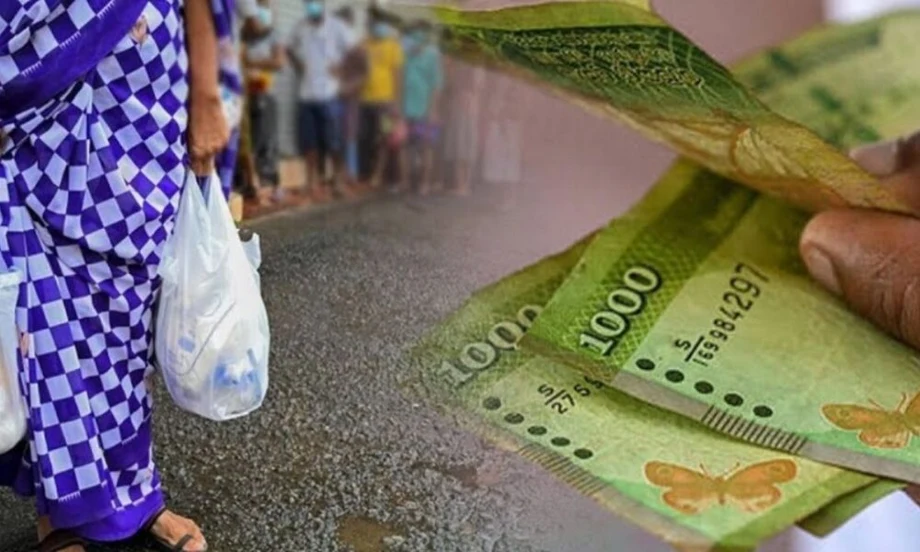
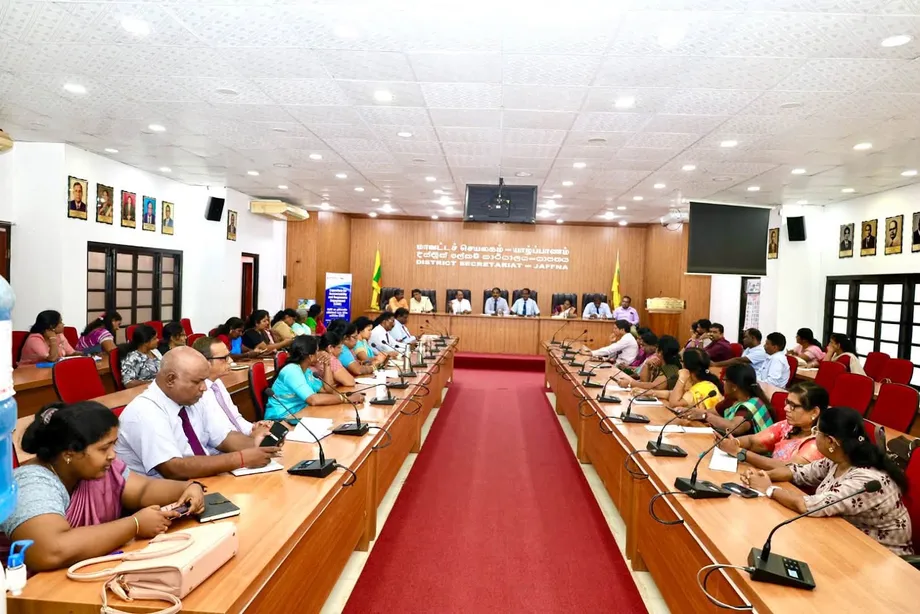
Compensation has been provided to 983 families in connection with disappearances in Jaffna district, where 2,249 registrations have been recorded, Additional District Secretary K. Sivakaran told a workshop at the Jaffna District Secretariat. He said payments were continuing, while stressing that the response must also address the grief, expectations and longstanding demands of affected families.
Contents
- Payments reach fewer than half of registered families
- What the missing persons office is required to do
- Jaffna has had a regional office since 2019
- Financial assistance has followed several routes
- The national figures need careful explanation
- Families describe the answers they still need
- Truth and accountability remain family demands
- Support also includes welfare and protection
- Key Points
The figures put the number receiving compensation at about 43.7% of the registration total. The difference is 1,266 registrations, although Sivakaran did not describe the eligibility or processing status of those remaining cases. He gave no payment amounts, total expenditure or timetable for completing the process.
The workshop, held on a Friday, was organised jointly by the National Peace Council of Sri Lanka and the Office on Missing Persons (OMP). It brought district civil society organisations together to improve their understanding of the office, its responsibilities and its procedures. The calendar date of the meeting was not specified.
Sivakaran's central message went beyond distributing money. Families needed a humane response that took account of their emotional pain and their continuing requests for answers. Civil society organisations, nongovernmental organisations and community representatives, he said, had an important role in communicating those needs and helping families obtain support.
For relatives who have spent years asking where a husband, daughter, brother or grandchild went, financial assistance and an explanation of the disappearance answer different needs. The Jaffna announcement shows progress on payments. The OMP's legal responsibilities also require it to search for missing people, clarify what happened to them and protect their families.
What the missing persons office is required to do
The Ministry of Justice's OMP mandate page describes a permanent, independent state institution responsible for clarifying the fate and whereabouts of people missing in connection with conflict, political unrest, civil disturbances or enforced disappearance. Its mandate covers all communities and regions, without a limit to one period.
The Office on Missing Persons Act, No. 14 of 2016, gives the office several connected tasks. It must search for missing people, investigate the circumstances of their disappearance, recommend action to authorities, protect the rights of relatives and identify ways for them to seek redress. It must also bring information from earlier commissions and other institutions into a central database.
In plain terms, a family should be able to approach the office for more than a payment referral. Its responsibilities include finding and checking information about the missing person, helping relatives access services and explaining which forms of assistance are available.
An enforced disappearance involves someone being deprived of liberty by state agents, or with state involvement, followed by concealment or refusal to acknowledge what happened. Families are left without reliable information about where the person is. The OMP's remit is broader, covering other people missing in the circumstances defined by its founding law.
Jaffna has had a regional office since 2019
The OMP's 2019 annual report records that its Jaffna regional office opened on 24 August 2019 at No. 123 Adiyapatham Road. By 31 December that year, 520 people had visited the office.
Nearly 100 relatives of missing and disappeared people and 18 civil society representatives attended the public meeting marking the opening at the Jaffna Kachcheri. Families took part in a question and answer session with commissioners after opening remarks by then OMP chairperson Saliya Pieris.
The report says regional offices record complaints, conduct inquiries and intervene with district authorities to protect family rights and interests. The ministry's institutional page now lists a Jaffna regional office at the District Secretariat. This gives the latest workshop a local administrative setting with an established history of receiving families and handling their requests.
Financial assistance has followed several routes
The OMP recommended interim relief in August 2018 for families made particularly vulnerable by the disappearance of a relative. Its 2019 annual report describes that relief as immediate assistance to ease hardship, separate from reparations, which address harm suffered through a broader process.
In March 2019, the government proposed a budget allocation of 500 million Sri Lankan rupees for interim relief. The proposed assistance covered families holding Certificates of Absence, including relatives of armed forces and police personnel missing in action. The OMP reported delays in implementing the proposal.
A Certificate of Absence officially records that someone is missing, allowing relatives to seek relevant administrative assistance without declaring the person dead. The OMP helps relatives obtain the documentation needed for the Registrar General to issue these certificates.
The ministry also lists recommendations to the Office for Reparations for family revival payments among the OMP's functions. Jaffna's announcement did not identify the scheme under which the 983 families were paid or connect those payments to the 2019 budget proposal.
The documented sequence shows how the institution and its assistance mechanisms developed:
- 22 June 2016: The bill establishing the OMP was presented to Parliament.
- 11 August 2016: Parliament passed the Office on Missing Persons Act.
- 28 February 2018: The office's initial leadership was appointed following Constitutional Council recommendations.
- August 2018: The OMP recommended interim relief for vulnerable families.
- March 2019: The government proposed 500 million rupees for interim relief.
- 24 August 2019: The Jaffna regional office opened.
- 30 November 2023: The ministry's published progress figures recorded 14,988 active cases nationally.
The national figures need careful explanation
The Ministry of Justice's progress table, dated 30 November 2023, lists 21,374 complaints or cases initially received by the OMP. It groups 6,386 entries as cases involving missing military personnel or duplicate entries, then subtracts that combined category to give 14,988 active cases.
The table also records 4,795 completed preliminary inquiries: 184 in 2020, 95 in 2021, 2,111 in 2022 and 2,405 in 2023. Preliminary inquiries are an early stage of examining a complaint; families still need the substantive answer about the person's fate and whereabouts.
The same table lists 12,341 cases awaiting inquiry. Its figures do not reconcile through simple subtraction: 14,988 active cases minus 4,795 completed preliminary inquiries equals 10,193. The page gives no explanation for the difference between that calculation and the published pending total.
Jaffna's 2,249 registrations concern a district count, while the ministry's figures describe national administrative records at a specified date. The district announcement provides no matching registration date or definition that would support calculating Jaffna's share of the national caseload.
Human rights organisations, including Amnesty International, have estimated that between 60,000 and 100,000 people disappeared in Sri Lanka from the 1970s to 2009. Those estimates cover decades of disappearances, while the OMP figures describe complaints entered into its processes. The country has no agreed official total for all disappearances.
Families describe the answers they still need
Relatives in northern Sri Lanka have described years of taking photographs, names, dates and documents to authorities while seeking information about people who disappeared during the conflict between government forces and the Liberation Tigers of Tamil Eelam (LTTE). Some of their accounts concern relatives they say surrendered as the war ended in May 2009.
Sasikumar Ranjanidevi, a woman from Mullaitivu, described her husband Manickam Sasikumar and her brothers Murugan Selvakumar and Murugesan Rajapulendran surrendering to the army on 18 May 2009. She said the three men, whom she described as lower ranking LTTE members, were taken away separately from her.
Ranjanidevi, who was pregnant at the time, recalled the moment her husband and brothers were taken away:
That was the last time I saw them.
Sivapatham Ilankothai, a mother and grandmother from Jaffna, said her daughter Parameswaran Sasikala, son-in-law Chinnathambi Parameswaran and three grandchildren disappeared after surrendering. The children ranged in age from eight months to 10 years. Ilankothai was in a refugee camp in India when the war ended.
Ilankothai described why compensation could not meet her family's central demand:
Now, they want us to take compensation and go silent. We do not want money. We want to know where our dear ones are or what happened to them,
Truth and accountability remain family demands
Senior human rights lawyer KS Ratnavale, who has represented relatives of disappeared people without charging fees, said families need an acknowledgement of what happened and accountability for those responsible. He described closure as something that depends on those answers.
Ratnavale also attributed the failure of successive commissions to a lack of political will, and slow court proceedings to institutional conflicts of interest and other obstacles. His account describes a demand that extends beyond household assistance: families want institutions to establish the facts and respond to wrongdoing.
Thurairasa Ravikaran, an Ilankai Tamil Arasu Kadchi parliamentarian who has supported relatives campaigning for answers, pointed to around 250 households headed by women in Thevipuram and Vallipuram, two villages in Mullaitivu district, in connection with men's disappearances. The figure illustrates how the loss of relatives has affected the organisation and support of entire households in particular communities.
Sivakaran's remarks in Jaffna addressed the same need to listen to families rather than treat payment as the endpoint. He said previous discussions had taken place, but affected people still needed their expectations addressed through cooperation among the relevant institutions.
Support also includes welfare and protection
The OMP's Victim and Family Support Unit is responsible for recording family information and helping relatives access administrative and welfare services. Its remit includes referrals for specialised psychological and social care, recognising the distress associated with living for years without an answer.
The Protection Unit handles threats and reprisals against victims and witnesses. It follows up complaints and coordinates with state and other organisations on safety. Relatives involved in campaigns for the disappeared have described intimidation and threats, making protection a practical part of their ability to continue seeking information.
The office's tracing and investigation staff are tasked with searching for missing people and clarifying the circumstances of disappearances. The OMP can also act as an observer at excavations, exhumations and proceedings involving suspected gravesites. Its database unit is meant to combine records from commissions, state bodies, civil society organisations and complaints made directly to the office.
Jaffna's workshop focused on improving coordination and public understanding of these responsibilities. For families, the concrete needs are connected: access to financial support, assistance with documents, protection when necessary and a credible response to the question of what happened to their relatives.
Key Points
- Jaffna Additional District Secretary K. Sivakaran said 983 families had received compensation against 2,249 recorded registrations.
- The payment count equals about 43.7% of the registration total; amounts and a completion timetable were not announced.
- The Jaffna workshop was jointly organised by the National Peace Council and the Office on Missing Persons.
- The OMP's legal duties include tracing missing people, protecting relatives, identifying redress and maintaining a central database.
- The Jaffna regional office opened on 24 August 2019 and recorded 520 visitors by the end of that year.
- National progress figures dated November 2023 contain an unexplained mismatch between active cases, completed preliminary inquiries and cases awaiting inquiry.
- Families continue to seek the truth about disappearances and accountability alongside practical support.