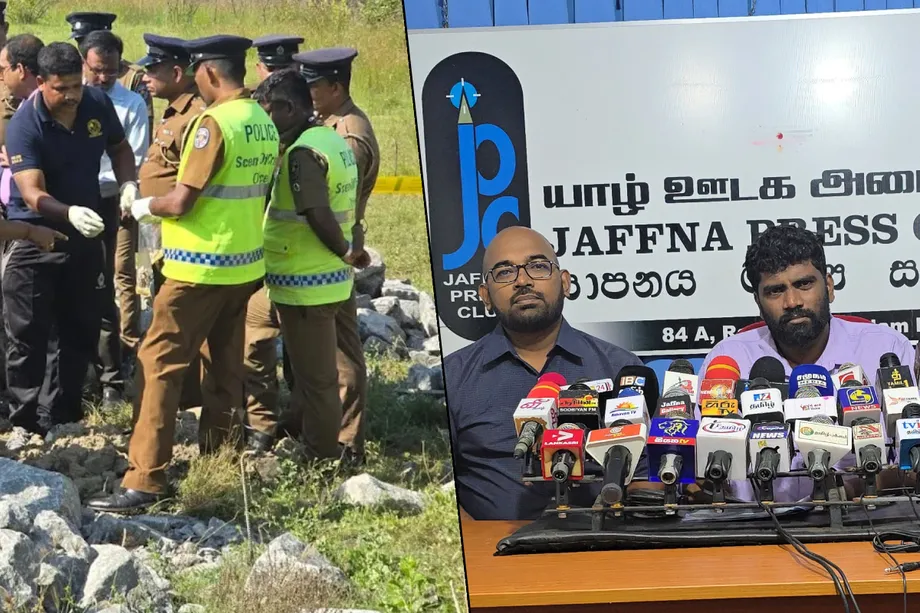
Families seek scientific answers after 110 days of excavation
The recovery of 583 sets of human remains from Chemmani in northern Sri Lanka has brought renewed demands for an independent international examination, as families and rights campaigners challenge an archaeological report suggesting that an epidemic or natural disaster could explain some burials.
Contents
- Families seek scientific answers after 110 days of excavation
- What the archaeological report describes
- The rights commission raised concerns about unlawful burials
- Why clothing, objects and age estimates matter
- Campaigners want several kinds of expertise
- What dating and DNA testing could answer
- Why the 1996 case still shapes Chemmani
- How the renewed investigation unfolded
- Political demands converge on an independent inquiry
- What the November review will consider
- Key Points
The report records a minimum of 574 individuals at the Sinthupathi Hindu cemetery near Jaffna, with preliminary estimates classifying nearly two thirds as infants or children. The larger figure of 583 describes the sets of remains recovered during 110 days of excavation. Forensic specialists use a minimum individual count to estimate how many people are represented when some bones are separated or mixed.
The Equal Rights Movement has called for the evidence to be assessed by an impartial team with expertise across several scientific fields, rather than relying on the interpretations of lead archaeologist Professor Raj Somadeva. Its activist Veerasingham made the appeal on October 25, 2026, arguing that families searching for people who disappeared during the war deserve an investigation capable of identifying victims and establishing responsibility.
The dispute comes as the Jaffna Magistrate's Court prepares to review the investigation on November 19. Families have announced a protest for November 16 at 2 p.m. The case concerns a place associated with allegations of wartime disappearances since the late 1990s, and renewed discoveries during construction work in February 2025.
Scientific dating, DNA identification and detailed examination of the bones for injury or disease remain outstanding. Those tests are central to determining when the people lived, who they were and how they died.
What the archaeological report describes
Somadeva, a senior archaeologist at the University of Kelaniya's Postgraduate Institute of Archaeology, prepared the 190 page summary with archaeologist Anusha Wanninayake. Titled Forensic Archaeological Excavation in Chemmani, Jaffna (2025/2026): A Summary Report on Findings, it describes excavation work carried out in phases under court supervision.
The team examined soil layers, the position and distribution of skeletons, skull orientation, clothing fittings, coins and other objects. Its account also discusses surveys using ground penetrating radar, which sends signals into the ground to help locate buried features.
The authors describe similarities between some Chemmani burials and established funeral practices. Many undisturbed skeletons had their hands over the abdomen or beside the body. Overlapping burials and disturbed bones were interpreted as possible signs that people were buried there on successive occasions.
The report proposes an epidemic or natural disaster as a possible explanation for a concentration of burials and relatively few funeral objects. Its suggested sequence is that many deaths could have created an urgent need to bury bodies quickly. It names no particular epidemic or disaster.
The People's Action Organisation says the third interim report was dated October 10 and submitted to the Judicial Medical Officer at Jaffna Teaching Hospital. Accounts of its subsequent court submission place that event on October 19 or October 20. Although Veerasingham described the latest document as a final report, the document under dispute is described elsewhere as an interim archaeological assessment.
The rights commission raised concerns about unlawful burials
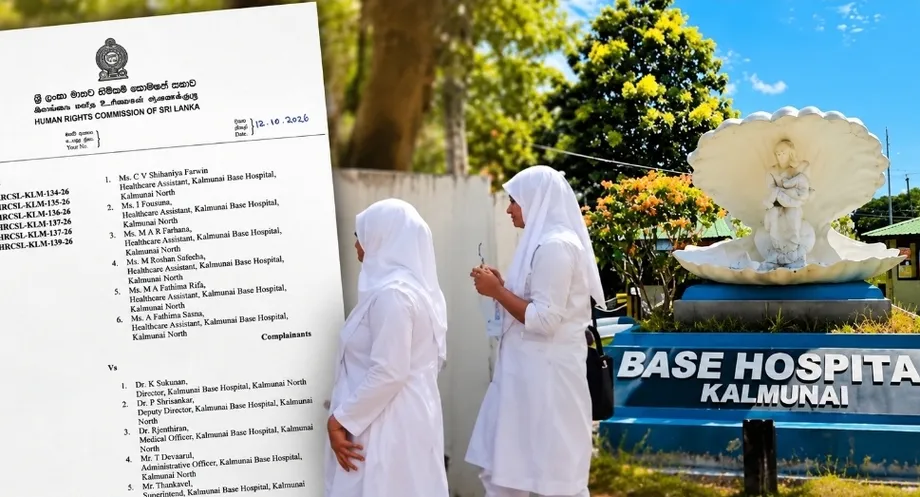
The Human Rights Commission of Sri Lanka reached a different preliminary assessment of the burial conditions in its September 2025 fact finding report. More than 200 human remains had been recovered when it was published.
The commission said experts at the site had told it that more than 90 percent of the remains had no clothing. It also recorded skeletons lying extremely close together and some remains only 1.5 to 2 feet below the surface.
The commission, Sri Lanka's national human rights institution, explained its assessment in these terms:
It was also observed that, given the positioning of the skeletal remains, including the fact that some remains were in extreme proximity to one another, and the shallow depth of the remains (on occasion, the depth being as shallow as 1.5-2 feet from the surface), there is a reasonable likelihood that the burials were unlawful and pursuant to extrajudicial killings.
Extrajudicial killings are killings carried out outside a lawful judicial process. The commission's wording expressed a reasonable likelihood and was accompanied by calls for further investigation and specialist assistance.
Why clothing, objects and age estimates matter
Clothing has become a central point of disagreement. The commission linked the apparent absence of clothing to concerns about burial practices. The later archaeological assessment explains that textiles can decay because of soil chemistry, moisture, microorganisms and the length of burial.
Buttons, buttonhole rings and small metal fasteners were recovered beside some skeletons. The archaeological team considered these consistent with at least some people having been clothed when buried. Investigators must examine those objects alongside the position of each body and the conditions in the surrounding soil.
The excavation recorded 170 artefact entries, including rings, bangles, beads, amulets, coins and iron fragments. Some iron pieces were provisionally interpreted as coffin fittings. Feeding bottles, school satchels, dolls and raincoats have also been reported among the recovered objects.
Preliminary age estimates put about 41 percent of individuals in a child category and 22 percent in an infant category. Together, those figures amount to about 63 percent, or roughly 360 of the minimum 574 individuals. The age categories and assessment methods need fuller explanation, particularly because the estimates were made in the field.
One account of the latest interim assessment says approximately 150 of the 583 recovered sets, together with associated objects, had been examined. The scope of that examination is another issue families want clarified. A specialist assessment of all the remains would allow investigators to compare age, injury, disease and burial patterns across the site.
Campaigners want several kinds of expertise
Veerasingham said the government had provided funding and personnel for the excavation, but argued that establishing the truth required more than archaeological interpretation. The Equal Rights Movement wants scientific dating, DNA extraction and testing, mortuary examinations and detailed forensic assessment under impartial expert oversight.
The movement also accused successive governments, including the current administration, of diverting evidence concerning alleged wartime crimes for political purposes. Those accusations form part of its demand for an investigation that families can trust.
The People's Action Organisation rejected the third interim report at an October 25 news conference in Jaffna. It called for every recovered set of remains to undergo radiocarbon testing under international supervision, rather than testing only a sample. Its representatives said Tamils overseas were prepared to help meet costs beyond government allocations if necessary.
Families of the forcibly disappeared have similarly demanded international forensic specialists and international oversight of DNA testing, including the handling of samples supplied by relatives. Their representatives also objected to the report's description of the cemetery and its failure to call the site a mass grave. Lawyers raised that objection in a court motion.
The practical question behind these demands is whether the investigation will have the staff, laboratories, procedures and independence needed to move from recovering bones to identifying people and explaining their deaths.
What dating and DNA testing could answer
The rights commission identified four major gaps: forensic anthropology, forensic archaeology, radiocarbon dating and accessible DNA analysis. Each addresses a different part of the investigation.
Forensic anthropologists examine human bones to estimate characteristics such as age and to assess injury or disease. Forensic archaeologists document how remains and objects lie in the ground, preserving information about the burial itself. Their work connects the examination of individual bones with the wider scene.
The commission specifically recommended access to bomb-pulse 14C dating overseas. This method uses changes in atmospheric radioactive carbon associated with nuclear weapons testing to help date biological material from after 1950. Its usefulness depends on the sample and the scientific question being examined.
DNA testing offers a route to identification by comparing genetic material from remains with voluntarily supplied samples from surviving relatives. The commission recommended a secure DNA bank for family samples and overseas expertise to support credible, independent analysis.
Families could provide samples before every set of remains is ready for testing, allowing comparisons later. Consent, secure storage and clear explanations of results would be essential parts of that process.
The commission also found that Sri Lanka had not formally adopted a standard operating procedure for mass grave investigations, although a draft existed. It called for consultation with specialists, the Bar Association of Jaffna and civil society, and recommended an independent institution to investigate and prosecute serious crimes.
Why the 1996 case still shapes Chemmani
Chemmani's history is closely connected to the rape and murder of Krishanthi Kumaraswamy, an 18 year old Tamil student, on September 7, 1996. Her mother, younger brother and a family friend were also killed after going to look for her.
Somaratne Rajapakse was among the soldiers convicted in 1998 in connection with those crimes. During the proceedings, he alleged that another 300 to 400 bodies were buried at Chemmani. He later gave detailed testimony in June 1999 identifying locations and describing alleged arrests, killings and burials.
The current court has authorised the Criminal Investigation Department to question Rajapakse again. His earlier account is important because it gives investigators potential burial locations and information to compare with disappearance records and physical evidence.
Excavations in 1999 recovered 15 bodies from eight burial locations. Two were identified as garage workers Rasaiah Satheeskumar and Mahenthiran Uthaskaran, who had been taken from their workplace in Ariyalai in August 1996. Several recovered bodies showed injuries, and some were described as having bound hands or blindfolds.
The defence ministry issued letters of regret to 355 families in November 1999, saying their relatives could not be traced. For families still searching today, the renewed excavation brings the possibility of identification after decades without answers.
How the renewed investigation unfolded
Construction work at the Sinthupathi cemetery brought human remains to the surface in February 2025. A preliminary inspection on February 20 was followed by court supervised excavation in phases. The work remains incomplete.
The main developments span several decades:
- September 7, 1996: Krishanthi Kumaraswamy was raped and murdered; three people who searched for her were also killed.
- 1998 and June 1999: Rajapakse alleged that hundreds of bodies were buried in Chemmani and later identified locations.
- 1999: Excavators recovered 15 bodies from eight burial locations.
- February 2025: Construction at the cemetery exposed human remains, prompting a renewed investigation.
- September 2025: The human rights commission published concerns about possible unlawful burials and gaps in forensic capacity.
- October 2026: The archaeological assessment prompted objections from families, campaigners and Tamil political representatives.
- November 16 and November 19, 2026: Families scheduled a protest, followed by a court administrative review three days later.
Early excavation findings included 19 skeletal assemblages, among them three infants estimated to be younger than 10 months. By mid-June 2025, less than 40 percent of the suspected burial area had reportedly been excavated, while drone and satellite work had identified another possible burial location.
Those early findings explain why families have pressed for work to continue beyond the areas already opened. Determining the full extent of the cemetery investigation will require further surveys, excavation decisions and funding.
Political demands converge on an independent inquiry
Democratic Tamil National Alliance spokesperson Suresh K Premachandran has called for an international investigation and examination of the remains against historical records of deaths and disappearances. He also cited reports of possible gunshot and cutting injuries as matters requiring forensic assessment.
Eelam People's Democratic Party media secretary Srikanth Panneerselvam urged President Anura Kumara Dissanayake to take a personal interest in the inquiry. He said explanations involving an epidemic or disaster should be tested scientifically and cited records of more than 850 disappearances from the area in 1996.
That figure concerns disappearances across the area, while the excavation figures count remains recovered from a particular site. Matching missing people to recovered remains requires individual identification and comparison with family and official records.
Ilankai Tamil Arasu Kachchi parliamentarian Sivagnanam Shritharan has also demanded an international investigation. Relatives' association representatives, including Kathirkamanathan Kokilavani and Yogarasa Kanagaranjani, have voiced distrust or fears that the investigation could be closed without answers.
Justice Minister Harshana Nanayakkara has ruled out an international investigation. The commission's recommendation for overseas laboratory assistance and specialist expertise therefore sits alongside a broader political dispute over who should control the inquiry.
What the November review will consider
The November 19 administrative review is expected to examine the excavation, the archaeological report and the request to send samples overseas for carbon dating. The Criminal Investigation Department has submitted two reports and obtained permission to record a further statement from Rajapakse.
Judicial Medical Officer Sellaiah Piranavan said an expert panel would be formed to examine the recovered remains. Magistrate Selvanayagam Leninkumar directed that copies of the archaeological report be made available to lawyers representing families and other stakeholders.
For relatives, the next meaningful developments are concrete: access to the report, a clear testing programme, decisions about further excavation and information about how voluntary DNA comparisons will work. Scientific findings will then need to be considered together with witness testimony and records of detention, disappearance and burial.
Key Points
- Excavators recovered 583 sets of remains over 110 working days; the interim report records a minimum of 574 individuals.
- Preliminary estimates classify about 63 percent of individuals as infants or children.
- Families, rights campaigners and Tamil parties want an independent investigation with international forensic involvement.
- The human rights commission identified a reasonable likelihood of unlawful burials connected to extrajudicial killings and recommended further specialist work.
- Scientific dating, DNA comparisons and examinations for injury or disease are central to the next stage.
- A families' protest is scheduled for November 16, 2026, and a court administrative review for November 19.