30,000 households and five care centers at the heart of the plan
The Asian Development Bank has approved $100 million in loans for Sri Lanka to expand earning opportunities for 30,000 households across six districts, establish five model elderly day care centers and improve the delivery of social protection. The bank announced the financing in Colombo on 21 October 2026.
Contents
The package combines a $50 million loan supporting policy reforms with a $50 million project loan. Under the Promoting Resilience and Opportunity for Inclusive Recovery Sector Development Program, Sri Lanka will link assistance for poorer households with changes to the institutions and services responsible for supporting them.
ADB's official announcement identifies a central problem: economic recovery is continuing, but poverty and exposure to sudden financial or other difficulties remain high. Women, young people, older people, persons with disabilities and residents of rural and disadvantaged areas are particularly vulnerable.
Shannon Cowlin, ADB's country director for Sri Lanka, said the recovery needed to reach people whose livelihoods remained insecure:
Sri Lanka's economic recovery must translate into meaningful improvements in the lives and livelihoods of vulnerable people.
The program brings together three practical goals: helping households earn an income, improving care for older people and making public support more responsive when emergencies strike. Social protection is the combination of assistance, services and public arrangements that helps people meet basic needs and cope with hardship. This package addresses both the help people receive and the systems that deliver it.
How the $100 million is divided
ADB's financing is split equally between two instruments, with each accounting for 50% of the total. The policy loan supports reforms, while the project loan supports investments under the program. Both are loans to support Sri Lanka's public response to poverty and vulnerability.
A policy loan focuses on changes to government rules, policies and institutions. A project loan finances a defined set of activities and investments. Combining them allows the program to address the rules governing services alongside the practical work of providing those services.
That combination matters for the proposed eldercare centers and improvements to social protection delivery. A new center needs a framework for how care is organized, while a digital platform needs arrangements for managing information and coordinating the agencies that use it. The program includes work on both sides.
What participating households will receive
Sri Lanka's National Empowerment Program will be the route for livelihood assistance. The ADB program will support 30,000 households identified through the Aswesuma social registry across six districts, including women and young people.
A social registry holds information used to identify households for assistance. Here, the Aswesuma registry will help identify the households receiving support under the program, connecting an existing government information system with opportunities to improve earnings.
The planned assistance covers several needs that can affect whether a household can find work or sustain a small business:
- Livelihood grants to support income earning activities.
- Employment and business support.
- Skills development and financial literacy training.
- Access to reliable markets.
These measures address different parts of the same challenge. Money can help someone begin an income earning activity, while training can build the skills needed to continue it. Financial literacy means understanding how to manage money and make financial decisions. Access to markets gives producers or businesses a route to customers.
For participating households, the intended result is a stronger ability to earn and manage an income. The program therefore connects immediate practical support, such as a grant, with services intended to help that support produce lasting benefits.
Five centers will test eldercare models
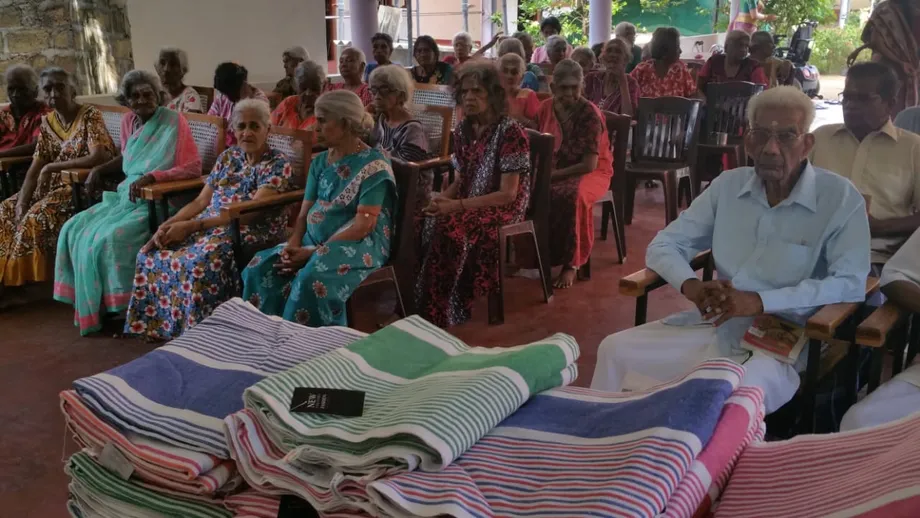
Older people are a distinct focus of the financing. Sri Lanka plans to establish five model elderly day care centers in poorer districts, offering integrated care and support services.
The centers will also serve as demonstration sites. Their role is to test and refine ways of providing eldercare that could later be expanded nationwide. This gives the proposed facilities two purposes: providing services locally and helping shape how similar services might operate elsewhere.
ADB will also support a stronger policy and regulatory framework for eldercare. In practical terms, that means working on the public rules and arrangements governing care services, alongside establishing the centers themselves.
The focus on day care gives older people a place in a program that also supports employment and household earnings. Their needs include access to care and support, making service provision an important part of the wider response to poverty.
Making assistance easier to manage
Sri Lanka's social protection delivery systems will receive support for monitoring and evaluation, digital platforms, case management and data governance. These are administrative functions, but they affect how assistance is organized and followed through.
Monitoring tracks whether activities are taking place as planned. Evaluation examines what those activities achieve. Together, they can help officials assess whether grants, training and care services are reaching their intended recipients and producing useful results.
Case management involves following a person's or household's circumstances and coordinating appropriate support. Data governance concerns the rules and responsibilities for handling information. Digital platforms provide tools for recording, sharing and using that information within the service system.
These investments connect the program's different activities. Household assistance requires information about recipients, eldercare requires organized services, and both need ways to track delivery. Strengthening those functions is part of the plan to make social protection more effective and responsive.
Preparing support for emergencies
ADB also plans to strengthen the system's ability to respond to shocks related to the changing climate and other emergencies. A shock is a sudden event that disrupts a household's income, safety or ability to meet everyday needs.
The program will support institutional arrangements and coordination mechanisms intended to make assistance timely and effective during such events. This concerns how the responsible bodies organize their work and act together when people need help.
Emergency response sits alongside the effort to improve livelihoods. A household can make progress through work or business activity and still face a sudden setback. The program aims to improve earning opportunities while strengthening the public support available during those disruptions.
What comes next for implementation
The next stage is to turn the approved financing into policy changes, household assistance, care services and improvements to delivery systems. The National Empowerment Program and Aswesuma registry provide named routes for the livelihood component, while the five centers provide a defined initial target for eldercare.
ADB's announcement did not name the six districts, specify individual grant amounts or loan repayment terms, or give dates for assistance to begin and the centers to open. Those details will determine where households can access support, how much help they receive and when services become available.
The program's reach will depend on several connected tasks: identifying participating households, providing grants and employment support, establishing the care centers and improving the institutions behind them. Its stated purpose is to make Sri Lanka's recovery more tangible for people who remain exposed to poverty and emergencies.
Key Points
- ADB announced $100 million in approved financing for Sri Lanka on 21 October 2026.
- The package consists of a $50 million policy loan and a $50 million project loan.
- Livelihood support will target 30,000 Aswesuma registered households across six districts.
- Assistance includes grants, employment and business support, skills training, financial literacy and market access.
- Five model elderly day care centers are planned in poorer districts.
- The program will also improve social protection administration and coordination during emergencies.