A November 10 letter could open a route out of the crisis
Negeri Sembilan Menteri Besar Datuk Ismail Lasim has reportedly moved to withdraw his challenge to Tuanku Muhriz Tuanku Munawir's position as state ruler, with a letter dated November 10, 2026, offering a possible route out of a constitutional crisis that has lasted seven months.
Contents
- A November 10 letter could open a route out of the crisis
- What Ismail and the former councillors are withdrawing
- Why the Budget has become urgent
- How a royal dispute left the executive council empty
- Courts, customary leaders and the state constitution
- The main dates behind the attempted reversal
- What the Malay Rulers and palace said
- A legislative majority has not resolved the impasse
- November 26 is the next practical test
- Key Points
The immediate pressure is financial. The state government wants its legislative assembly to begin a sitting on November 26 and receive the 2027 state Budget on November 27. Both depend on consent from Tuanku Muhriz, the Yang di-Pertuan Besar, whose removal Ismail and his former executive council had previously supported.
Ismail reportedly met Tan Sri Syed Danial Syed Ahmad, the Keeper of the Rulers' Seal, during the week leading up to November 14 and presented a letter withdrawing objections to Tuanku Muhriz's position. A circulated letter describes unanimous agreement between Ismail and the 10 executive councillors whose appointments the ruler revoked in September.
The document refers specifically to withdrawing the contents of a September 17 letter. It cites the Malay Rulers' October 14 statement, a June 5 Seremban High Court order preserving the existing position, and the Negeri Sembilan Constitution of 1959.
Public confirmation of the circulated letter's authenticity, a royal audience, consent for the assembly sitting and any restoration of the dismissed councillors remained outstanding as of November 14. Those steps matter because the state needs an assembly meeting and an approved budget to keep its administration funded.
What Ismail and the former councillors are withdrawing
The September letter followed an executive council decision to recognise a proclamation removing Tuanku Muhriz and naming Tunku Nadzaruddin Tuanku Ja'afar as his replacement. The council decided its position on September 15, issued a statement on September 16, and received Ismail's endorsement on September 17.
The November 10 letter reportedly reverses that position. It describes the withdrawal as a collective decision intended to uphold the state constitution, respect royal government and allow the administration to operate peacefully and in an orderly manner.
The 10 former councillors named as signatories are Mohd. Faizal Ramli, Zaifulbahri Idris, Mustapha Nagoor, Siow Kong Choon, Siti Nur Umaira Hasim, Mohd. Asna Amin, Mohd. Razi Mohd. Ali, Suhaimizan Bizar, Mohd. Fairuz Mohd. Isa and Razali Abu Samah.
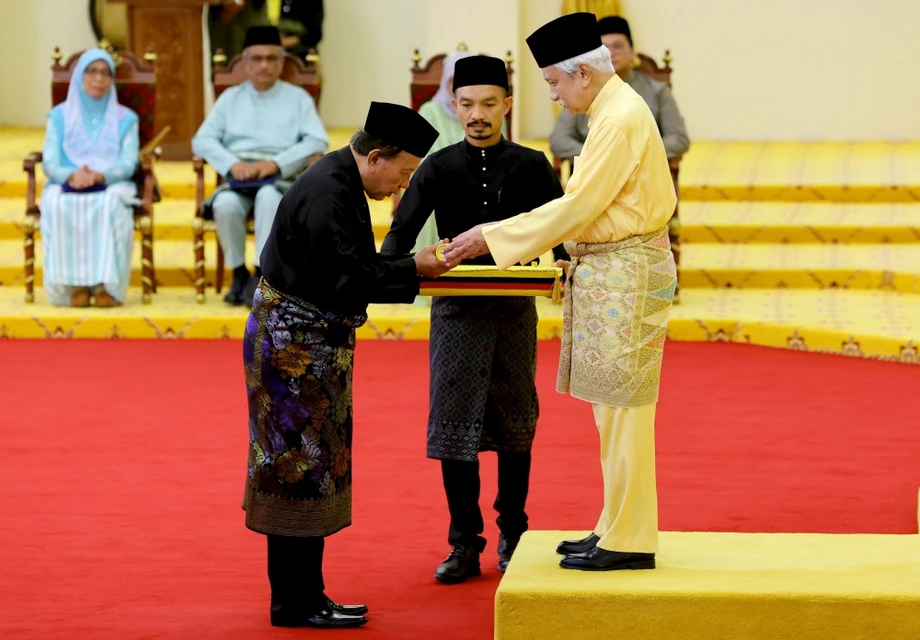
Syed Danial is expected to communicate Ismail's decision to the Conference of Rulers. Ismail is then expected to seek an audience with Tuanku Muhriz to express loyalty and request consent for the assembly to meet.
The withdrawal addresses a concrete obstacle identified before the letter emerged: Ismail was asking Tuanku Muhriz to exercise royal authority while leaving in place an earlier communication challenging his right to hold that authority.
Why the Budget has become urgent
Negeri Sembilan's assembly was originally due to meet on October 16. The government later proposed a sitting lasting five days from November 26, with the 2027 Budget scheduled for the following day.
A state budget sets out spending plans and seeks legislative approval for public expenditure. Preparing it is an administrative task; obtaining approval requires the elected assembly to meet and consider it. The dispute has therefore reached beyond royal titles into the machinery needed to finance government operations.
Ismail said on November 8 that preparations for the Budget were complete and the government was waiting for an official sitting date. Speaking in Seremban after a Deepavali open house hosted by special adviser Datuk VS Mogan, he said:
Preparations for the Budget are all in place. We have also finalised it and are only waiting for the date to hold the state assembly sitting.
On November 10, Ismail said an official notice could be issued soon. His statements show the government had finished preparing its financial proposal while still working to secure the royal consent needed to bring it before lawmakers.
Failure to obtain spending approval could interrupt government and administrative services. No specific timetable for any interruption, or list of services at immediate risk, has been announced.
How a royal dispute left the executive council empty
Tuanku Muhriz revoked the appointments of all 10 executive councillors on September 20, leaving Ismail as the sole remaining member of the state executive. The palace said the councillors had violated their oaths of office and pledges of allegiance made before the ruler on August 7.
Ismail initially disputed the dismissals, arguing that the ruler needed advice or a request from the menteri besar to terminate their appointments. The dispute then extended to senior state officials.
On September 22, Ismail announced that the executive council had decided to suspend the state secretary and state legal adviser and appoint temporary replacements. The Attorney-General's Chambers said the council lacked authority to take that action.
The dismissed councillors were barred from their offices on September 24, when the revocation of their appointments was officially gazetted. Gazetting means publishing a decision in the government's formal legal record.
Attorney-General Dusuki Mokhtar said on September 26 that, under the state constitution, executive councillors other than the menteri besar hold office at the pleasure of the Yang di-Pertuan Besar. That places their continued appointments within the ruler's constitutional authority.
The resulting loss of the executive council explains why resolving the dispute has become an administrative priority. Ismail remains in office, but the team appointed to share responsibility for governing the state has been removed.
Courts, customary leaders and the state constitution
The crisis began on April 19, when four men presenting themselves as undangs, or territorial customary chiefs, announced Tuanku Muhriz's removal. Negeri Sembilan's royal arrangements give customary institutions a central role, making the standing of those chiefs a key part of the dispute.
The Dewan Keadilan dan Undang, known as the DKU and described as the state's highest customary council, later said three of the four were not undangs when they made the announcement. Two had already been removed, while another had never been officially appointed.
The Seremban High Court granted an ad interim injunction on June 5 to preserve the status quo. An injunction is a court order directing people to act, or refrain from acting, while a legal dispute proceeds. In this case, the order maintained Tuanku Muhriz's existing position as ruler.
On June 5, disputed customary leaders also purportedly proclaimed Tunku Nadzaruddin as ruler at a hotel in Melaka. Prime Minister Datuk Seri Anwar Ibrahim said Tuanku Muhriz remained the recognised Yang di-Pertuan Besar. The palace rejected the proclamation on June 9 and withdrew Tunku Nadzaruddin's hereditary Tunku Panglima Besar title.
The DKU obtained permission in July to begin contempt proceedings against six people over an alleged breach of the injunction. The Court of Appeal later temporarily stayed those proceedings, putting them on hold.
When Ismail endorsed the executive council's position in September, the Attorney-General's Chambers said the proclamation had no legal effect because the menteri besar and councillors had no authority to remove the ruler. Citing that advice, the state secretary refused to gazette it.
The main dates behind the attempted reversal
The November move follows months of legal action, changes in political control and conflicting declarations about the rulership. The main developments were:
- April 19: Four purported undangs announced Tuanku Muhriz's removal.
- June 5: The Seremban High Court issued an injunction preserving the existing position; Tunku Nadzaruddin was purportedly proclaimed ruler in Melaka.
- August 1: The DKU reaffirmed Tuanku Muhriz's position, and the BN and PN alliance won the state election.
- August 2: Tuanku Muhriz swore in Ismail as menteri besar.
- September 17: Ismail endorsed the executive council's position supporting Tuanku Muhriz's removal and sought publication of the proclamation.
- September 20: Tuanku Muhriz revoked the appointments of the 10 executive councillors.
- October 14: The Malay Rulers called for a lawful and courteous resolution.
- October 16: Tuanku Muhriz publicly rebuked Ismail over his earlier position.
- November 10: The circulated withdrawal letter was dated.
- November 26 and 27: The proposed assembly opening and Budget presentation are scheduled, subject to royal consent.
Ismail's position had already changed during September. On September 9, he said he had signed a proclamation seeking Tuanku Muhriz's removal unwillingly and under coercion, maintained that it was invalid, and lodged a police report. Eight days later, he endorsed the executive council's statement supporting the removal.
What the Malay Rulers and palace said
The Conference of Rulers addressed the dispute at its 273rd meeting on October 14. The Malay Rulers urged the parties to exercise wisdom and patience, use lawful channels and resolve their differences courteously and according to custom under the state constitution.
The Rulers also warned outsiders against interference and attempts to politicise the crisis. They said contradictory and irresponsible statements could heighten tensions, confuse the public and damage the dignity of the royal institution.
Tuanku Muhriz did not attend the October conference. Earlier reporting said Perak ruler Sultan Nazrin Shah, who was to chair the meeting, had invited him and that he intended to attend only the October 13 meeting preceding the main conference. Palace official Datuk Azizi Mohamad Ali clarified on October 12 that attendance did not require an invitation, that no invitation to the preceding meeting had been received, and that Tuanku Muhriz would focus on state duties.
Those duties included a ceremony scheduled for October 14 concerning the appointment of a new Undang Jelebu. The appointment carried weight in the customary dispute because the undangs and the DKU have central roles in the state's traditional governing structure.
On October 16, Tuanku Muhriz publicly challenged Ismail over his letter concerning the rulership. The ruler told him to retract his earlier position before seeking a meeting. The reported November withdrawal follows that demand.
A legislative majority has not resolved the impasse
Barisan Nasional won 18 seats in the August election, Pakatan Harapan won 11, and Perikatan Nasional won seven. Together, BN and PN held 25 of the assembly's 36 seats, one more than the 24 seats needed for a two thirds majority.
That numerical strength gave the governing alliance a large majority among elected representatives. The crisis has instead centred on who may exercise royal and customary authority, the status of executive appointments and the consent needed to convene the assembly.
Lawyer and political observer Liyana Marzuki had urged the government to withdraw its letter to the Conference of Rulers before seeking Tuanku Muhriz's consent. She described the contradiction in these terms:
It is odd to seek the Yang di-Pertuan Besar's consent when the person making the request does not recognise him as the Ruler of Negeri Sembilan.
Pressure also came from Gagasan Benteng Setia Tuanku Muhriz, a coalition of nongovernmental organisations. Its chairman, Kamel Yassin, called on November 4 for Ismail to withdraw the letter and said five reports had been filed with authorities. He requested updates from police and the Malaysian Communications and Multimedia Commission on the investigations.
BN chairman and Deputy Prime Minister Datuk Seri Ahmad Zahid Hamidi had directed Ismail in September to seek an audience with Tuanku Muhriz and the four undangs. By November, the effort involved both national and state Umno leaders.
November 26 is the next practical test
Ahmad Zahid said on November 11 that he believed the crisis had reached its final stage. Speaking after a PN and BN campaign event in Melaka, he expressed confidence that a solution would allow the state government to function smoothly.
Ahmad Zahid, who is also Umno president, made the requirement for the Budget sitting explicit:
It would be impossible to hold the budget sitting without the consent of His Royal Highness the Yang Dipertuan Besar of Negeri Sembilan.
He said Umno's national and state leadership were working with Ismail and expressed confidence that consent would be granted during November. His remarks followed Ismail's November 8 pledge that he would not allow the assembly to dissolve and would work to hold the sitting as planned.
Claims that the assembly could automatically dissolve if it failed to convene by February 2027 have also entered the debate. Asked about those claims on October 30, Ismail said the relevant provision of the state constitution required careful examination. No settled constitutional deadline has been publicly set out in these statements.
For residents, the immediate milestones are concrete: an official assembly notice, a sitting beginning on November 26, and presentation of the 2027 Budget on November 27. The reported withdrawal would remove Ismail's formal challenge to the ruler from that process, while the assembly and executive appointments still require their own decisions.
Key Points
- A letter dated November 10 reportedly withdraws Ismail Lasim's September challenge to Tuanku Muhriz's position as ruler.
- The letter describes unanimous support from Ismail and the 10 dismissed executive councillors.
- A June 5 High Court injunction preserved the existing position, and federal authorities continued to recognise Tuanku Muhriz.
- The ruler revoked the 10 councillors' appointments in September, leaving Ismail as the sole remaining executive member.
- The proposed assembly sitting begins November 26, with the 2027 Budget scheduled for November 27, subject to royal consent.
- Ahmad Zahid Hamidi says national and state Umno leaders are working with Ismail to resolve the crisis.