RM510 Billion Package Moves to Detailed Scrutiny
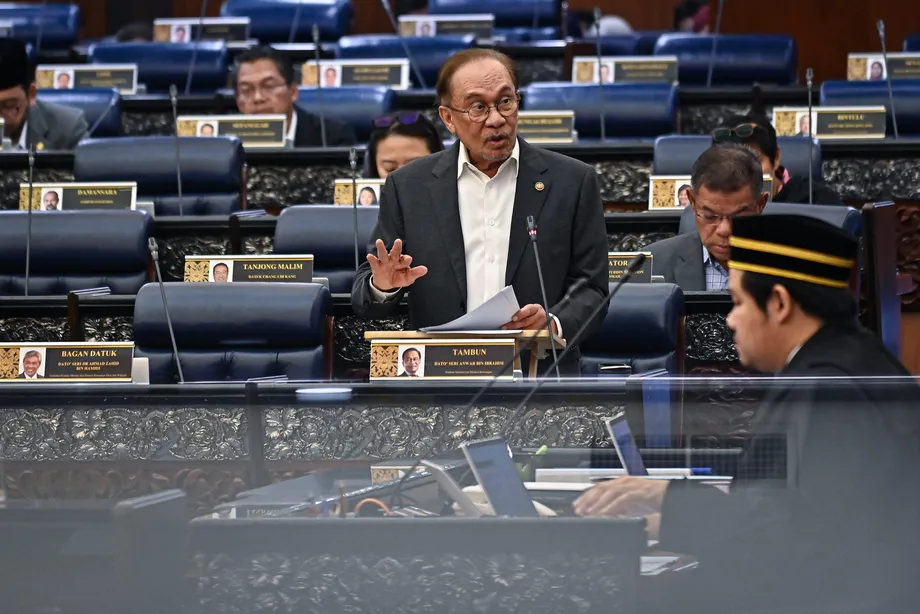
Malaysia's Dewan Rakyat passed the Supply Bill 2027 at the policy stage on October 29, 2026, advancing a budget package valued at RM510 billion and bringing 13 opposition and independent MPs closer to receiving constituency development funds under an agreement with the government.
Contents
- RM510 Billion Package Moves to Detailed Scrutiny
- What Makes Up the RM510 Billion?
- When Will Parliament Finish Its Work?
- Thirteen MPs Join the Funding Agreement
- Constituency Funds and Constitutional Changes
- Government Companies Face Proposed Governance Rules
- Political Financing Proposals Enter Review
- Healthcare and Household Costs Stay Central
- Regional Development, Energy and Drought Planning
- Key Points
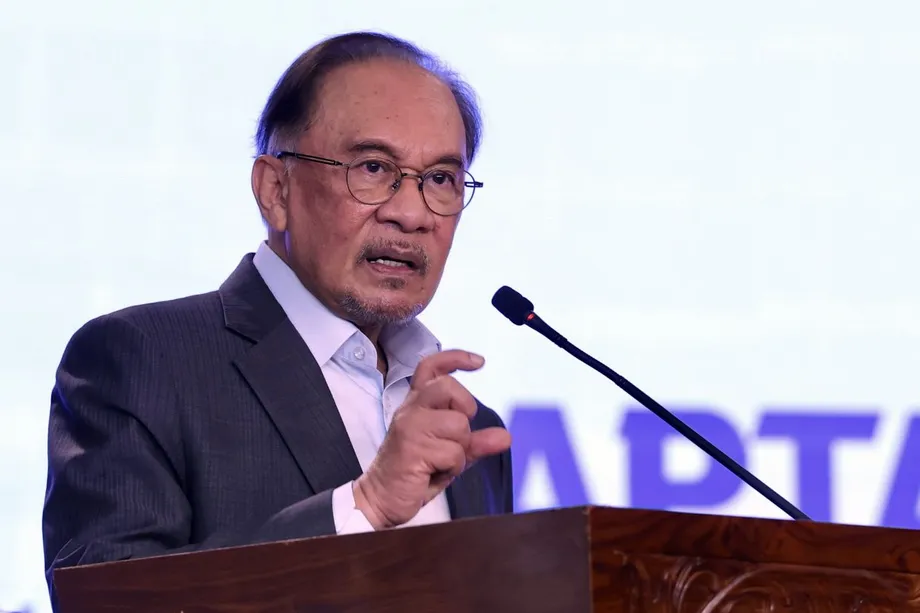
The bill secured majority approval through a voice vote after debates that began on October 12. Prime Minister Anwar Ibrahim, who also serves as finance minister, tabled the budget on October 9. Detailed debate at the committee stage is scheduled for November 2 to 26.
The package combines RM459.8 billion in budget allocations with RM50.2 billion in investments from government investment institutions, partnerships between the public and private sectors, federal statutory bodies and companies under Finance Minister Incorporated. It is the fifth budget under the Madani government.
The policy vote approves the budget's broad direction. MPs will next examine spending in greater detail before the bill proceeds through the remaining parliamentary steps. Anwar said on October 30 that he expected passage by the end of the year, with constituency funds covered by the political agreement to follow immediately according to the budget schedule.
What Makes Up the RM510 Billion?
Budget 2027 carries the theme "Reaching for the Skies, While Anchored on Our Values" and sets out eight pillars covering living standards, national resilience and the country's future. Its financial package has four components:
- RM459.8 billion in budget allocations.
- RM25 billion in investments from government-linked investment companies.
- RM11 billion in investments involving the public and private sectors.
- RM14.2 billion in investments by federal statutory bodies and Finance Minister Incorporated companies.
The three investment components total RM50.2 billion, about 9.8 percent of the RM510 billion package. Budget allocations account for the remaining 90.2 percent. Readers assessing the package therefore need to keep track of both government spending and investment delivered through other institutions.
The government describes the approach as an expansionary fiscal policy. In simple terms, it intends to use spending and investment to support economic activity while pursuing its public service and development priorities.
When Will Parliament Finish Its Work?
The October 29 vote followed debate on the budget's general policy direction. Committee scrutiny gives MPs an opportunity to question the details of spending proposals and ministers an opportunity to explain how their ministries intend to use public money.
The parliamentary timetable separates the completed policy debate from the detailed examination still ahead:
- October 9: Anwar tabled Budget 2027 in the Dewan Rakyat.
- October 12: Debate on the budget's policy direction began.
- October 29: The Dewan Rakyat passed the bill at the policy stage through a voice vote.
- October 30: Anwar said constituency funds covered by the confidence and supply agreement would follow parliamentary passage.
- November 2 to 26: Committee stage debate is scheduled.
- December 8: The Dewan Rakyat session is scheduled to conclude after 37 sitting days.
Anwar's expectation of passage by the end of the year sets the political timetable for releasing the agreed constituency allocations. The precise disbursement date and the amount each participating MP will receive were not announced.
Thirteen MPs Join the Funding Agreement
Six Bersatu MPs agreed on October 29 to support Budget 2027 in return for equal constituency development allocations under a confidence and supply agreement, or CSA, with the Madani government. Six former Bersatu MPs and Muar MP Syed Saddiq Syed Abdul Rahman also signed, bringing the group to 13.
A confidence and supply agreement is an arrangement in which MPs promise support on matters affecting a government's ability to remain in office and obtain funding. Here, the agreement connects support for the budget with constituency allocations and commitments on constitutional reform.
The six Bersatu MPs are Muhyiddin Yassin of Pagoh, Radzi Jidin of Putrajaya, Ali Biju of Saratok, Mohd Suhaimi of Langkawi, Nazri Abu Hassan of Merbok and Azman Nasrudin of Padang Serai. The six former Bersatu MPs were expelled from the party in 2024 after declaring support for the government.
Anwar, speaking after Friday prayers in Kuala Lumpur on October 30, said the government would release the allocations once Parliament passed the bill.
"As soon as it is passed by Parliament, we can disburse the allocation in accordance with the agreement," he said.
Constituency Funds and Constitutional Changes
Anwar distinguished between parliamentary allocations, which he said continue as usual for government and opposition MPs, and constituency development allocations channelled through MPs, which are tied to agreements of this kind.
The distinction matters for residents because constituency development money concerns spending within the areas MPs represent. The agreement creates a route for the participating opposition and independent MPs to receive equal development allocations once the budget passes.
Anwar said similar arrangements had operated under previous governments. He recalled negotiations when he was opposition leader with a government comprising Umno, PAS and Bersatu, and said the same mechanism remained open to others willing to agree to it.
The CSA also requires the government to table two constitutional amendments: one concerning limits on a prime minister's time in office, and another separating the roles of the attorney-general and public prosecutor. The first concerns how long a prime minister can serve. The second would divide the government's chief legal adviser from the office responsible for bringing criminal prosecutions.
Those commitments extend the agreement beyond funding. Tabling an amendment places a proposal before Parliament, where it must go through debate and the required voting process before becoming law.
Government Companies Face Proposed Governance Rules
Anwar also told the Dewan Rakyat that the government is considering a Government-Owned Entities Bill to strengthen oversight of government-linked companies and related agencies. The proposed legislation would establish clearer legal rules and regulatory mechanisms covering entities and their subsidiaries.
He cited financial irregularities involving 1Malaysia Development Berhad, Felda and Tabung Haji as cases the proposed framework would seek to prevent from recurring. He also stressed that political interference should be prohibited in the selection of projects and investments by government-linked companies and investment companies.
Anwar said institutions entrusted with community interests had a particular responsibility to manage their resources properly.
"Government-linked institutions mandated to safeguard the interests of the Bumiputera and the Muslim community must set an example in the practice of good governance specifically regarding integrity, transparency, and management accountability," he said.
The proposal has a direct connection to the budget's structure. Government-linked investment companies alone account for RM25 billion of the wider package. Their project choices, oversight and management will help determine how that part of the package reaches the economy.
Political Financing Proposals Enter Review
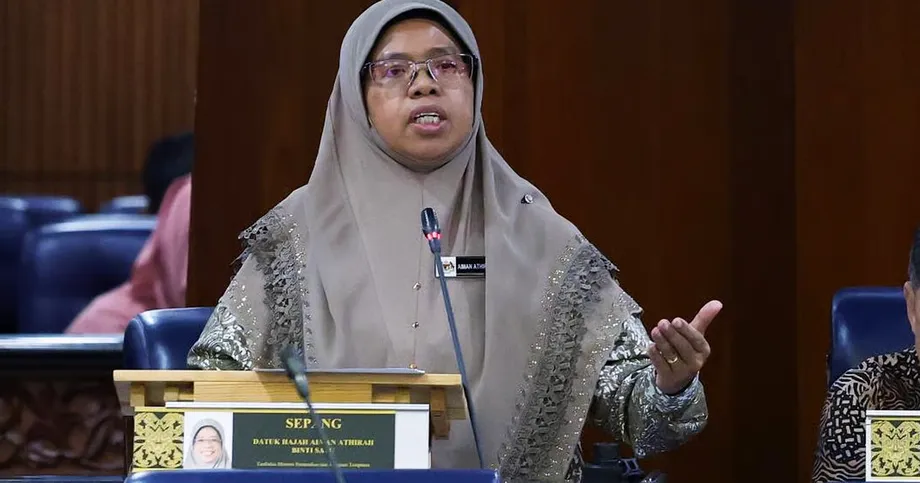
Azalina Othman Said, the minister in the Prime Minister's Department responsible for law and institutional reform, told MPs that policy recommendations for a Political Financing Bill would be presented to the Special Select Committee.
The committee would review the recommendations and gather further feedback before the bill is finalised for Cabinet consideration. Political financing rules concern how political activity receives money, an issue separate from the constituency development allocations negotiated under the CSA.
The proposed financing legislation and the government entities proposal address different decisions involving money: how political activity is funded, and how institutions owned by the government choose and manage investments. Both remained proposals during the parliamentary discussions.
Healthcare and Household Costs Stay Central
Health Minister Dzulkefly Ahmad announced plans to introduce a "cottage hospital" concept in rural areas and expand the outsourcing of hospital services across 16 areas by 2027. The plans form part of the ministry's effort to strengthen public healthcare services.
The rural hospital proposal concerns bringing services closer to communities outside major urban centres. Outsourcing means arranging for services to be provided outside the ministry's own delivery system. The announced plans make access to care and the organisation of services issues for detailed budget scrutiny.
Household finances also featured in the debate. Finance Minister II Amir Hamzah Azizan described BUDI Madani as a targeted subsidy initiative intended to ease living costs while reducing leakage in fuel subsidies. Targeting directs assistance towards intended recipients rather than providing the same support to everyone.
Amir Hamzah explained the government's aim during his reply to the policy debate.
"This is one of the measures we have introduced to help the people reduce their cost-of-living burden, while simultaneously increasing their disposable income," he said.
The debate followed public calls for relief ahead of the budget. In a reader survey of 700 respondents, 40 percent selected lower income tax or higher tax relief as a way to ease living costs, while 27 percent wanted cheaper essential goods. Those requests show the practical household pressures against which budget measures will be judged.
Regional Development, Energy and Drought Planning
Anwar defended larger development allocations for Sabah and Sarawak on the basis of their geography and infrastructure needs. His explanation places the cost of connecting and serving communities at the centre of the government's case for allocating more development money to the two states.
Elsewhere, the budget's tourism and transport plans include RM935 million for tourism and culture in 2027, compared with RM705 million in 2026. The RM230 million increase amounts to 32.6 percent. Johor is also preparing transport connections ahead of the expected February 2027 opening of the Rapid Transit System Link with Singapore.
Energy planning featured in the parliamentary discussions as well. Deputy Prime Minister Fadillah Yusof, who is also minister of energy transition and water transformation, said the Energy Commission was preparing a framework and guidelines for electricity generation by data centres themselves and their use of renewable energy. Data centres house computer systems that store and process digital information, making their electricity arrangements part of the investment picture.
The Ministry of Natural Resources and Environmental Sustainability will also present a proposal for a drought action plan to the National Disaster Management Council. The proposal is intended to strengthen preparedness for weather effects associated with El Niño.
The committee debate will bring these spending and delivery priorities into sharper focus. For households, the practical concerns are access to healthcare and help with costs. For constituencies, the immediate issue is when development money becomes available. For the government, passing the budget must be followed by delivering the programmes and investments it contains.
Key Points
- The Dewan Rakyat passed Budget 2027 at the policy stage on October 29, 2026, through a voice vote.
- The RM510 billion package comprises RM459.8 billion in budget allocations and RM50.2 billion in other investments.
- Committee stage debate is scheduled for November 2 to 26, with the parliamentary session ending on December 8.
- Thirteen opposition and independent MPs signed an agreement linking budget support to constituency development allocations and reform commitments.
- Anwar said the agreed constituency funds would be released after parliamentary passage, according to the budget schedule.
- The government is considering legislation on government entities and political financing, alongside plans involving rural healthcare, data centre energy use and drought preparedness.