October 29 court filing turns up pressure on LAUGFS
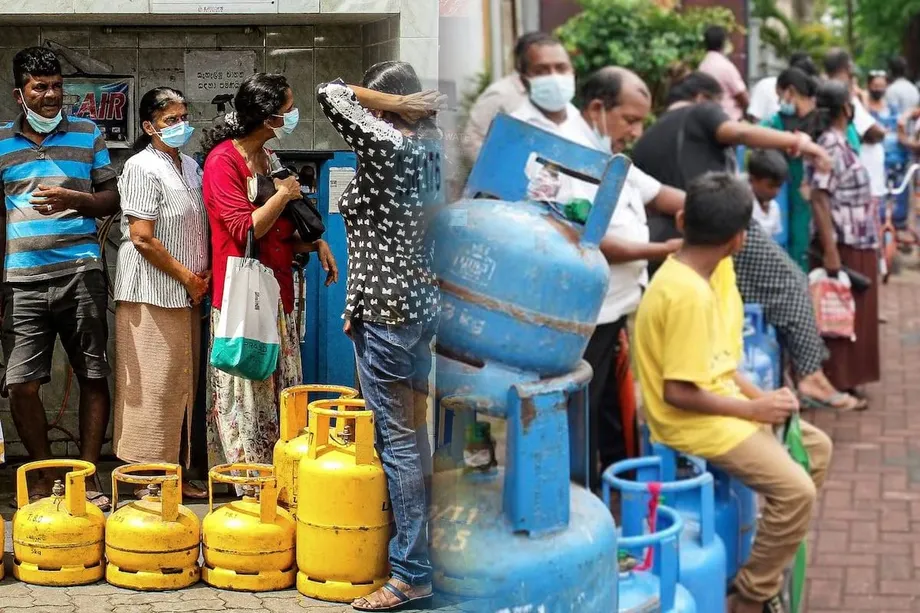
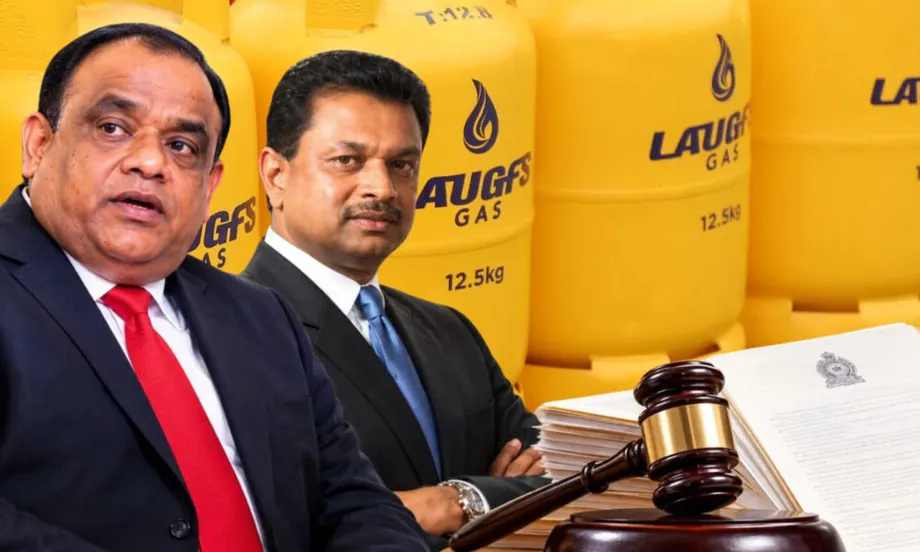
Sri Lanka's Consumer Affairs Authority has filed a case against LAUGFS Gas PLC over its failure to maintain uninterrupted gas supplies, moving beyond warnings as households struggle to obtain cooking fuel. The case was filed on October 29 at Court No. 5 of the Colombo Chief Magistrate's Court, with the company summoned to appear on November 11 before Additional Magistrate Darshima Premaratne.
Contents
- October 29 court filing turns up pressure on LAUGFS
- What the consumer authority is asking the court to address
- How the shipment promises unfolded
- Why gas at Hambantota involves a tax condition
- Litro expands deliveries as demand shifts
- Why changing suppliers can cost thousands of rupees
- Supply problems extend beyond filling cylinders
- Terminal investment talks add another development
- Key Points
The authority alleges that LAUGFS violated its Direction No. 86. Trade Minister Wasantha Samarasinghe said legal proceedings followed a missed shipment of 3,800 metric tonnes and repeated assurances about incoming supplies. The dispute now involves three connected problems: obtaining gas, releasing stocks through the Hambantota terminal and helping customers who cannot afford to change suppliers.
LAUGFS customers face a practical obstacle even as rival Litro increases deliveries. Families who already have a LAUGFS cylinder may need to pay for a different cylinder to use Litro's supply. Some consumers paid deposits of Rs. 10,000 to Rs. 15,000 for their LAUGFS cylinders, according to the minister.
Descriptions of the disruption span different periods. Initial complaints described difficulties lasting three months, Cabinet spokesperson and Health Minister Dr. Nalinda Jayatissa said the market had been affected since September, and LAUGFS customer service described around a month of unavailability. The customer service centre said stocks had been exhausted.
What the consumer authority is asking the court to address
The CAA's case concerns the company's alleged failure to keep gas available to consumers. The authority operates under the Consumer Affairs Authority Act No. 9 of 2003, while the specific allegation in this filing concerns Direction No. 86 and uninterrupted supply.
An official familiar with the matter said LAUGFS had received several notices to restore adequate deliveries before legal action was considered. The company repeatedly responded that shipments were coming but had been delayed. Earlier disruptions were also described in December and April, when requests to restore supply were made.
Samarasinghe accused LAUGFS of misleading consumers through assurances about deliveries and alleged that shortcomings in procurement had contributed to the shortage. Those allegations will form part of the dispute facing the company. The November 11 hearing is the next stated court date, with a decision on the allegations still pending.
For households and retailers, the immediate concern is access to refills. Distributors cannot meet orders without incoming cylinders, while families dependent on gas for cooking must find another fuel or raise money to move to another supplier.
How the shipment promises unfolded
Samarasinghe said LAUGFS had told the Ministry of Finance that a shipment carrying 3,800 metric tonnes would arrive between October 20 and 28. That delivery failed to arrive within the stated period. The company subsequently gave the CAA and the Ministry of Trade a revised arrival window of November 2 to 5.
The main dates show how efforts to secure gas developed alongside the legal action:
- September 2026: Jayatissa said the LAUGFS disruption began affecting the wider gas market.
- October 20 to 28: The arrival window given for a LAUGFS shipment carrying 3,800 metric tonnes passed without delivery, according to Samarasinghe.
- October 27: Jayatissa announced increased Litro cylinder distribution at the weekly Cabinet media briefing.
- October 29: The CAA filed its case against LAUGFS. Samarasinghe also said permission was issued to release more Hambantota terminal gas locally, subject to a tax repayment condition.
- October 31: A Litro vessel carrying 3,900 metric tonnes was expected to arrive.
- November 2 to 5: LAUGFS gave this revised window for its delayed shipment.
- November 11: The case is scheduled before Additional Magistrate Darshima Premaratne.
LAUGFS has not given a confirmed date for normal refill deliveries to resume. The revised vessel schedule, terminal arrangements and distribution to retailers are the immediate steps affecting when consumers can obtain gas.
Why gas at Hambantota involves a tax condition
LAUGFS sought permission to release its entire stock of 3,900 metric tonnes at the Hambantota terminal into Sri Lanka's domestic market, Samarasinghe said. That stock and the delayed shipment are described separately in his account.
The minister said the company's agreement with the Board of Investment requires 80% of the gas covered by the arrangement to be exported and permits 20% to be supplied locally. The percentage governs how terminal gas is allocated between exports and domestic sales.
Samarasinghe said the government issued a letter on October 29 allowing 100% of that gas to be distributed domestically, subject to repayment of tax concessions granted for construction of the terminal. Tax concessions reduce the taxes a business would otherwise pay. In this case, the government tied broader access to the local market to repayment of those benefits.
Applied to 3,900 metric tonnes, a 20% allocation would amount to 780 tonnes. Permission to release the full quantity would make another 3,120 tonnes available locally, provided the stated conditions are met. The full stock is equivalent to 65% of the roughly 6,000 tonnes that Samarasinghe said LAUGFS was expected to supply each month.
Previous requests to increase domestic releases had produced different outcomes. Temporary relief was reportedly granted during December's disaster, while a later request during April's disruption was rejected. The October permission therefore offers a new route for releasing terminal stocks, with a financial condition attached.
Litro expands deliveries as demand shifts
Litro has increased deliveries to absorb demand from consumers affected by the LAUGFS shortage. At the October 27 Cabinet briefing, Jayatissa said daily demand for Litro had risen from about 1,100 to 1,600 metric tonnes, an increase of roughly 45%.
Daily cylinder distribution rose from a usual level of around 74,000 to between 90,000 and 100,000, he said. Those figures represent an increase of about 22% to 35%, or another 16,000 to 26,000 cylinders each day. The minister described the expansion as approximately 25%.
Jayatissa said a vessel carrying 3,000 metric tonnes had arrived and was being unloaded. Another carrying 3,900 tonnes was expected by October 31. Together, the two cargoes amount to 6,900 tonnes.
Litro chairman Channa Gunawardena said monthly market releases had increased from around 32,000 to 40,000 metric tonnes, a rise of 25%. He also put normal monthly cylinder sales at around 1.8 million, compared with approximately 450,000 LAUGFS cylinders.
Samarasinghe gave October distribution as 39,000 tonnes, against the usual 32,000, and said Litro had ordered 41,000 tonnes for November. He put daily distribution at around 1,200 tonnes. Jayatissa's higher figure of 1,600 tonnes referred to demand, illustrating the volume consumers were seeking as the market adjusted.
Why changing suppliers can cost thousands of rupees
A LAUGFS customer seeking a refill needs access to the company's cylinder distribution system. More Litro deliveries help households already able to buy Litro gas, while LAUGFS users may first have to obtain a Litro cylinder.
Samarasinghe said consumers who had paid LAUGFS deposits of Rs. 10,000 to Rs. 15,000 should receive refunds so they could purchase Litro cylinders. The deposit dispute therefore directly affects whether a family can use the extra supply the government has arranged.
Some customers were reportedly offered refunds of only about Rs. 1,000, depending on cylinder age and depreciation, while obtaining a new Litro cylinder could cost more than Rs. 10,000. Depreciation means a reduction in an item's assigned value as it ages. On those figures, a household accepting a Rs. 1,000 refund would still need more than Rs. 9,000 to cover the replacement cylinder cost described.
The minister's call for refunds leaves the practical details unresolved: the amount each consumer would receive, the deductions applied and the process for payment. Families waiting for a refill face that expense alongside the cost of cooking fuel itself.
The LAUGFS refill prices cited during the shortage were Rs. 4,965 for 12.5 kg, Rs. 1,988 for 5 kg, Rs. 795 for 2 kg and Rs. 20,000 for 37.5 kg. Cylinder deposits are a separate expense from the gas purchased during a refill.
Supply problems extend beyond filling cylinders
LAUGFS has an automated filling plant designed to fill about 30,000 cylinders of various sizes a day, according to company information. The facility also has storage for empty and filled cylinders. Its operations still depend on obtaining gas, bringing it into the country and making it available for domestic distribution.
Procurement difficulties have included obtaining the required mixture of butane and propane, the two gases used in liquefied petroleum gas, or LPG. LPG is kept as a liquid under pressure inside a cylinder and released as gas for cooking. The mixture must meet the specifications required for use.
LAUGFS reportedly tried unsuccessfully to obtain smaller quantities from a supplier serving Litro. Samarasinghe separately alleged failures in procurement procedures. The immediate supply problem therefore involves both access to suitable gas and the timing of purchases and shipments.
Company information puts LAUGFS's share of the domestic and commercial LPG market at about 30%, with around 60% of industrial LPG and 85% of retail autogas, the gas used by some vehicles. Another market estimate assigns about 20% of LPG supply to LAUGFS and 80% to Litro. These figures use different market categories and give different pictures of the company's reach.
The monthly cylinder sales figures provide a useful comparison: 450,000 LAUGFS cylinders against 1.8 million Litro cylinders. Together they total 2.25 million, with LAUGFS accounting for one fifth of those units. Cylinder sizes vary, so sales by cylinder and sales by weight measure different things.
Terminal investment talks add another development
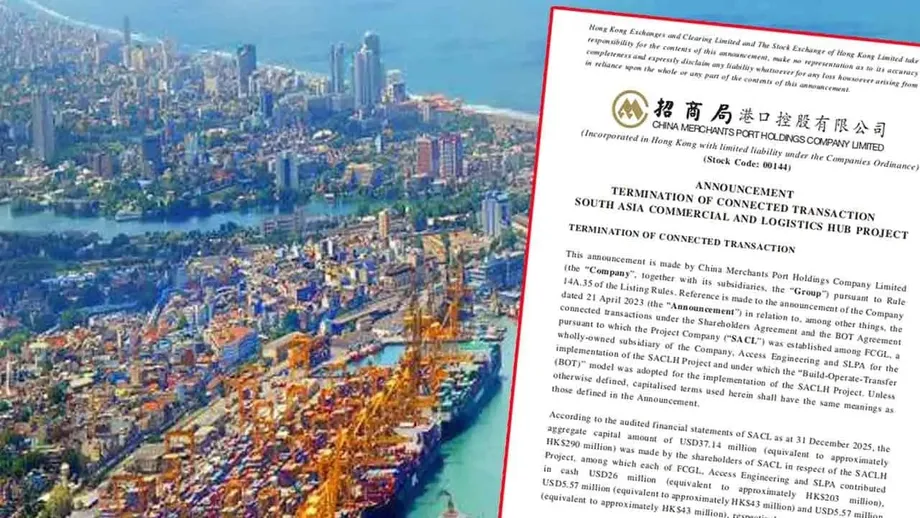
LAUGFS has also disclosed informal discussions about its wholly owned subsidiary, LAUGFS Terminals Limited, which operates a terminal with capacity for 30,000 tonnes of LPG at Hambantota International Port. The options include commercial collaborations, investment and a sale of part or all of the subsidiary.
LAUGFS Gas PLC described the preliminary status of those talks in a market filing:
No agreement has been reached on the structure or terms of any transaction.
The company said no definitive transaction agreement had been entered into and that the financial effect could not yet be determined. Any eventual deal would concern an asset with storage capacity equal to five times the roughly 6,000 tonnes that the trade minister said LAUGFS was expected to supply domestically each month.
LAUGFS Holdings Limited holds 74.02% of the voting shares in LAUGFS Gas, according to the financial ownership information cited for the year ended March 31, 2026. Ownership of LAUGFS Holdings was described in a September 2025 company announcement as divided equally between Vallibel Three, controlled by businessman Dhammika Perera, and LAUGFS founder W.K.H. Wegapitiya.
For consumers, the immediate measures remain more concrete than the corporate discussions: arrival of the delayed cargo, release of Hambantota stocks, delivery of filled cylinders and workable refunds for households seeking another supplier. The November shipment window and November 11 hearing are the next stated dates in that process.
Key Points
- The CAA filed a case against LAUGFS Gas on October 29 over alleged failure to maintain uninterrupted supply under Direction No. 86.
- LAUGFS was summoned to appear on November 11 before Additional Magistrate Darshima Premaratne.
- A shipment of 3,800 metric tonnes missed its October arrival window. LAUGFS subsequently gave November 2 to 5 as the revised window.
- The government permitted full domestic distribution of 3,900 tonnes at Hambantota, subject to repayment of terminal tax concessions, according to the trade minister.
- Litro increased daily distribution to between 90,000 and 100,000 cylinders, compared with its usual 74,000.
- Cylinder deposits and replacement costs remain a major obstacle for LAUGFS customers seeking to switch suppliers.
- LAUGFS is exploring investment or sale options for its terminal subsidiary, with no transaction agreement reached.