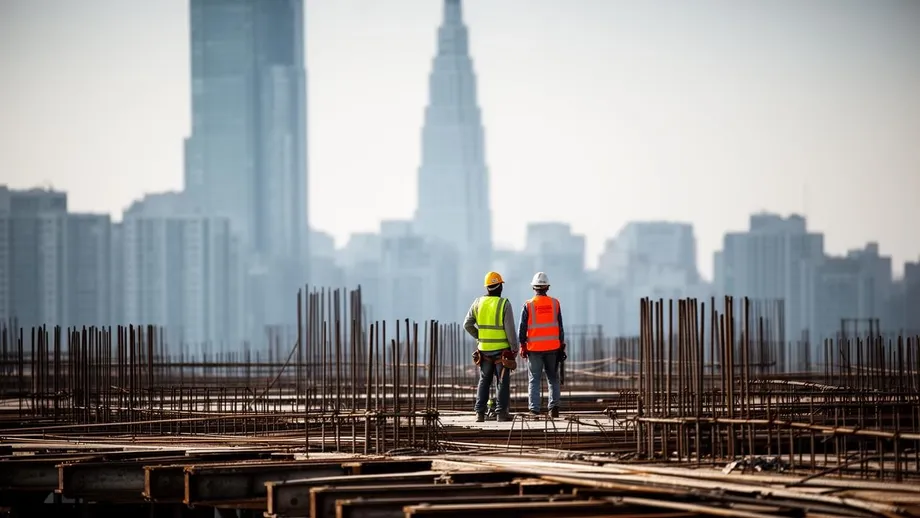
Exports and investment power Taiwan's fastest third quarter in 48 years
Taiwan's economy expanded by an estimated 14.36% in July through September 2026 compared with a year earlier, as demand for artificial intelligence equipment drove exports and businesses stepped up spending on production capacity. The Directorate General of Budget, Accounting and Statistics (DGBAS) released the preliminary figures on October 30.
Contents
- Exports and investment power Taiwan's fastest third quarter in 48 years
- Why the forecast was beaten
- AI demand lifts exports to US$244.9 billion
- Factories buy equipment and expand capacity
- Households spend more on cars, phones and services
- Overseas travel explains part of the spending picture
- Four quarters of double digit growth
- Manufacturing indicators show an uneven picture
- The Bottom Line
The result exceeded the agency's August forecast of 11.42% by 2.94 percentage points and marked the strongest growth for a third quarter in 48 years. Growth accelerated from 12.93% in April through June, delivering a fourth consecutive quarter of double digit expansion.
Two figures show where much of the momentum came from. Capital formation, which includes investment and changes in inventories, contributed 6.32 percentage points to growth. Net exports, the value of exports minus imports, contributed another 4.94 points. Together, those contributions accounted for about 78% of the 14.36% expansion.
Household spending also increased, with real private consumption rising 5.37%. Recovering automobile sales, purchases of new smartphones and gains in household wealth from rising share prices helped support spending beyond the factories supplying the AI industry.
The preliminary estimate put growth for the first nine months at 14.22%, the strongest performance for that period in roughly half a century. A publication date for the next revision was not given.
Why the forecast was beaten
DGBAS identified stronger exports and business investment as the main reasons growth exceeded its August projection. The 14.36% result also surpassed the 12% forecast attributed to economists.
The difference between a forecast and an estimate matters here. August's 11.42% figure was a prediction made before the quarter had finished. October's 14.36% figure was an initial calculation of activity during the completed quarter, using more information about trade, investment and spending.
Investment produced a particularly large surprise. Real capital formation grew 26.36%, exceeding the previous forecast by 4.26 percentage points and reaching its strongest growth in 14 quarters. Private consumption, by contrast, came in just 0.01 percentage points above its August forecast.
The growth figures measure real gross domestic product, or GDP: the value of goods and services produced in Taiwan after adjusting for price changes. That adjustment helps separate an increase in production from an increase in prices.
AI demand lifts exports to US$244.9 billion
Taiwan's merchandise exports reached US$244.9 billion during the third quarter, an increase of 44.63% from a year earlier. The total exceeded the US$238 billion forecast by US$6.9 billion, or about 2.9%.
Demand came from expanding AI applications, high performance computing and cloud services. These activities require chips and computing equipment to process and store enormous quantities of information. Taiwan supplies advanced semiconductors and manufactures equipment used in the data centers supporting those services.
Orders for electronic components used in new consumer products also strengthened. Higher product prices added to the dollar value of shipments, alongside the demand for more equipment.
Real exports of goods and services rose 21.12%. This measure covers a broader range of trade than merchandise exports and adjusts for prices. The 44.63% increase describes the dollar value of physical goods shipped abroad, while the 21.12% figure describes growth in exports of both goods and services after price adjustments.
Growth also reached industries outside electronics and information and communications technology. Excluding those two groups, merchandise exports increased 18.86%. That expansion points to recovery among traditional exporters, although the strongest demand remained closely connected to computing and electronics.
Factories buy equipment and expand capacity
Businesses responded to stronger demand by purchasing machinery, upgrading production technology and expanding capacity. DGBAS specialist Chiang Hsin-yi linked the investment increase to the construction of AI infrastructure, improvements in manufacturing processes and continued spending on research and development.
Capital equipment imports, measured in New Taiwan dollars, rose 58.50% from a year earlier. Within that category, semiconductor equipment imports increased 35.66%. Production of investment goods within Taiwan rose 62.75%, showing that the increase in equipment spending also reached domestic manufacturers.
Machinery was only part of the expansion. Investment also increased in transportation equipment, intellectual property and construction. Intellectual property investment includes assets such as research and development that can help a business produce new products or improve its methods.
The 26.36% capital formation figure combines fixed investment with changes in inventories. Fixed investment covers assets used over time, such as factories and machinery. Inventories are goods businesses have produced or acquired but have not yet sold or used.
Its 6.32 percentage point contribution made capital formation a larger direct contributor to growth than net exports. The relationship between the two helps explain the quarter: overseas demand encouraged businesses to invest, and that investment increased activity within Taiwan.
Households spend more on cars, phones and services
Real private consumption grew 5.37%, marking a second consecutive quarter of growth above 5%. Strong corporate earnings, an improving employment market and record Taiwan share prices supported household income and wealth.
Chiang described how those conditions reached consumer spending. In a translated statement, the DGBAS specialist said:
Record stock market highs and continued improvement in the employment market added to household wealth and income. A recovery in car buying and enthusiasm for new smartphones also drove related consumption.
Registrations of private passenger cars increased by nearly 10%. Retail sales rose 7.60%, while restaurant and food service revenue increased 3.93%. Active trading in financial markets also generated more fees for securities and fund transactions.
The stock market connection is often called a wealth effect. When the value of a household's investments rises, its members may feel more able to spend. In this quarter, that channel operated alongside stronger employment conditions and demand for particular products, including cars and phones.
The figures show a wider spending recovery than an export boom alone would suggest. They also show different speeds of expansion: consumption grew steadily, while capital formation rose almost five times as quickly.
Overseas travel explains part of the spending picture
Taiwan residents increased their spending abroad by 12.54% in real terms during the third quarter, compared with 4.90% growth in their domestic spending. Continued enthusiasm for overseas travel helped explain the faster increase outside Taiwan.
GDP accounting handles those purchases through both consumption and trade. A resident's spending on accommodation or other services overseas enters household consumption, while the service purchased from abroad is recorded as an import. The import entry offsets that foreign production when Taiwan's GDP is calculated.
Imports also matter to the investment story. A business can increase its spending by purchasing a machine made abroad, but the machine's production belongs to the exporting economy. Taiwan's GDP calculation records the investment and subtracts the imported equipment through trade.
That is why the 4.94 percentage point contribution from net exports is useful. It measures the trade contribution after imports have been taken into account, rather than counting the export surge on its own.
Four quarters of double digit growth
Taiwan's latest expansion extends a run that began before 2026. The economy last experienced a longer stretch of double digit growth in 1986 and 1987, when it recorded six consecutive quarters as the government gradually relaxed capital controls and foreign exchange restrictions.
The current figures trace both stronger growth and a substantial improvement over expectations:
- April through June 2026: Real GDP grew 12.93% compared with a year earlier.
- August 2026: DGBAS forecast third quarter growth of 11.42%.
- July through September 2026: Preliminary growth reached 14.36%, the fourth consecutive quarter of double digit expansion.
- October 30, 2026: DGBAS released its preliminary third quarter estimate and put growth for the first nine months at 14.22%.
Across the first three quarters, real exports of goods and services grew 25.34%, capital formation increased 16.69% and domestic demand expanded 8.83%. Those figures show that the strength extended across much of the year, with exports growing faster than domestic demand.
Chiang said the expansion was taking place on top of growth in the previous year, with both domestic and external demand performing well. Stronger orders were feeding into equipment purchases and production capacity, sustaining rapid expansion despite the larger economy used for comparison.
Manufacturing indicators show an uneven picture
Taiwan's manufacturing indicators were less uniformly strong than the GDP headline. The Taiwan Institute of Economic Research's manufacturing business conditions indicator stood at 16.22 points in September, down from August, although it remained in the yellow red category for a fifth consecutive month. That category signals an expanding manufacturing economy.
Among the indicator's five components, demand recorded the largest decline. Business confidence improved, with a greater share of manufacturers expressing optimism about conditions during the month. Taken together, the readings showed more positive business sentiment alongside softer demand momentum.
Hsu Pi-shu, an associate research fellow at the institute, identified conflict in the Middle East, energy price movements and rising government bond yields in major economies as risks to manufacturing. Higher bond yields can feed into borrowing costs, making it more expensive for companies to finance equipment and expansion.
Energy prices also affect the cost of production and shipping. For businesses committing money to new facilities, those costs matter alongside the strength of incoming orders. The third quarter figures show substantial investment already taking place, while September's demand reading identifies a weaker part of the manufacturing picture.
The Bottom Line
- Taiwan's real GDP grew an estimated 14.36% in the third quarter of 2026, its strongest third quarter performance in 48 years.
- The result exceeded the August forecast by 2.94 percentage points and extended double digit growth to four consecutive quarters.
- Merchandise exports reached US$244.9 billion, up 44.63%, while real exports of goods and services grew 21.12%.
- Capital formation rose 26.36% and contributed 6.32 percentage points to GDP growth. Net exports contributed 4.94 points.
- Private consumption increased 5.37%, supported by cars, smartphones, stronger household finances and financial services activity.
- Growth for the first nine months reached 14.22%, while September's manufacturing indicator showed weaker demand alongside improving business confidence.