RM50 million payment leaves Najib awaiting transfer
Malaysia's Attorney General Tan Sri Mohd Dusuki Mokhtar has requested an audience with King Sultan Ibrahim after a dispute over court orders delayed former prime minister Datuk Seri Najib Razak's transfer to house arrest, despite payment of the RM50 million fine required by his conditional pardon.
Contents
- RM50 million payment leaves Najib awaiting transfer
- What the King ordered
- Why the court order matters
- The second sentence changes the stakes
- Anwar sends the attorney general to the palace
- Najib's lawyers demand an immediate move home
- How the case reached this point
- An earlier house arrest dispute had a different origin
- Political pressure grows inside Anwar's coalition
- Key Points
The Prime Minister's Office said on November 7, 2026, that Mohd Dusuki would seek forgiveness and affirm his commitment to implementing the royal decree. Prime Minister Datuk Seri Anwar Ibrahim had instructed him to seek an immediate audience to explain legal questions affecting Najib's remaining sentence in the SRC International case and the start of a separate sentence involving 1Malaysia Development Berhad, or 1MDB.
Najib's lawyer, Muhammad Farhan Muhammad Shafee, said Umno paid the fine at the Kuala Lumpur High Court registry on November 6. The court subsequently issued an order providing for Najib to serve the remainder of his SRC sentence under house arrest until August 23, 2028.
The Attorney General's Chambers, or AGC, temporarily deferred the transfer while seeking clarification about the legal effect of that court order. Najib remains at Kajang Prison, where he has been imprisoned since August 23, 2022.
The immediate question is whether the SRC sentence continues, with Najib serving its remainder at home, or whether the court's discharge order means that sentence has ended. The answer matters because his separate prison sentence of 15 years in the 1MDB case must begin after the SRC sentence finishes.
What the King ordered
Istana Negara said the Federal Territories Pardons Board considered Najib's petition on September 18. The Federal Territories Minister and the attorney general attended the meeting and provided advice to the King.
Sultan Ibrahim then granted a conditional pardon allowing Najib to serve the remainder of his SRC prison sentence under house arrest, subject to payment of the RM50 million fine. The palace said all conditions had now been fulfilled.
In its November 7 statement explaining the King's position, Istana Negara described both the wording and the scope of the order:
This conditional pardon order is clear, explicit, and free from any ambiguity, and it is not linked to any other cases against him.
The palace said the King's pardoning power comes from Article 42 of the Federal Constitution. It called for that power to be respected in accordance with constitutional monarchy and the rule of law, and warned against prolonged uncertainty over implementation.
Istana Negara also said arguments disputing an order whose conditions had been fulfilled would amount to disregarding the King's decree. Its reference to the attorney general's attendance at the September meeting placed his involvement in the pardon process at the centre of the public dispute.
Why the court order matters
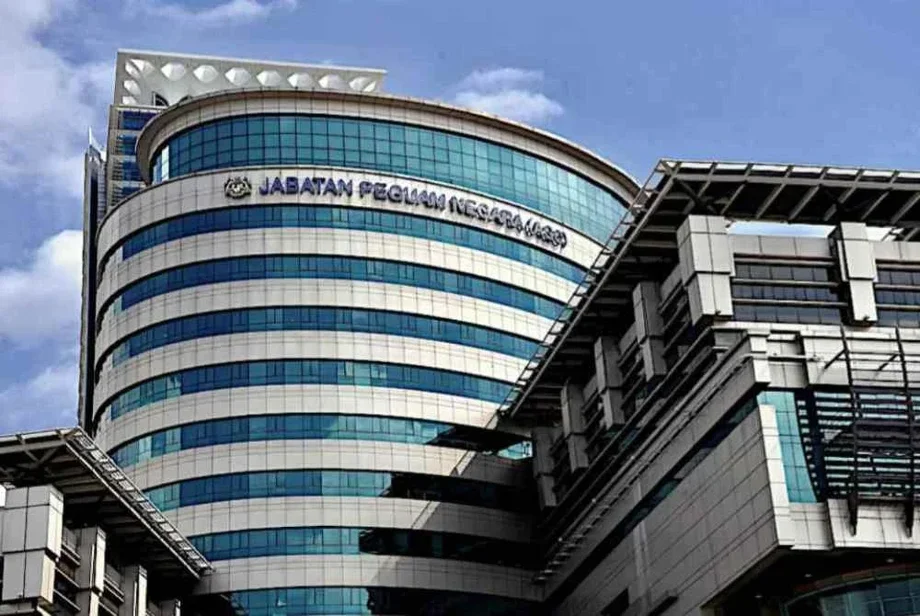
The AGC says its legal concern centres on the Order of Discharge issued by the Kuala Lumpur High Court after the fine was paid on November 6. Its November 7 explanation said that order also provided for Najib to serve his remaining sentence at home until August 23, 2028.
A discharge order directs a person's release from a particular legal basis for detention. Here, the AGC wants the court to determine exactly what that release means for the SRC sentence and the sentence waiting to follow it.
Under the first interpretation set out by the AGC, the payment satisfies the financial condition alone. Najib's SRC prison sentence continues until August 2028, with the remaining period served under house arrest.
Under the second interpretation, payment fulfils the condition for the SRC sentence to be treated as completed. That would bring forward the question of when the 1MDB sentence starts.
The AGC explained its position in a statement addressing the relationship between the two sentences:
If the sentence in the SRC International case remains in effect, there is no issue regarding serving the remaining sentence under house arrest.
The chamber said a court determination would prevent conflicting orders and help ensure Najib is detained under the correct legal authority for the correct period.
The second sentence changes the stakes
Najib received a separate prison sentence of 15 years in December 2025 for corruption and money laundering in the 1MDB case. The High Court ordered that sentence to begin immediately after he completes his SRC sentence.
Najib is appealing against the 1MDB conviction. On October 14, 2026, the High Court rejected his application to suspend execution of that sentence. An appeal asks a higher court to review a decision; a suspension, also called a stay, pauses its enforcement while further proceedings take place.
The SRC conditional pardon applies to the SRC case. The palace has stated that it is unrelated to Najib's other cases, while the AGC says the court must decide how the discharge order affects the timing of the separate 1MDB punishment.
If the SRC sentence continues until August 23, 2028, the 1MDB term would follow it. If the court decides that the SRC sentence has already ended, the next sentence could begin immediately. For Najib, that makes the meaning of the discharge order central to whether he can move home now.
Anwar sends the attorney general to the palace
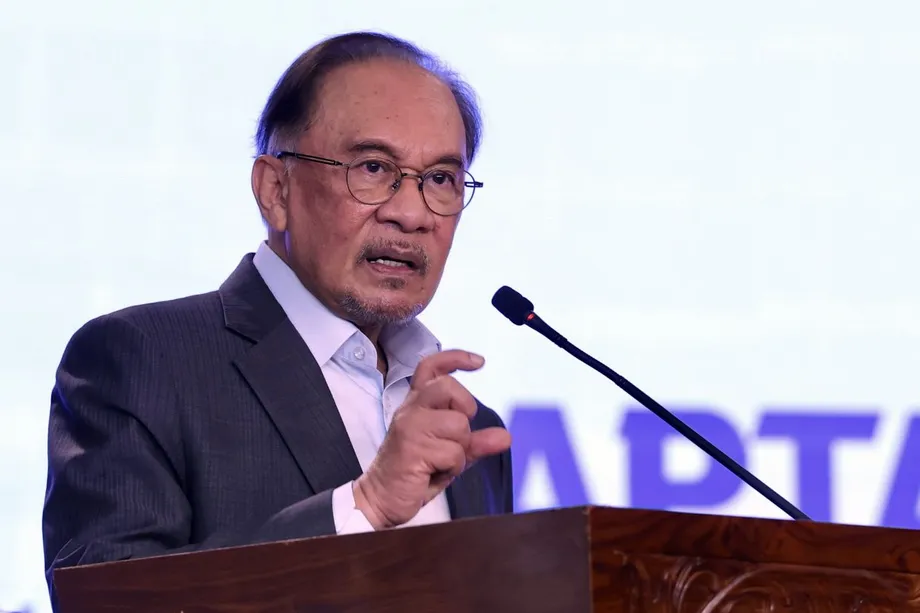
Anwar announced his instruction to Mohd Dusuki after launching the National Family Month celebration in Shah Alam, Selangor, on November 7. He said the attorney general should explain the legal constraints involving the remainder of the SRC sentence and the effects on the 1MDB case.
Anwar maintained that the King's authority and decision had never been questioned. His explanation focused on how the royal decree should be implemented alongside the separate case.
The Prime Minister's Office later said Mohd Dusuki had sought permission for an audience to seek forgiveness and express his intention to comply with the decree. It also said the legal questions arising from the High Court's discharge order required a court decision because they affected the start of the 1MDB sentence.
No date for the royal audience or a court hearing on those questions was announced. The government's stated course therefore involves both an explanation to the King and judicial clarification of the sentencing orders.
Najib's lawyers demand an immediate move home
Najib's legal team, Shafee & Co., accused the attorney general of exceeding his authority, disobeying the royal decree and unlawfully continuing Najib's detention. The firm demanded that the Prison Department expedite his transfer.
The lawyers pointed to Mohd Dusuki's membership of the Pardons Board and his attendance at the September 18 meeting. They argued that the conditions had been met and that Najib should be moved to his residence in Kuala Lumpur.
Farhan Shafee, one of Najib's lawyers, identified the intended destination in a statement following the King's intervention:
They must transfer him immediately to his residence at Jalan Langgak Duta to serve his house arrest, as His Majesty has ordered. Daulat Tuanku,
The AGC rejected the accusations against it. It said it had neither disputed nor set aside the pardon and had no intention of suspending the King's decision. Its explanation described the temporary deferment as a step to ensure that the royal decree and court orders could be carried out lawfully.
The chamber also urged parties to let the judiciary determine how the orders should be executed rather than continue debating the legal questions through the media. During the deferment, it said, Najib would remain at his current place of detention, subject to the powers and directions of the relevant authorities.
How the case reached this point
Najib's current SRC sentence follows a conviction involving RM42 million belonging to SRC International, a former subsidiary of 1MDB. In 2020, he was sentenced to 12 years in prison and fined RM210 million for abuse of power, criminal breach of trust and money laundering.
The developments leading to the present dispute span several years:
- 2020: Najib receives the original SRC sentence of 12 years and a RM210 million fine.
- August 23, 2022: He begins serving his sentence at Kajang Prison.
- January 29, 2024: The Pardons Board meets before a February 2 announcement reducing the sentence to six years and the fine to RM50 million.
- December 2025: Najib receives a separate prison sentence of 15 years in the 1MDB case, to follow the SRC sentence.
- September 18, 2026: Sultan Ibrahim grants the conditional pardon allowing the remainder of the SRC sentence to be served at home once the fine is paid.
- October 14, 2026: The High Court rejects Najib's application to suspend his 1MDB sentence.
- November 6, 2026: The RM50 million fine is paid and the High Court issues its discharge order. The AGC temporarily defers the transfer.
- November 7, 2026: The King calls for implementation, the AGC explains its legal concerns and the attorney general seeks a royal audience.
The 2024 reduction halved the prison term from 12 years to six. It also reduced the fine by RM160 million, from RM210 million to RM50 million. The latest pardon changes where Najib may serve the remainder of that reduced SRC term.
An earlier house arrest dispute had a different origin
Najib previously sought house arrest through litigation concerning an additional order, known as an addendum, that he said followed the January 29, 2024, Pardons Board meeting under the previous King, Sultan Abdullah.
The board's February 2, 2024, announcement of his reduced prison term and fine contained no reference to house arrest. Checks by the legal affairs division of the Prime Minister's Department, which serves as the board's secretariat, found no additional addendum in its official records.
The litigation included a Court of Appeal decision granting Najib permission to pursue judicial review by a majority of two judges to one. A High Court ruling found the alleged addendum unenforceable because it had not been made in consultation with the Pardons Board.
The September 2026 order comes with a specific account from Istana Negara of the board's consideration of Najib's petition and the attendance of the minister and attorney general. The palace has tied its demand for implementation to that process and to the subsequent payment of the fine.
House arrest means serving detention at home rather than inside a prison. Restrictions can govern movement, visitors and monitoring. The present official explanations focus on Najib's eligibility to transfer and the sentence he would be serving, rather than setting out those practical arrangements.
Political pressure grows inside Anwar's coalition
Umno, the party Najib once led and a partner in Anwar's coalition government, demanded immediate implementation of the pardon. Farhan said the party paid the RM50 million fine, giving it a direct role in fulfilling the condition for the proposed transfer.
Umno secretary general Asyraf Wajdi Dusuki called for action against those who failed to comply with the royal order. Youth chief Akmal Saleh said party youth wings across the country would lodge police reports over the delay.
Akmal argued that questions should have been raised at the September 18 Pardons Board meeting rather than after the conditions were fulfilled. Najib's lawyers made a similar argument about the attorney general's participation in that meeting.
Pressure also came from another part of the governing coalition. Democratic Action Party secretary general Anthony Loke pledged to resign as transport minister once Najib returned home, bringing the dispute directly into the government's political relationships.
Anwar's immediate task is to secure an explanation of how the decree and the court orders will be implemented. For Najib, the practical outcome remains his place of detention and which sentence provides the legal basis for keeping him there.
Key Points
- Attorney General Mohd Dusuki Mokhtar has sought an audience with Sultan Ibrahim following Anwar's instruction.
- Umno paid Najib's RM50 million fine on November 6, fulfilling the financial condition of his SRC conditional pardon.
- The King says the pardon is clear, all conditions have been met and implementation should proceed without prolonged uncertainty.
- The AGC wants a court to determine whether the High Court's discharge order leaves the SRC sentence running or treats it as completed.
- Najib's separate 1MDB sentence of 15 years is ordered to begin after his SRC sentence ends.
- Najib remains at Kajang Prison while his lawyers demand an immediate transfer to house arrest.