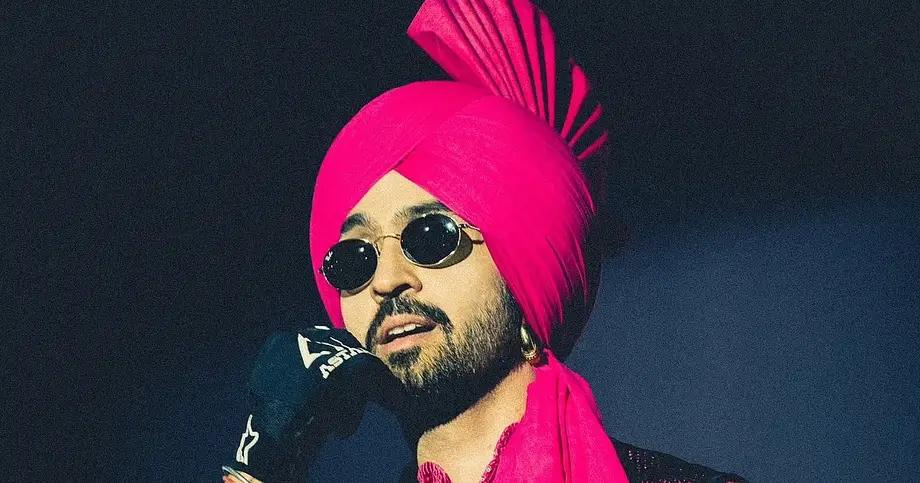
Four songs restricted nine days before the show
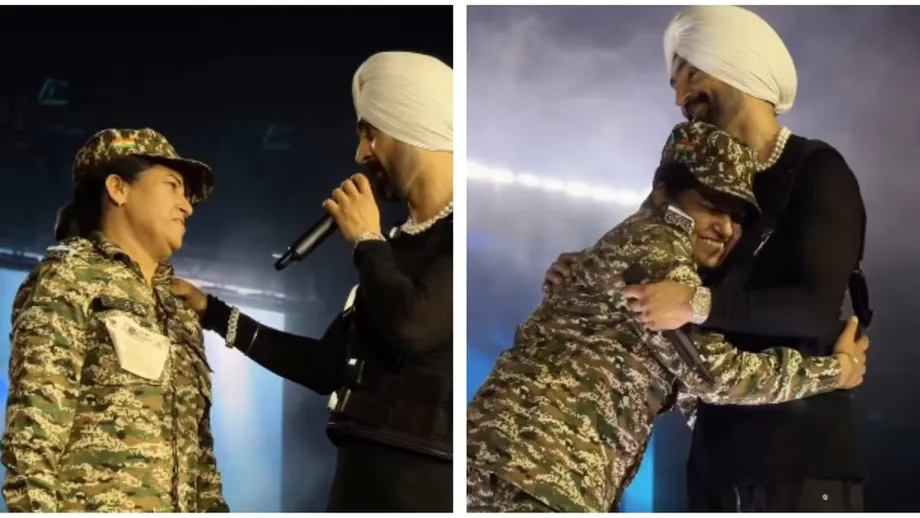
Indore's District Child Protection Officer has directed concert organisers to keep four Diljit Dosanjh songs out of his November 15, 2026, performance, citing concerns about their influence on children aged five and above who will be allowed to attend. The November 6 letter to C-21 Mall management names songs accused of glorifying alcohol, drugs and violence.
Contents
- Four songs restricted nine days before the show
- What the venue has been told
- Why a 2019 court order is central
- Noise rules were part of the same judgment
- The complaint goes beyond the original lyrics
- Children's admission drives the safety argument
- Police investigate threatening emails
- Dosanjh says he will meet fans in Indore
- Indore faced a different dispute in 2024
- The dates shaping the concert and tour
- Key Points
The restricted songs are "Patiala Peg", "5 Taara Theke", "Case (Jeb Vichon Afeem Labhiya)" and "Jatt Fire Karda". The original description of the directive identifies the third song as "Jeb Vicho Feem"; fuller titles used in coverage identify it as "Case". The fourth also appears under its longer title, "Jatt Uthe Fire Karda Jitthe Pabandi Hathiyaran Di".
The show is scheduled at C-21 Estate Ground in Indore, Madhya Pradesh. The letter followed a complaint by Chandigarh professor Dr Panditrao Dharenavar and cited a July 22, 2019, Punjab and Haryana High Court order concerning songs that glorify intoxicants and violence.
Dosanjh has said he intends to perform as scheduled. Preparations are also taking place amid a police investigation into threatening emails sent to three private schools and the office of Indore Mayor Pushyamitra Bhargava. Searches of the schools found no explosives.
The immediate change for organisers is concrete: four popular tracks must be removed from the planned performance. The professor's complaint also seeks restrictions on altered lyrics, children appearing on stage and imitation bullet belts, extending the dispute beyond the song selection.
What the venue has been told
The District Child Protection Officer, part of the Women and Child Development Department, instructed C-21 Mall management to ensure the four songs are not performed. The letter says their lyrics could negatively influence young children and points to the admission of children aged five and above.
Copies were sent to the Indore Collector, the relevant revenue officer, the Joint Director of Women and Child Development and the officer in charge of Vijay Nagar police station. That circulation brings the instruction to the attention of both district administrators and local police.
The stated instruction concerns the four songs. Whether authorities have also accepted the requests concerning modified lyrics, children on stage and costume accessories has not been specified. Organisers therefore face a confirmed restriction on the music alongside additional demands made by the complainant.
Why a 2019 court order is central
Justices Rajiv Sharma and Harinder Singh Sidhu issued the July 22, 2019, Punjab and Haryana High Court judgment while hearing petitions about excessive noise in Punjab, Haryana and Chandigarh. The Indore complaint identifies the case as CWP/27011/2016.
The judgment was delivered in CWP No. 6213 of 2016 (O&M) and connected cases. The committee's proposed policy was intended for implementation in Punjab, Haryana and the Union Territory of Chandigarh.
The bench addressed songs alongside loudspeakers, firearms at processions and educational institutions, and other concerns involving children. Its directions included ensuring that songs glorifying liquor, wine, drugs and violence were not played at live shows.
Direction 28(x) states:
The Director General of Police in the States of Punjab, Haryana and Union Territory, Chandigarh, are directed to ensure that no songs are played glorifying the liquor, wine, drugs and violence in any song even in live shows.
In explaining its concern about violence, the bench stated:
The glorification of violence has given rise to culture of gangsters in the States of Punjab, Haryana and Union Territory, Chandigarh.
The judgment directed authorities in Punjab, Haryana and Chandigarh. Indore's child protection officer has cited it as the basis for the local instruction in Madhya Pradesh, placing a ruling from another region at the centre of preparations for this concert.
The song restriction specifically addresses the Directors General of Police of Punjab, Haryana and Chandigarh; it does not name Indore or Madhya Pradesh. The court also directed that copies of the order be sent to the Chief Secretaries of Punjab and Haryana and the Home Secretary of Chandigarh for compliance.
Noise rules were part of the same judgment
The 2019 proceedings also examined enforcement of the Noise Pollution (Regulation and Control) Rules, 2000. A committee headed by advocate M. L. Sarin told the court that sufficient laws already existed to control noise, but implementation was lacking.
The bench addressed written permission for loudspeakers, restrictions on their use at night and the responsibilities of district and police officials. Its directions also covered noisy construction equipment between 10 pm and 6 am, pressure horns and motorcycles without suitable silencers.
The judgment discussed Rules 2(c), 3, 4 and 5, covering the definition of the enforcing authority, noise standards for different areas and restrictions on loudspeakers. It said state governments must categorise industrial, commercial, residential and silence areas and take measures to keep noise within the prescribed standards.
Under Rule 5, loudspeakers and public address systems require written permission. The judgment described restrictions on their use at night, with an exception for communication within closed premises such as auditoriums, conference rooms, community halls and banquet halls. State governments may permit their use between 10 pm and midnight on cultural or religious festive occasions for no more than 15 days in a calendar year, subject to conditions to reduce noise pollution. Noise at the boundary of a public place using a loudspeaker or other noise source cannot exceed the ambient noise standards by more than 10 dB(A).
The judges relied on the Supreme Court decision in Anirudh Kumar v. Municipal Corporation of Delhi & Ors., 2015(7) SCC 779. That case connected protection from unpleasant or obnoxious noise with Article 21 of the Constitution, which protects life and personal liberty. In practical terms, the issue was people's ability to live peacefully without excessive noise.
For the Indore concert, the dispute therefore brings together two concerns addressed in the earlier proceedings: what audiences hear in the lyrics and how sound is controlled at a public event.
The complaint goes beyond the original lyrics
Dharenavar asked authorities to prohibit the four songs even if Dosanjh changes their words. That request would prevent organisers from resolving the objection simply by replacing references to alcohol, drugs or weapons during the performance.
The professor also cited Nasha Mukt Bharat Abhiyaan, the Union Ministry of Social Justice and Empowerment's campaign against substance abuse. He argued that performances promoting intoxicants would conflict with that campaign.
His clothing objection concerns two silver coloured bandoliers worn across the chest in a cross pattern. A bandolier is a belt designed to hold ammunition; the complaint also refers to imitation metallic cartridges. Dharenavar argued that displaying these accessories symbolised gun culture and could influence young audiences.
The complaint's scope is broader than a demand to remove certain words. It targets the songs themselves, the imagery surrounding the performance and the participation of children on stage.
Children's admission drives the safety argument
Children aged five and above will be permitted to attend, according to the venue letter. Dharenavar cited that admission policy when asking officials to prevent children from being invited onto the stage.
The professor's complaint claimed that concert sound could exceed 120 decibels and that flashing lights could operate at frequencies between 5 and 30 hertz. Decibels measure sound level, while hertz measures how often something repeats each second. For flashing lights, 5 hertz means five flashes a second.
Dharenavar raised concerns about damage to hearing and the possibility of flashing lights triggering seizures in some children. Those figures were presented as concerns about potential conditions at the concert; no measurements from the planned Indore performance have been announced.
The stage request focuses on a different part of the audience experience from the lyric restriction. It concerns bringing children into the performance area, where the complaint says loud music and lighting effects could affect them.
Police investigate threatening emails
Three private schools and Mayor Pushyamitra Bhargava's office received emails threatening bomb blasts in connection with the November 15 concert. The messages also warned schools against sending students to the event.
Police teams and bomb disposal squads searched all three schools and found no explosive material. Additional Deputy Commissioner of Police Rajesh Dandotiya said early findings suggested the emails could be hoaxes, while the crime branch examined technical evidence to trace the sender.
Investigators were also examining whether the email addresses had previously been used by people in two states, one in southern India and another in the north. The identities of those responsible have not been announced.
Mayor Bhargava directed officials to ensure the concert proceeds smoothly without unnecessary obstruction or harassment. The threat investigation concerns the safety of the event, while the child protection directive governs part of its content.
Dosanjh says he will meet fans in Indore
Dosanjh has responded to the controversy by saying he will keep his commitment to the city. The singer also referred to poha, a dish closely associated with Indore, while discussing his planned visit.
Speaking about the November 15 performance, Dosanjh said:
I will visit Indore on 15th of November. I will have poha first after visiting Indore. Anyone can say anything, but I will meet you in Indore on 15th November.
Security arrangements had also complicated the opening Delhi concert. Delhi Police initially withheld permission over security and public order concerns during the festive period. Organisers submitted a revised plan covering safety, traffic and crowd management before the performance went ahead.
About 2,000 security personnel were deployed for the Delhi event, with a zone extending 700 metres around the venue closed to cars. The Delhi performance is dated October 30 in descriptions of its police clearance, while the Aura tour's Delhi NCR launch is also listed as November 1.
Dosanjh separately said during an Instagram Live that plans for a Bihar performance fell through because of disagreement over who would manage the crowd. He said officials expected him to take responsibility, while he considered crowd control a task for the administration.
Indore faced a different dispute in 2024
Dosanjh's December 8, 2024, concert at C-21 Estate Ground also drew objections, although those centred on proposed liquor sales and food stalls rather than the current list of restricted songs.
The Vishwa Hindu Parishad and Bajrang Dal protested against liquor and food containing meat at the venue, citing Indore's cultural traditions. BJP legislators Usha Thakur and Golu Shukla also opposed aspects of the arrangements. Liquor stalls, stalls selling food containing meat and associated advertisements were subsequently removed.
The 2024 show proceeded under heavy security and finished before 10 pm. Compared with that dispute, the current directive reaches directly into the musical programme: the earlier objections changed what could be sold at the venue, while the November 6 instruction changes what can be performed.
Dosanjh also faced criticism in 2024 over tickets being resold illegally at higher prices. He questioned why artists should be held responsible for prices charged by people reselling tickets, arguing that performers had little control over those transactions.
The dates shaping the concert and tour
The Indore event is described as the second Indian stop on the Aura India Tour. Its immediate timetable brings together an older court judgment, a new district instruction and a scheduled performance nine days later.
- July 22, 2019: The Punjab and Haryana High Court issues directions concerning noise and songs glorifying intoxicants and violence.
- December 8, 2024: Dosanjh performs in Indore after protests over proposed liquor and food sales.
- November 6, 2026: Indore's District Child Protection Officer sends the song restriction letter to C-21 Mall management.
- November 15, 2026: Dosanjh is scheduled to perform at C-21 Estate Ground.
The subsequent itinerary lists Ahmedabad on November 21, Mumbai on November 27, Bengaluru on November 29, Lucknow on December 5, Chandigarh on December 12 and Kolkata on December 19.
For Indore organisers, the immediate work is to prepare a performance that follows the song directive while coordinating safety and crowd arrangements with the authorities. For ticket holders, Dosanjh's stated intention remains to appear on November 15.
Key Points
- Indore's child protection officer has directed organisers to exclude four Dosanjh songs from the November 15 concert.
- The November 6 letter cites a July 22, 2019, Punjab and Haryana High Court order concerning songs that glorify intoxicants and violence; its song restriction directs the police chiefs of Punjab, Haryana and Chandigarh and does not name Indore or Madhya Pradesh.
- Children aged five and above will be allowed to attend.
- The complainant also seeks restrictions on altered lyrics, children appearing on stage and imitation bullet belts.
- Police found no explosives during searches of three schools that received threatening emails.
- Dosanjh says he will perform in Indore as scheduled.