A small label amid a growing problem
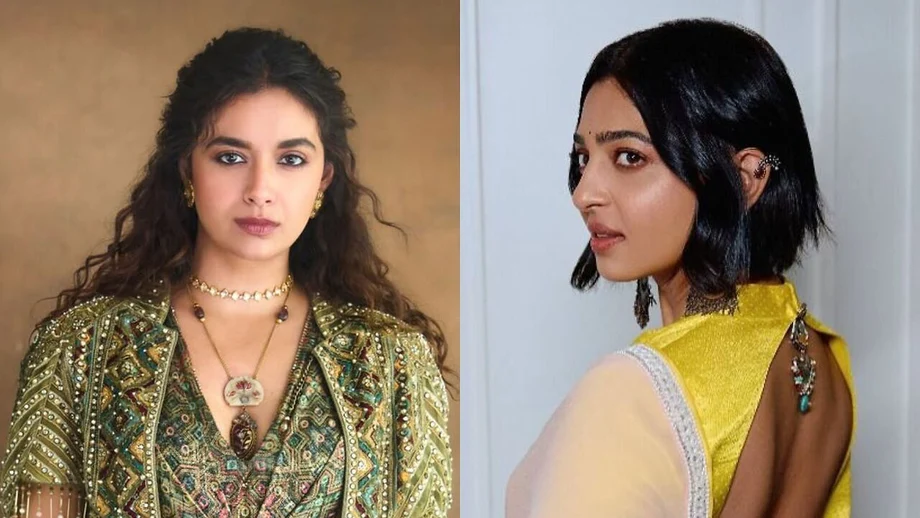
Actors Janhvi Kapoor, Keerthy Suresh and Sunainaa have objected to the misuse of their likenesses in artificial intelligence deepfakes, with warnings of legal action following objectionable images and videos. Their experiences have sharpened a practical question for social media platforms: how easily can viewers tell when the person on screen has been digitally fabricated?
Contents
CB Arun Kumar, a visual effects expert and dean of communications, film and gaming at Pearl Academy, is calling for laws requiring clear, bold labels on content created using AI. He argues that existing notices can be too easy to miss, leaving fabricated material looking like an authentic photograph, recording or news event.
Instagram's AI Info tag is central to his criticism. He describes the notice as appearing in small text between the account username and the posted image or video. His concern is about visibility: a disclosure offers little practical help to a viewer who scrolls past without noticing it.
Arun Kumar explained why he wants stronger labelling requirements:
We need stricter laws that mandate clear, bold labelling of AI content so it can no longer pretend to be news, like some disaster clips that proliferate on the internet. The real problem arises when the audience can no longer tell what's real and what is fake.
His proposal addresses two connected problems. Actors face the personal harm of seeing their identities placed in objectionable material. Audiences face the risk of accepting a manufactured scene as something that actually happened. A visible label would give viewers information at the moment they encounter the image, before they decide whether to believe or share it.
What happened to the actors?
Kapoor, Suresh and Sunainaa are among the actors who have expressed shock or objected after their likenesses appeared in objectionable deepfake pictures or videos. The reactions include warnings of legal action against those responsible for the misuse.
A deepfake is an image, video or audio recording made or altered with AI to make someone appear to do or say something they did not. In an actor's case, recognisable facial features can make the fabrication appear convincing even when the person never participated in its creation.
The immediate problem is control over identity. An actor may choose which roles to accept, which photographs to publish and which products to promote. A fabricated image can place that same actor in a scene they never approved, while viewers may initially assume the appearance is genuine.
Arun Kumar's demand is for a stronger legal requirement, rather than an announcement that a new rule has taken effect. No specific bill, enforcement deadline or proposed penalty was identified in his comments.
Fake images existed before AI
Arun Kumar places the current concern within a longer history of manipulated entertainment imagery. Before today's AI tools, people could use body doubles, Photoshop and visual effects techniques such as cloning and morphing to create false scenes.
Cloning copies elements within an image or sequence. Morphing changes one image into another, including altering a face or its appearance. Both can serve legitimate purposes in film production, where viewers expect constructed scenes. The problem arises when manipulated material is presented as a real record of someone's conduct.
AI has given people another way to produce such material, including those seeking quick financial returns from attention and circulation. Arun Kumar argues that the technology should be judged through its uses, while people responsible for objectionable content should face the legal remedies already available.
Arun Kumar said existing law already provides routes for seeking removal:
There are already plenty of legal ways to take down that kind of objectionable content.
Removal and labelling address different moments in the same chain. A takedown seeks to stop an image from remaining available after it has been challenged. A prominent label helps people assess it while it is still on their screens. His argument brings both tasks into focus: responding to harmful material and making its artificial origin easier to recognise.
Why the size of a label matters
Instagram's small AI notice illustrates the gap between having a disclosure and making it useful. Arun Kumar wants platforms to display the information prominently enough that ordinary viewers can spot it without searching around the image.
A fabricated disaster clip shows why that matters beyond celebrity culture. Someone watching what appears to be footage of a real emergency needs to understand whether the scene was generated. Otherwise, the image can shape their view of an event that never happened in the way depicted.
For actors, the same issue is more personal. Their face is the feature that makes the false image recognisable and attracts attention. A viewer who misses a label may associate the scene with the actor before learning anything about how it was made.
Arun Kumar's demand therefore concerns the presentation of information as much as its presence. A platform can place a notice beside a post, yet its size and position still affect whether that notice reaches the audience. His preferred standard is plain: the artificial origin should be readily visible.
Consent is a separate concern for artists
Arun Kumar also draws a line between rejecting AI as a whole and challenging the use of an artist's work without permission. The first is a judgment about an entire technology. The second concerns how particular material was obtained and used.
Training is the process through which an AI system learns patterns from examples, which may include pictures, text, sound or video. Artists concerned about training are asking what happens when their creative work becomes part of that process without their consent.
That issue reaches beyond a visible deepfake. An actor may object to a fabricated appearance, while an illustrator or other creator may object to the use of their work in developing the system that generates new images. The people affected, and the conduct they challenge, can be different.
Arun Kumar argues that blanket condemnation of AI overlooks those distinctions. His position leaves room for legitimate creative uses while taking objections about permission seriously. For readers, the useful questions are concrete: whose identity appears, whose work was used, and what permission was given?
Digital artists face pressure on their earnings
Graphic artists working across media, business, film, television, architecture and fashion face another consequence of AI's spread, according to Arun Kumar. Their concern is their ability to earn a living when companies can generate some kinds of visual material more quickly.
Arun Kumar says work that requires painstaking human effort is losing commercial value as AI output becomes a competing option. Clients deciding how to produce an image may consider speed and cost alongside the skills and judgment of an artist.
The pressure can also affect how human work is perceived. Arun Kumar warns that carefully produced images may be compared with low quality AI output. For an artist, that means explaining the value of their work in a market where audiences and clients increasingly encounter both.
Arun Kumar described the employment pressure and his advice to artists:
The reality is that the AI revolution is putting them out of work because it can do the work faster. True artists who can use AI as another tool in their pipeline will survive and thrive.
A pipeline is the sequence of steps used to complete a creative project, from an initial idea to the finished image or film. His advice is to learn where AI can fit into that process, while continuing to bring human choices and craft to the work.
His prediction is optimistic about artists who adapt, but his account also recognises the immediate strain on people whose income depends on tasks that AI can accelerate. The actors seeking protection from fabricated appearances and the artists facing cheaper competition are experiencing different parts of the same technological shift.
The Bottom Line
- Janhvi Kapoor, Keerthy Suresh and Sunainaa are among the actors who have objected to deepfake misuse of their likenesses.
- Pearl Academy dean and VFX expert CB Arun Kumar wants laws requiring clear, bold labels on AI content.
- He argues that small notices, including Instagram's AI Info tag, can be too easy for viewers to miss.
- He supports action against harmful uses of AI and raises concerns about artists' work being used without consent.
- He says digital artists face pressure on earnings and should learn to incorporate AI into their creative processes.