36,800 US Tickets Put Ramayana Within Reach of Third Place
Ramayana: Part 1 has sold approximately 36,800 tickets worth $810,000 for its November 4 paid previews in the United States, placing it fourth on the cited list of Indian films by advance ticket sales for those screenings. With its worldwide release scheduled for November 5, 2026, the film is approaching the listed totals for Baahubali 2 and Kalki 2898 AD.
Contents
- 36,800 US Tickets Put Ramayana Within Reach of Third Place
- Which Films Are Still Ahead?
- India Bookings Depend on What Is Counted
- IMAX Generates a Quarter of Early Revenue
- Where Indian Demand Is Strongest
- Overseas Sales Raise Opening Weekend Expectations
- A Cast and Release Plan Built for Several Markets
- Music Promotion Accompanies the Booking Campaign
- The Dates That Matter
- Key Points
A broader North American count puts advance sales above 43,000 tickets and $1 million for November 4 screenings. That figure covers a larger territory than the United States alone, so the US total remains the basis for the fourth place comparison.
Worldwide advance bookings have meanwhile exceeded Rs 40 crore, with overseas reservations contributing around $3.5 million. In India, the booking figures show substantial demand, though totals vary depending on whether seats blocked by cinemas are included.
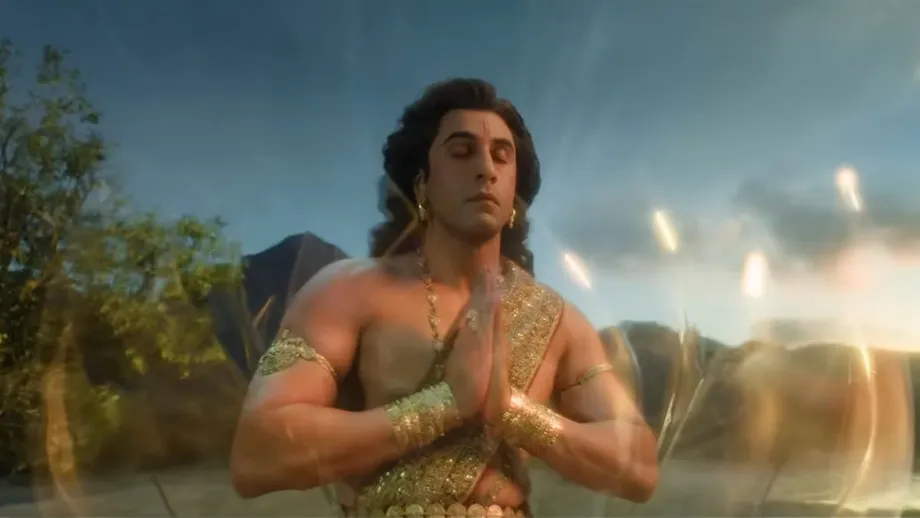
Directed by Nitesh Tiwari, the film stars Ranbir Kapoor as Lord Rama, Sai Pallavi as Sita and Yash as Ravana. Its early commercial story combines strong international reservations with expensive IMAX screenings that are generating a much larger share of revenue than their share of shows.
Which Films Are Still Ahead?
Ramayana has passed the listed US preview ticket totals for RRR, Pathaan, Pushpa 2, Jawan and Animal. The next benchmarks are close: Baahubali 2 is listed at more than 39,000 tickets and Kalki 2898 AD at more than 40,000.
Dhurandhar: The Revenge, also referred to as Dhurandhar 2, leads the comparison with more than 52,000 tickets. The figures below are approximate advance booking benchmarks, with several expressed as minimum totals:
- Dhurandhar 2: more than 52,000 tickets.
- Kalki 2898 AD: more than 40,000.
- Baahubali 2: more than 39,000.
- Ramayana: approximately 36,800.
- RRR: more than 35,700.
- Pathaan: approximately 35,700.
- Pushpa 2: approximately 35,000.
- Jawan: more than 28,000.
- Animal: more than 24,000.
Using the listed thresholds, Ramayana needs roughly 2,200 additional US reservations to reach 39,000 and 3,200 to reach 40,000. Reaching 52,000 would require another 15,200 tickets, an increase of about 41% from its current US tally.
Paid previews allow audiences to watch a film before its main release date. For Ramayana, those screenings fall on November 4, one day before the worldwide opening. The ranking concerns tickets reserved for that specific preview window, while the wider commercial campaign also includes opening day and weekend bookings.
India Bookings Depend on What Is Counted
India has recorded approximately 334,000 advance ticket purchases excluding blocked seats, with gross receipts of Rs 16.55 crore in one tally attributed to box office tracker Sacnilk. Another Sacnilk tally lists the same rounded ticket count across 6,780 shows at Rs 17.13 crore.
Including blocked inventory, the larger domestic figure rises to about 407,000 seats and Rs 19.89 crore. Cinemas can hold seats out of public sale for operational or commercial reasons. A booking total that includes that inventory therefore measures a broader pool than tickets bought by customers.
The difference between the paired totals of Rs 19.89 crore and Rs 16.55 crore is Rs 3.34 crore. The associated seat counts differ by approximately 73,000, making the treatment of blocked inventory a substantial part of the headline figure.
Earlier Sacnilk tracking put domestic advance receipts at Rs 11.11 crore, or Rs 8.89 crore excluding blocked seats, with nearly 200,000 tickets booked. Films Discourse separately measured early receipts for the first three days at Rs 11.38 crore across 12,604 shows in 151 cities, rising to Rs 21.92 crore with blocked inventory. Those figures cover different booking measures and screening periods.
IMAX Generates a Quarter of Early Revenue
IMAX screenings account for just 3.8% of Indian shows in the early format breakdown but approximately 25% of advance booking earnings. That gives the format a revenue share about 6.6 times its share of scheduled shows.
More than 23,000 tickets were booked across roughly 140 IMAX screenings. The figures suggest about 164 reservations per screening, compared with an early average of around 35 for regular shows.
Ticket prices help explain the revenue gap. Average IMAX prices range from Rs 1,095 to Rs 1,500, against about Rs 380 for standard 2D and 3D screenings. On those figures, an IMAX seat costs roughly 2.9 to 3.9 times as much.
Ramayana is being presented in IMAX with a production built around large visual effects sequences. Early buyers are paying a premium for that presentation, giving the film a substantial revenue contribution from a relatively small number of shows.
Where Indian Demand Is Strongest
Karnataka leads the later state collection breakdown at Rs 3.54 crore, followed by Maharashtra at Rs 3.35 crore and Delhi at Rs 3.06 crore. Together, those three markets contribute Rs 9.95 crore, about 58% of the Rs 17.13 crore domestic tally accompanying that breakdown.
Maharashtra had led an earlier snapshot with between Rs 2.44 crore and Rs 2.98 crore. At that stage, the Delhi National Capital Region had passed Rs 2 crore and Karnataka had exceeded Rs 1.47 crore. The changing order shows how the geographic balance can shift as bookings accumulate.
Hindi accounts for approximately 87% of domestic advance revenue in the early language breakdown. Kannada reservations have crossed Rs 1 crore across about 100 screens, while the initial Telugu rollout was limited to selected locations before a planned expansion.
PVR Inox and Cinepolis together account for roughly 77% of tracked domestic advance receipts in the early chain breakdown. Demand is therefore heavily concentrated in major multiplex operators as well as in the Hindi version, even though the film is scheduled to open in five languages.
Overseas Sales Raise Opening Weekend Expectations
North America has emerged as Ramayana's biggest international market. Overseas bookings grew from an early figure above $1.1 million to around $3.5 million, while worldwide advance receipts moved beyond Rs 40 crore after previously crossing Rs 24 crore.
The wider North American premiere count of more than 43,000 tickets and $1 million points to demand across the region. The narrower US tally of $810,000 for 36,800 tickets works out to approximately $22 per reservation.
Opening weekend projections put overseas revenue above $20 million, with a possible $25 million if additional international markets perform strongly. Those are forecasts for the weekend rather than money already collected through advance sales.
Dhurandhar 2 provides a benchmark with an overseas opening of approximately $21.25 million, while Jawan collected around $21 million during its opening weekend in 2023. An opening near the lower end of Ramayana's forecast would put it close to those figures; reaching $25 million would place it above both.
Final preview sales, cinema attendance after release and the overseas opening weekend total are still pending. The next concrete milestones are the November 4 paid previews and the November 5 worldwide opening.
A Cast and Release Plan Built for Several Markets
Ranbir Kapoor's Rama, Sai Pallavi's Sita and Yash's Ravana lead an ensemble that also includes Ravie Dubey as Lakshmana and Sunny Deol as Hanuman. Lara Dutta, Rakul Preet Singh, Arun Govil, Indira Krishnan, Sheeba Chaddha, Addinath M. Kothare and Kunal Kapoor are among the other cast members.
Namit Malhotra's Prime Focus Studios is producing the project with Yash's Monster Mind Creations, with visual effects company DNEG involved in the production. A.R. Rahman and Hans Zimmer have composed the music.
The film retells the Ramayana's story of Rama, Sita and the conflict with Ravana. The production is planned as two films, allowing the first installment's release to begin a theatrical story that is scheduled to continue at Diwali 2027.
Hindi, Tamil, Telugu, Kannada and Malayalam versions are scheduled for release. Sony Pictures is handling distribution outside India, while Dharma Productions will distribute the film in the Hindi speaking market. The arrangement places international distribution and the main Hindi release with different companies.
Music Promotion Accompanies the Booking Campaign
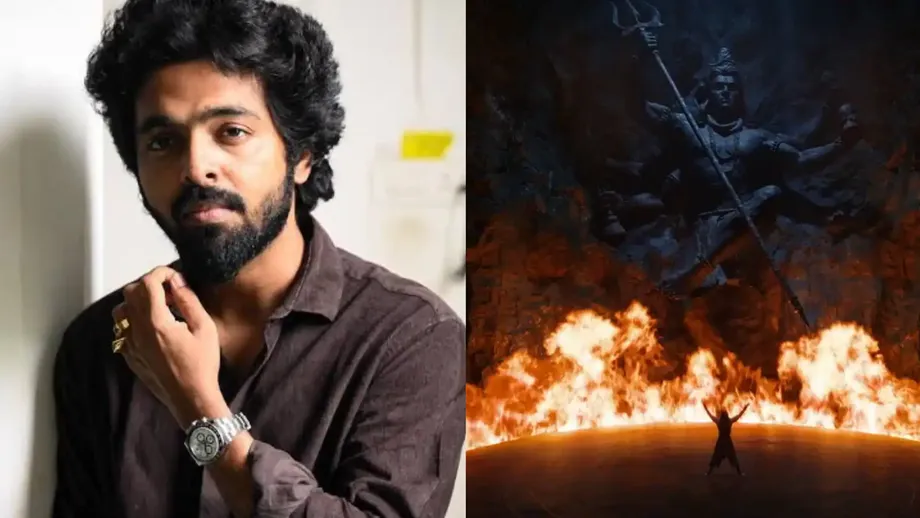
The advance sale campaign has coincided with promotion of the film's music, including the October 20 release of the Tamil version of Ravana Tandavam. Anirudh Ravichander and G.V. Prakash Kumar joined as singers on the track composed by Rahman.
The Ravana Tandavam release put Yash's portrayal of Ravana at the centre of a promotional sequence devoted to Lord Shiva. The video prompted praise for his performance alongside criticism of the music and Hindi lyrics.
Prakash said his recording involved rap and chants at Rahman's Panchathan Record Inn studio in Chennai. The song campaign gives the production a route to Tamil audiences alongside the five language theatrical release, while the booking figures so far show Hindi contributing the largest share of Indian revenue.
The Dates That Matter
Ramayana's release campaign runs from October ticket sales to November screenings, with the second film scheduled for the following year. The key dates are:
- October 20, 2026: Nationwide advance bookings opened, coinciding with Dussehra. The Tamil version of Ravana Tandavam was also released.
- November 4, 2026: Paid preview screenings are scheduled in the United States and elsewhere in North America.
- November 5, 2026: Ramayana: Part 1 is scheduled to open worldwide in five Indian languages.
- Diwali 2027: Ramayana: Part 2 is scheduled for release.
For cinemas, the immediate test is whether the early concentration in premium formats and major chains expands into stronger attendance across regular screenings and more locations. For audiences, the first choice arrives with the November 4 previews, followed by the wider release a day later.
Key Points
- Ramayana has approximately 36,800 US paid preview reservations worth $810,000, placing it fourth in the cited ticket comparison.
- The broader North American premiere tally exceeds 43,000 tickets and $1 million.
- Worldwide advance bookings have passed Rs 40 crore, including around $3.5 million overseas.
- India has approximately 334,000 purchased tickets excluding blocked seats; larger totals include inventory held by cinemas.
- IMAX contributes about 25% of early Indian booking revenue from 3.8% of shows.
- Part 1 opens worldwide on November 5, 2026, with Part 2 scheduled for Diwali 2027.