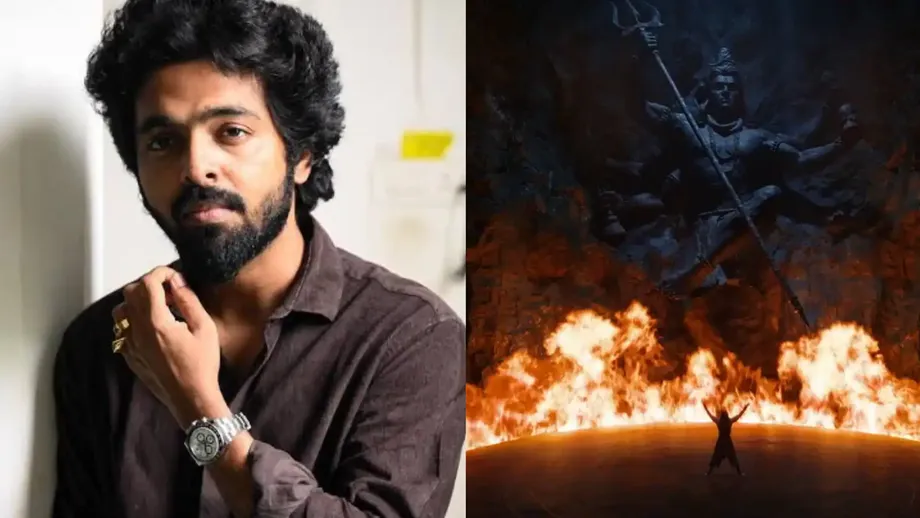
Two composers lend their voices to Ravana
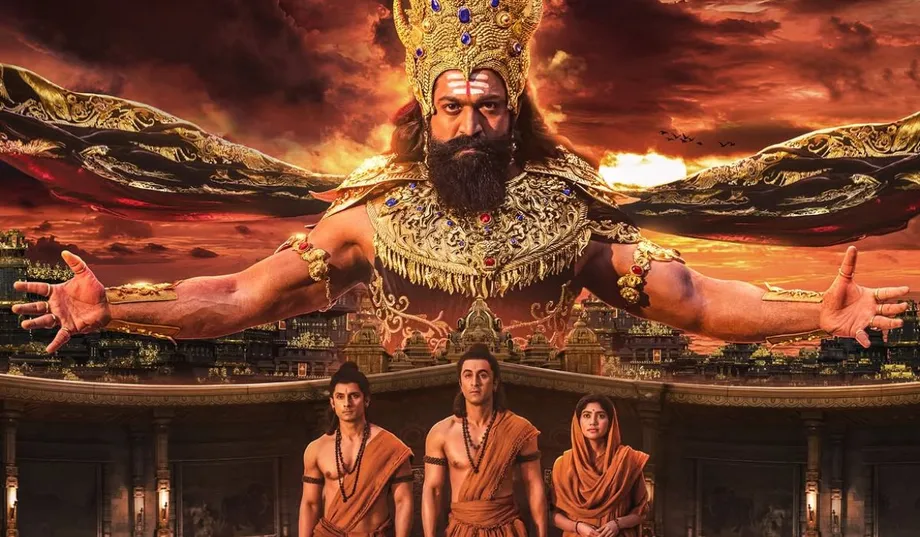
Anirudh Ravichander and G.V. Prakash Kumar have sung the Tamil version of Ravana Tandavam for Nitesh Tiwari's Ramayana: Part 1, bringing the two composers together as vocalists on the same song for the first time. The promotional video runs for one minute and 55 seconds and places Yash's Ravana at the centre of an intense ritual devoted to Lord Shiva.
Contents
- Two composers lend their voices to Ravana
- An unexpected call after Ayodhya
- What Yash's performance shows
- Different voices across languages
- Why the brief release has divided listeners
- A trailer builds the Rama and Ravana conflict
- A large cast and a budget covering two films
- The promotional calendar and release plans
- Key Points
Anirudh announced his involvement on social media, saying he had sung the Shiva Tandava Stotram and expressing gratitude for the opportunity to sing for A.R. Rahman. Prakash described a recording session involving rap and chants, completed in about two hours at Rahman's Panchathan Record Inn studio in Chennai.
The Tamil track was released on October 20. It forms part of a campaign for a film scheduled to open worldwide on November 5, 2026, with Ranbir Kapoor as Rama and Sai Pallavi as Sita. The second part is planned for Diwali 2027.
The song has drawn attention for both its performers and its treatment of Ravana. Some viewers have praised Yash's dance and commanding presence, while others have criticised the music and Hindi lyrics. Those reactions place a brief promotional release at the centre of a larger challenge for the production: finding a fresh musical identity for an epic familiar to generations of viewers.
An unexpected call after Ayodhya
Prakash's involvement began after a visit to Ayodhya to promote Nayyi Navelli, starring Yami Gautam. He had attended the launch of the film's song Awadhiya Ke Raja before receiving an invitation to sing for Ramayana.
Prakash, a composer, actor and singer who is also Rahman's maternal nephew, described the unexpected invitation:
I didn't know beforehand. While I was coming back from the airport, I got a call from AR Rahman asking me to come and sing.
Prakash recorded at Panchathan Record Inn in Chennai, reportedly finishing his contribution in two hours. His account places the session about six days before the interview in which he discussed it, suggesting a short interval between recording and release.
Anirudh's participation added another connection between musicians better known for composing their own film scores. Prakash said he learned during the process that Anirudh would also be singing.
Describing the collaboration with Rahman and Anirudh, whom he called Ani, Prakash said:
It was rap and some chants, and we did that together. I am very happy to record a song for him after so many years. And then they told me Ani is also singing. So, for the first time, you know, it was a collaboration between Rahman sir, me and Ani together. I am happy that it happened, that all three of us are in one song!
What Yash's performance shows
Yash's sequence presents Ravana as a devotee of Shiva. The video opens with him cutting his palm with a dagger, applying a Tripund tilak to his forehead and preparing for worship. The tilak is a religious marking associated with devotion to Shiva.
Ravana then performs aarti before a large Shiva idol before beginning the Tandav. Aarti is a ritual offering of light. The Tandav is the powerful dance associated with Shiva, whose imagery brings together creation, preservation and destruction.
The Shiva Tandava Stotram is a hymn praising Shiva, traditionally associated with Ravana. Its forceful rhythm gives the sequence a connection between music, movement and devotion. Prakash's description of rap and chants suggests that the film combines that religious foundation with contemporary vocal techniques.
The choice gives audiences a view of Ravana beyond the battlefield. The same character who confronts Rama is shown worshipping with fierce concentration. For Yash, the scene combines a dance performance with the task of establishing Ravana's religious devotion and physical power.
Different voices across languages
The Tamil rendition features lyrics by Ilango Krishnan and vocals by Anirudh and Prakash. Vishal Dadlani sings the Hindi version, whose lyrics are credited to Kumar Vishwas. The Hindi promotional unit has also been presented under the title Rise of Asura.
Rahman is credited with composing the track in Anirudh's announcement and the main accounts of its release. Another published credit names A.R. Ameen and Hiral Viradia as composers; their precise roles in relation to Rahman's have not been clarified.
The film's wider music collaboration brings together Rahman and Hans Zimmer for the first time. Their involvement gives Ramayana two composers with international recognition, while the regional vocal recordings connect the production to different Indian audiences.
Ramayana is planned for release in Tamil, Telugu, Kannada, Malayalam and other languages. For the Tamil song, choosing Anirudh and Prakash makes their voices part of the film's appeal, even though their contribution here is as singers rather than as the composers leading the project.
Why the brief release has divided listeners
The promotional cut lasts 115 seconds. The full version in the film is reportedly four minutes long, meaning the public preview contains just under half that running time. The longer version would have another two minutes and five seconds in which to develop its musical passages.
Some listeners have argued that shortening the track interrupted its flow. Others have said Rahman's composition lacks the energy they expected from a sequence built around Ravana's devotion to Shiva. Kumar Vishwas's Hindi lyrics have also attracted criticism from viewers who wanted a stronger sense of spiritual intensity.
Comparisons have focused on Ajay–Atul's Shiv Tandav from Adipurush. Some social media users have suggested that Ajay–Atul should compose for Ramayana's second part. The announced music partnership remains Rahman and Zimmer.
Positive responses have centred on Yash's screen presence, his return to an extended dance sequence and the combination of Anirudh's and Prakash's voices. The reactions show that audiences are judging several elements at once: the performance, the devotional mood, the lyrics and the arrangement.
The criticism of Kumar Vishwas concerns the Hindi words, while Ilango Krishnan wrote the Tamil lyrics. Readers following discussion of the song across languages therefore need to know which rendition a comment addresses. The singers and lyricists change even when the visuals and central dramatic idea remain shared.
A trailer builds the Rama and Ravana conflict
The second trailer was unveiled in Bengaluru on October 15. It showed Ranbir Kapoor's Rama vowing to destroy evil and Yash's Ravana presenting himself as ruler of the three realms.
The footage also included Ravana fighting divine forces and Jatayu confronting him during Sita's abduction. Moments between Rama and Sita appeared alongside large battle scenes and encounters with powerful creatures.
Ravana Tandavam extends that campaign by concentrating on one character rather than the conflict as a whole. The trailer establishes Ravana's threat; the musical sequence adds his devotion to Shiva. Together, the releases outline how the film intends to present both his strength and his religious identity.
Earlier promotional footage drew praise for its scale and visual effects, as well as complaints from some viewers who saw similarities to Game of Thrones, The Lord of the Rings and other Hollywood productions. The song has moved part of that discussion from the film's imagery to its sound.
A large cast and a budget covering two films
Nitesh Tiwari directs the adaptation of the Ramayana associated with the ancient poet Valmiki. Alongside Kapoor, Pallavi and Yash, the cast includes Sunny Deol as Hanuman, Ravie Dubey as Lakshman and Rakul Preet Singh as Surpanakha. Lara Dutta and Sheeba Chadha are also part of the ensemble.
Namit Malhotra is producing the project, with Yash's Monster Mind Creations, Prime Focus Studios and Double Negative named among the companies involved. Malhotra has put the combined budget for the two films at about $500 million, or more than Rs 4,000 crore.
Malhotra described the spending while discussing how long the production had been in development:
When we set out to make this six or seven years ago, people thought I was a lunatic because no Indian film comes close to this scale. Put simply, the budget will be around $500 million for both parts combined, which is over Rs 4,000 crore.
The figure covers both instalments. With the second film planned for Diwali 2027, the production is building an audience for a story that will continue beyond the first release.
Rahman has also described the pressure of working with Zimmer on an epic that audiences already know. Explaining their musical approach, he said:
It's terrifying for both of us. We're scoring something so iconic and so important to the world.
His account of their work described Zimmer developing a soundscape for a promotional piece, to which Rahman added Sanskrit words. That gives a concrete example of how their partnership brings orchestral atmosphere and Indian language traditions into the same production.
The promotional calendar and release plans
Ramayana: Part 1 is scheduled for worldwide release on November 5, 2026; an alternative promotional account gives October 2026. The November 5 date is the one repeated in the principal release announcements surrounding the song.
The campaign has combined trailers, music releases and public appearances. Kapoor, Yash, Dubey and Malhotra attended a Dussehra event in Kolkata and met Suvendu Adhikari, identified in accounts of the event as West Bengal's chief minister. A tax exemption for the film in West Bengal and the opening of advance bookings across India have also been reported.
The main dates associated with the promotion and planned releases are:
- October 15: The second trailer was unveiled in Bengaluru.
- Dussehra: The Shiva Tandav promotional sequence featuring Yash was unveiled.
- October 20: The Tamil Ravana Tandavam track was released.
- November 5, 2026: Scheduled worldwide release of Ramayana: Part 1.
- Diwali 2027: Planned release period for the second part.
The promotional announcements identify the October dates without consistently specifying their year. For audiences, the next major scheduled milestone is the first film's theatrical release, when the reported four minute version of the sequence is expected to appear within the story.
Key Points
- Anirudh Ravichander and G.V. Prakash Kumar sing the Tamil Ravana Tandavam, their first song together as vocalists.
- Prakash said the recording involved rap and chants and followed an unexpected invitation from Rahman.
- The promotional video runs for one minute and 55 seconds and shows Yash's Ravana worshipping Shiva and performing the Tandav.
- Vishal Dadlani sings the Hindi rendition, with lyrics by Kumar Vishwas; Ilango Krishnan wrote the Tamil lyrics.
- Audience reactions include praise for Yash's performance and criticism of the music and Hindi lyrics.
- Producer Namit Malhotra puts the combined budget for both films at about $500 million, or more than Rs 4,000 crore.
- Part 1 is scheduled for November 5, 2026, with the second part planned for Diwali 2027.