Screening permission denied before October 23 opening
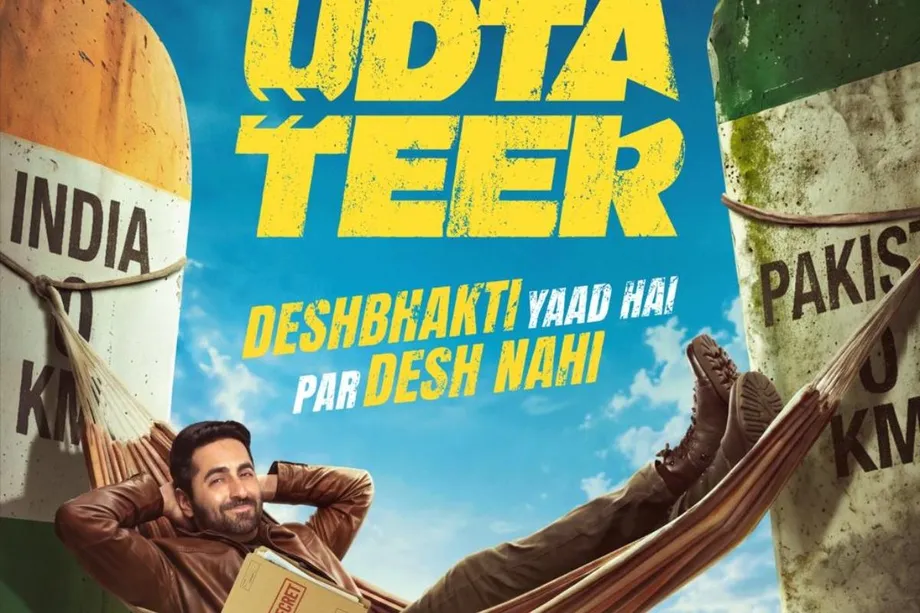
Nepal has denied public screening permission to Udta Teer, the spy comedy starring Ayushmann Khurrana and Sara Ali Khan, ahead of its scheduled theatrical release on October 23, 2026. The decision follows a review by the Central Film Censor Board and concerns about the film's treatment of tensions between India and Pakistan.
Contents
- Screening permission denied before October 23 opening
- Why the India-Pakistan plot drew scrutiny
- What Nepal's film law covers
- A ministry circular set out the screening rule
- Could cuts allow a later release?
- A critic warns against repeated restrictions
- Alpha shows how screening decisions can change
- Earlier disputes involved Buddha and Sita
- A release calendar interrupted twice
- Key Points
The Ministry of Communication and Information Technology informed the film's Nepal distributor, National Cine Group Nepal, that it could not authorise public exhibition. The refusal letter, dated October 16, was communicated by Bishal Bhandari, a section officer at the ministry. Its date in Nepal's Bikram Sambat calendar was Ashwin 30, 2083.
The ministry's Audio-Visual and Broadcasting Division cited legislation allowing authorities to withhold approval from films considered harmful to Nepal's security, public order or relations with friendly countries. For audiences and cinemas, the immediate result is straightforward: the planned Nepal opening cannot proceed under the current decision.
The refusal comes after the filmmakers had already moved the Indian release from October 9 to October 23 to seek a less crowded theatrical window. Nepal's planned opening was also on October 23, identified locally as Friday, Kartik 6.
Why the India-Pakistan plot drew scrutiny
Khurrana plays Bilal Ahmed, a Pakistani intelligence agent sent into India on a mission. After an accident causes him to lose his memory, Bilal forgets his original identity and begins believing he is an Indian counterterrorism officer.
The story places him in the India-Pakistan border region, where his mistaken identity and newly adopted patriotism drive the comedy. His confusion connects the film's humour directly to the political rivalry between the two countries.
Authorities' concerns have been described as involving the possible damage to a country's image through the portrayal of that rivalry. Film writer and critic Samipyaraj Timilsina also attributed the refusal to the story's focus on India-Pakistan tensions and the legal protection given to Nepal's relations with friendly nations.
Timilsina explained that both India and Pakistan are friendly countries for Nepal. In his account, a film that damages another country's image, or directly affects its national identity or communities, can fall within the grounds for restricting exhibition.
No specific scene, dialogue or requested edit has been publicly identified in the details accompanying the refusal. That leaves the precise content that prompted the board's decision unclear.
What Nepal's film law covers
The relevant legislation is the Film (Production, Exhibition and Distribution) Act, identified in accounts of the ministry's policy as the 1969 law, or 2026 B.S. Nepal's Bikram Sambat calendar uses a different year numbering system from the Gregorian calendar, so 2026 B.S. refers to the older statute.
Section 8(3) covers a film, or any part of it, considered detrimental to Nepal's security, peace and order, its relations with friendly countries, or harmony between different classes or ethnic groups. Its reach therefore extends beyond content about Nepal itself to material involving countries with which Nepal maintains friendly relations.
The refusal has principally been attributed to Section 8(3), although a description of the October 16 letter identifies Section 5(3). The ministry's wider screening policy and the legal provision quoted in connection with this case identify Section 8(3).
For distributors, the practical requirement is prior permission. A scheduled opening date and a distribution arrangement still need to be followed by approval from Nepal's screening authorities before a film can be shown publicly.
A ministry circular set out the screening rule
The ministry had also issued a circular to the Film Development Board instructing it not to approve films containing material against Nepal's security or friendly neighbouring countries. The circular was described in a report dated July 14, which did not specify the year.
The Ministry of Communications and Information Technology set out the certification requirement in that circular:
Films intended for public screening in Nepal must first apply to the Film Screening Committee for certification and may only be exhibited after receiving approval in accordance with the prevailing laws and regulations.
The ministry instructed the Film Development Board to inform producers, distributors and other stakeholders of the requirement and coordinate its implementation. The circular also expressly referred to Section 8(3) as the basis for refusing films containing prohibited material.
Udta Teer's refusal therefore follows an already stated ministry position on content involving friendly nations. The board examined the film a few days before the official notice, and the ministry then communicated the decision to its local distributor.
Could cuts allow a later release?
The Act provides a route for a film to receive permission after changes. Where removing or modifying part of a film would bring it into compliance with the law, the screening committee may approve exhibition subject to the necessary cuts or alterations.
For Udta Teer, that provision makes the board's assessment of particular content important. A concern about an individual line or sequence could require a different response from a concern running through the central story.
No revised Nepal release date, agreement on cuts or decision to submit a modified version has been announced in the details made public. October 23 remains the scheduled theatrical release date, while Nepal's screening permission remains withheld.
The immediate decision facing the distributor and producers is whether to pursue a version that meets the committee's requirements. Any such version would still need approval before public exhibition.
A critic warns against repeated restrictions
Timilsina acknowledged the provision concerning friendly countries while warning that repeatedly banning films about conflict and revenge could create further complications. He recommended examining a film's particular subject matter and sensitivity when deciding whether to restrict it.
His argument addresses the way the rule is applied. India-Pakistan stories can involve hostility and revenge, but they can also focus on love or friendship. Assessing the specific treatment of those subjects matters because the same international rivalry can support very different stories.
Udta Teer uses memory loss and a reversal of national allegiance as its central comic device. That makes the handling of identity and patriotism central to the film rather than a small element at the edge of its plot.
Timilsina also cited earlier screening controversies involving Alpha and Bantwara. His warning points to the recurring task for Nepal's authorities: deciding which portrayals cross the legal threshold while considering the content of each film.
Alpha shows how screening decisions can change
Alpha featured in the dispute that preceded the ministry's circular. The Film Screening Committee debated whether to approve it because of concerns over its subject matter, but the film ultimately received permission following a minister's directive.
The sequence matters for producers and distributors trying to plan a release. A film may face objections during certification and still eventually be permitted, while another can reach its intended opening week without clearance.
Udta Teer's current position is a refusal of public screening permission. Alpha's experience provides an example of a different outcome after objections, with a ministerial intervention specifically identified in that case.
Bantwara was also mentioned by Timilsina as a previous screening controversy. The details cited about Udta Teer do not explain the outcome of that earlier dispute.
Earlier disputes involved Buddha and Sita
Nepal has previously halted or disrupted Indian film screenings over portrayals involving religious figures and national identity. In 2009, Chandni Chowk to China faced protests over a claim that Gautam Buddha was born in India, and its exhibition in Nepal was stopped.
In 2023, Adipurush prompted objections to dialogue describing Sita as India's daughter. Kathmandu mayor Balen Shah announced a ban on Indian films within the city in response. Screenings of Adipurush were also halted or postponed in Janakpur and other places.
The Adipurush dispute reached beyond the exhibition of a single film in Kathmandu because the mayor's announcement covered Indian films more broadly. Udta Teer, by contrast, has received a refusal through the national film screening process communicated by the ministry.
The three controversies concern different material: a claim about Buddha's birthplace, dialogue about Sita's identity, and a fictional intelligence story involving India and Pakistan. Each brought the content of an imported film into a wider dispute over identity or relations between countries.
A release calendar interrupted twice
Udta Teer is the feature film directorial debut of Aakash Kaushik, also credited as Akash A Kaushik. Alongside Khurrana and Khan, the cast includes Gulshan Grover, the late Mukul Dev and Ram Kapoor.
Dharma Productions and Sikhya Entertainment produced the film. The named producers are Karan Johar, Adar Poonawalla and Apoorva Mehta of Dharma, and Guneet Monga Kapoor and Achin Jain of Sikhya.
The filmmakers shifted the Indian opening by two weeks, from October 9 to October 23, seeking fewer competing releases. Trade analyst Taran Adarsh announced that scheduling change on X. Nepal's refusal then created a separate obstacle to the planned opening there.
The principal dates and decisions are:
- October 9, 2026: The originally announced Indian release date, later postponed.
- October 16, 2026: The date of the letter denying public screening permission in Nepal, also given as Ashwin 30, 2083.
- October 23, 2026: The revised theatrical release date and the planned Nepal opening, locally identified as Kartik 6.
For National Cine Group Nepal, the refusal interrupts the planned distribution of the film. For cinema audiences, access now depends on a further approval decision rather than the previously advertised release calendar.
Key Points
- Nepal denied Udta Teer public screening permission before its planned October 23, 2026 opening.
- The ministry communicated the refusal to distributor National Cine Group Nepal after a censor board review.
- The objections concern the film's India-Pakistan storyline and legal protections for relations with friendly countries.
- The film stars Ayushmann Khurrana as a Pakistani spy who loses his memory and believes he is an Indian counterterrorism officer.
- Nepal's film law allows approval after necessary cuts or modifications.
- No revised Nepal release date or agreement on changes has been announced.