Five decades, more than 170 films and a hero still at the centre
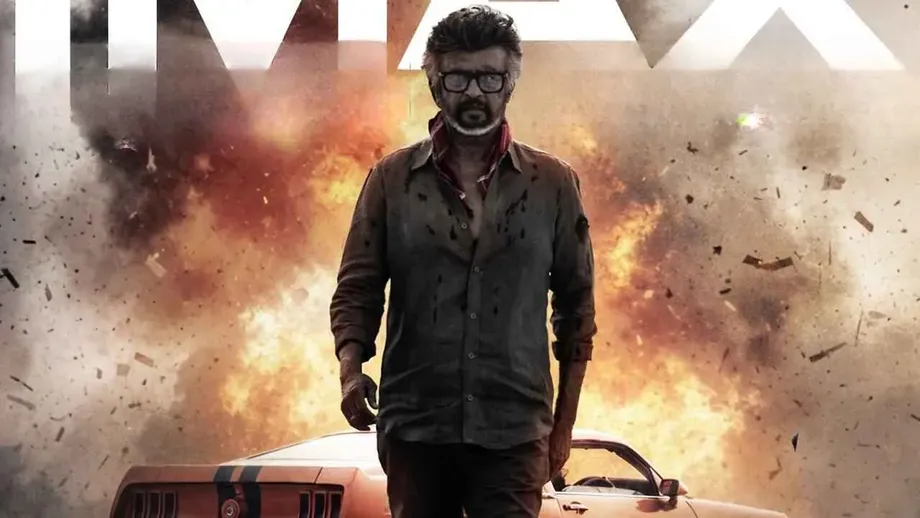
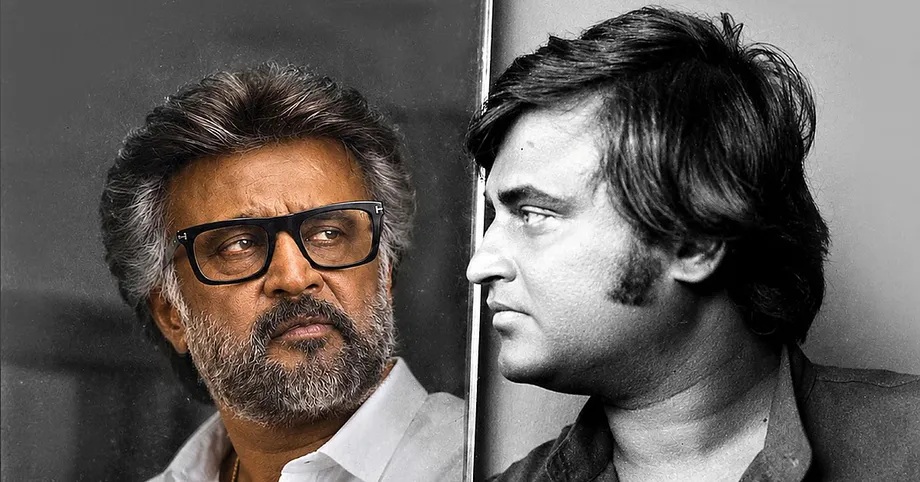
On August 15, 1975, K. Balachander's Apoorva Raagangal introduced Tamil audiences to Rajinikanth in a small role as an estranged husband. Fifty years later, his anniversary coincided with another major production, Lokesh Kanagaraj's Coolie, released in August 2025. The actor who once fought to be noticed at the edge of a story had become the person around whom entire films were built.
Contents
- Five decades, more than 170 films and a hero still at the centre
- How the villain became the leading man
- The advertisement that named a Superstar
- The actor beneath the familiar gestures
- Why Baasha became a blueprint
- What younger directors changed
- Listening, preparation and respect on set
- The business of a familiar face
- A career that travelled across borders and generations
- The milestones behind the longevity
- Key Points
His career spans more than 170 films, from threatening villains and wounded working men to gangsters, robots and an apparently ordinary grandfather with a violent past. The continuity lies in his recognisable movements and delivery. The changes lie in how successive filmmakers have used them.
Born Shivaji Rao Gaekwad on December 12, 1950, in Bengaluru, Rajinikanth was 74 at the anniversary and turned 75 that December. His journey from bus conductor to leading actor is familiar. Less familiar are the practical decisions behind his longevity: listening closely to directors, understanding what audiences expect, accepting older characters and keeping relationships alive long after a production ends.
Colleagues offer concrete examples. Producer Kalaignanam remembers choosing him for Bairavi despite objections. Director T.J. Gnanavel recalls the actor repeating an entire story back two days after hearing it. Cinematographer Vijay Kartik Kannan describes his concern that a junior performer should still appear on screen after struggling with a speaking part.
Together, those memories explain a career sustained by more than a famous walk or a flip of sunglasses. Rajinikanth's screen authority has depended on preparation, collaboration and a careful understanding of the people buying tickets.
How the villain became the leading man
Rajinikanth grew up in a Marathi speaking family and worked as a bus conductor before moving to Chennai to study at the Madras Film Institute. His Tamil breakthrough came through Balachander, whose Apoorva Raagangal placed the newcomer alongside an already established Kamal Haasan.
Moondru Mudichu in 1976, followed by Avargal and 16 Vayathinile in 1977, made his unsettling presence an attraction. His characters could be cruel, selfish or dangerous. His restless energy gave audiences something distinctive to watch even when the story asked them to reject the person he played.
The move into leading roles happened through several films rather than a single transformation. Chilakamma Cheppindi, a Telugu film released in 1977, gave him an early lead. Bhuvana Oru Kelvikkuri, also released in 1977, presented him as a wounded romantic figure. Bairavi in 1978 became a defining vehicle built around him as a Tamil leading man.
Actor Sivakumar remembers working on Bhuvana Oru Kelvikkuri in 1976, before its 1977 release. He recalls a young colleague struggling with long Tamil dialogue and wondering whether to return home. His recollection gives the familiar success story a human scale: confidence on screen developed alongside uncertainty away from it.
The advertisement that named a Superstar
Producer and writer Kalaignanam says he chose Rajinikanth for Bairavi after seeing how strongly the actor registered in a few scenes in Aaru Pushpangal. Friends, including producer Chinnappa Devar, questioned the choice because audiences knew him mainly through villainous roles. Kalaignanam held to his decision.
Distributor Kalaippuli S. Thanu recalls that Bairavi drew a strong response in Chennai, including substantial attendance by women. He advertised it with the description Superstar Rajinikanth, giving a commercial label to the attention the actor was attracting.
Rajinikanth initially wanted the title withdrawn, according to Thanu. With M.G. Ramachandran and Sivaji Ganesan still active, he worried that such billing would appear disrespectful. Thanu responded by placing another advertisement with the grander wording The Greatest Super Star.
Billa in 1980, a remake of Amitabh Bachchan's Don, then delivered the blockbuster breakthrough associated with his rise to superstardom. Murattu Kaalai, released the same year, strengthened his standing as an action hero. The title began in advertising; a succession of performances gave it staying power.
The actor beneath the familiar gestures
Mullum Malarum in 1978 remains central to understanding Rajinikanth's range. His character Kaali, a proud winch operator, combines anger, hurt and affection. The performance depends on emotional conflict as much as physical command.
Aarilirunthu Arubathu Varai in 1979 followed a man's passage through poverty, responsibility and disappointment. Thillu Mullu in 1981 moved into comedy, relying on timing, expression and body language rather than the action sequences that would increasingly define his commercial image.
Johnny and Netrikkan gave him contrasting characters within the same film. Enthiran in 2010 later used that capacity on a much larger technological stage, placing him in the roles of scientist Vaseegaran and robot Chitti. The robot's destructive transformation also gave the actor room to revisit the menace of his early performances.
These films help explain why filmmakers have repeatedly returned to him with different demands. His gestures provide immediate recognition, while his acting can supply vulnerability, comedy or threat. A director can draw on either side, or arrange a story around the moment one gives way to the other.
Why Baasha became a blueprint
Baasha in 1995 gave Tamil commercial cinema one of its most durable structures: an unassuming man whose extraordinary past is gradually revealed. Rajinikanth's auto driver appears modest until the story exposes his former life as a feared underworld figure.
A mass hero film, in this context, is designed around a star's commanding appeal to a large audience. Entrances, confrontations, music and dialogue are arranged to create moments of collective excitement. Baasha made the contrast between restraint and sudden authority especially effective.
Director Nelson Dilipkumar says Annaamalai and Baasha shaped his approach to Jailer. He wanted to recreate some of their audience impact. His retired jailer Muthuvel Pandian begins within an ordinary family setting before revealing a capacity for calculated violence.
Jailer 2 continues that contrast through domestic chores, family affection and brutal action. Near its conclusion, Muthu speaks a line that connects the fictional character directly to the actor's anniversary:
Countless attempts have been made by people to bring me down in 50 years; no one could.
The dialogue turns a career milestone into part of the entertainment. Baasha's theatrical return for its 30th anniversary in 2025 showed the continuing attraction of the earlier version of that formula.
What younger directors changed
Pa. Ranjith directed Rajinikanth in Kabali in 2016 and Kaala in 2018. Karthik Subbaraj followed with Petta in 2019, Nelson with Jailer in 2023, Gnanavel with Vettaiyan in 2024 and Kanagaraj with Coolie in 2025. Each inherited a famous screen image while bringing a different setting and storytelling approach.
Kabali presented an ageing Malaysian gangster seeking revenge and reunion. Kaala placed an imperfect community leader at the centre of a struggle over home and power. Petta used a hostel warden with a concealed past. Vettaiyan required a police officer accustomed to lethal force to confront mistakes in his own judgment.
Age became part of these characters. Grey hair, grown children and retirement allowed Rajinikanth to remain the central figure without always relying on the young romantic hero he had played earlier. His leading status continued while the reasons for his authority changed.
Writer J. Deepa, whose books examine cinema and its craft, argues that Rajinikanth understands his strengths and limits and selects stories with his audience in mind. She also points to Chandramukhi, where Jyotika's character carries much of the dramatic weight, as evidence of his confidence in sharing the narrative.
Coolie extended the collaboration across Indian film industries. Its cast included Nagarjuna, Sathyaraj, Shruti Haasan, Upendra and Soubin Shahir, with Aamir Khan making a cameo appearance. The anniversary production placed Rajinikanth at the centre of an ensemble reaching well beyond Tamil cinema.
Listening, preparation and respect on set
Gnanavel offers a precise example of Rajinikanth's preparation. Two days after hearing the Vettaiyan story, the actor recounted it to him in full and checked whether he had understood it correctly. Director Ashwath Marimuthu similarly describes repeated story discussions, with Rajinikanth explaining how the character and narrative were taking shape in his mind.
Cinematographer S.R. Kathir says the actor watches the reactions of the director and camera team after a take. A small sign of dissatisfaction can prompt him to prepare for another attempt. Kathir also describes an actor constantly considering how a scene will play before a theatre audience.
Thiru, the cinematographer of Petta, recalls Rajinikanth continuing to read scene papers and ask questions despite decades of experience. He used silhouettes to make the actor's recognisable outline part of the film's visual language. Rajinikanth later called to praise the response to the camera work.
Vijay Kartik Kannan's memory from Jailer concerns someone with far less power. After a junior artist struggled with dialogue and was replaced in a scene, Rajinikanth asked that the performer be included beside him elsewhere. He reasoned that the man's family would be disappointed if they watched the film expecting to see him and found him absent.
The business of a familiar face
Jailer's production company said the 2023 film collected more than Rs 600 crore. That is Rs 6 billion in ticket revenue, a substantial result for a film led by an actor in his seventies. Ticket collections and profit are different measures: cinemas and distributors take shares, while production and promotion carry costs.
Producer G. Dhananjayan argues that Rajinikanth's name is the main basis for estimating opening collections and audience demand for projects such as Jailer and its sequel. His prediction that Jailer 2 would exceed the first film's collections remains a forecast; a verified final total was not specified.
The career also contains commercial disappointments. Baba, which Rajinikanth wrote and produced, failed in 2002. Chandramukhi restored his commercial momentum in 2005. More recent films, including Darbar and Vettaiyan, fell short of expectations, while Jailer produced a major success.
Deepa's explanation is that audiences maintain a relationship with the actor across individual releases. Studies of his public image, including A Bird's Eye View of Brand Rajinikanth and the book Grand Brand Rajini, connect that relationship to ordinary working characters, memorable dialogue, distinctive style and an accessible public manner.
Thanu and Kalaignanam describe another form of continuity. According to Thanu, Rajinikanth brought together eight producers facing financial difficulties for Arunachalam and shared the profits among them. Kalaignanam also says the actor bought him a home. Their accounts place long professional relationships alongside the commercial machinery of stardom.
A career that travelled across borders and generations
Rajinikanth entered Hindi cinema with Andhaa Kanoon in 1983 and later appeared in films including Geraftaar and Hum. His collaborations with Amitabh Bachchan created a lasting professional friendship. Muthu, released in 1995, subsequently helped build a dedicated following in Japan through its dubbed release.
Hrithik Roshan offered a personal example of that reach in an anniversary message posted on August 13, 2025. Roshan had acted alongside Rajinikanth in Bhagwaan Dada in 1986, playing Govinda when he was 12. The actor described Rajinikanth as an early teacher:
Took my first steps as an actor at your side. You were one of my first teachers, @rajinikanth sir, and continue to be an inspiration and a standard. Congratulations on completing 50 years of on-screen magic!
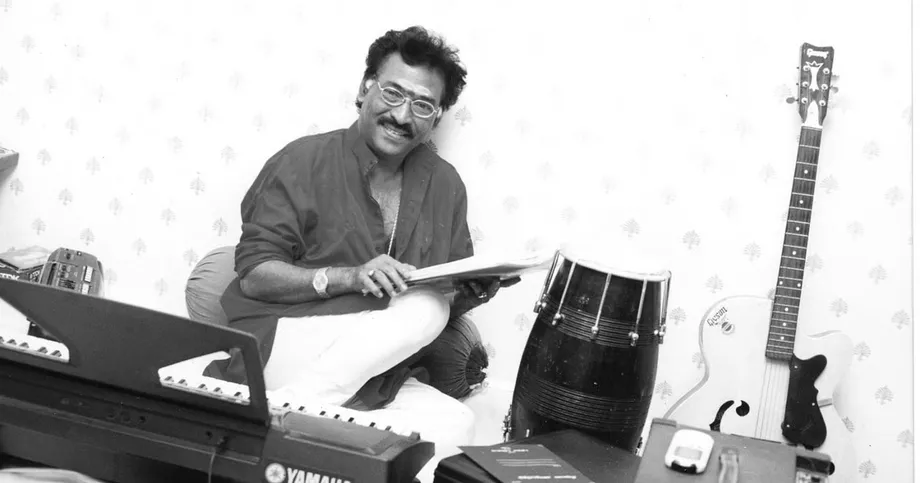
Music helped make that recognition immediate. Composer Deva's work accompanied Rajinikanth's famous Superstar title card and films including Annaamalai and Baasha. The connection was recalled after Deva's death in Chennai on October 17, 2026, when tributes returned to the sounds that had helped turn star entrances into public celebrations.
Politics offered another possible direction. Rajinikanth's criticism of Jayalalithaa's government helped shape public sentiment before the 1996 Tamil Nadu election. He announced plans to enter politics in 2017, later withdrew from launching a party and dissolved Rajini Makkal Mandram in 2021. Acting remained his principal public role.
The milestones behind the longevity
Rajinikanth's career is easier to understand as a series of changes than as an uninterrupted climb. Supporting parts led to villain roles, leading roles brought dramatic and comic opportunities, and stardom later made his own image part of the story.
- 1975: Apoorva Raagangal introduces him to Tamil audiences.
- 1977 to 1978: Chilakamma Cheppindi, Bhuvana Oru Kelvikkuri and Bairavi mark his transition into leading roles.
- 1980 to 1981: Billa, Murattu Kaalai and Thillu Mullu establish commercial strength and range.
- 1995: Baasha creates an enduring model for stories about a modest man with a powerful hidden past.
- 2016 to 2024: Kabali, Kaala, Petta, Jailer and Vettaiyan place him with a younger generation of directors.
- August 2025: Coolie arrives during the month marking 50 years since his Tamil debut.
Nelson's admiration for Annaamalai and Baasha captures the cycle behind that longevity. Filmmakers who once watched Rajinikanth from the audience now direct him, using memories of earlier films to create new moments for another generation. His continued willingness to work within their stories keeps that exchange active.
Key Points
- Rajinikanth's Tamil debut, Apoorva Raagangal, opened on August 15, 1975.
- His career spans more than 170 films, including villain roles, drama, comedy, action and science fiction.
- Thanu traces the Superstar title to his advertising for Bairavi in 1978.
- Baasha helped establish the hidden past formula later used in films such as Jailer.
- Jailer's production company reported collections exceeding Rs 600 crore.
- Collaborators describe close preparation, respect for directors and concern for junior performers.
- Older characters and new directing partnerships have helped him remain a leading actor across generations.