A 24 Day Climb to the Top Two
On 28 November 2026, the fourth Saturday of its run, Ramayana: Part 1 reached ₹1,814.55 crore in worldwide gross. The figure pushed Nitesh Tiwari's film past Dhurandhar 2, which has a lifetime gross of ₹1,813.39 crore, by just ₹1.16 crore. Only Dangal, at ₹2,070.30 crore, now stands above it among Indian films.
Contents
- A 24 Day Climb to the Top Two
- What Gross, Net and Worldwide Actually Mean
- The Opening Run That Set the Pace
- The Day the Double Digit Streak Ended
- South India Turns a Hindi Film Into a National Hit
- A ₹2,000 Crore Budget and a Hit Test Still Out of Reach
- Ram Gopal Varma Disputes the Budget
- Supreme Court Refuses Urgent Hearing on Plea
- An Oscar 2027 Detour Through Visual Effects
- The Gap to Dangal
- At a Glance
The film had entered the day in third place. On its 21st day, Wednesday 25 November, its worldwide gross reached ₹1,755.60 crore and passed Allu Arjun's Pushpa 2, which finished with ₹1,742.10 crore. That made Ramayana the fourth highest grossing Indian film. Baahubali 2 was next, at ₹1,788.06 crore, and the gap was ₹32.46 crore. By day 23, Friday 27 November, the film had reached ₹1,790.10 crore and moved into third place.
- 5 November: Ramayana: Part 1 opens in cinemas.
- 9 November: the film earns ₹107.50 crore net in India on day five, a record for that stage of a run.
- 19 November: worldwide gross reaches ₹1,547.15 crore after 15 days.
- 23 November: India net crosses ₹1,000 crore, and a public interest plea is filed in the Supreme Court.
- 25 November: worldwide gross reaches ₹1,755.60 crore and passes Pushpa 2.
- 27 November: worldwide gross reaches ₹1,790.10 crore and passes Baahubali 2.
- 28 November: worldwide gross reaches ₹1,814.55 crore and passes Dhurandhar 2.
Ramayana was the fastest Indian film to reach ₹1,400 crore worldwide, doing so in 12 days, and the fastest to ₹1,500 crore, doing so in 14 days. Dhurandhar 2 had needed 16 days for the second mark. Dangal remains ₹255.75 crore away.
What Gross, Net and Worldwide Actually Mean
Box office totals use three measures, and they are easy to mix up. Gross is the full value of tickets sold, including taxes. Net is what remains after goods and services tax is removed. Worldwide gross adds the India and overseas totals together. On day 24, Ramayana had ₹1,015.20 crore in India net, ₹1,212.55 crore in India gross and ₹602 crore in overseas gross, for a worldwide gross of ₹1,814.55 crore. The ₹197.35 crore gap between India gross and India net is mostly the tax taken from ticket sales.
The India net figure crossed ₹1,000 crore on day 23, at ₹1,000.55 crore. Ramayana is the second Bollywood film to reach that mark in India, after Dhurandhar 2, and the fourth Indian film overall, after Baahubali 2, Pushpa 2 and Dhurandhar 2. It is also the first Ranbir Kapoor film to cross ₹1,000 crore net in India. The day 24 take of ₹14.65 crore came from 7,025 shows. Hindi led with ₹9.50 crore, followed by Tamil with ₹1.90 crore, Malayalam with ₹1.60 crore, Kannada with ₹1.40 crore and Telugu with ₹25 lakh.
The Opening Run That Set the Pace
Day five, 9 November, brought ₹107.50 crore net in India, the biggest fifth day for any Indian film. Dhurandhar 2 had held the previous mark with ₹65 crore. Ramayana added ₹299.15 crore net in its second week, the second Hindi film in 2026 to cross ₹200 crore in week two after Dhurandhar 2. By day 12 it had ₹1,437.25 crore worldwide and by day 14 it had ₹1,519.05 crore, both the fastest runs to those levels. Day 15 brought ₹1,547.15 crore worldwide and ₹657.50 crore in Hindi net, making it the second fastest Hindi film to ₹650 crore after Dhurandhar 2, which took nine days.
By day 14, Hindi accounted for ₹643.50 crore of the ₹844.40 crore India net, or 76.2%. Kannada added ₹68.75 crore, Telugu ₹53.70 crore, Tamil ₹39.65 crore and Malayalam ₹38.80 crore. Day 17 took the worldwide total to ₹1,616.70 crore, making Ramayana the fifth Indian film to cross ₹1,600 crore. Day 18 produced ₹35.60 crore net in India, a 28.8% rise over Saturday, and the third weekend closed at ₹79 crore net. Only Dhurandhar's ₹38.50 crore third Sunday was higher. The film also set a North America record for an Indian title, with about $28 million, beating Dhurandhar 2. Day 19 took the worldwide gross to ₹1,704.65 crore, the fifth Indian film past ₹1,700 crore.
The Day the Double Digit Streak Ended
For 20 straight days, Ramayana collected at least ₹10 crore net in India each day. The run stopped on day 21. The film earned ₹9.60 crore from 15,700 shows on Wednesday 25 November, its first single day below ₹10 crore. The previous day had brought ₹17.50 crore, so the drop was 45.1%. Hindi contributed ₹6.75 crore, Malayalam ₹1.10 crore, Kannada ₹75 lakh, Tamil ₹70 lakh and Telugu ₹30 lakh.
Day 19, a Monday, earned ₹12.70 crore after a Sunday haul of ₹35.60 crore, a fall of 64.3%. Day 20, a Tuesday, rose 37.8% to ₹17.50 crore. The makers had priced tickets from ₹99 for Gurpurab, and the day drew 15,817 shows and about 11.03 lakh tickets. By then the film had sold more than 4.03 crore tickets in India. Day 23 slipped to ₹8.45 crore, and day 24 recovered to ₹14.65 crore. The pattern is familiar for a big release: weekends lift the total, weekdays pull it back.
South India Turns a Hindi Film Into a National Hit
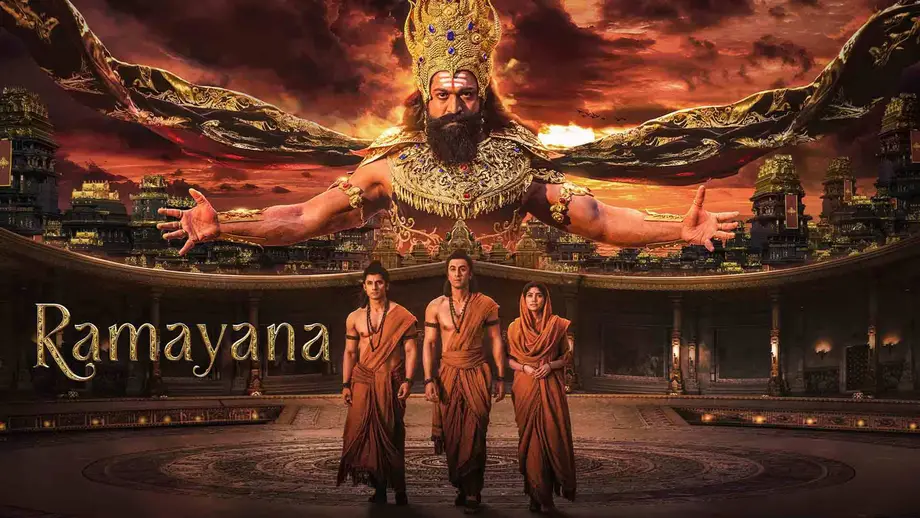
Ramayana did something most Hindi films do not. Its south dubbed versions collected more than ₹247 crore, close to 25% of the film's total business. Yash, one of Kannada cinema's biggest stars, plays Ravana, and Sai Pallavi, familiar to audiences across the south, plays Sita. Both are central to the story. Earlier Hindi films often used southern stars in cameos or supporting parts to generate publicity. Ramayana gave Karnataka and other southern markets a reason to follow the film beyond its Hindi origins.
The southern market is not one audience. Karnataka responds strongly to Yash. Kerala may weigh story, performance and word of mouth more heavily. Tamil and Telugu audiences bring their own expectations about stars, action and storytelling. The film's mythological subject helped because the Ramayana story already lives in these regions, giving a Hindi production a cultural entry point that an ordinary commercial film may lack. The lesson for studios is to work with local distributors and plan each market separately, rather than treating a dubbed release as a complete strategy.
A ₹2,000 Crore Budget and a Hit Test Still Out of Reach
The makers gave the budget in court. They told the High Court that the first part of Ramayana cost ₹2,000 crore. On that basis, the film needs at least ₹1,100 crore in Hindi and ₹2,800 crore worldwide to be called a hit. At ₹1,814.55 crore worldwide on day 24, it was ₹985.45 crore short of the worldwide mark. The Hindi version had reached ₹715.75 crore net by day 18, still ₹384.25 crore from the Hindi threshold.
Sumit Kadel, a film and trade expert, said the labels depend on a different number: the distributor share. That is the slice of ticket revenue that returns to the film's distributors after cinemas and taxes take their cut. A film can sell ₹1,800 crore in tickets and still face a recovery test because producers do not keep every rupee.
'Whether a film is a hit or a flop is decided by its distributor share,' Kadel said.
At ₹1,814.55 crore worldwide, the film remains below the ₹2,800 crore mark, and no final total is available.
Ram Gopal Varma Disputes the Budget
Filmmaker Ram Gopal Varma has challenged the ₹2,000 crore figure. After watching the film twice, he wrote on X that the actual cost of Part 1 was a little under ₹800 crore, after including mutually beneficial deals, global tax benefits and subsidies. He said treating both parts as equal in cost is wrong, comparing the budget to a film that spends heavily on its climax rather than spreading money evenly.
Varma praised producer Namit Malhotra's vision. He said much of the spending went into building the film's visual world, a setup that can be reused for gaming, other projects and Part 2. He predicted that Part 2, now set for 2028 after moving from 2027, would earn ten times Part 1, citing KGF 2 as a sequel that earned five times its predecessor. The makers have confirmed the 2028 release for the second part.
Supreme Court Refuses Urgent Hearing on Plea
A public interest litigation, or PIL, was filed in the Supreme Court on 23 November by Manoj Singh Thakur, an advocate from Raipur in Chhattisgarh. A PIL is a case brought on a matter of public concern rather than a private dispute. The plea claims the film departs from the original facts of Valmiki's Ramayana and misled viewers through its promotion. It argues the issue should be examined as alleged commercial deception as well as a question of religious sentiment. The respondents include the Ministry of Information and Broadcasting, the Central Board of Film Certification, Prime Focus Studios, Monster Mind Creations, producer Namit Malhotra, Yash, director Nitesh Tiwari and writers Sridhar Raghavan and Shreyas Jain.
The Supreme Court declined an urgent hearing. The Chief Justice of India, Surya Kant, pointed to the film's release status.
'The film has already released and those who wanted to see it have seen it,' Surya Kant said.
Justice Bagchi said the petitioner could make his own film if he had a different understanding. The bench told the petitioner's lawyer not to waste the court's time. The refusal was for urgent listing, not a ruling on the film's content. No next hearing date was given.
An Oscar 2027 Detour Through Visual Effects
Trade accounts place Ramayana on a longlist of 20 films for Best Visual Effects at the 99th Academy Awards. The Academy has not published the official list. The film's effects were made by DNEG and Yash's Monster Mind Creations. DNEG, owned by Malhotra, has won eight Academy Awards and worked on Dune, Interstellar and Inception. Five of the 20 longlisted films used DNEG. The competition includes Avengers: Doomsday, Odyssey and Dune 3.
The awards calendar gives the film several dates to clear. Nomination voting runs from 7 to 11 December, the shortlist arrives on 15 December, final nominations come on 21 January 2027 and the ceremony is on 14 March 2027. RRR reached the same top 20 in 2023 but missed the final five. Ramayana has also been shortlisted for Best Visual Effects and Best Stunt Design at next year's Critics Choice Awards.
The Gap to Dangal
Dangal's ₹2,070.30 crore worldwide gross is the last target. Ramayana needs ₹255.75 crore more to pass it. The film added ₹24.45 crore worldwide between day 23 and day 24, so the remaining distance is more than ten times that single day gain. A final total will depend on how long the film stays in cinemas and how much it adds from overseas markets, where it had ₹602 crore by day 24.
The Supreme Court has not set a hearing, the Academy has not released its official visual effects list, and the second part is due in 2028 with no exact release date given. For now, the numbers place Ramayana above every Indian film except Dangal.
At a Glance
- Ramayana: Part 1 reached ₹1,814.55 crore worldwide on day 24, passing Dhurandhar 2's ₹1,813.39 crore.
- Dangal leads with ₹2,070.30 crore, leaving a gap of ₹255.75 crore.
- The film passed Pushpa 2 on day 21 and Baahubali 2 on day 23.
- India net crossed ₹1,000 crore on day 23, the second Bollywood film to do so.
- Day 24 India net was ₹1,015.20 crore, India gross ₹1,212.55 crore and overseas gross ₹602 crore.
- The makers told the High Court the first part cost ₹2,000 crore and needs ₹2,800 crore worldwide to be a hit.
- Ram Gopal Varma says the actual cost was under ₹800 crore.
- The Supreme Court refused an urgent hearing on a plea alleging distortion of Valmiki's Ramayana.
- The film is on a longlist of 20 films for Best Visual Effects at the 99th Academy Awards, with the shortlist due on 15 December.