Why Is President Lee Warning About Seoul Home Prices?
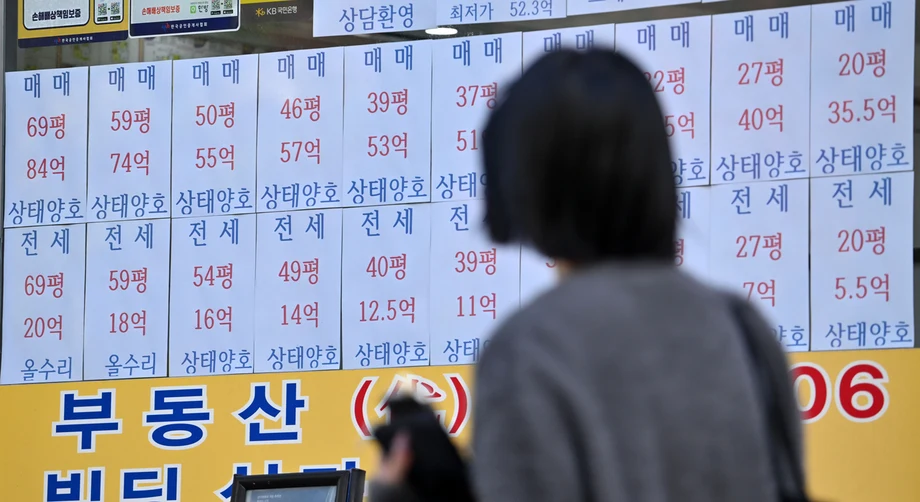
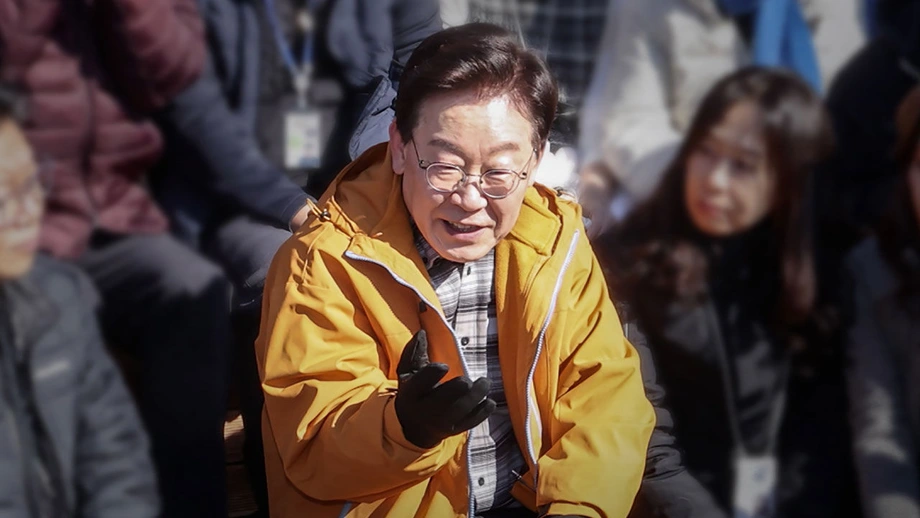
On November 29, President Lee Jae-myung hiked Mount Bugaksan near Cheong Wa Dae, the presidential office in Seoul, with the reporters who cover him. At a rest stop on the mountain and later at the Chunchugwan press center, he told them that home prices in South Korea's core areas are falling sharply, and that people are not talking about it. The core areas he named include the four Gangnam districts in southern Seoul, where many of the country's most expensive homes are concentrated. He put the drop at billions of won per home, while a fuller Korean record of his remarks says tens of billions of won.
Contents
- Why Is President Lee Warning About Seoul Home Prices?
- Which Signs Show Prices Are Falling?
- How Did Stock Money End Up Paying for Homes?
- What Is the Government's Plan If Prices Crash?
- How Is the Government Trying to Add Homes?
- What Did Lee Say About the Stock Fund, Nuclear Power and Public Offices?
- What Happens Next?
- Key Points
Lee described the housing market in strong terms. He said the market is overvalued and that the risk is being passed from buyer to buyer, a situation he called a dangerous hot potato game, meaning nobody wants to hold the falling asset when it finally bursts.
Real estate in South Korea is overvalued. It is a dangerous game of passing a bomb. My view on this has not changed.
Lee also said he cannot predict when a full correction might come. He added that it could happen during his term or after it, and he said his main duty is to reduce the total damage to the public when that happens.
Lee's concern is that a sharp fall would hit ordinary households and the wider economy. He said that if this abnormal situation continues, prices will crash someday, and that he sees it as his mission to minimize the total damage.
Which Signs Show Prices Are Falling?
Lee pointed to three signs: more homes for sale, fewer deals, and more forced sales. Listings are piling up and transactions are not happening, which means sellers are asking for prices that buyers will not pay. The Korea Real Estate Board reported that apartment prices in Gangnam and Seocho fell for 15 consecutive weeks through the third week of November, while prices in Songpa fell for 11 straight weeks. Yongsan and Dongjak in central and southern Seoul have also turned downward, and the weakness is spreading across the Han River belt, a term for neighborhoods along the river.
Borrowing costs are the second sign. Many buyers took out loans at low interest rates five years ago, and those loans usually had fixed rates for five years. When they reset, Lee said, rates had more than doubled. Banks' household lending rate rose to 5.02 percent in October, topping 5 percent for the first time in two years and 11 months, according to the Bank of Korea. The mortgage rate rose to 4.98 percent, its sixth straight monthly increase and its highest level since March 2012. Lee also said that delinquencies, meaning missed loan payments, are rising, and that auctions of seized homes are increasing while the success rate and winning bid prices are falling.
Lee also criticized the way prices are measured. He said statistics based on asking prices, the amounts sellers hope to get, can make the market look stronger than it is, and that a few high sales can shape a whole weekly figure. The Social Reform Committee has asked the government to switch weekly announcements to monthly ones and to revise the asking price rules.
How Did Stock Money End Up Paying for Homes?
The most surprising number in the story comes from housing funding plans that the Ministry of Land, Infrastructure and Transport submitted to a member of the National Assembly's land committee. From January to October this year, Koreans raised a record 10.07 trillion won ($7.5 billion) by selling stocks, bonds and cryptocurrency to pay for homes. That is 1.7 times the 5.82 trillion won raised for home purchases in all of last year, and about nine times the 1.12 trillion won in 2022, when the housing market was in a slump. Financial assets made up 6.13 percent of home purchase funds this year, up from 3.13 percent last year.
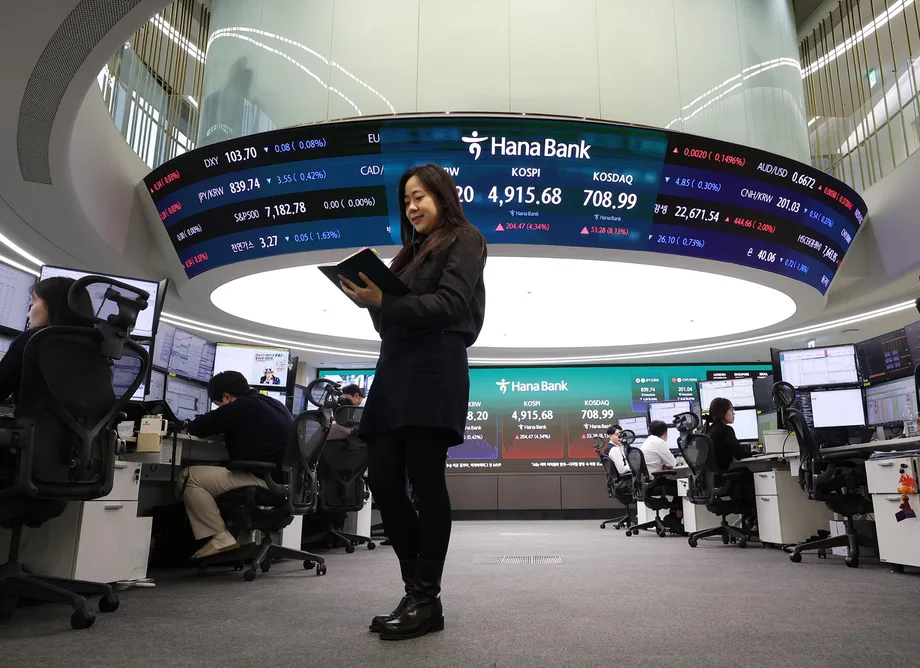
The shift followed a stock rally. The Kospi, South Korea's main stock index, opened 2026 at 4,224.53 on January 2 and passed 9,000 in June. The number of active domestic trading accounts rose to 113.92 million from 98.29 million at the end of last year, according to the Korea Financial Investment Association. Then on November 25, the Kospi fell more than 6 percent to close at 4,697.51, roughly half its June high of 9,114.55.
Loan limits made cash more important. Measures introduced on October 15 last year capped mortgages at 600 million won for homes worth up to 1.5 billion won, 400 million won for homes worth 1.5 billion to 2.5 billion won, and 200 million won for homes worth more than 2.5 billion won. Buyers of expensive homes depend most on their own money. In June, at the peak of the rally, financial assets funded 23.77 percent of purchases of homes worth 3 billion won or more, which was 9.5 times the 2.51 percent share for homes under 300 million won.
Seok Byoung-hoon, an economics professor at Ewha Womans University, explained why falling stocks now threaten the housing market. A drop in shares can reduce the cash that buyers planned to use, so fewer people can buy.
In particular, people who were blocked by loan limits and tried to grow their homebuying funds through stock investment could take a big hit.
Seo Jin-hyung, a professor of real estate law at Kwangwoon University, said the two markets are now linked. Seo warned that a shock in one asset market could now spread to the other.
We now need to consider even the possibility that a shock in one asset market could spread to the other.
What Is the Government's Plan If Prices Crash?
Lee said the public sector could buy homes whose prices have fallen too far, then use them as public rental housing. This is called acquisition rental, and it would give the government homes to rent out while supporting prices on the way down. Lee said officials are already reviewing the idea internally. He said that if prices drop below normal levels, the government should buy homes and massively expand rental purchases to support the market to a certain extent.
Lee's main worry is that Korea has too few public homes to absorb a shock. He said public housing makes up about 8 percent of the market, and he suggested that a figure around 20 percent would be needed. He also raised the problem of tenants who could not get their deposits back when home prices fell below the level of their jeonse deposits. Jeonse is a rental system in which the tenant pays a large lump-sum deposit instead of monthly rent, and gets it back when the lease ends.
This probably needs to be around 20%, though let's not talk about numbers. Right now we are only at about 8%.
Several details are still unsettled. The reports do not give the criteria for which homes the government would buy, the target number, the purchase prices, or how the money would be raised. Lee also did not give a date for a decision, and the reports say that the buyout idea remains at the internal review stage.
How Is the Government Trying to Add Homes?
On November 25, Lee visited a publicly supported home in Seoul's Eunpyeong District, a 76 square meter (about 23 pyeong) unit rented by newlyweds, and met Lee Sung-hoon, president of the Korea Land and Housing Corporation, known as LH. Lee said the government plans to provide an average of about 240,000 publicly supported homes a year through 2030. He said this is the largest number on record and 50 percent more than the average over the past 10 years. LH plans to supply 1.19 million publicly supported homes by 2030, including 310,000 purchase rental units and 230,000 jeonse rental units.
Public housing must serve as a buffer to ease that anxiety.
Lee made this statement at the Eunpyeong District Office, where he linked housing anxiety to the failure of housing to serve as a place to live. He also said that public rental homes should become an option the middle class can easily choose, and a step toward buying a home of their own.
The government is also expanding its buyback pledge. Under this program, LH promises in advance to buy unsold homes at a preset price, which lowers the risk for developers. The pledge will now cover all public and private land in regulated areas of greater Seoul, and it aims to help about 38,000 approved units that have not started construction. The purchase price is 85 percent to 89 percent of the benchmark, with up to 3 percentage points extra for early construction. Projects must be able to break ground by 2028, and a project notice is expected in December.
The track record is limited. Since the program began in August 2024, LH has signed pledges covering 53 lots and about 31,000 units in greater Seoul. Only 25 lots, about 13,000 units, have broken ground, a construction start rate of 41.9 percent. In practice, about six in every ten homes covered by a pledge have not started construction. The government will also open applications for 56,000 public housing units in greater Seoul next year, including 35,000 for sale and 21,000 for rent, which is double the average of 28,000 units a year over the past five years.
The housing shortage is also a timing problem. Permits and construction starts fell after 2022, and the reports say they are now reducing supply with a lag of about three years. Lee expects supply to turn upward about two years from next year, which he said should reassure the market. Permits in Seoul are rising significantly, according to his remarks.
The rental market is under pressure in the meantime. KB Real Estate reported that jeonse prices for Seoul apartments rose 0.77 percent in November, up from 0.50 percent the month before, and Gyeonggi Province rose 0.96 percent, up from 0.56 percent. Lee said the shift from jeonse to monthly rent is a trend of the times. He told ministries to draw up measures for the jeonse and monthly rent markets, but no details or announcement date have been given.
What Did Lee Say About the Stock Fund, Nuclear Power and Public Offices?
Lee said the Stock Market Stabilization Fund, a pool that financial institutions would use to buy shares during sharp drops, is less important than fixing the market itself. He said a small fund may not have much effect, but added that it can help psychologically and in the short term. The fund's size has not been announced, and Lee said experts should decide that. On public funding, Lee said he will follow the decision of Kim Yong-beom, vice chairman of Meritz Financial Group, who chairs the Capital Market Transformation Committee. Lee said he will meet Kim soon.
Lee said public agencies will not be relocated to regional areas until a final decision is made by the end of this year. He said the Financial Services Commission is a government agency while the Financial Supervisory Service is formally a private organization, and that the government is still weighing which capital should have more weight. He also said the relocation should happen in clusters rather than one region at a time.
This time, even if I take some criticism, I intend to concentrate them and send them in a cluster, following principle.
On nuclear power, Lee said his position is pragmatism. The current plan includes two new reactors and a small modular reactor, and he said the government should consider more if it has the capacity. He also asked for a public debate without a predetermined result, and said the retirement age question must weigh the interests of regular workers against young and irregular workers.
What Happens Next?
Several dates shape the next stage of the story, and some decisions have no date yet. The table below lists the key moments reported so far.
- January 2: The Kospi opens the year at 4,224.53.
- June: The Kospi passes 9,000, and stock money reaches its peak share of expensive home purchases.
- October 15 of last year: Mortgage caps of 600 million, 400 million and 200 million won take effect.
- November 25: The Kospi falls more than 6 percent, and Lee visits Eunpyeong to call for 240,000 public homes a year.
- November 29: Lee speaks on the mountain about falling prices and the buyout plan.
- December: A project notice for the expanded buyback pledge is expected.
- First half of next year: Projects that start construction then get the best purchase prices.
- Year-end: The final decision on relocating public agencies is due.
Key Points
- President Lee says core Seoul home prices are falling sharply, including in the four Gangnam districts.
- Record stock and bond sales, totaling 10.07 trillion won from January to October, are funding home purchases.
- Lee is reviewing a plan for the public sector to buy homes if prices crash, but no criteria, budget or date have been set.
- Public housing is about 8 percent of the market, and Lee wants it closer to 20 percent.
- LH plans 1.19 million publicly supported homes by 2030, and the buyback pledge now covers about 38,000 more units.
- Only 41.9 percent of homes covered by buyback pledges have started construction so far.