A stock slump reaches the housing market
Money from selling stocks and bonds funded 1.36 trillion won of Seoul home purchases in May 2026, when the KOSPI first crossed 8,000. By October, with the index back in the 5,000 range, that flow had collapsed to 258.7 billion won. The 81% decline shows how a stock market reversal can remove cash that buyers expected to use for a home, especially when mortgage limits already restrict what they can borrow.
Contents
- A stock slump reaches the housing market
- What the funding disclosures show
- Why expensive homes are most exposed
- Broken purchases and delayed family plans
- Seoul's 94-week rise almost stops
- Asking prices fall, but cheaper districts keep rising
- Gyeonggi slows while rents keep climbing
- Confidence weakens as borrowing gets dearer
- A stall, not yet a declared crash
- What to Know
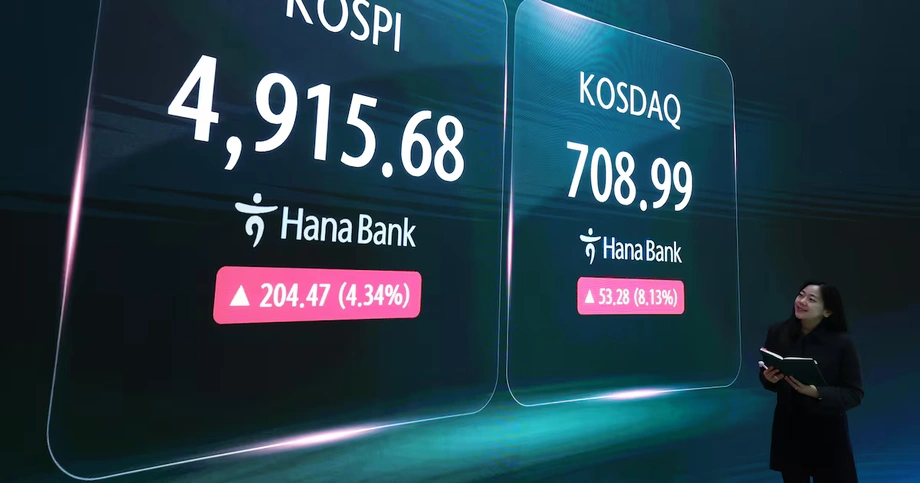
The pressure intensified in late November. The KOSPI closed at 4,697.51 on November 25 after falling more than 6% that day, roughly half its record of 9,114.55 reached in June. Bestselling author Song Hee-gu, reviewing the property market on his YouTube channel on November 27, said he saw the share decline as connected to the artificial intelligence industry. He argued that the housing market had stalled partly because buyers could no longer count on investment gains.
If this happens, the demand from people who were going to sell stocks and buy a home suddenly disappears. That could also be the reason the real estate market is stopped now.
The connection does not mean every apartment is falling in value. Seoul's average price index was still rising in late November, but by only 0.01% a week. Expensive southern districts were declining, while several cheaper northern districts continued to gain.
- May: Seoul buyers declared 1.36 trillion won from stock and bond sales, while the KOSPI traded above 8,000.
- June: the KOSPI reached its record, and financial asset sales supplied 23.77% of purchase funding for Korean homes priced at 3 billion won or more.
- October: the Seoul flow fell to 258.7 billion won, and a broader national measure dropped to 535.3 billion won.
- November 24 to 27: consumer confidence, apartment prices and buyer funding plans all showed the effects of the market reversal.
What the funding disclosures show
The Seoul figures come from housing acquisition funding forms for 2025 and 2026, obtained by People Power Party lawmaker Jeong Hee-yong from the Ministry of Land, Infrastructure and Transport. Buyers in land transaction permit zones, whether Korean or foreign, must submit these forms and supporting documents when reporting a purchase. Permit zones are designated areas where transactions require official approval. The forms disclose financial asset sales, virtual asset sales, certain private and business loans, and money brought from overseas.
Of 13.78 trillion won in Seoul purchase funding declared in May, stocks and bonds supplied 9.8%. Their share fell to 5.9% in October. Transactions using those proceeds dropped from 4,036 to 1,183, while the total number of purchases accompanied by disclosure forms fell from 13,040 to 5,221. Buyers drawing on stocks or bonds therefore fell from 31.0% of disclosed transactions to 22.7%, or from nearly one in three to fewer than one in four.
Virtual assets such as cryptocurrencies followed the same direction. Their contribution fell from 31.4 billion won across 290 transactions in May to 6.3 billion won across 86 transactions in October, a decline of 79.9% in value. The share of transactions listing company subsidies or private loans moved the other way, rising from 3.0% to 3.4%.
The first half of the year shows how important financial markets had become before the reversal. Seoul buyers declared 4.57 trillion won from stock and bond sales during those six months, already exceeding the 3.89 trillion won recorded for all of the previous year in the same series. Falling share prices subsequently removed part of a funding source that had expanded rapidly.
Why expensive homes are most exposed
A broader national count, obtained from the ministry by People Power Party lawmaker Kim Jong-yang, includes stocks, bonds and virtual assets. It shows that 10.0715 trillion won from those sales was declared for home purchases from January through October. That was about 1.7 times the 5.8199 trillion won recorded for all of last year and nine times the 1.1199 trillion won recorded in 2022. Financial assets supplied 6.13% of purchase funding this year, compared with 3.13% last year.
The monthly turn was abrupt. National asset sale funding fell from 1.9952 trillion won in May to 1.3345 trillion won in June, 1.0825 trillion won in July and 644 billion won in August. It recovered slightly to 655.5 billion won in September before falling to 535.3 billion won in October. The decline from May was 73.2%, and financial assets supplied only 4.89% of October purchase funding. Buyers using them accounted for 22.5% of transactions.
Exposure increased sharply with price. For homes costing at least 3 billion won, asset sales supplied 23.77% of funding in June and 16.22% in October. For homes costing between 1.5 billion and 3 billion won, the share fell from 11.02% in May to 7.28% in October. Homes below 300 million won stayed near 2% from January through October. In June, the 23.77% share for the most expensive band was 9.5 times the 2.51% share for the cheapest band.
Tighter mortgage rules explain much of that gap. When a loan cap covers only a limited portion of an expensive apartment, a buyer needs more cash. Selling investments can fill that gap, but a falling portfolio makes the same home unaffordable. The pattern also complicates the goal President Lee Jae Myung praised in February, when he described money moving from property into stocks as productive finance. The disclosures show that stock gains had also been travelling back into property.
Broken purchases and delayed family plans
The financial figures have consequences that begin well before a price index moves. A licensed real estate agent in Jamsil, in Seoul's Songpa District, said some clients could not proceed because falling stocks had left them short of money. The agent also described a buyer who lost 300 million won in contract deposits after failing to raise the remaining funds.
Kim, an office worker aged 34 who is preparing to marry, had been deciding between buying a home and starting married life under a jeonse lease. Jeonse requires a large refundable deposit, usually instead of ordinary monthly rent. Kim described how the stock losses destroyed the purchase plan.
I was weighing whether to buy a home for after the wedding or move in on a jeonse lease, and then every stock I held went negative and was completely wiped out. The plan to use the proceeds from selling stocks to buy a place has in effect fallen through.
Other households delayed major decisions. A man aged 37, also surnamed Kim, invested his entire 300 million won fortune in stocks in May and lost 100 million won. He said the loss amounted to a third of the money he had saved from his salary and left him unsure whether he could propose marriage. Ju, aged 36, had hoped to move from an apartment of about 33 square metres after becoming a father. He and his wife abandoned that plan after both suffered substantial stock losses.
Kim Jung-sik, an emeritus professor of economics at Yonsei University, said many young people had entered the stock market to catch up with rapidly rising home prices. He warned that the crash had pushed ownership further away, with especially heavy damage to young investors who had borrowed to invest.
Seoul's 94-week rise almost stops
The Korea Real Estate Board's weekly survey, measured on November 23 and released on November 26, recorded a 0.01% increase in Seoul apartment sale prices. Growth slowed from 0.03% the previous week and reached its lowest level this year. It was also the smallest change since prices were flat in the third week of January last year, although the citywide rising streak extended to 94 weeks.
The slowdown had been developing for more than a month. Prices gained 0.13% at the 89th weekly increase, when Seongbuk and Seodaemun led the capital and every district outside Gangnam, Seocho and Songpa rose. Growth then eased to 0.09% during the 90th weekly rise, with Gangnam falling 0.38% and Gyeonggi Province growing more than twice as fast as Seoul.
By the fourth week of November, nine of Seoul's 25 districts were declining, up from seven a week earlier and the largest number since 12 districts fell in the second week of February last year. Gwangjin and Yeongdeungpo each declined 0.01%. For Gwangjin, it was the first fall in 145 weeks; for Yeongdeungpo, the first in 143 weeks.
The largest declines remained in the expensive southeast. Songpa's fall widened from 0.42% to 0.50%, its steepest since a 0.75% decline in the third week of December 2022. Gangnam fell 0.34%, compared with 0.30% the previous week, while Seocho declined 0.30%. Gangnam and Seocho had fallen for 16 consecutive weeks, and Songpa for 12. Yongsan and Dongjak declined for a second week, while Seongdong and Gangdong extended their falls to a third week.
Asking prices fall, but cheaper districts keep rising
Song said the market above 3 billion won had clearly turned downward, with apartments approaching reconstruction weakening more than newer buildings. He attributed some listings to the reconstruction excess profit recovery system, which can reclaim part of the financial gain from a rebuilding project, and to capital gains tax burdens. In his account, owners who bought cheaply and held their apartments for many years were increasingly willing to sell.
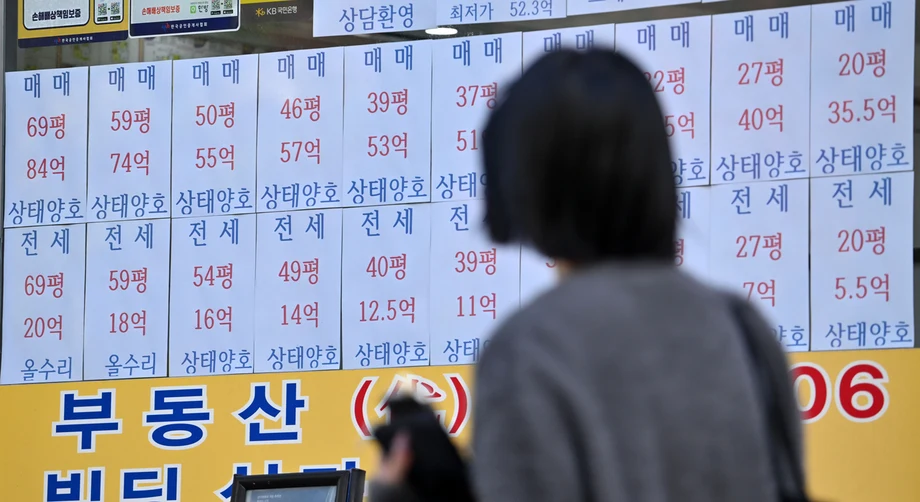
He cited lower asking prices in Mapo, Seongdong, Dongjak, Yeongdeungpo and Gangdong in Seoul, as well as Gwacheon and Bundang in Gyeonggi. Where an apartment with a previous transaction price of 1.9 billion won might once have been offered from 2 billion won, he said similar properties were now appearing at 1.85 billion won or even 1.8 billion won.
Song described apartments priced between 1 billion and 1.5 billion won as broadly flat and said demand remained below 1 billion won. The board's district figures support that divided picture. Seongbuk rose 0.33%, leading Seoul for a third consecutive week as large complexes around Jeongneung and Donam gained. Nowon rose 0.27%, led by areas near subway stations in Sanggye and Junggye, while Seodaemun gained 0.25%.
Some other affordable areas lost momentum without falling. Jungnang's increase slowed from 0.32% to 0.18%, Geumcheon's from 0.29% to 0.16%, and Dobong's from 0.24% to 0.12%. Seoul's average therefore concealed three different conditions: declining expensive districts, slowing gains in parts of the outskirts, and continued growth where buyers could still find apartments near transport and workplaces.
Gyeonggi slows while rents keep climbing
Gyeonggi Province's apartment sale prices rose 0.17%, down from 0.21% the previous week. Suwon's Gwonseon District slowed sharply from 0.62% to 0.28%, and Anyang's Dongan District eased from 0.61% to 0.35%. Gunpo and Yongin's Giheung District nevertheless each gained 0.52%, while Hwaseong's Dongtan District rose 0.50%, supported by demand around major apartment complexes and employment centres. The wider capital region gained 0.10%, and the national index rose 0.05%.
Renters received little relief. National apartment jeonse prices rose 0.09%, slightly faster than the previous week's 0.08%. Seoul's jeonse index increased 0.14% for a second week, with the 14 northern districts rising 0.19%, compared with 0.09% in the 11 southern districts. Nowon recorded a 0.40% increase. Gyeonggi's jeonse index rose 0.16%, also matching its previous pace.
This rental pressure matters for buyers whose stock losses have forced them to postpone a purchase. Jung Jae-hoon, a professor of urban planning and real estate at Dankook University, said young households could remain in jeonse and monthly rental accommodation for longer. He warned that their delayed entry into ownership could add to rental instability and housing costs.
Confidence weakens as borrowing gets dearer
The Bank of Korea's November consumer survey captured the household mood before the latest weekly housing figures. Its Composite Consumer Sentiment Index, which combines public assessments of the economy, personal finances and spending, fell 2.3 points to 103.1. That was the lowest reading since April's 99.2 and followed a 1.2 point decline in October, although the index remained above its average of 100 for 2003 through 2025. The survey contacted 2,500 households from November 9 to 16 and received 2,236 responses.
The current economic assessment dropped four points to 78, while the future economic outlook slipped two points to 86. The current household savings measure fell four points to 89, a decline the central bank said was overwhelmingly driven by falling stock prices. The employment outlook fell three points to 83. The bank also cited uncertainty surrounding the semiconductor industry alongside domestic and overseas market corrections.
Expectations for housing prices one year ahead fell six points to 118, the third consecutive monthly decline and the steepest since March. The index had reached 127 in July. The central bank attributed the deterioration to falling apartment prices in parts of Seoul, government housing measures and rising loan rates.
Borrowing costs tightened further on November 26, when the Bank of Korea's Monetary Policy Board raised its base rate from 3.00% to 3.25%. The base rate is the central bank's benchmark and influences what banks charge their customers. In October, the weighted average bank household lending rate had already reached 5.02%, exceeding 5% for the first time in two years and 11 months. Mortgage rates rose 0.10 percentage points to 4.98%, a sixth consecutive monthly increase and the highest level since March 2012.
Expected inflation for the coming year eased 0.1 percentage points to 2.6%, helped by lower international oil prices and government price measures. Expectations for three and five years ahead stayed at 2.6%. The central bank nevertheless said concern about industrial goods and personal services had increased, making it difficult to judge whether inflation expectations would continue falling.
A stall, not yet a declared crash
Song stopped short of calling a sustained housing downturn. He said a clearer decline would require a shock capable of jolting the market, and warned against assuming that the most widely discussed risks are the ones that will cause it.
The crisis we predict is not a crisis. Just as a traffic accident happens suddenly, an economic crisis comes from a place we did not predict.
He also advised homeowners against selling first simply to wait for cheaper prices. A decline could arrive much later than expected, pass quickly, or prove shallow before prices rebound. His alternative was to base a purchase or move on available funds rather than an ambitious attempt to time every market turn.
Ham Young-jin, head of Woori Bank's Real Estate Research Lab, said caution that began around expensive homes and reconstruction complexes was spreading to nearby areas. He expected Seoul's citywide growth to approach a flat reading around zero soon. Nam Hyuk-woo of Woori Bank's real estate research institute said higher rates and stock volatility could keep buyers cautious, with additional urgent sales by rental business operators possible next year. He nevertheless expected scarce rental listings and demand for homes below 1 billion won to limit a sharp near term fall in cheaper areas.
Jung called for lending rules that restrain speculative borrowing while giving young households and genuine homebuyers with verified repayment ability predictable access to finance. Seo Jin-hyung, a professor of real estate law at Kwangwoon University, said the closer financial connection between stocks and property meant policymakers also had to consider a shock travelling from one asset market into the other. No timetable for a change to lending or tax policy was given.
What to Know
- Stock and bond proceeds used in Seoul home purchases fell 81%, from 1.36 trillion won in May to 258.7 billion won in October.
- Seoul transactions using those proceeds dropped from 4,036 to 1,183, while virtual asset funding fell 79.9%.
- National funding from stocks, bonds and virtual assets reached 10.0715 trillion won from January through October, despite a steep decline since May.
- Homes priced at 3 billion won or more were much more dependent on financial asset sales than homes below 300 million won.
- Seoul apartment prices rose only 0.01% in the fourth week of November, extending a 94 week rising streak but approaching flat conditions.
- Songpa fell 0.50%, while Gwangjin and Yeongdeungpo recorded their first declines in 145 and 143 weeks respectively.
- Consumer sentiment fell to a seven month low, housing price expectations declined for a third month, and the Bank of Korea raised its base rate to 3.25%.
- Song Hee-gu described a stalled and divided market, not a confirmed crash, and urged buyers to plan around their finances rather than market predictions.