A long rise masks a widening divide
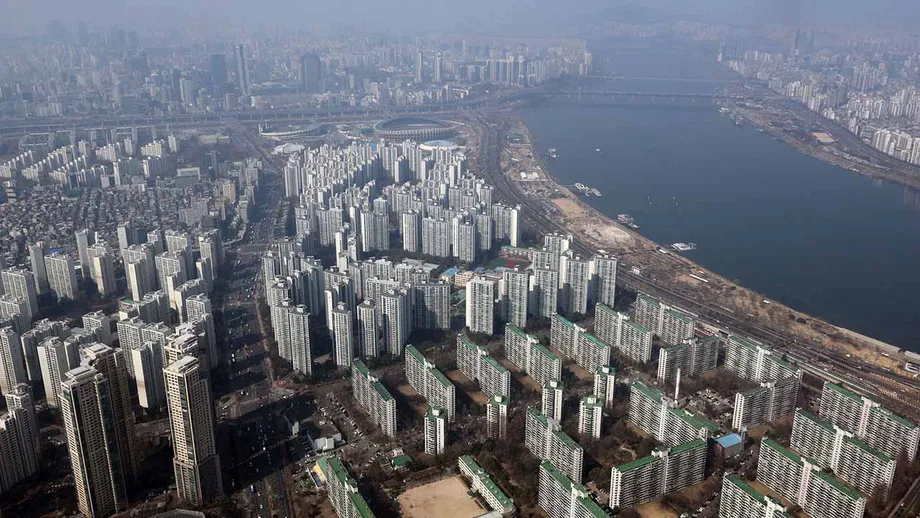
Seoul apartment prices rose for a 90th consecutive week in the Korea Real Estate Board's survey for the fourth week of October, but the city's 0.09% increase concealed sharply different conditions across the capital. Gangnam District fell 0.38%, while Seongbuk District rose 0.39%. In neighbouring Gyeonggi Province, Gunpo and Suwon's Yeongtong District each gained 0.58%.
Contents
- A long rise masks a widening divide
- How quickly has Seoul's growth slowed?
- Gangnam's three districts fall further
- Northern Seoul rises, though some areas cool
- Gyeonggi's strongest gains shift between cities
- Yeongtong transactions show the sums involved
- Large cumulative gains meet new supply plans
- Rental pressure persists as the wider market slows
- Key Points
The survey, measured as of October 26 and announced on October 29, showed Seoul's weekly increase slowing for a second consecutive week. Growth eased from 0.16% in the second week of October to 0.13% in the third week and then 0.09% in the fourth. Prices were still rising across the city on average, but more slowly.
Gyeonggi's apartment prices increased 0.20%, slightly below the previous week's 0.21%. Its weekly growth nevertheless exceeded Seoul's for a sixth consecutive week, a run beginning in the fourth week of September. The latest provincial increase was more than twice Seoul's.
Renters faced a different direction of travel. Seoul's apartment jeonse index rose 0.17%, accelerating from 0.16% the previous week and extending its own rising streak to 90 weeks. Jeonse is a Korean rental arrangement in which a tenant provides a large refundable deposit rather than paying the usual monthly rent.
How quickly has Seoul's growth slowed?
Seoul's weekly price increase shrank by 0.04 percentage points in the latest survey, after declining by 0.03 percentage points the week before. Compared with the second week's 0.16% rise, the latest 0.09% increase was about 44% smaller.
A percentage point measures the gap between two percentages. Here, it helps describe a loss of speed: the citywide index continued to climb, even as the size of each weekly step became smaller.
The October sequence shows how the slowdown developed:
- Second week of October: Seoul apartment sale prices rose 0.16%.
- Third week of October: growth eased to 0.13%.
- Fourth week of October, measured as of October 26: growth slowed to 0.09%.
- October 29: the Korea Real Estate Board announced the fourth week's results.
The board described a market in which lower priced listings appeared in some areas and apartment complexes pursuing reconstruction, while sought after developments with firm demand recorded transactions at higher prices. Those opposing movements produced a smaller increase for Seoul as a whole.
Gangnam's three districts fall further
Gangnam, Seocho and Songpa, three districts associated with some of Seoul's most expensive housing, all recorded steeper declines. Gangnam fell 0.38%, compared with 0.31% the previous week. Seocho's decline widened from 0.32% to 0.35%, while Songpa's widened from 0.13% to 0.22%.
Gangnam's weakness centred on large apartment complexes in Yeoksam and Apgujeong. In Seocho, declines were concentrated in Banpo and Seocho neighbourhoods. Songpa's falls were concentrated in Jamsil and Sincheon.
Gangnam's cumulative decline for the year reached 1.64%. Concern about potentially higher tax bills if tax rules change was cited as a factor weighing on expensive properties. The possible tax changes were not specified.
The broader southern grouping also showed weakness. Across Seoul's 11 districts south of the Han River, apartment prices fell 0.02%, while the 14 districts north of the river gained 0.22%. This broader southern group includes more districts than Gangnam, Seocho and Songpa alone.
Northern Seoul rises, though some areas cool
Seongbuk recorded Seoul's strongest weekly increase at 0.39%, led by large complexes in Donam and Gireum. Seodaemun rose 0.36%, with smaller and medium sized apartments in Hongeun and Hongje contributing to the gain. Jongno increased 0.35%, supported by major developments in Changsin and Muak.
Gangbuk and Dobong each rose 0.32%. Together, these figures show continued price pressure in several northern districts even while the most expensive southern areas were falling.
Other northern and eastern districts lost speed. Nowon's increase dropped from 0.26% to 0.12%, its second consecutive weekly slowdown. Gwangjin slowed from 0.16% to 0.05%, while Seongdong eased from 0.21% to 0.08%.
The cumulative figures show how much prices had already climbed before the latest week. Seongbuk was up 16.56% for the year, Seodaemun 14.07%, Gangseo 13.14% and Guro 13.03%. Dongdaemun and Nowon had gained 12.78% and 12.71%, respectively.
For buyers, the combination is demanding: a smaller weekly rise can come after months of substantial increases. Nowon's latest gain was less than half the previous week's, yet its cumulative rise remained in double digits.
Gyeonggi's strongest gains shift between cities
Gunpo and Suwon's Yeongtong District led the highlighted Gyeonggi markets with weekly increases of 0.58%. Gunpo accelerated from 0.53%, with gains centred on large complexes in Sanbon and Geumjeong. Yeongtong accelerated from 0.52%, supported by major developments in Maetan and Yeongtong neighbourhoods.
Yongin's Giheung District rose 0.54%, up from 0.30% the previous week, with strength in Jung and Dongbaek. Other sizable increases included Uiwang at 0.47%, Hwaseong's Byeongjeom District at 0.44%, Suwon's Gwonseon District at 0.42% and Hwaseong's Dongtan District at 0.41%. Byeongjeom and Dongtan were still rising, but more slowly than the week before.
Some earlier leaders cooled more sharply. Seongnam's Bundang District rose 0.20%, compared with 0.79% two weeks earlier. Anyang's Dongan District slowed from 0.56% to 0.38%. Icheon moved in the opposite direction to the provincial average, falling 0.20% for a sixth consecutive weekly decline.
The regional pattern points to strength moving between locations rather than every city accelerating together. Rising prices around semiconductor industry employment centres in Suwon and Yongin were described as encouraging buyers to consider relatively cheaper nearby locations, including Gunpo and Uiwang.
Nam Hyuk-woo, a real estate researcher at Woori Bank, assessed that Seoul's price strength was spreading more fully into Gyeonggi. He expected the province's strength could continue for a time regardless of whether individual areas were subject to property market restrictions.
Yeongtong transactions show the sums involved
A 101 square metre apartment at Salgugol Donga in Yeongtong neighbourhood sold for 1.07 billion won on October 27, setting a record for that size in the complex. A transaction for the same floor area on October 23 was priced at 947 million won.
The gap between those two transactions was 123 million won, or about 13% of the earlier price, over four days. Buyers comparing homes within a complex also need to account for features such as the floor, condition and outlook, which were not detailed for these transactions.
Other Yeongtong sales also reached records. A 59 square metre apartment at Cheongmyeong Maeul Jugong changed hands for 718 million won on October 28. An 84 square metre apartment at Sinnamusil Poonglim sold for 1.05 billion won on October 23.
The transaction dates span both sides of the October 26 survey reference date. The October 27 and 28 sales therefore provide a later glimpse of activity in a district that was already recording one of Gyeonggi's strongest weekly increases.
Large cumulative gains meet new supply plans
Gwangmyeong's apartment prices had risen 17.62% for the year, followed among the highlighted Gyeonggi areas by Yeongtong at 17.47%, Dongan at 16.90%, Bundang at 16.86% and Yongin's Suji District at 16.32%.
Dongtan recorded a 21.32% increase after an administrative reorganisation in February. Its measurement period starts with that change, while the other cumulative figures describe gains during the year.
Several places included in newly announced public housing site plans were also still recording increases. On October 29, the government announced plans covering locations near Seoul, including areas where the latest survey showed continued price growth.
Hanam rose 0.33% during the week and Guri 0.31%. Their cumulative increases reached 13.97% and 13.46%, respectively. Uijeongbu gained 0.11%, Gimpo 0.04% and Goyang 0.03%.
The timing matters for households considering those locations: the survey measured prices as of October 26, three days before the announcement. The figures describe market conditions going into the supply announcement. No construction or completion timetable was given with these figures.
Rental pressure persists as the wider market slows
Seoul's jeonse increase accelerated to 0.17%, with Dobong rising 0.34% and Dongdaemun 0.32%. The Korea Real Estate Board described higher rental prices in preferred developments, including large complexes and those near railway stations, alongside some transactions at adjusted prices.
Gyeonggi's jeonse index rose 0.18%, unchanged from the preceding week, while the national index increased 0.10%. For a household renewing a jeonse agreement or moving to another apartment, rising deposit requirements can increase the amount of cash or borrowing needed to secure a home.
A shortage of rental listings and some tenants entering the purchase market were cited as factors supporting Gyeonggi's sale prices. This connects the two markets in practical terms: households comparing a larger rental deposit with the cost of buying may reconsider which option they can manage.
Across South Korea, apartment sale prices rose 0.07%. The capital region, comprising Seoul, Gyeonggi and Incheon, increased 0.14%, down from 0.16%. Incheon slipped from a 0.02% increase to a 0.01% decline, while areas outside the capital region rose 0.01%.
Ulsan's weekly gain increased from 0.02% to 0.04%, while Daegu moved from no change to a 0.01% decline. The national increase therefore brought together strong gains in selected Gyeonggi locations, slowing growth in Seoul and much smaller changes elsewhere.
Key Points
- Seoul apartment sale prices rose 0.09% in the fourth week of October, extending their increase to 90 consecutive weeks.
- The pace slowed for a second week, while declines deepened in Gangnam, Seocho and Songpa.
- Seongbuk led Seoul's weekly gains at 0.39%; its cumulative rise for the year reached 16.56%.
- Gyeonggi rose 0.20%, exceeding Seoul's weekly increase for a sixth consecutive week.
- Gunpo and Yeongtong each gained 0.58%, while Giheung rose 0.54%.
- Seoul's jeonse index rose 0.17%, accelerating even as sale price growth slowed.
- National apartment sale prices increased 0.07%, with substantial differences between locations.