A January factory start compresses Apple's spring schedule
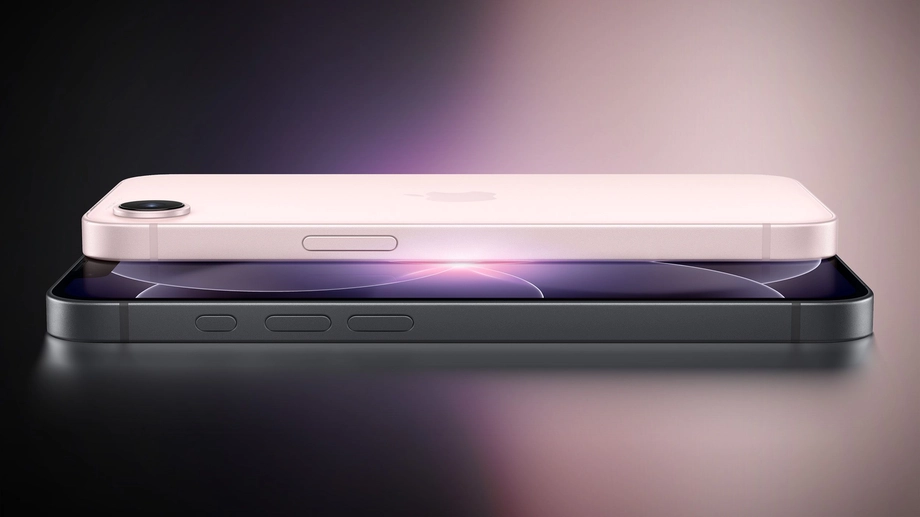
Apple has not started mass production of the standard iPhone 18 or the less expensive iPhone 18e, according to a 27 November 2026 claim from Weibo leaker Fixed Focus Digital. He now points to a start around New Year's Day 2027, rather than late October 2026. The expected public introduction remains February or March 2027, leaving Apple with weeks rather than its usual months to assemble finished phones and build inventory.
Contents
- A January factory start compresses Apple's spring schedule
- One leaker has supplied two different earlier dates
- Display supplier schedules offer a separate clue
- A February or March launch is still possible
- Reported March dates are scenarios, not invitations
- Shared components could speed production and concentrate risk
- The rumored upgrades centre on the A20 chip and shared hardware
- The spring schedule extends beyond the two iPhones
- What buyers should watch between now and spring
- The Bottom Line
Apple could keep the launch window and accept lean initial supplies, allow a longer gap between preorders and deliveries, or move the release. Limited availability during the first few weeks is the most immediate risk for buyers. Apple has not commented on the production claim, announced a launch date or said that its release plans have changed.
The timing matters because the two phones are already part of an unusual schedule. Apple introduced the iPhone 18 Pro, iPhone 18 Pro Max and its first foldable phone, the iPhone Duo, in September 2026. The standard and less expensive models were held back for 2027, making this the first time since 2010 that a mainstream iPhone has been scheduled outside the autumn launch season. Shoppers looking for a regular iPhone today still encounter the iPhone 17 range.
One leaker has supplied two different earlier dates
Fixed Focus Digital gave another timeline in the middle of October. At that point, he said standard iPhone 18 production would begin in late November 2026, that Apple intended to accumulate an unusually large inventory, and that the phone would reach the market in March alongside the iPhone 18e. His latest post instead describes late October as the original target. January is later than either date, while the inconsistency means the supposed October and November factory deadlines should not be treated as independently confirmed schedules.
A tally of the leaker's record illustrates the uncertainty. Of 57 claims logged, 19 had been resolved: ten were fully confirmed, five were partly confirmed and four were false. The other 38 remained unresolved in that count. His newest assertion provides no factory document, production volume or identified supplier to explain the change.
- September 2026: Apple launched the iPhone 18 Pro, Pro Max and foldable iPhone Duo.
- Middle of October 2026: Fixed Focus Digital pointed to production in late November and a large initial stock build.
- Middle of November 2026: display industry schedules placed panel production for the standard models around the turn of the year.
- 27 November 2026: the same leaker said neither phone had entered mass production and pointed to around New Year's Day.
- February or March 2027: the expected introduction window for the iPhone 18 and iPhone 18e.
Display supplier schedules offer a separate clue
LG Display is expected to begin mass production of OLED panels for the standard iPhone 18 in late December 2026. Samsung Display is expected to follow in January 2027, making panels for both the iPhone 18 and iPhone Air 2. OLED is the display technology used in these premium screens, with individual pixels producing their own light. Finished phone assembly cannot run at full volume before sufficient displays and other components arrive.
Panel makers have reportedly spent the autumn concentrating on screens for the iPhone 18 Pro, Pro Max and iPhone Duo. That work pushed panels for the standard models later in the production queue. Korean display manufacturers were still aiming for a March market introduction. Prioritizing the premium devices was also credited with bringing some iPhone Duo delivery estimates forward from January 2027 to December 2026.
Fixed Focus Digital has separately presented the delay as a commercial strategy. He claimed that Apple wanted to extend the iPhone 17 sales period, reduce production costs and ensure plentiful iPhone 17 supply for China's Double 11 shopping event. He also alleged changes to display specifications and the processor. Apple has not described such a strategy, and these assertions differ from the component capacity explanation suggested by display production schedules.
An earlier supplier statement fits the broad change in timing without settling the new January claim. Largan Precision, a major supplier of camera lenses and optical modules for iPhones, told investors through its chief executive that a major US client had moved a new model to the first quarter of 2027. The executive did not name Apple. That statement concerned a product launch, while the latest leak concerns the start of assembly.
A February or March launch is still possible
Bloomberg journalist Mark Gurman has narrowed the expected introduction period for Apple's less expensive devices to February or March. In his newsletter, he placed the phones within a larger group of products planned for that period.
Apple plans to unveil an iPhone 18e, iPhone 18, updated entry-level iPad, and new MacBook Neo and MacBook Air models around February or March next year
A production start around 1 January would leave about eight weeks before 1 March and roughly ten weeks before the middle of March. A late February introduction would allow less time. Apple commonly has around three to four months between the manufacturing ramp and retail availability; for a September phone, substantial production can begin as early as late June. Starting in January therefore removes much of the cushion normally used to fill warehouses, distribute phones internationally and absorb factory problems.
The calendar still offers a plausible route to March. A start in late November would have provided roughly three months before an early March presentation, while New Year's Day provides around two. Eight to ten weeks can support a release if components are ready and assembly accelerates quickly, although the initial inventory would be smaller. Estimates of only six to eight weeks of effective production account for the slower beginning of a factory ramp and possible staffing reductions around Lunar New Year.
Validation testing is the missing piece of the public picture. Engineering validation testing, or EVT, checks whether the design works. Design validation testing, or DVT, checks whether the finished design meets its requirements. Production validation testing, or PVT, then checks whether factory lines can build it consistently. If DVT is complete and PVT can proceed in early December, suppliers could still prepare for a rapid January ramp. Apple and its partners have not disclosed which stage either phone has reached.
Reported March dates are scenarios, not invitations
One reported schedule sketches an announcement around 1 March 2027, preorders on 5 March and sales beginning on 12 March. A version running roughly a week later uses 12 and 19 March for the later preorder and sales steps. Apple has not announced an event, and the products could also be introduced through press releases rather than a presentation.
The iPhone 16e was unveiled on 19 February 2025, while the iPhone 17e followed on 2 March 2026. Those dates explain why late February and early March are natural reference points for the iPhone 18e. The standard iPhone 18 has no comparable spring precedent because earlier standard models appeared alongside Pro versions in autumn.
For customers, the practical difference may appear in delivery estimates rather than the announcement date. Popular colours and base storage versions could develop waits lasting several weeks if opening inventory is thin. One estimate has factory output catching up during April. Apple could also preserve the public date with a longer preorder period, while a more substantial factory problem could push the release later.
Shared components could speed production and concentrate risk
Fixed Focus Digital has claimed that Apple will use some of the same manufacturing processes and components in both phones. A diagram he circulated described identical batteries and displays measuring 6.3 inches. Other claims extend the overlap to the chassis and logic board, with some parts interchangeable between the iPhone 18 and iPhone 18e.
Shared batteries, display tooling and internal brackets could simplify purchasing and allow assembly lines to move between the two models more easily. The arrangement also creates a common vulnerability: a shortage affecting one shared part could hold up both phones. Questions remain about the iPhone 18e display, with some claims supporting the same dimensions and others expecting a different screen size.
Sales patterns may reduce the pressure to accumulate an enormous opening inventory. Pro and Pro Max phones generally generate the greatest volumes immediately after an autumn launch, while demand for standard models builds more strongly during the opening months of the following year. Apple could consequently begin with fewer standard phones than it would need for a simultaneous launch of the entire range.
The standard and Air models nevertheless account for more than 30 percent of total iPhone unit volume, according to the reported market estimates, with the regular model selling more units than the Air. That share makes their spring availability commercially important even if their first weekend is less frantic than a Pro launch.
The rumored upgrades centre on the A20 chip and shared hardware
Both phones are expected to use an A20 processor manufactured by TSMC on a 2 nanometer process, potentially with new packaging technology. The 2 nanometer label describes the manufacturing generation rather than the physical size of the whole chip. A newer process can improve performance and energy efficiency, and one claim suggests power consumption could fall by about 30 percent compared with the predecessor. No reliable battery capacity has emerged for the standard iPhone 18, so actual endurance cannot be calculated from that figure.
Memory claims range from 9GB to 12GB of RAM. The repeatedly mentioned 9GB option would still exceed the 8GB in the iPhone 17, providing more working memory for apps and artificial intelligence tasks performed on the device. Both phones are also expected to adopt Apple's C2 cellular modem, extending the move away from Qualcomm modems already associated with the Pro range.
The standard iPhone 18 has been linked to a 6.3 inch OLED screen running at 120Hz, which can make scrolling and animation appear smoother than a 60Hz display. Camera rumors include 48 megapixel sensors for the main and ultrawide cameras, a 24 megapixel selfie camera with Centre Stage, and a pressure sensitive Camera Control button. Variable aperture is expected to remain exclusive to Pro models.
The iPhone 18e is more likely to retain one rear camera while gaining a larger battery and an improved camera for selfies and video calls. Its screen remains unsettled: it could receive the same 120Hz ProMotion technology or continue with a 60Hz LTPS panel. LTPS is a display backplane technology, while 60Hz means the image refreshes 60 times per second.
A separate design claim describes a rear camera surround shaped like an aircraft porthole and a densely stacked motherboard. Moving the motherboard into less space would leave more room for the battery and heat dissipation. These details sit alongside the leaker's conflicting allegation of cost related display and chip reductions. Apple has confirmed none of the specifications, camera designs or memory figures.
The spring schedule extends beyond the two iPhones
The iPhone Air 2 could enter production around the same period, although Fixed Focus Digital did not include it in his latest statement. Some schedules group it with the iPhone 18 and 18e, while Gurman places it somewhat later in the first half of 2027. Samsung Display is expected to be its sole OLED supplier, retaining the first generation panel specifications so that existing inventory and tooling can be used.
The Air 2 is rumored to keep a screen measuring 6.5 inches while adding a 2 nanometer A20 chip, Apple's C2 modem, a second rear camera with a 48 megapixel ultrawide sensor and a larger battery. Those changes would address camera flexibility and endurance without requiring a completely new display design.
Other products expected around February or March include a basic iPad, MacBook Neo and MacBook Air. Additional hardware claims describe an M6 processor for the MacBook Air and a Neo moving from the A18 Pro to the A19 Pro with 12GB of RAM. Apple's October 2026 releases had already included the HomeView smart home device, a new iPad mini and a MacBook Pro with a touchscreen, reinforcing the spread of launches across the calendar.
Software provides another timing marker. iOS 27.3 is expected in December 2026 with Siri operations involving several steps in Apple's own apps, while fuller support for apps from other developers is expected later. iOS 27.4 is anticipated during the same February to March cycle as the spring hardware.
What buyers should watch between now and spring
Anyone needing a phone immediately still has the iPhone 17 family and the autumn 2026 Pro models as the current choices. Buyers waiting for the standard iPhone 18 are weighing a newer processor, additional memory and possible camera improvements against the possibility of restricted opening stock. A January assembly start would make quick delivery more dependent on colour, storage and local allocation than on the announcement itself.
India provides a concrete illustration of the pricing uncertainty. The iPhone 17 launched there at Rs 79,900 and reportedly rose to Rs 99,900 in September 2026, an increase of Rs 20,000, or about 25 percent. No iPhone 18 price has been announced; discussion of a figure near Rs 100,000 is an estimate informed partly by that increase, not a confirmed retail price.
The next observable checkpoints are LG Display's expected panel ramp in late December, Samsung Display's January work and the claimed start of finished phone assembly around New Year's Day. February and March remain the expected introduction months. Apple has given no public production figures, supplier explanation, event date, specification list or pricing for either phone.
The Bottom Line
- Fixed Focus Digital says neither the iPhone 18 nor iPhone 18e has entered mass production.
- His latest target is around New Year's Day 2027, but his earlier October and November targets were inconsistent.
- LG Display is expected to start relevant OLED panel production in late December, followed by Samsung Display in January.
- February or March 2027 remains the expected launch window, with March supported by display manufacturing schedules.
- Apple could preserve that window with smaller initial inventories, longer delivery estimates or a later retail release.
- Rumored features include an A20 chip, Apple's C2 modem, more RAM and shared components, but Apple has confirmed none of them.
- The iPhone Air 2, a basic iPad and new MacBooks are also expected during the broader spring product cycle.