Inside Meta's Bangladesh network plan
Meta asked Bangladesh's telecom regulator for permission to build and run its own network infrastructure in the country after an August 13 meeting with the Bangladesh Telecommunication Regulatory Commission, or BTRC. The plan matters at once to 77.1 million Facebook users counted in Bangladesh in October and to a country that, as of August, imported 11,653.68 Gbps of international bandwidth. The regulator discussed local infrastructure to improve the quality and speed of Meta's services in Bangladesh during the meeting, according to the company letter at the centre of the request.
Contents
- Inside Meta's Bangladesh network plan
- Why local servers would change Facebook traffic
- A short timeline of the request
- What Meta wants permission to do
- How the traffic exchange would work
- The law and policy behind the request
- What changes for users and local networks
- Why the request fits a wider investment debate
- What regulators must weigh next
- Key Points
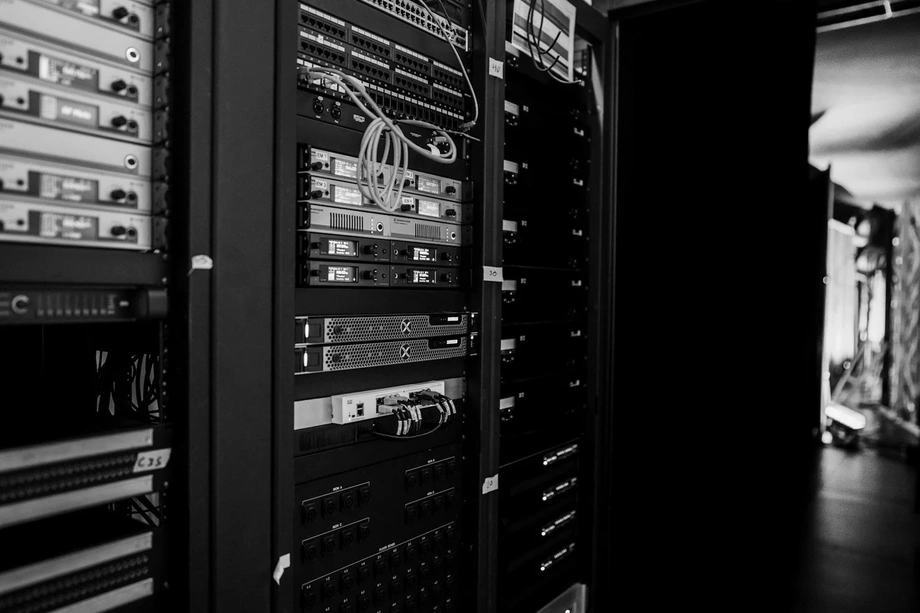
The American company wants to install points of presence, or PoPs, in Bangladesh. A PoP is a small site with servers and network equipment that keeps or delivers web content closer to users. Instead of sending a Facebook video or a WhatsApp message through India or another country before it reaches a phone in Dhaka or Chattogram, a local PoP could deliver that content inside Bangladesh. Meta also wants to place equipment in data centres serving multiple carriers or in facilities run by others and chosen by Meta.
The letter says the plan would involve significant capital investment by Meta, but the company did not disclose the amount. If approved, the network would let Meta serve more of its own traffic locally, reducing the distance data travels and lowering the amount of international bandwidth Bangladesh must bring in to carry social media traffic.
Why local servers would change Facebook traffic
A significant share of the social media content watched by people in Bangladesh is currently served from data centres in India, said Rehan Asad, ICT adviser to the prime minister. He said bringing that content into Bangladesh costs money whether it arrives through undersea cables or land links. He said local hosting would both reduce those payments and improve how platforms perform for users.
Rehan Asad, ICT adviser to the prime minister, explained the cost in practical terms and said the same traffic could be delivered inside Bangladesh if Meta built local infrastructure. He said Bangladesh now pays to bring the content in from India or other countries.
We will also save up on the bandwidth costs that we currently pay to India or any other country to bring this content into Bangladesh, whether through submarine cables or overland connections. So, this will both save us money and ensure better performance for our users,
The scale helps explain the interest. BTRC said Bangladesh imported 11,653.68 Gbps of international bandwidth as of August from Singapore through two submarine cables and from India through international terrestrial cable companies. Industry insiders estimate that Meta platforms account for around 25 percent of international bandwidth consumption. NapoleonCat, a social media management company, counted 77.1 million Facebook users in Bangladesh in October. Using BTRC's total and the 25 percent estimate, Meta traffic would be about 2,913 Gbps.
A short timeline of the request
The plan moved from discussion to a formal request within weeks. The letter connects Meta's application to a meeting with the regulator and to a policy the regulator published soon afterwards.
- August 13: Meta met BTRC. The talks covered local infrastructure, service quality and speed, local payment facilities, a permanent office in Bangladesh, and artificial intelligence tools to find and remove harmful content.
- August 20: BTRC published the draft telecommunications network policy that Meta later cited.
- August 21: BTRC's notice was last updated at 11:35 AM.
- August: BTRC recorded 11,653.68 Gbps of imported international bandwidth.
- October: NapoleonCat counted 77.1 million Facebook users in Bangladesh.
The sequence shows that Meta is asking for more than a server room. The company wants a defined role in Bangladesh's internet system, covering content delivery, traffic exchange and direct links to networks that carry users.
What Meta wants permission to do
Nico Roehrich, director of network investments at Edge Network Services, a Meta subsidiary, signed the letter. He said regulatory certainty was necessary before Meta could evaluate and proceed with the investment. The company cited the Bangladesh Telecommunication Regulation Act 2001 and clause 7.2.10 of the Telecommunications Network and Licensing Policy 2025 to support its request for simplified treatment.
- Meta wants to install, own, operate and maintain PoP equipment in Bangladesh through partners without obtaining a conventional telecommunications licence. It also wants to put that equipment in data centres serving multiple carriers or in facilities run by others.
- The company wants to connect its international backbone, including places where undersea cables reach land, terrestrial links crossing borders and domestic links carrying traffic onward, directly to its Bangladesh PoPs. It also wants to operate transmission capacity between its own PoPs inside Bangladesh and across borders to carry its own traffic.
- Meta wants to set up direct peering arrangements with local internet service providers, international internet gateways, mobile network operators and other network operators. It wants to choose its partners, negotiate commercial terms and avoid charges added just because those arrangements exist.
Meta also asked for written confirmation that no separate interconnection licence or additional regulatory approval would be needed. The company said that confirmation would guide planning, procurement, financing and deployment.
How the traffic exchange would work
A PoP works like a local delivery point on the internet. If a user in Bangladesh asks for a Meta page, the request can end at a nearby PoP rather than travelling to a data centre in another country. The closer the delivery point, the fewer long network hops are needed. That can reduce delay, sometimes called latency, which users notice as slower or faster loading.
Peering is the arrangement that lets two networks exchange traffic directly. In a peering deal with no settlement charges, neither side pays the other for the traffic exchanged. That can reduce payments to transit providers, companies that sell passage between networks. Meta wants that kind of direct exchange with Bangladeshi internet service providers, mobile network operators and internet gateways.
The change would alter both the route and the bill. Traffic that now moves through overseas links could stop inside Bangladesh. Local providers would have a direct route to Meta instead of paying for a longer path through other networks.
The law and policy behind the request
Meta's application rests on two regulatory references. The first is the Bangladesh Telecommunication Regulation Act 2001. The second is clause 7.2.10 of the Telecommunications Network and Licensing Policy 2025, which the company says supports a lighter process for the infrastructure it proposes.
Bangladesh Telecommunication Regulatory Commission published the Draft Licencing Policy on August 20, 2025. It is the policy whose clause 7.2.10 appears in Meta's request. The notice lists an archive date of January 1, 2031, says the content was last updated on Thursday, August 21, 2025 at 11:35 AM, and offers the draft document for download.
The government notification for the Telecommunications Network and Licensing Policy 2025 is dated 18 September 2025 (৩ আশ্বিন ১৪৩২). It says the government approved and published the policy, that the policy repeals the International Long Distance Telecommunication Service (ILDTS) Policy, 2010, and that the policy takes effect immediately.
The clause that Meta cites reads:
7.2.10 Introduction and Facilitation of Emerging and Specialized Telecommunication Services
7.2.10.1 To accelerate digital transformation and foster economic innovation, the Bangladesh Telecommunication Regulatory Commission (BTRC) shall enable the introduction, regulation, and facilitation of emerging and specialized telecommunication services, based on market readiness, digital transformation service demand, technological advancement, and national strategic priorities. Such services may include, but are not limited to: Virtual Network Services (VNS), innovative Radio Access Networks (RAN) technologies, Network Slicing, Internet of Things (IoT), Massive MIMO, Private 5G/6G, Mission-Critical Communications, Edge and Fog Computing, Blockchain Computing, Quantum Computing Infrastructure, LPWAN, Machine-to-Machine (M2M) Connectivity services, Non-Terrestrial Networks (NTN), and Cloud-Native Network Functions (CNFs)/Network-as-a-Service (NaaS).
7.2.10.2 BTRC shall adopt a proportionate and flexible regulatory approach for emerging and innovative services. Depending on the nature and scope of the service, BTRC may require formal licensing for certain categories, while others—particularly enterprise-oriented or non-exclusive services—may be permitted under simplified regulatory frameworks. These may include registration, technical enlistment, or authorization through light-touch regulatory models, aimed at facilitating ease of market entry, fostering innovation, and ensuring operational flexibility.
7.2.10.3 Where applicable, BTRC shall issue specific regulatory guidelines outlining the service scope, eligibility criteria, operational conditions, interoperability requirements, and applicable technical and security standards. These frameworks shall be designed to protect the public interest, safeguard consumer rights, and ensure consistency with national strategic priorities, including digital inclusion, innovation, and network resilience.
7.2.10.4 BTRC shall adopt a technology-neutral approach in enabling the advancement of next-generation telecommunications services. The deployment of innovative network architectures and functionalities—such as emerging Radio Access Network (RAN) technologies, Network Slicing, IoT services, Private Networks (5G/6G and beyond), and Mission-Critical Services—shall be determined by licensed or authorized operators, subject to compliance with applicable regulatory provisions.
7.2.10.5 Services with significant impact on market structure, government revenue, or mass consumer access—such as Mobile Virtual Network Operators (MVNOs)—shall be regulated under a proportionate framework. This may include full or light-touch licensing to ensure fair competition, consumer protection, and equitable market access. BTRC shall issue separate guidelines for providing license, detailing MVNO eligibility, interconnection, dispute resolution, and operational conditions.
The broader exemption route appears in clause 7.2.8:
7.2.8 ANSPs shall be permitted to engage in both passive and active infrastructure sharing, including core networks, last mile fiber connectivity, radio networks, spectrum and other relevant facilities etc. Passive infrastructure, specially optical fiber and telecommunications towers shall be shared through licensed infrastructure service providers. However, BTRC may grant exemptions to this requirement in specific cases deemed necessary for the national interest. Spectrum sharing shall require prior approval from BTRC.
The clause matters because Meta is not asking to become a full telecommunications operator. It is asking for permission to perform a defined set of network functions that it says support its own services. Regulators now have to decide whether that activity falls outside the usual licensing route and whether direct links to local networks need separate approval.
What changes for users and local networks
For ordinary users, the clearest change would be in performance. Facebook photos, Instagram videos and WhatsApp messages could load faster if they are delivered from equipment inside Bangladesh. The benefit would be most visible when demand is high and international links are expensive or crowded.
For local providers, direct peering could reduce the need to buy international capacity from third parties. BTRC's August figure of 11,653.68 Gbps shows how much bandwidth the country already imports. Industry insiders estimate that Meta platforms use about a quarter of that capacity, so a local routing arrangement would touch a large part of Bangladesh's international traffic bill.
Meta did not disclose the investment amount, and the regulator has not announced a decision or a date for one. No hearing or vote date was given. The company is seeking certainty before it commits money, while BTRC must set the terms for equipment, traffic exchange and regulatory oversight.
Why the request fits a wider investment debate
The GSMA investment policy paper says telecom operators in Bangladesh spend capital equal to 15 to 20 percent of revenue. It says mobile operators invested about $2.6 billion in the country's telecom market between 2019 and 2023. The paper argues that more investment is needed to support advanced connectivity.
Revenue growth has been weak. The paper says average revenue per user, known as ARPU, grew only 1.2 percent from 2019 while average inflation reached 7 percent. ARPU is the average amount a company earns from each subscriber. When prices fall in real terms, operators have less room to recover the cost of building networks.
The paper also points to rules that raise costs. Mobile licences last 15 years, and mobile internet carries an effective tax rate of 39 percent after a 15 percent VAT becomes an effective 18 percent rate, a 20 percent supplementary duty and a 1 percent surcharge are added. Publicly traded telecom firms can face corporate tax of up to 40 percent, while unlisted firms can face 45 percent. A 2 percent minimum turnover tax applies, compared with 0.6 percent in other general sectors. The paper also lists a BDT 300 SIM ownership tax, a 1 percent surcharge on purchases outside telecom services, and a 7.5 percent extra cost from BTRC not registering operators for VAT.
The paper says mobile operators are barred from building, owning and operating fibre infrastructure, while active infrastructure sharing is restricted. It says the gateway traffic routing system excludes mobile operators and uses pricing that is not transparent. It also describes complex licensing that increases paperwork, limits how companies can offer services, and leaves no single unified licence for a wide range of services. Opaque penalties and retrospective financial claims from information system audits, some reaching back to the start of operations, add uncertainty.
The recommended fixes include letting operators deploy their own fibre and gateways, allowing voluntary sharing through commercial deals, longer licence periods, and licensing rules that treat operators alike and allow competition. Indonesia, Sri Lanka, India, Pakistan and Malaysia already let operators take those steps. The paper also cites the 2024 ICT Development Index from the United Nations agency ITU, where Bangladesh scored 62, against 90 for peer nations and 93 for developed countries.
What regulators must weigh next
BTRC's decision will define how far a global platform can operate inside Bangladesh's internet system without taking on the full role of a telecom operator. The request touches sensitive parts of the network: undersea cable landings, domestic backhaul, peering with local providers and the right to carry Meta traffic across borders. Those are technical functions, but they also shape who controls routes and who pays for capacity.
The practical test is simple. If Meta builds local PoPs and connects them directly to Bangladeshi networks, users may see faster access and the country may import less bandwidth for Meta traffic. Local providers may gain cheaper routes, though they will be negotiating with one of the largest sources of online demand. Regulators must also decide what reporting, access and approval rules apply when Meta operates equipment in the country.
The next formal steps are not known. Meta wants written confirmation before it spends money, and BTRC's published notice gives no approval schedule. The draft policy's archive date of January 1, 2031 shows how long the policy document may remain in force, but it is not an approval date for Meta's application.
Key Points
- Meta applied to build and operate its own points of presence in Bangladesh after an August 13 meeting with BTRC.
- The plan includes direct links to Meta's international backbone, local network operators, mobile operators and internet gateways.
- Meta wants peering with no settlement charges, freedom to choose partners, and confirmation that no separate interconnection licence is needed.
- The company says the project requires significant capital investment but did not disclose the amount.
- BTRC says Bangladesh imported 11,653.68 Gbps of international bandwidth as of August, while industry insiders estimate Meta platforms use about 25 percent of consumption.
- Rehan Asad said local hosting would save bandwidth costs and improve performance for users.
- Meta cites the Bangladesh Telecommunication Regulation Act 2001 and clause 7.2.10 of the Telecommunications Network and Licensing Policy 2025.
- No regulator decision, hearing date or approval date has been announced.