A streaming debut backed by awards and a long cinema run
At 10:00 on 27 November 2026, Once Upon a Time in the Middle East began streaming simultaneously across China's largest video platforms. The Chinese film, whose original title 欢迎来龙餐馆 translates as Welcome to the Loong Restaurant, reached home screens with a mainland box office total of 2.413 billion yuan and two prizes from the 12th Asian International Film Festival.
Contents
- A streaming debut backed by awards and a long cinema run
- Where can viewers watch it?
- How does a restaurant become a refuge?
- Baghdad memories and a city constructed in Qingdao
- The dates behind the film's long release
- How did box office receipts reach 2.413 billion yuan?
- Why did its audience scores keep rising?
- Why does Shen Teng's trophy carry extra weight?
- What comes next for the festival winner?
- What to Know
The festival named it best film and gave Shen Teng the Snow Leopard best actor prize for playing chef Xu Fu. The ceremony took place in Los Angeles on the evening of 19 November local time, and the producers confirmed both wins on 20 November. Viewers can now see the performance that moved one of China's most successful comic stars into the centre of a serious war drama.
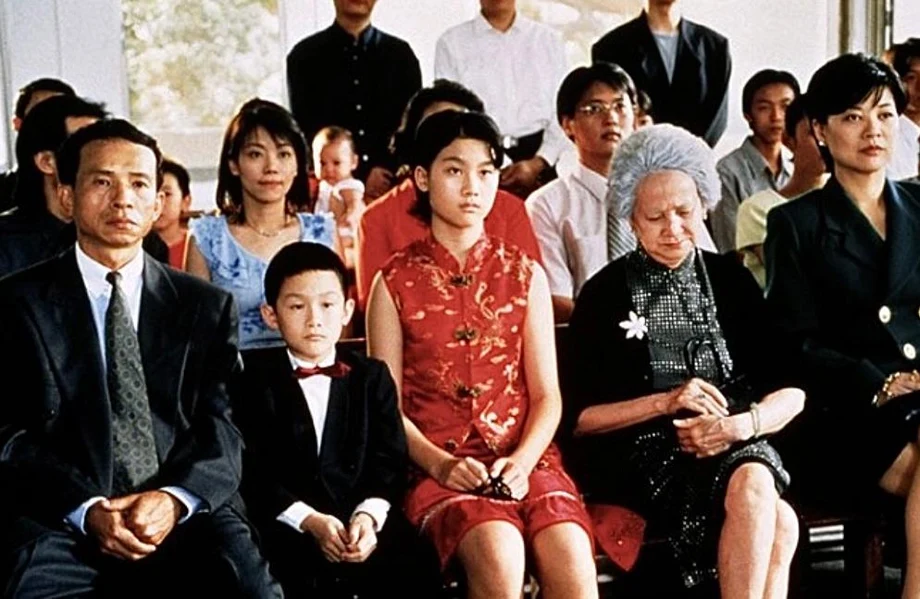
Wen Muye wrote and directed the film, with Ning Hao as producer. Shen plays a chef from northeastern China, while Jiang Qiming plays restaurant manager Ma Junsheng. Their story begins with debt and the search for a living, then changes into an account of sheltering children as war destroys the city around them.
Where can viewers watch it?
Youku, iQIYI, Tencent Video, Bilibili and Mango TV all started showing the film at the same time. The release extends well beyond those five services, with viewing arrangements differing by platform:
- Huawei Video, Xiaomi TV, Migu Video, Tianyi Ultra HD and Tianyi Smart Screen also carry the film. China Unicom's 5G Wide Vision service offers it through its app screening room and WeChat Mini Program.
- Television viewers can use Youku's Cool Meow TV, iQIYI's Qiyiguo TV, Tencent Video's Aurora TV or Bilibili's Yunshiting Little TV.
- Huawei Video supports phones, smart screens and tablets. Xiaomi TV lists the film under Xiaomi Movie VIP, while Migu Video's Diamond membership package removes advertisements before the feature.
Most platforms reserved the first viewing window for paying members. iQIYI used VIP premiere access, Bilibili required a premium membership and Mango TV offered member access. Some services said nonmembers would be able to watch later, but no common date for that later window was given. The version released online is the official 4K streaming edition.
How does a restaurant become a refuge?
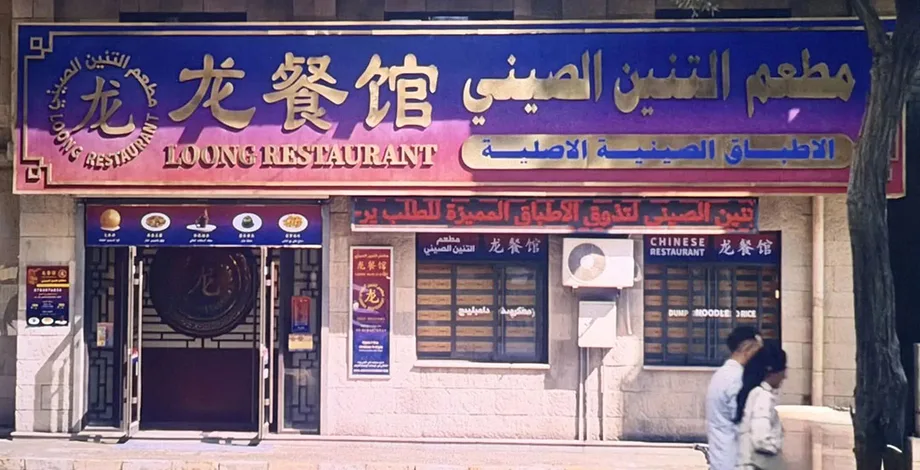
Xu Fu travels to the fictional Middle Eastern city of Bahata after a workplace disaster leaves him with debts. He becomes head chef of the Loong Restaurant, which is owned by Zaid, a local government official. Ma Junsheng manages the dining room, and his fiancee, Lina, teaches at a nearby orphanage. A mischievous boy named Seif is among the children who gradually change Xu's attitude towards them.
An opening set more than two decades later, when an elderly Xu is questioned by immigration officials, frames these events as memories. Back in Bahata, business is improving when war with the United States suddenly erupts. China organises an evacuation, but Zaid persuades Xu to remain by offering him a share of the restaurant.
The orphanage is subsequently destroyed and children take shelter in the restaurant. Seif begins helping in the kitchen, learning to cook and speak Chinese. The story later moves beyond the refuge into imprisonment and a militant compound where orphans are trained as child soldiers. Cooking remains Xu's practical means of survival, but it also becomes his way of preserving the children's lives and his own sense of right and wrong.
The setting contains strong indications of the 2003 invasion of Iraq, yet the film never names the country where Bahata is located. Wen Muye explained his decision by pointing to the continuing human cost of war:
I did not want to limit it to any particular war.
Wen said the story could just as easily be unfolding in the present. That approach keeps attention on Xu and the children rather than on battlefield strategy, with food shortages, imprisonment and recruitment of young fighters showing how conflict enters ordinary routines.
Baghdad memories and a city constructed in Qingdao
The fictional restaurant has roots in the experiences of three named restaurateurs. They are Baghdad restaurant owner Chen Xianzhong, and Liu Lei and Shuai Xuejun of the Chinese Dragon restaurant in Baghdad's Green Zone, the fortified district that became a centre of administration after the invasion.
Filming began in April 2024. The production spent five months constructing a Bahata set covering 100,000 square metres at Qingdao Oriental Movie Metropolis. Parts were filmed for IMAX presentation. The completed feature runs for about 140 minutes and has no scene after its credits.
Nearly 40 dishes appear on screen. A wedding sequence brings together an iron pot stew and Arabic grilled fish, while a fried egg changes from glossy and appetising to curled and burnt as circumstances deteriorate. Wen has described the restaurant as a shelter and Chinese food as a representation of peace. The kitchen therefore serves as more than decoration: its changing supplies and meals register what Xu, his friends and the children are losing.
The dates behind the film's long release
The journey from production to streaming included a gradual international rollout, an Academy Awards submission and a cinema run that continued after the online premiere.
- 8 to 11 August 2026: Previews ran from 8 to 10 August, between 14:00 and 21:00, before the nationwide Chinese cinema release on 11 August.
- 11 to 18 September: Releases followed in Hong Kong, Macao, Malaysia, Australia and New Zealand on 11 September, Singapore on 17 September and Japan on 18 September.
- 7 October: The producers announced that the film would represent mainland China in the Best International Feature Film race at the 99th Academy Awards.
- 9 October: The film opened in the United States and Canada. Its North American release covered more than 120 cinemas in dozens of cities, including Los Angeles and San Francisco.
- 19 and 20 November: The Los Angeles festival presented its prizes on 19 November, followed by the producers' public confirmation on 20 November.
- 27 November to 15 December: Streaming began on 27 November, while the extended cinema licence remains valid until 15 December.
The extension means that the online release and theatrical screenings are operating together. Viewers can choose the 4K home version, while cinemas still have time to continue showing the film.
How did box office receipts reach 2.413 billion yuan?
The three days of previews generated 160 million yuan, and receipts on the second preview day rose by more than 50 percent. On its official opening day, the film received roughly 34 percent of cinema screenings, the largest allocation among films then playing. It passed 1 billion yuan after eight days, opened at number one and remained at the top of the Chinese box office chart for more than a month.
Its later milestones show how long that interest lasted. Receipts reached 1.95 billion yuan after 22 days and 2.356 billion yuan after 58 days. A tally dated 9 November recorded 2.404 billion yuan, equivalent to $373 million, from more than 66 million tickets. The cumulative figure accompanying the streaming release was 2.413 billion yuan.
That result placed the film second among mainland releases in 2026. The annual leader, Pegasus 3, stood at about 4.42 billion yuan. Early expectations for Wen's film had moved from 2.057 billion yuan to 2.248 billion yuan, both below the eventual total. The difference between those forecasts and the final figure reflects the film's continued drawing power after its opening weeks.
Why did its audience scores keep rising?
Douban opened at 8.4, with more than 40 percent of early users awarding five stars. It was initially the highest rated new film of the 2026 summer season. The score subsequently rose to 8.5 and then 8.7, with the number of Douban users rating it later passing 750,000. Maoyan recorded 9.7 and Taopiaopiao 9.9.
The film also received 87.0 points in the 2026 audience satisfaction survey, placing first among feature films and second across all categories. Rotten Tomatoes listed 100 percent positive reviews from 15 critics, a much smaller sample than the Chinese ticketing and rating platforms.
Shen's comic reputation led some viewers to expect a far lighter experience, even as the production moved away from presenting the film as a comedy. Its first half retains warm restaurant scenes and measured humour, while the second half turns towards war, imprisonment and the exploitation of children. Shen said the production contained more emotional material than all his previous films combined. He described its effect on him after filming:
I have cried all the tears of my lifetime.
He also said his concern was that he might move himself without moving the audience. Before filming, he practised cutting ingredients, tossing a wok and stir frying so that he could perform the cooking scenes himself.
Why does Shen Teng's trophy carry extra weight?
At 47, Shen has built an exceptional commercial record. His starring films have accumulated 41.56 billion yuan in ticket sales, making him the first Chinese actor whose films in leading roles passed 40 billion yuan. His domestic awards history has been far less rewarding.
At the 2022 Hundred Flowers Awards, Shen received zero votes from the 101 public jurors in the best actor ballot. Zhang Yi received 38 votes, Liu Ye 28, Jackson Yee 15 and Wu Jing 13. Shen's later Golden Rooster nominations, for Moon Man and Pegasus 2, ended with Zhu Yilong and Lei Jiayin winning respectively. When the five best actor nominees for the 2026 Golden Rooster Awards were announced on 10 November, Shen was again absent.
A Lighthouse Research Institute study shows how closely this film's commercial performance was tied to him. More than half of ticket purchases were connected to Shen: 30 percent of respondents liked him personally, while 26 percent specifically wanted to see him break away from his comic image. The study put the 2026 market it measured at about 31.7 billion yuan, with films headlined by Shen contributing about 6.8 billion yuan, roughly 21 percent.
At a roadshow appearance, Shen was presented with a banner celebrating him as a national best actor. He bowed and answered with a mixture of ambition and self-deprecation:
Winning an award matters, and it also does not matter that much. Every actor hopes to win one.
He separately said that audiences liking the film already made him feel fortunate. The Snow Leopard prize is his most widely noticed international festival acting honour, but it is not his first festival acting trophy. He previously won best actor at the 2019 Pyongyang International Film Festival for Pegasus, a victory that attracted little attention in China.
What comes next for the festival winner?
The Asian International Film Festival, known as AWFF, was founded in Los Angeles in 2015. More than 50 Asian countries and regions have participated since then, and Snow Leopard is its principal competition. This edition's showcase included 27 films submitted by their countries for Oscar consideration, placing Wen's film within a broader group of international contenders.
When the producers confirmed the two Los Angeles prizes on the film's official Weibo account, they connected Xu Fu's cooking with the story's argument about peace:
The dinner table builds a bridge across national borders and illuminates the faint light of humanity. The story of the Loong Restaurant speaks to the world of the hope for peace on the Asian screen.
The Academy Awards campaign is a separate process. The producers announced on 7 October that the film was mainland China's submission for Best International Feature Film at the 99th ceremony. Their statement said that each dish and meal expressed a hope for peace, while the warmth of Chinese cooking conveyed love and kindness. Academy voters still have to determine the shortlist and final nominees, and no later decision date or result accompanied the streaming announcement.
This is Wen's second film to enter that process, after Nice View was submitted for the 95th Academy Awards. For audiences, the more immediate change is straightforward: a film that spent more than three months building its reputation in cinemas is now widely available on phones, televisions and other screens, with its restaurant story, festival recognition and Oscar campaign arriving together.
What to Know
- Once Upon a Time in the Middle East began streaming in 4K at 10:00 on 27 November 2026.
- Five major Chinese platforms and numerous television, device and telecommunications services carry the film, with membership required for most first viewing access.
- Wen Muye directed Shen Teng as Xu Fu, a chef who protects children after war engulfs the fictional city of Bahata.
- Mainland box office receipts reached 2.413 billion yuan, while Douban's rating rose from 8.4 to 8.7.
- The film won best film and Shen won Snow Leopard best actor at the Los Angeles festival on 19 November.
- It is mainland China's submission for the 99th Academy Awards, and its Chinese cinema licence remains valid until 15 December.