A market surge meets a wave of server orders
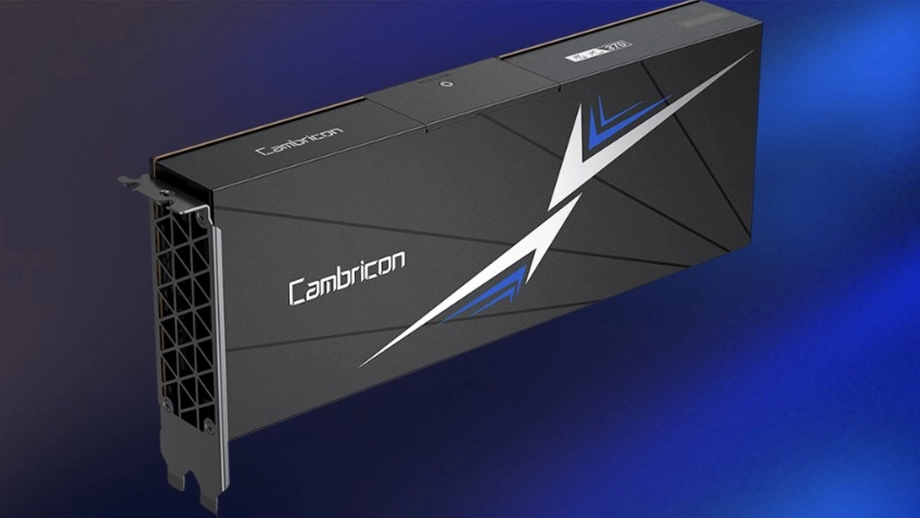
A computing services contract worth up to 37.49 billion yuan, carrier tenders exceeding 55 billion yuan and a 15.94% jump in the ChiNext computing power index turned November 27, 2026 into a showcase for China's AI infrastructure boom. Zhongji Innolight rose 19.98%, while Cambricon, Hygon Information and Sharetronic Data gained 18.68%, 18.05% and 16.68%. The Wind index tracking the East Data, West Computing programme, which channels computing work toward data centres in suitable locations across China, climbed 14.15%.
Contents
- A market surge meets a wave of server orders
- Spending and order books are rising together
- Why advanced processor rents are climbing
- The 37.49 billion yuan contract that defines the boom
- Bank affiliated lessors are buying the servers
- Guangdong is turning domestic computing into a target
- Revenue covers less than 8% of the investment bill
- Chip scarcity and capital scarcity reinforce each other
- The next test is whether spending produces returns
- A compressed timeline of the expansion
- The Bottom Line
The rally extended far beyond computing stocks. The Shanghai Composite rose 3.73% to 3,606.49 points, the Shenzhen Component gained 7.24% and the ChiNext Index jumped 11.61%. The STAR 50 surged 15.07%. Turnover across Shanghai, Shenzhen and Beijing reached 2.017572 trillion yuan, an increase of 700.195 billion yuan from the previous session, with 5,456 stocks rising and 182 falling. A semiconductor fund advanced 17.60%, while funds tracking ChiNext artificial intelligence and cloud computing rose 15.13% and 10.88%.
The State Council met at 1 p.m. and called for stronger mechanisms to stabilise the capital market. Its proposals included improving Central Huijin's function as a type of market stabilisation fund, giving state investment institutions a larger stabilising role, encouraging dividends and share repurchases, and supporting investment by insurance funds, enterprise annuities and social security funds. Defensive bank and dividend shares lagged the rally as money moved toward technology.
Spending and order books are rising together
China Mobile and China Telecom had launched procurement for AI supernodes worth more than 55 billion yuan on November 25. A supernode links many processors and servers so that they can work as one large computing system. This approach can increase the computing available for training and running models, while coordination across the system can partly compensate for limitations in individual chips.
Tencent, Alibaba and Baidu spent a combined 139.259 billion yuan on capital expenditure in the third quarter. Capital expenditure is money used for assets such as chips, servers and data centres, rather than everyday operating costs. Tencent accounted for 81.433 billion yuan, up 527% from a year earlier, and spent 166.153 billion yuan during the first nine months, 179% more than in the corresponding period. Its quarterly expenditure alone exceeded its capital spending for the whole of 2025.
Alibaba spent 50.477 billion yuan, 60% more than a year earlier, and recorded a net free cash outflow of 34.472 billion yuan. Free cash flow is the cash left after operating expenses and investment, so the figure shows how heavily expansion can draw on available funds. Baidu's quarterly capital expenditure was 7.349 billion yuan.
Large orders and revenue growth are also appearing abroad. CoreWeave reported third quarter revenue of $3.66 billion, up 168%, and an order backlog of $132.5 billion, including $28 billion added since the end of June. AMD's data centre revenue reached $8.546 billion, up 97%, and management expected total revenue to grow by more than 80% in 2027. Nvidia's fiscal 2027 third quarter revenue was $115.84 billion, up 103%, including $107.6 billion from data centres. It guided the following quarter toward $130 billion.
EY Ireland estimated that global venture investment in AI reached about $430 billion during the first half of 2026, exceeding the $254 billion recorded for all of 2025. Between 70% and 80% went to leading companies. More computing capacity allows a company to pursue larger projects and process more tokens, the small units of text or data handled by a model. The commercial value depends on customers paying for that output.
Why advanced processor rents are climbing
Rental prices show a sharp division between the most capable equipment and more plentiful general computing capacity. Ornn data showed that, by November 5, prices for renting Nvidia H100, H200 and B200 processors on demand had risen over 30 days by 10.21%, 27.22% and 24.97%. Shanghai Ganglian's November 6 weekly reading put increases for domestic H100 rentals at 9.36% for monthly contracts and 6.99% for on demand use.
Nvidia disclosed that new contracts for Hopper processors under agreements lasting several years had reached as much as twice their original prices. Alibaba Cloud and Tencent Cloud also raised prices for some AI computing services during the year, concentrating the increases on advanced graphics processors. At the same time, domestic rental prices for less advanced general computing capacity had fallen more than 40% from their 2025 peak.
For a model developer, cheaper general capacity cannot always replace the processors needed for demanding training work. For owners of smaller domestic clusters, low utilisation means expensive equipment may sit idle. That creates a need for scheduling software and services that can distribute work across different chip designs and regions, matching each task with suitable capacity.
The demand visibility extends to optical modules, which move data between servers at very high speed. Zhongji Innolight said during a call in late October that orders from major customers broadly covered all of 2027, while some important customers had already provided guidance for 2028. Those commitments give suppliers a clearer basis for planning production, although the service operators buying the equipment still have to collect enough revenue from their own customers.
The 37.49 billion yuan contract that defines the boom
Sharetronic Data's agreement stands out for both its size and its conditions. Its computing subsidiary signed a cloud computing services agreement that took effect on November 18, with an expected value capped at 37.49 billion yuan. It is the largest publicly disclosed single computing services order among mainland listed companies in the sector, and its ceiling exceeds Sharetronic's audited principal business revenue for its most recent full accounting year.
The service period lasts 60 months from the day after customer acceptance. Fees are payable monthly and final revenue will follow actual settlement. The customer's name was withheld through an authorised disclosure exemption. Sharetronic has placed server purchase orders with qualified suppliers, said all servers under the agreement would be compliant machines located within China, and obtained written confirmations covering production schedules and delivery periods.
Several other listed companies have signed agreements with similarly long payment periods:
- Dongyangguang announced two contracts lasting 60 months in May and June, valued at 16 billion to 19 billion yuan and 10 billion to 12 billion yuan.
- Richinfo Technology signed an agreement in September lasting 60 months and worth at least 1.812 billion yuan.
- Pingzhi Information disclosed cumulative computing service orders exceeding 4.7 billion yuan in its interim report.
- Xingyun Technology announced on November 23 a contract with Beijing Doushen Intelligent Computing covering 32 standardised GPU computing units. The price was about 299 million yuan including tax, the service period was five years, and the servers had already been procured through compliant channels, accepted and delivered.
Zhiwei Intelligent told investors on November 18 that rental pricing considers equipment configuration, service duration, customer requirements and market conditions, with each arrangement negotiated separately. For service providers, these agreements can secure years of demand, but the servers must usually be purchased before monthly fees arrive. That timing gap explains why leasing companies have become important participants.
Bank affiliated lessors are buying the servers
CDB Financial Leasing disclosed a 9.676 billion yuan purchase of a domestic AI server cluster around November 17. Its computing hardware procurement for the year approached 20 billion yuan, after it began testing the business near the end of 2025 and accelerated during 2026. The company previously concentrated on aircraft, ships, wind power and solar equipment.
The basic arrangement is straightforward. The lessor pays for and owns the servers, then rents them to an intelligent computing platform or AI operator. The operator maintains the equipment and pays rent, while the lessor seeks a return from the difference between its funding cost and the lease payments. Ma Hong, chairman of CDB Financial Leasing, has described leasing as a combination of financing and physical assets that can support equipment renewal and intelligent manufacturing.
In March 2026, ICBC Financial Leasing, CIB Financial Leasing and Sharetronic signed a 4.248 billion yuan joint financing lease using direct leasing for server finance. In November, ICBC Financial Leasing and Huarong Financial Leasing agreed a 5.72 billion yuan direct lease for computing equipment. Zhang Bao, president of ICBC Financial Leasing, has put China's computing leasing market at 400 billion yuan at the end of 2024.
Suyin Financial Leasing, Kunlun Financial Leasing and CMB Financial Leasing have also completed computing projects this year. In a direct lease, the lessor acquires equipment for the user. In a sale and leaseback, an operator sells equipment it already owns and rents it back, releasing cash while continuing to use it.
Smaller financing companies face larger obstacles. One institution in southern China plans to build a computing leasing business worth 500 million to 1 billion yuan within two years, while other firms are considering joint leases because individual projects require substantial funds and some lenders face geographic limits. Zhao Hongwei, secretary general of the Shanghai Financial Leasing Association, said the industry was actively promoting computing leasing as a business opportunity. Operators in Guangzhou nevertheless pointed to lengthy investment periods, the cost of managing projects far from their home markets and the concentration of quality resources in Inner Mongolia, Yunnan, Guizhou and Sichuan. Their risk controls increasingly focus on the operator's ability to generate cash and keep paying rent.
Guangdong is turning domestic computing into a target
Guangdong issued its Computing Power Development Plan for the 15th Five Year Plan period on November 26. It calls for intelligent computing capacity to exceed 1,000 EFlops at FP16 precision by 2028 and encourages computing centres to give priority to domestic chips. An EFlop is a measure of calculation speed, while FP16 is a numerical format commonly used in AI. The plan also supports domestic models, Huawei's CANN software ecosystem and supporting Ascend computing tools.
A separate Digital Guangdong plan proposes computing corridors across borders and deeper AI cooperation among Guangdong, Hong Kong and Macao. Together, the measures give provincial projects a capacity objective and a direction for procurement, while creating potential demand for domestic processors, networking equipment, scheduling software and data centre operations.
Supply restrictions are adding pressure. Nvidia informed partners that it would suspend shipments of servers containing its chips to Malaysia, Singapore, Thailand and Indonesia. Washington also moved to restrict Chinese access obtained by renting overseas data centres filled with Nvidia hardware. Tencent and Alibaba have warned that new US restrictions would slow their AI growth, making access to compliant domestic capacity more urgent for Chinese cloud customers.
Alibaba applied to the Hong Kong stock exchange on November 10 for a separate listing of its chip subsidiary T-Head, also known as Pingtouge. No listing timetable was given. Five mainland listed Chinese AI chip companies increased their combined revenue by 97.66% during the first three quarters of 2026, according to China Merchants Securities data, and most retained gross margins of about 50%.
Infrastructure operators are expanding as well. Range Technology reported revenue of 5.666 billion yuan for the first nine months, close to its entire 2025 result. Utilisation at its mature computing centres exceeded 90%, while construction in progress reached 15.172 billion yuan, up 115% from the end of the previous year. The wider equipment chain also received support: Jingce Electronic announced a 199.8 million yuan inspection equipment contract, ACM Research Shanghai held orders worth 17.073 billion yuan at the end of September, and SEMI forecast that global spending on equipment for 300 millimetre wafer fabrication plants would reach $149 billion in 2026, up 31%. Official statistics showed profits in China's electronics industry doubling during the first ten months.
Revenue covers less than 8% of the investment bill
The central financial problem is the distance between infrastructure spending and model revenue. A September study by Rhodium Group covering 13 listed Chinese companies projected that their AI infrastructure capital expenditure would rise 103% in 2026 to 932 billion yuan, or $139 billion. It forecast more than 1.2 trillion yuan, or $193 billion, in 2027. Revenue from their AI laboratories was expected to cover less than 8% of the 2026 spending.
Rhodium estimated China's AI construction at only 15% to 20% of the US level. It put the annual recurring revenue of all Chinese AI models at about $10.7 billion, roughly one tenth of the combined figure for OpenAI and Anthropic. Annual recurring revenue measures repeating subscription or contract income, offering a useful comparison with the continuing cost of chips, data centres and electricity.
Kyle Chan, a fellow at the Brookings Institution, described the pressure created when companies must keep increasing spending to remain competitive:
When you look at their numbers, it looks like they're running on a treadmill that's speeding up and getting harder to run.
Logan Wright, the Rhodium partner who co-wrote the study, argued that financing constraints would probably matter more than chip restrictions over the long run. Stanford's AI Index provides a measure of that gap: private AI investment in China reached $12.4 billion in 2025, compared with $285.9 billion in the United States. The index cautions that China's figure probably understates total support because state guidance funds also invest heavily. Foreign capital has become harder to attract, partly because Washington restricts US venture investment in some Chinese technologies.
DeepSeek has raised more than $20 billion, including a $15 billion round backed by Tencent and CATL, giving it resources unavailable to many rivals. Alibaba, Baidu and Tencent, which support several leading laboratories, were all reported to have negative cash flow. Their access to large existing businesses provides funding, but it also connects AI investment with the financial performance of their wider operations.
China's preference for openly available models adds another source of pressure. Z.ai released GLM-5.3 Flash in August and halved prices for two weeks to encourage customers to run it on its own servers. By November, about 20 competing providers were charging less than Z.ai to supply access to Z.ai's own model, according to OpenRouter data. Wider adoption can reduce prices without producing enough income to pay for the underlying computing infrastructure.
Chip scarcity and capital scarcity reinforce each other
Liang Wenfeng, chief executive of DeepSeek, said Huawei's chips were about two years behind Nvidia's in technology, but estimated that four Huawei 950 chips would be needed to match one Nvidia GB300. His comments, contained in a transcript of a call with investors, connect the hardware gap directly to higher equipment, space and energy requirements.
We simply can't afford to train the largest models available right now.
Scarcity is also visible in equipment prices. Sellers on Goofish, a Chinese resale marketplace, listed Nvidia's DGX B300 server at nearly $3 million, about eight times its US price. Such prices raise the amount of cash an operator must commit before selling its first computing service, increasing the importance of leasing and customer contracts lasting several years.
China retains considerable engineering strengths. Han Lin, China country director at the Asia Group, pointed to the country's engineering talent and a government capable of mobilising extensive resources. He also said frontier technology needs risk capital that can absorb failure. That distinction matters because efficient research can reduce computing requirements, while commercially unsuccessful projects still leave lenders and operators with equipment and payment obligations.
The next test is whether spending produces returns
Commentator Li Jiankun offered a practical way to assess the internet groups' commitments. He contrasted Tencent's computing contracts with Alibaba's subsidies in instant retail, arguing that subsidies can be stopped while signed computing agreements continue to require payment. He characterised Tencent's expenditure as buying eligibility to remain in the competition rather than immediately buying growth, and pointed to Tencent's indication that conditions would improve in 2028.
Huachuang Securities described 2027 as the year when AI moves from capital expenditure toward return on investment, meaning that investors will increasingly compare revenue and cash generation with the cost of the infrastructure. It expects domestic substitution, better coordination within supernodes and expanding applications to support Chinese equipment and computing suppliers.
Market forecasts remain divided. Goldman Sachs projected gains of 23% for MSCI China and 10% for the CSI 300 in 2027, while favouring Hong Kong equities over mainland shares. Morgan Stanley's team led by Wang Ying preferred mainland equities, citing buybacks, institutional investment policies and the concentration of AI, semiconductor and automation companies in that market. It expected MSCI China's earnings per share growth to rise from 6% in 2026 to 8% in 2027 and 11% in 2028.
The November 27 surge also followed considerable volatility, with the STAR 50 reported 43% below its late July level. For computing companies, the concrete indicators are server delivery, customer acceptance, utilisation, rental collection and free cash flow. Sharetronic's final contract revenue remains subject to settlement, its customer remains undisclosed, and the largest capital spending forecasts still lie in 2027. Guangdong's capacity target and some customer planning for optical modules extend into 2028.
A compressed timeline of the expansion
- March 2026: ICBC Financial Leasing, CIB Financial Leasing and Sharetronic agreed a 4.248 billion yuan server financing lease.
- November 10: Alibaba applied for a separate Hong Kong listing of T-Head.
- November 17: CDB Financial Leasing disclosed a 9.676 billion yuan domestic AI server cluster purchase.
- November 18: Sharetronic's agreement worth up to 37.49 billion yuan took effect.
- November 23: Xingyun Technology announced delivery under its 299 million yuan GPU services contract.
- November 25: China Mobile and China Telecom launched AI supernode procurement exceeding 55 billion yuan.
- November 26 and 27: Guangdong published its computing plan, and the State Council announced stronger market stabilisation measures as technology shares surged.
The Bottom Line
- Tencent, Alibaba and Baidu spent 139.259 billion yuan on capital expenditure in the third quarter, led by Tencent's 81.433 billion yuan.
- Sharetronic's 37.49 billion yuan agreement is a ceiling, with 60 months of service and revenue based on actual settlement.
- Advanced Nvidia processor rents are rising, while prices for less advanced domestic general computing capacity have fallen more than 40% from their 2025 peak.
- Leasing companies are financing servers through purchases worth billions of yuan, shifting attention toward operators' cash flow and ability to pay rent.
- Guangdong wants intelligent computing capacity above 1,000 EFlops by 2028 and priority use of domestic chips.
- Rhodium projects AI infrastructure spending of 932 billion yuan across 13 listed Chinese companies in 2026, while laboratory revenue covers less than 8% of that amount.
- Orders extending into 2027 and 2028 provide demand visibility, but chip performance, financing costs and model revenue will determine whether the expansion produces sustainable returns.