A crowded descent and a woman without a pulse
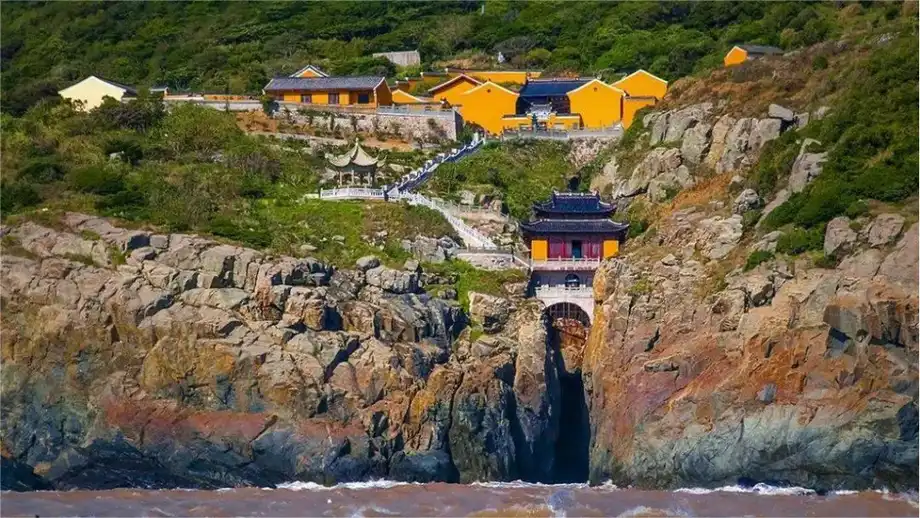
At 2:40 p.m. on November 1, Lin Bimei was hurrying down Luojia Mountain in the Putuoshan scenic area of Zhejiang province, hoping to catch the last ferry with her classmate. Lin, a nurse in the cardiac surgery operating room at Guangdong Provincial People's Hospital, was on vacation. A crowd blocking the steep path below changed her plans.
Contents
- A crowded descent and a woman without a pulse
- No equipment and no way for an ambulance to arrive
- The rescue continued aboard the ferry
- Why a rescuer can still feel afraid afterward
- The rescue and its aftermath, date by date
- Other hospital staff have stepped forward away from work
- What training, transport and public support can change
- Key Points
A woman had collapsed. Someone in the crowd was urging others not to move her and to take photographs first. Lin pushed through without even putting down her luggage. She found the tourist unresponsive, with dark purple lips, no spontaneous breathing and no detectable carotid pulse, the pulse felt in the neck. Lin recognized the signs of cardiac arrest, an emergency in which the heart stops circulating blood effectively.
Only about two weeks earlier, a displaced cervical vertebra had pressed on a nerve in Lin's neck, leaving her right arm too weak to lift properly. Now she was kneeling beside a stranger and preparing to use both arms to keep that stranger alive. She positioned the woman, shouted for someone to call 120, China's emergency medical number, checked her clenched mouth for a foreign object and began chest compressions.
No equipment and no way for an ambulance to arrive
Chest compressions involve pressing rhythmically on the chest to help move blood through the body when the heart cannot do so effectively. Their immediate purpose is to buy time for the brain and other organs. Lin had no medical equipment on the mountain, and the emergency response brought another alarming message: an ambulance could not drive up to the scene.
Speaking about those minutes in an interview on November 25, the Guangdong nurse explained why she continued despite the isolation of the location:
On an island mountain, there was no equipment and the ambulance could not come up, so I could only keep pressing!
Lin later recalled that her mind went blank, but her hands did not stop. After several minutes, someone in the crowd called out that the woman's eyes had moved. The tourist slowly opened her eyes, and color returned to her lips. Lin repeatedly urged her to go to a hospital for an examination. Once the woman appeared to be out of immediate danger, Lin left quietly rather than waiting for praise.
The rescue had depended on a nurse recognizing a crisis, calling for emergency help and continuing a physically demanding intervention without knowing when professional equipment might arrive. Her recent neck injury makes that persistence even more striking, although no medical details about her recovery from the injury were given.
The rescue continued aboard the ferry
The tourist's revival on the mountain was not the end of Lin's involvement. The two women encountered each other again on the ferry, where the tourist was still vomiting. Lin contacted the scenic area's management, which arranged a speedboat so the woman could be taken for medical attention and an examination.
The woman's name, age, diagnosis and later hospital findings have not been disclosed. No date was given for her medical examination. What is known is that she later managed to find Lin on WeChat and transferred 5,000 yuan to her as an expression of gratitude. Lin immediately returned the money. The nurse explained her decision in one sentence:
Saving people is simply my duty.
The tourist later sent a decorative banner instead. Its inscription read "见义勇为救命恩,妙手施救显仁心"—praise for Lin's courage in saving a life and the compassion shown through her skilled rescue. The sequence also shows that Lin's care extended beyond restoring visible signs of life: she pressed for a hospital assessment, responded when vomiting suggested that the woman still needed help and used the local transport available when an ordinary ambulance journey was impossible.
Why a rescuer can still feel afraid afterward
Lin has not described herself as fearless. She admitted that she felt frightened after the event, both because the tourist might not have survived and because she worried about how society might judge her actions. Her concern gives a human dimension to a scene that can sound straightforward when reduced to a successful rescue.
The legal context for that concern includes Guangdong's 广东省见义勇为人员奖励和保障条例, the provincial regulation on rewarding and protecting Good Samaritans. First passed in 2012, revised on November 28, 2024, and effective from March 1, 2025, it has six chapters and 39 articles. Rescue, emergency-response and disaster-relief actions by people without a legal duty to act can be confirmed as Good Samaritan conduct. Article 38 extends the regulation to Guangdong-registered residents who act outside the province; the account does not specify Lin's household registration or whether she has received formal recognition.
Article 32 states that Good Samaritans who cause harm to the person rescued while voluntarily giving emergency aid bear no civil liability. It also provides legal aid without a financial-hardship test for Good Samaritans and their close relatives in civil disputes arising from the act, and allows the special Good Samaritan fund to subsidize compensation when damage to another person's property still carries a legal liability. Other provisions require police to protect Good Samaritans and their close relatives when their safety is threatened, and require police and relevant authorities to address retaliation, false accusations and online violence. Employers must treat absence caused by a rescue as attendance and may not reduce benefits or unlawfully terminate the worker's contract.
Her conclusion, however, was consistent with the duty she described after refusing the money. Lin said that saving people is part of what medical workers do every day and explained how she would respond to another emergency:
Saving people is what we do every day. Next time I will still step forward without hesitation!
She also turned the attention toward public training. Lin urged more people to learn cardiopulmonary resuscitation, commonly called CPR, including chest compressions. CPR is emergency care intended to support circulation and breathing when normal heart or lung function fails. In Lin's rescue, repeated compressions were the central action available to her.
Her appeal addressed the hesitation an untrained witness may feel when no professional appears to be present. Speaking as a nurse who had just faced that situation without equipment, she offered deliberately simple encouragement:
Even if your first aid at the scene is not standard, that is okay! Taking action can help.
She paired that encouragement with a request for wider CPR education. The practical message is to learn the skills before an emergency, call professional help promptly and be willing to assist within one's ability rather than assuming that someone else will act.
The rescue and its aftermath, date by date
Several distinct moments connect the collapse on Luojia Mountain with Lin's later appeal for public training:
- At 2:40 p.m. on November 1, Lin found the tourist unresponsive and without detectable breathing or a neck pulse, then began chest compressions.
- Several minutes later, the woman moved her eyes, opened them and regained color in her lips. Lin urged her to seek hospital care.
- Later that day, Lin saw the tourist vomiting on the ferry and contacted scenic area staff, who arranged a speedboat for her medical examination.
- On November 25, Lin described continuing the compressions because there was no equipment and the ambulance could not reach the mountain.
- On later dates that were not specified, the tourist attempted to give Lin 5,000 yuan, which was returned, and then sent the banner of thanks.
Other hospital staff have stepped forward away from work
Lin's experience is one of several rescues involving employees of Guangdong Provincial People's Hospital during the past two years. At a swimming pool in Meizhou, nurse Zhong Weiqi performed 900 compressions within 15 minutes while helping save a girl after a drowning incident. The figure conveys both the duration and the physical effort involved in that response.
At Shenzhen North railway station, married nurses Zong Ruoyu and Jiang Hongkai knelt to perform compressions and used an automated external defibrillator, or AED, while saving a man aged 78. An AED checks the heart's electrical rhythm and can deliver an electric shock when that rhythm requires one. It serves a different purpose from compressions, which manually support circulation.
Doctors Sun Shuo and Liu Fangzhou also separately intervened to help people in the hospital's outpatient area and on the road outside its entrance. Those actions were not publicly reported at the time. Together, the examples widen the account beyond one tourist and one mountain: nurses and doctors have applied emergency skills at a pool, a railway station, a hospital entrance and now an island scenic area.
Online reactions to Lin's rescue focused on her employer and her cardiac surgery specialty, reflecting public trust in the hospital and its cardiovascular work. Her own explanation was less about reputation than preparation. Regular CPR training in her department gave her skills she could use even when she was outside the operating room and had none of its equipment.
What training, transport and public support can change
Regular practice helped Lin move from assessment to action: checking responsiveness, breathing and a pulse, requesting an emergency call and beginning compressions. She still experienced fear afterward, so training did not remove the emotional weight of holding a stranger's life in her hands. It gave her something practical to do while that pressure was at its highest.
The geography of Luojia Mountain created a second challenge. An ambulance could not simply drive to the patient, and a ferry remained part of the journey. Scenic area managers eventually used a speedboat to continue the woman's care. Emergency access therefore mattered alongside Lin's compressions, particularly when the tourist's vomiting showed that she still needed attention.
Lin's concern about social judgment also explains the wider appeal surrounding her rescue. People who intervene need fair treatment, institutional backing and public encouragement if hesitation is to be reduced. Learning CPR, calling 120 early and knowing how an AED can assist are concrete forms of preparation. Lin's refusal of payment and her promise to act again supply the personal example, while her training message gives witnesses something they can do before they ever face a similar crowd.
Key Points
- Guangdong nurse Lin Bimei began chest compressions after finding a tourist without detectable breathing or a neck pulse on Luojia Mountain on November 1.
- No equipment was available, and an ambulance could not reach the mountain scene.
- The tourist opened her eyes after several minutes, and scenic area staff later arranged a speedboat when she was vomiting on the ferry.
- Lin returned a 5,000 yuan gift and said saving people was her duty; the tourist later sent a banner of thanks.
- Lin admitted feeling afraid afterward but said she would act again, and she urged more people to learn CPR.
- Other employees of her hospital have assisted in rescues in Meizhou, at Shenzhen North railway station and around the hospital itself.