A Finite Course Changes the Treatment Goal
China has approved the first antisense oligonucleotide medicine for hepatitis B, offering a carefully defined group of patients the possibility of controlling the infection without continuing medication. The National Medical Products Administration (NMPA) cleared bepirovirsen sodium injection, sold as Hibsago, on November 26, 2026. Sino Biopharmaceutical, whose subsidiary will commercialize the medicine in mainland China, announced the decision in a Hong Kong stock exchange filing the following day.
Contents
- A Finite Course Changes the Treatment Goal
- What the B-Well Trials Showed
- Why the Cure Percentages Rise in Selected Patients
- Functional Cure Means Control Without Continuing Drugs
- How an Antisense Drug Attacks Hepatitis B
- Safety Limits and Advice for Patients
- Who Owns and Sells the Medicine
- The Scale of the Health Problem
- Price and Supply Remain Undecided
- Other Drugmakers Are Pursuing the Same Goal
- Key Points
The medicine is approved for use alongside nucleoside or nucleotide analogues, commonly abbreviated as NAs. These oral antiviral drugs can suppress hepatitis B virus, but many patients must take them indefinitely. Bepirovirsen introduces a different objective: a course of injections lasting 24 weeks, followed by an assessment of whether the immune system can keep the virus under control after treatment ends.
The approval does not cover everyone carrying hepatitis B. Adults must satisfy all four conditions in the Chinese indication:
- They have received NA treatment for at least six months.
- Their HBV DNA level is below 90 IU/mL, showing that viral replication is already suppressed.
- Their hepatitis B surface antigen, or HBsAg, is at or below 3,000 IU/mL.
- They do not have cirrhosis, which is advanced scarring of the liver.
China processed the application through its breakthrough therapy and priority review programs. Before the Chinese decision, bepirovirsen had been approved in Japan in August 2026 and in the United States in October. Canada was also among the countries that approved it earlier in the year.
What the B-Well Trials Showed
The approval rests on two Phase III studies, B-Well 1, registered as NCT05630807, and B-Well 2, registered as NCT05630820. Together they enrolled 1,838 patients across 29 countries. Participants were assigned at random to bepirovirsen or placebo in studies where neither patients nor investigators knew the assignments. Treatment lasted 24 weeks, with another 24 weeks of observation used to assess the treatment endpoint.
GSK said in its January trial statement that both studies met their primary endpoints. Bepirovirsen combined with standard treatment produced a statistically significant and clinically meaningful functional cure rate compared with standard treatment alone. At that point, on January 12, 2026, GSK planned to begin submissions to regulators worldwide during the first quarter and present complete results at scientific meetings and in journals reviewed by independent researchers.
Tony Wood, GSK chief scientific officer, described the findings as a change in what hepatitis B treatment could aim to achieve.
Bepirovirsen has the potential to change the treatment goal for patients with chronic hepatitis B by achieving significant functional cure rates, which would be groundbreaking for this disease.
Pooled results disclosed with the Chinese approval provide the detailed numbers. Among participants with HBsAg at or below 3,000 IU/mL, 233 of 1,220 bepirovirsen recipients achieved functional cure, a rate of 19%. None of the 614 placebo recipients did so. In the subgroup with HBsAg at or below 1,000 IU/mL, 200 of 768 bepirovirsen recipients achieved the endpoint, or 26%, compared with none of 393 placebo recipients. Standard treatment alone generally produces a functional cure rate below 1% after one year.
An exploratory analysis also found that 598 of 1,220 bepirovirsen recipients, or 49%, had HBsAg reduced to 100 IU/mL or less by week 72. That result measures antigen reduction. Functional cure has the additional requirement that both HBsAg and HBV DNA remain undetectable after treatment stops.
Why the Cure Percentages Rise in Selected Patients
Results from the Chinese subgroup were numerically higher than the pooled global figures. Among patients whose virus had already been suppressed by NA therapy, the functional cure rate after 24 weeks of bepirovirsen treatment was 24% for those starting with HBsAg at or below 3,000 IU/mL. It reached 35% among those starting at or below 1,000 IU/mL.
Further Chinese subgroup data presented in Singapore in September showed a clearer relationship between the initial antigen level and response. Under enrollment conditions that required HBsAg of at least 100 IU/mL, patients at or below 500 IU/mL recorded a 44% functional cure rate. Those at or below 200 IU/mL recorded 61%, while the placebo group recorded 0%. The 61% figure means roughly six out of every ten patients in that particular subgroup reached the endpoint; about four out of ten did not.
These percentages come from progressively narrower groups with lower antigen levels. The 61% result applies to the subgroup at or below 200 IU/mL, while the approved Chinese indication extends to eligible patients at or below 3,000 IU/mL. A quantitative HBsAg blood test therefore does more than confirm eligibility. It helps a liver specialist explain which trial population most closely resembles an individual patient and what chance of response was observed there.
Functional Cure Means Control Without Continuing Drugs
Functional cure has a precise clinical definition. HBV DNA and HBsAg must remain undetectable in the blood for at least 24 weeks after all treatment has stopped. HBsAg is a viral protein whose presence signals continuing infection. When both markers remain absent without medication, the immune system is considered capable of controlling the infection on its own.
This state differs from complete eradication of the virus. Hepatitis B can leave a stable genetic template called covalently closed circular DNA, or cccDNA, inside the nucleus of liver cells. Viral genetic material can also become integrated into human liver cell DNA. No available medicine removes every trace of these viral reservoirs. Functional cure instead means that viral activity is suppressed, surface antigen is lost, liver inflammation can settle and treatment can be stopped under medical supervision.
Existing care remains essential. Oral NA drugs such as entecavir and tenofovir alafenamide interfere with viral replication, lower HBV DNA and protect the liver. They generally do not remove cccDNA or produce sustained surface antigen loss, and stopping them can allow the virus to rebound. Interferon injections work differently by activating immune responses and can help some patients lose surface antigen.
GSK describes functional cure as associated with a substantial reduction in lasting liver complications, including liver cancer, and in death from any cause. Patients who reach the endpoint still need periodic liver monitoring.
How an Antisense Drug Attacks Hepatitis B
Hepatitis B persists through three related problems. Its cccDNA template can survive inside liver cells for a long time, integrated viral material cannot readily be separated from human DNA, and chronic exposure to viral proteins can leave the immune system tolerant of the infection rather than aggressively clearing it.
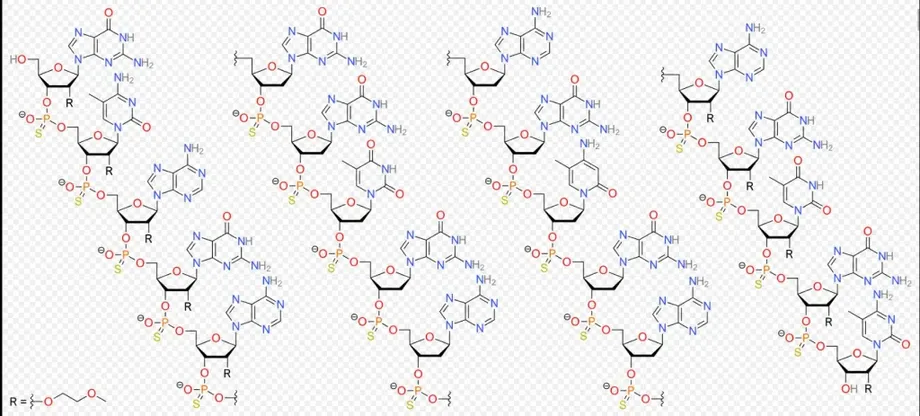
Bepirovirsen is an antisense oligonucleotide, a short piece of designed genetic material that can recognize a selected RNA sequence. RNA carries instructions used to make viral proteins. The drug is designed to bind hepatitis B RNA and promote its degradation, reducing the material needed to sustain chronic infection.
GSK describes three connected actions: recognition and degradation of viral RNA, suppression of viral DNA replication and HBsAg production, and stimulation of immunity to improve the chance of a durable response. The injection is given for 24 weeks alongside NA therapy. This approach attacks viral protein production while also attempting to release the immune system from the suppressive effect of a continuing antigen burden.
Safety Limits and Advice for Patients
The B-Well studies showed an acceptable safety and tolerability profile. The three most frequently observed adverse events were redness at the injection site, local pain and a temporary rise in a liver enzyme. In the Chinese subgroup, no case met the criteria for liver injury caused by drugs, and investigators described the safety findings as consistent with the global data. GSK retains responsibility for pharmacovigilance, the continuing collection and assessment of safety information after approval.
The exclusion of patients with cirrhosis and the observation of liver enzyme increases make specialist supervision central to treatment. Approval also does not create an immediate option for untreated patients, people with high HBV DNA or those whose HBsAg exceeds the labeled threshold.
Zhu Li, deputy chief physician in the Department of Liver Disease II at Chengdu Public Health Clinical Medical Center, advised that carriers of the virus receive an individual assessment at a liver disease clinic rather than assume that everyone can use the injection. Her guidance for patients waiting for treatment or considering eligibility includes several practical steps:
- Continue prescribed antiviral tablets regularly and do not stop them without a specialist changing the treatment plan.
- Undergo reviews every three to six months, including hepatitis B markers, HBV DNA, liver function, liver ultrasound, fibrosis measurements and quantitative HBsAg testing.
- Avoid alcohol, unnecessary supplements and unidentified medicines that could injure the liver.
- Continue appropriate liver checks after achieving functional cure, because ongoing monitoring remains part of care.
Hou Jinlin, director of the Guangdong Liver Disease Institute and head of infectious diseases at Nanfang Hospital of Southern Medical University, summarized the treatment objective for the selected population.
For eligible patients, functional cure is a key treatment goal.
Who Owns and Sells the Medicine
Ionis Pharmaceuticals originally developed bepirovirsen. GSK licensed it in August 2019 and agreed to collaborate on its development, with a deal valued at $25 million upfront and as much as $237 million in potential milestone payments. GSK remains the marketing authorization holder and is responsible for regulatory affairs, quality control, safety monitoring and global medical strategy.
In May 2026, GSK signed an exclusive strategic collaboration with Chia Tai Tianqing Pharmaceutical Group, known as CTTQ, a core subsidiary of Sino Biopharmaceutical. CTTQ handles importation, distribution, hospital access, promotion and nonpromotional activities in mainland China. All product sales revenue will be recorded in CTTQ operating revenue. The initial cooperation period lasts five and a half years, with CTTQ purchasing supplies from GSK under agreed terms; the companies can extend the arrangement by mutual consent. CTTQ has access to more than 5,000 medical centers in China.
The route from licensing to Chinese approval can be summarized through these dates:
- August 2019: GSK obtained development and commercialization rights from Ionis.
- January 12, 2026: GSK announced positive results from B-Well 1 and B-Well 2 and outlined plans for global regulatory submissions.
- May 2026: GSK and CTTQ agreed their exclusive mainland China commercialization arrangement.
- August and October 2026: Japan and the United States respectively approved the medicine, followed by China in November.
- November 26, 2026: The NMPA approved Hibsago, and GSK disclosed the decision in a Form 6-K filing.
- November 27, 2026: Sino Biopharmaceutical announced the approval to the Hong Kong stock exchange.
The medicine had earlier received FDA fast track status, inclusion in the breakthrough therapy program of China's Center for Drug Evaluation, and Japan's SENKU designation for pioneering treatments.
The Scale of the Health Problem
Chronic hepatitis B occurs when the immune system cannot clear the virus, leaving a lasting infection that can progress to cirrhosis and liver cancer. GSK used a global estimate of more than 250 million affected people, approximately 1.1 million deaths each year and about 56% of liver cancer cases attributable to the disease. A later World Health Organization estimate used in discussions of the Chinese approval put the worldwide number above 240 million.
China accounts for an estimated 75 million people living with chronic hepatitis B. Company disclosures attributed approximately 450,000 deaths in China to hepatitis B infection in 2023, while Chinese research cited with the approval estimated that nearly 85% of liver cancer cases in the country arise from chronic hepatitis B.
China's Action Plan for the Prevention and Control of Viral Hepatitis for 2025 through 2030 sets two relevant targets for 2030: diagnose at least 80% of chronic hepatitis B patients and provide antiviral treatment to at least 80% of newly reported chronic patients. Those goals matter for bepirovirsen access because its indication begins with people who have already been diagnosed, treated for at least six months and shown to have suppressed HBV DNA.
Price and Supply Remain Undecided
Neither GSK nor CTTQ has disclosed an official Chinese launch date or price. Unofficial estimates circulating after the approval pointed to domestic supply around March 2027 and a Chinese cost of 150,000 to 200,000 yuan for a complete course. The reported Japanese price is equivalent to roughly 400,000 yuan per course. These figures provide an early indication of possible affordability pressures, but the Chinese estimates have not been confirmed by the companies.
Reimbursement negotiations, execution of the hospital launch, competition and safety experience after market entry will influence how widely the treatment is used. Until pricing and supply arrangements are announced, the number of patients who can obtain the injections through hospitals or insurance remains unknown.
Other Drugmakers Are Pursuing the Same Goal
Bepirovirsen reaches the market first, but researchers are pursuing several ways to combine viral suppression, antigen reduction and immune restoration. NAs currently account for about 80% of China's hepatitis B drug market. One industry forecast projects that the market could grow from 12.34 billion yuan in 2024 to 77.04 billion yuan in 2034, approximately 6.2 times the earlier value, as treatment rates increase and innovative therapies arrive.
- Small interfering RNA, or siRNA, medicines use another form of genetic interference. Eleven candidates worldwide have reached Phase I or II development or beyond for chronic hepatitis B, with Chinese companies accounting for more than half of those pipelines. HRS-5635, being developed by Tuojie Bioscience and Hengrui Pharmaceuticals, has entered Phase III and received Chinese breakthrough therapy designation in September 2025. Candidates from Yuekang Pharmaceutical, Haobo Medical, Argo Biopharma and Ribo Life Science have reached Phase II.
- Capsid assembly modulators interfere with formation of the viral protein shell and other stages of replication. No medicine using this mechanism has yet been approved, but six are in middle or later clinical development. GLS4 from HEC Pharm, GST-HG141 from Cosunter Pharmaceuticals and canocapavir, also called ZM-H1505R, have reached Phase III. GST-HG141 completed Phase III enrollment in February 2026. China's drug evaluation center also proposed breakthrough designation in May for ALG-000184, introduced by Amoytop Biotech, for patients who have not started treatment.
- Therapies directed at HBsAg include Replicor's nucleic acid polymer REP2139, the neutralizing antibody BM012 and tobevibart, also known as BRII-877, from Vir Biotechnology and Brii Biosciences. These candidates are in Phase II studies.
A treatment model now being discussed starts with NA drugs to suppress replication, followed by an ASO or siRNA medicine to lower surface antigen, and then interferon or a vaccine to consolidate immune control. Such sequential combinations could extend research toward untreated patients and those with higher antigen levels, groups outside the present bepirovirsen indication.
Key Points
- China's NMPA approved bepirovirsen sodium injection, branded Hibsago, on November 26, 2026, for use with NA therapy.
- Eligible adults must have taken NAs for at least six months, have HBV DNA below 90 IU/mL, have HBsAg at or below 3,000 IU/mL and have no cirrhosis.
- Treatment consists of injections over 24 weeks. Functional cure requires HBV DNA and HBsAg to remain undetectable for at least 24 weeks after all treatment stops.
- Pooled B-Well results showed functional cure rates of 19% in the labeled antigen population and 26% at or below 1,000 IU/mL, with no placebo recipients reaching the endpoint.
- Chinese subgroup rates were 24% and 35% at those respective thresholds; more selected groups recorded rates of 44% and 61%.
- Common trial adverse events included injection site redness, local pain and temporary liver enzyme increases.
- CTTQ will commercialize the medicine in mainland China, while GSK remains the marketing authorization holder and retains regulatory and safety responsibilities.
- Official Chinese pricing and supply timing have not been announced, and patients should continue prescribed treatment and specialist monitoring while access arrangements are completed.