How a Budget Phone Decision Became a Market Story
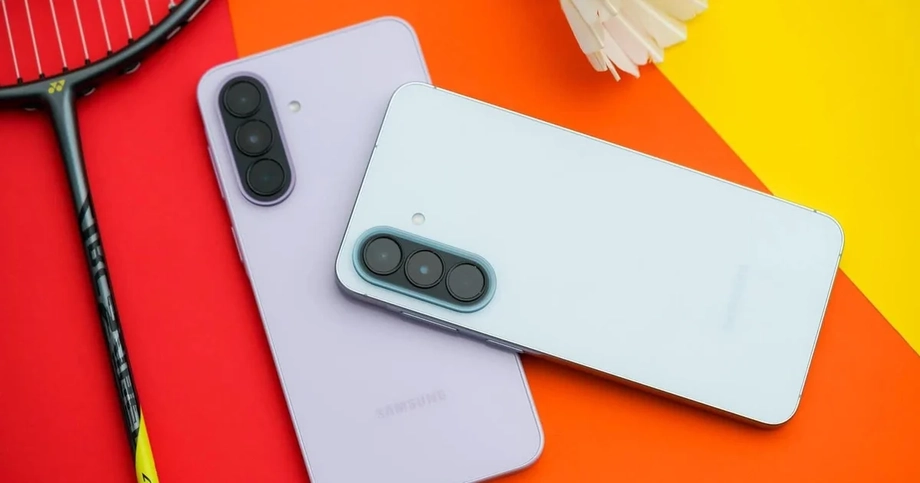
Samsung may cut Galaxy A production by about 20% in the fourth quarter of 2026 compared with its original plan, a move that would remove roughly 10 million phones from a year of output. Industry reports also point to cuts of more than 10% in 2027 for the same line. The Galaxy A family has historically supplied more than 70% of Samsung smartphone shipments, so a change there reaches far beyond one model cycle. It touches the phones that keep Samsung visible in India, Southeast Asia, Latin America, the Middle East and Africa, where buyers often compare a few dollars or a small monthly payment before choosing a brand.
Contents
- How a Budget Phone Decision Became a Market Story
- What the Production Figures Actually Mean
- A Short Timeline of the Squeeze
- Inside the Memory Bill
- Why the Galaxy A Line Carries So Much Weight
- What Buyers Are Already Paying
- Samsung's Wider Retrenchment
- The Market Around Samsung
- Forecasts for 2027 and Beyond
- What Changes for Buyers and Suppliers
- What to Know
The reason is simple but powerful: the parts inside a phone have become expensive faster than phone prices can rise. Memory, the part that stores apps and data and temporarily holds work in progress, is now the main pressure point. Samsung is reportedly steering scarce components toward the Galaxy S and Galaxy Z ranges, where each phone sells for more and can earn a bigger margin.
What the Production Figures Actually Mean
The headline cut concerns Galaxy A orders for the fourth quarter of 2026. Industry reporting says component orders were lowered by about 20% against Samsung's plan at the start of the year, equivalent to roughly 10 million fewer phones annually. That figure is different from wider reports that Samsung may reduce total smartphone output by 20% to 30% in the fourth quarter. The Galaxy A number covers one product family. The wider figure covers a broader set of smartphone orders and different planning baselines.
Samsung's original 2026 production plan was about 270 million phones. More recent reporting suggests full year shipments could be around 230 million, about 15% below that plan. For 2027, one supply chain figure puts Samsung's target at 210 million phones, down from 232 million, a cut of 9.5%. Another figure for OLED Galaxy A models describes a fall from 120 million to 100 million. Samsung has not confirmed the changes, no date was given for a final decision, and it has not said which models or markets will be affected.
A Short Timeline of the Squeeze
- July 29, 2026: Counterpoint's component review found smartphone memory prices up more than 80% from the previous quarter and low end phone component costs up 70% from a year earlier.
- Second quarter of 2026: Global smartphone shipments fell 7% from a year earlier. Samsung led with a 23% share and 9% growth, while Xiaomi fell 26% and vivo fell 21%.
- September 1, 2026: Several Chinese brands raised prices by up to 20%, or as much as 1,000 yuan per device.
- September 4, 2026: Xiaomi's Japan unit raised the Poco X8 Pro 8GB and 256GB model from 59,980 yen to 79,980 yen, a 33.3% increase.
- October 25, 2026: Suppliers were preparing for Galaxy A production cuts of about 20% and a proposed 2027 OLED Galaxy A target of 100 million units, down from 120 million.
- November 15 and 16, 2026: Samsung and Xiaomi raised prices by 1,000 to 4,000 rupees across 48 models in India.
- November 22, 2026: Supply chain notices described a 20% cut in fourth quarter Galaxy A output against plan.
- November 24, 2026: Samsung's mobile memory purchase prices in the first nine months of 2026 were put 263% above the 2025 annual average, while smartphone selling prices had risen only 13%.
- November 25, 2026: Suppliers described lower 2027 targets across most major phone brands, with Samsung's Galaxy target cut to 210 million units from 232 million.
Inside the Memory Bill
A bill of materials, often shortened to BoM, is the list of parts that go into a finished device. Counterpoint's component cost analysis, published July 29, 2026, used its BoM and Teardown Service and Memory Price Tracker to show how memory rewrote that list. It found low end phone component costs up 70% from a year earlier, midrange costs up 52% and premium costs up about 50%. DRAM works like a phone's temporary desk, while NAND flash acts as the cupboard that keeps data when the screen is off.
Memory has taken a larger share of the cost of cheaper phones. One component count put memory at 54% of a low cost phone's bill, up from 20% about a year earlier. If a phone's nonmemory parts stayed at 80 dollars and memory moved from 20% to 54% of the total, the parts bill would rise to about 174 dollars, a derived increase of 74%. Memory makers have been sending more capacity toward AI servers, where buyers pay more, leaving phone makers with a smaller pool at higher prices.
Shenghao Bai, a principal researcher at Counterpoint Research, said product changes would not spare every cheaper model and that premium innovation was slowing because parts had become dearer.
Low and mid range smartphones will continue to face weaker profitability and some models face a risk of losses even after portfolio adjustments. Higher component costs in premium smartphones are also slowing the adoption of new display and camera technologies.
The same analysis estimated that a 1TB iPhone 18 Pro Max costs about 300 dollars more to build than the iPhone 17 Pro Max of the same storage size. It also said the arrival of 2 nanometre processors would add further cost.
Why the Galaxy A Line Carries So Much Weight
The Galaxy A family is Samsung's volume engine. It has accounted for more than 70% of the company's smartphone shipments. Samsung's leading position in the global market has often rested on having a phone at nearly every price, from low cost models sold through carriers and shops to better equipped A series devices in emerging markets. If Samsung ships fewer Galaxy A phones, the immediate result is fewer Samsung devices in the hands of people buying a first smartphone or replacing an older one every few years.
The Android operating system is exposed in a similar way. In the third quarter of 2026, Android held 74% of the global smartphone market, down 5% from the same quarter a year earlier and the lowest third quarter share on record for that period. New models from OPPO, vivo, Xiaomi and Samsung softened the decline. Android's strength across many price bands also made it more exposed to a slowdown centred on cheaper phones.
Apple and Huawei are pressing on the zones where Android is weakest. For operating systems, iOS reached a record 21% and iPhone sales rose 2%. In China, Huawei's HarmonyOS reached 22%, with Huawei sales up 12%. Samsung held the top global shipment share in the third quarter at 22%, supported by steadier component access and demand for foldables, although its shipments fell 5%. Apple's global shipment share was 21%, while Apple shipments slipped 1%. The operating system and shipment figures measure different things.
What Buyers Are Already Paying
Phone makers have three main choices when memory costs jump: pass the cost to buyers, reduce the specification or ship fewer devices. Samsung is using more than one of those choices. Industry reports say several Galaxy A models could be priced up to 19% higher. That would change what a budget buyer gets for a familiar amount of money.
- In South Korea, the Galaxy A18 LTE launched with a list price of 425,700 won, about 33.4% above the Galaxy A17 LTE at 319,000 won.
- In India, Samsung and Xiaomi raised prices by 1,000 to 4,000 rupees across 48 model variants from November 15 to 16, 2026.
- A Vietnam price rise lifted Galaxy S26 listed prices by 4 million dong compared with launch, bringing the 256GB Galaxy S26 to 30 million dong.
- In Japan, Xiaomi's Poco X8 Pro rose 33.3% to 79,980 yen from 59,980 yen.
- Chinese brands including Huawei and Honor raised prices by up to 20%, or up to 1,000 yuan, from September 1, 2026.
Specifications are changing too. TrendForce reported that midrange models were moving back toward 8GB of memory and budget models were staying at 4GB, reversing a years long push toward larger memory configurations. An industry source cited in connection with Samsung's supply chain warned that future Galaxy A phones could also arrive with weaker displays or cameras. For a buyer, an unchanged price with lower storage can be as real a change as a higher shelf price.
Samsung's Wider Retrenchment
The Galaxy A cut sits inside a larger effort to protect profit. Samsung's Mobile eXperience division has posted operating losses for two quarters. Industry reports say the company plans to lift the combined production share of the Galaxy S27 Pro and Galaxy S27 Ultra to as much as 70% in the early part of 2027. Samsung has also scaled back discounts.
Supply chain figures for 2027 show how broad the pullback is:
- Apple: 220 million units, down from 233 million.
- Samsung: 210 million units, down from 232 million.
- Xiaomi: 90 million units, down from 120 million.
- OPPO: 90 million units, down from 105 million.
- Vivo: 60 million units, down from 85 million.
- Transsion, Motorola and Huawei: 58 million, 40 million and below 50 million units respectively, all below earlier targets.
- Honor: about 50 million units, the only major brand holding its target.
If Apple reaches 220 million units, it could become the largest phone brand by volume in 2027. Samsung's other cost moves include skipping a new Galaxy Watch series in 2027 and moving to launches once every two years after nine annual releases since 2018. The Galaxy Watch9 sold below expectations after component costs pushed up its retail price. Choi Won-joon was appointed head of the Mobile eXperience division in November, succeeding Roh Tae-moon, who is focusing more on the wider Device eXperience business and robotics.
The Market Around Samsung
Counterpoint's market share tracker puts global smartphone shipments down 19% from a year earlier in the third quarter of 2026, the lowest third quarter since 2012. Earlier industry coverage used a 16% decline. Omdia counted 254.7 million shipments, down 20% and the lowest third quarter since 2013, while IDC counted 255.3 million, down 22.0%. The figures come from Market Monitor - OEM Shipment by Region and Countries, Q3 2026, published in November 2026.
The quarterly path shows how sharply conditions changed. In the fourth quarter of 2025, shipments grew 4%, Apple led with a 25% share, and Samsung grew 17%. In the first quarter of 2026, the market fell 3%, Latin America was the only growing region at 3%, Apple led for the first time with a 21% share and 9% growth, and HONOR grew 31%. In the second quarter, the market fell 7%. Samsung regained the lead with a 23% share and 9% growth, while Apple grew 13% to a 21% share and was the only major brand to avoid price rises.
Money moving through the market tells a different story from unit counts. Counterpoint put third quarter revenue at 114 billion dollars, up 3%, and average selling price at 442 dollars, up 27% to a record. IDC put the average selling price at 581 dollars, up 27.6%. In Europe, Samsung's share rose to 35% from 30%, and Apple's rose to 31% from 27%, although both shipped fewer devices there. In the Middle East, Samsung's share rose to 45% from 34% as buyers kept buying Galaxy A17 and Galaxy A07 4G phones, while shipments under 200 dollars fell 56% and shipments from 400 to 599 dollars rose 65%.
Forecasts for 2027 and Beyond
Counterpoint expects global smartphone shipments to fall 13.9% in 2026 and another 6% in 2027. That 2026 drop would exceed the previous annual record fall of 11.3% in 2022. A rebound of 6% is forecast for 2028, but shipments would still be about 14% below 2025, and a return to the 2025 level may take until 2030. Apple is forecast to fall 1% in 2026 and 4% in 2027. Samsung is forecast to fall 1% and 3% in the same years. Huawei is expected to rise 12% in 2026 on strong China demand and progress on HiSilicon chips.
Yang Wang, a principal researcher at Counterpoint Research, cautioned that the expected 2028 rebound should be read carefully.
It should not be interpreted as a return to the past growth path.
LPDDR, the low power form of DRAM used in phones, may rise further early in 2027. New wafer fabs are not expected before 2028, and memory prices are expected to stabilise only around the middle of 2027. Dell chief operating officer Jeff Clarke told analysts on November 24 that the gap between component supply and demand would be wider in calendar 2027 than in 2026. Dell's Client Solutions Group revenue rose 3% to 12.89 billion dollars, but consumer revenue fell 15%. IDC expects global PC shipments down 11.3% in 2026, with the fourth quarter down about 20%, and PC makers are planning 2027 lineups with lower specification memory, fewer processor cores and more private label models.
What Changes for Buyers and Suppliers
For ordinary buyers, the result is a narrower path to a cheap phone. A model that used to arrive with a larger storage tier may return to 4GB or 8GB of memory. A phone may keep its screen size and camera layout but cost more because the memory inside it is dearer. Some people will hold onto old phones longer or buy refurbished devices. That slows replacement cycles, the rhythm that keeps phone makers, shops and repair businesses busy.
Suppliers face a different squeeze. Rising memory prices and trouble getting raw materials for printed circuit boards were cited in connection with Samsung's supply chain move. Multilayer ceramic capacitor makers, which produce parts that help stabilise electronics, are also under pressure as manufacturers direct capacity toward AI hardware. ODM and EMS suppliers, the companies that design or assemble phones for brands, have cut production as Android vendors reduce orders. Apple has more pricing power and early access to suppliers. Huawei has a strong home market and locally sourced components. Samsung's challenge is that folding phones and premium Galaxies cannot replace all the volume lost in the Galaxy A range.
What to Know
- Samsung may cut Galaxy A production by about 20% in the fourth quarter of 2026, equal to roughly 10 million fewer phones a year.
- The Galaxy A family has historically made up more than 70% of Samsung smartphone shipments.
- Memory can now account for more than half of a low cost phone's component cost, leaving little room to absorb price rises.
- Samsung has not confirmed the cuts, and no date was given for a final decision.
- Apple held a 21% global shipment share in the third quarter, while Android's operating system share was 74% and falling.
- Global shipments are forecast to fall again in 2027, with memory prices expected to stabilise only around the middle of that year.