A sales review that became a full withdrawal
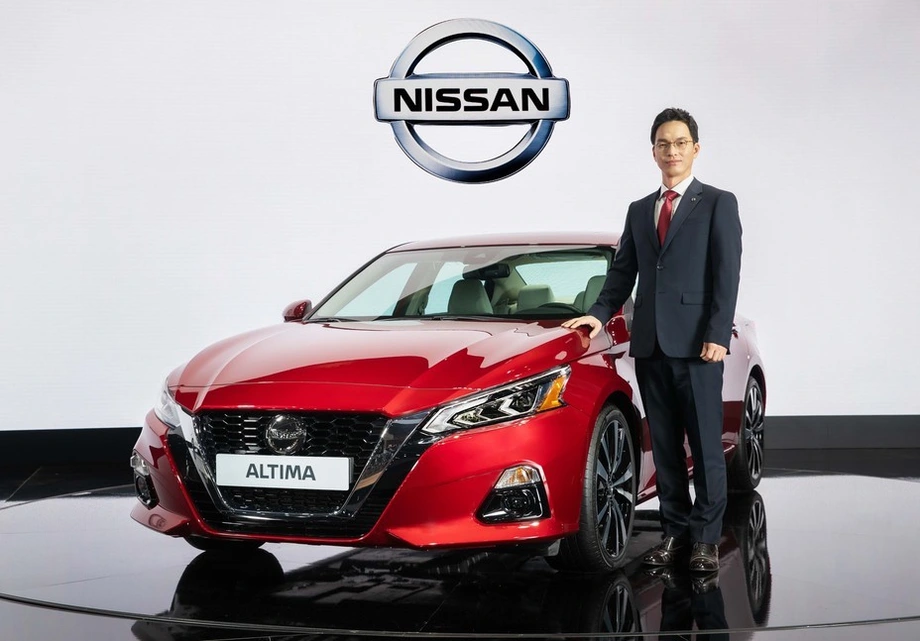
Nissan Motor Co. sold just 3,581 Nissan and Infiniti vehicles in South Korea from January through August 2019, 27% fewer than a year earlier. Japan's second largest automaker was then considering whether to stop sales in the country altogether. The review came as South Korean consumers were shunning Japanese cars, beer, clothing and other products during an increasingly bitter dispute between the two governments.
Contents
- A sales review that became a full withdrawal
- What Nissan had at stake in South Korea
- How a labour ruling became an export dispute
- Inside the boycott: shops, beer and cars
- Travel carried the losses across borders
- From trade lists to military intelligence
- Nissan's 16 years in South Korea
- What the withdrawal changed
- Key Points
What began as a possible retreat became a decision to leave. In the middle of 2020, Nissan announced that both the Nissan and Infiniti brands would be withdrawn from South Korea by December. It cited the worsening business environment during the COVID-19 pandemic and the effects of the 2019 boycott. Nissan spokespeople in South Korea and Japan had declined to comment when the earlier review was underway.
What Nissan had at stake in South Korea
The 2019 review covered more than showrooms. Nissan was also examining its involvement in an assembly plant in Busan owned by Renault Samsung Motors Co., a venture connected to Nissan through its French partner Renault SA. The plant produced vehicles mainly for export markets. Ending Korean sales and changing involvement in the factory were therefore separate choices: one concerned domestic customers, while the other touched production for buyers elsewhere. No final decision on the Busan operation was announced at that stage.
South Korea had long been a difficult market for Nissan. Hyundai Motor Co. dominated domestic sales, while German imports including Mercedes-Benz and BMW competed strongly in premium segments. Nissan and Infiniti also trailed far behind Toyota Motor Corp. Their combined sales of 3,581 vehicles over eight months underlined how little market presence Nissan had to cushion a sudden collapse in demand.
The external pressure arrived while Nissan was trying to strengthen governance, cut costs and improve weak profitability. Those efforts followed persistent allegations of financial misconduct involving former chairman Carlos Ghosn, whose period at the top had lasted two decades. The Korean review consequently formed part of a wider reassessment of where Nissan could earn acceptable returns.
How a labour ruling became an export dispute
South Korean court decisions on wartime labour sat at the centre of the political confrontation. In June 2019, the Seoul High Court ordered Japan Iron and Steel to pay roughly $86,400 each to seven South Koreans who had been forced to work 12 hours a day between 1942 and 1945. The wider compensation campaign also involved Mitsubishi Heavy Industries and Nippon Steel. Tokyo argued that the claims had been settled through the 1965 treaty between the countries and through later arrangements under President Park Geun-hye in 2015.
Japan announced restrictions on exports of three chemical products used by South Korean companies to make mobile phones and electronic displays shortly after the June ruling. The measures effectively delayed the export process. Prime Minister Shinzo Abe's administration cited national security rather than the labour judgments. Japanese officials raised the possibility that the chemicals, which can also have weapons applications, might reach North Korea. Seoul firmly rejected that suggestion. The nationwide No Japan boycott began on July 5.
Sohn Kiyoun, a professor of international trade at Incheon National University, challenged Tokyo's justification in direct terms.
There are no grounds for Japan's national security argument.
Sohn said Japan had not specified evidence demonstrating a security problem involving the South Korean government or its companies. He viewed the measures as connected to the forced labour dispute. For shoppers, however, the historical and legal arguments translated into a much simpler decision about whether to buy a Japanese product.
Inside the boycott: shops, beer and cars
The No Japan campaign built a mobile app and website identifying Japanese products, their brands and South Korean alternatives. More than 200 supermarkets and grocery stores removed Japanese items from their shelves, and polling suggested that six in 10 South Koreans were participating. Some anger also spilled beyond consumer choices, including a sign at a Busan restaurant saying that Japanese people were not allowed inside.
Lee Sang-joon, who operated his own 7-Eleven in Bucheon after running franchise convenience stores for more than 15 years, described the commercial effect.
My business has been hurt by the boycotts, and it seems to be ongoing. I started feeling it around the time 'No Japan' started.
His experience showed how easily the campaign could affect a business with a misunderstood identity. 7-Eleven is an American company, while its South Korean stores were run by Korea Seven Co., with Lotte Corporation holding nearly 80% of the shares. Lee said some customers nevertheless believed the business was Japanese. He planned to sell his remaining Japanese stock and stop ordering more.
Japanese automakers recorded sharp declines, with Toyota sales down 32% from a year earlier and Honda down 34%. National Assembly member Kang Byung-won released data showing that July imports of Japanese beer fell 34.6%, while sake imports dropped 42.1%. Early August readings put Japanese beer sales down 98.8% and sake sales down 70%. At two major convenience store chains, Japanese beer sales declined between 21% and 24%. Those percentages describe monthly imports, early August sales and sales at particular retailers, rather than one common measurement.
Data supplied by National Assembly member Tae Gyu Lee captured the shift in another way. Spending through eight major credit card companies on selected Japanese brands fell 51.3%, from 10.2 billion won ($8.4 million) in the last week of June to 4.98 billion won ($4.1 million) in the fourth week of July. Uniqlo recorded a 70.1% decline in that card series, the steepest among the listed brands. Retail tracking also produced a 40% sales decline for Uniqlo over another period. Foreign beer had been expanding before the boycott: its market share at E-mart rose from 17.7% in 2015 to 25.3% in 2018, helped by promotions such as four imported cans for 10,000 won, then about $8.
Travel carried the losses across borders
The dispute soon reached tourism. South Korean spending in major Japanese cities fell 18.1% after the boycott began. Seasonal patterns did not explain the drop, since spending during the corresponding period a year earlier had been rising through July and was already higher than in the last week of June. Travellers also posted notices cancelling trips to Japan and shared information about Japanese-owned businesses.
Japan had become an especially popular destination before the confrontation. In a survey of 11,153 South Korean consumers conducted by Korea Consumer Insight and Sejong University, 31% said they had visited Japan in 2018, up from 29.1% in 2017. Korean visitor numbers to Japan nearly tripled between 2014 and 2018. Flights could take less than two hours, while Japanese food, culture and shopping provided additional attractions. Japanese visitor numbers to South Korea, by contrast, had peaked in 2012 and had not returned to that level.
A Hyundai Research Institute study of the travel cliff between the two countries estimated that a steep tourism decline would reduce Japan's economic growth by 0.1 percentage points, compared with 0.05 percentage points for South Korea. Its projection assumed an 81.2% fall in Korean visitors to Japan. That assumption drew on the 75.1% decline in Chinese tourists visiting South Korea during the 2016 dispute over the THAAD missile defence system.
South Korea still faced its own exposure. Japanese visitors accounted for 20% of its total visitors in 2018, although Chinese resellers and other visitors generated 83.7% of downtown duty free sales. A fall in Japanese arrivals would therefore not produce an equivalent fall in those sales. Korean duty free operators were also contending with China's new ecommerce law, introduced on January 1, and fresh licence tenders that promised stronger competition.
From trade lists to military intelligence
Preferential trade treatment became another battleground. A white list is a group of countries that receive smoother treatment for sensitive exports. Japan removed South Korea from its list on August 2, and the two governments eventually removed each other from their respective lists. The commercial disagreement was moving into procedures governing strategic supplies.
- June 2019: The Seoul High Court ordered compensation for seven South Koreans forced to work for Japan Iron and Steel during the Second World War.
- July 5: The nationwide boycott gathered force after Japan restricted exports of three chemicals important to South Korean electronics production.
- August 2: Japan removed South Korea from its white list of preferred trading partners.
- August 8: Japan approved its first shipment of semiconductor materials to South Korea since imposing the restrictions.
- August 15: President Moon Jae-in used his Liberation Day address to urge dialogue and cooperation, while Abe refrained from visiting Yasukuni Shrine.
- August 22: Tokyo downgraded South Korea's trade status, and Seoul announced its departure from the General Security of Military Information Agreement (GSOMIA).
GSOMIA allowed South Korea and Japan to share military intelligence at a time when North Korea's weapons activities remained a central security concern. Nearly half of South Koreans surveyed supported ending participation, while Japan's foreign minister had argued in a July editorial for preserving the pact. Seoul's announcement meant that the confrontation had spread from compensation claims and exports to security cooperation watched closely by Washington.
The August 8 approval of semiconductor materials offered a limited sign of movement. Sohn interpreted it as an attempt by Tokyo to seek a way out.
The Japanese government is trying to find a way to exit this dispute.
He also suggested that concern over North Korea's nuclear programme could eventually encourage Japan, South Korea and the United States to cooperate again. That possibility sat alongside the immediate reality of cancelled trips, falling card spending and manufacturers reassessing their Korean businesses.
Nissan's 16 years in South Korea
Nissan Korea had been established in February 2004. It introduced Infiniti in July 2005 and began selling vehicles under that brand before launching the Nissan brand itself in November 2008. Infiniti Korea Co., Ltd. was created in April 2015, separating the luxury operation from Nissan Korea. The announced departure in 2020 therefore ended a corporate presence built over roughly 16 years, through several brand reorganisations.
Nissan's final announcement went beyond the possibility discussed in 2019. Both Nissan and Infiniti were to leave by December 2020, with the company pointing to the deteriorating business environment during the pandemic and the earlier boycott. Nissan Korea became defunct in 2020. The decision removed new vehicle sales from a market where Hyundai held the dominant position and where Nissan had remained a small importer.
Existing owners received a continuing commitment. Nissan said service centres would be managed for eight years to provide vehicle quality assurance and parts support. For a customer who already owned a Nissan or Infiniti, withdrawal from new car sales did not mean the immediate disappearance of warranty assistance or replacement parts. That service network became the company's practical connection with South Korean customers after the brands departed.
What the withdrawal changed
Nissan's 3,581 sales during the first eight months of 2019 captured the weakness of its position before the final decision was taken. The boycott reduced demand across numerous Japanese businesses, but Nissan also faced its limited market share, a global cost-cutting drive and then the pandemic. Its eventual explanation joined those commercial pressures rather than presenting the Korean operation as a healthy business interrupted by a single event.
The consequences reached different groups in different ways. Korean shop owners lost sales, Japanese consumer brands saw spending contract, and travellers reduced their purchases in Japanese cities. Renault Samsung's Busan plant represented a separate industrial question because its output served export markets. Nissan owners, meanwhile, were left with an eight-year service commitment rather than an abrupt end to support.
For the two governments, the sequence showed how a dispute over wartime compensation could spread through export controls, retail trade, tourism and military intelligence within months. For Nissan, the endpoint was much more concrete: by December 2020, its two brands were leaving South Korea, closing a chapter that had begun with the establishment of Nissan Korea in 2004.
Key Points
- Nissan and Infiniti sold 3,581 vehicles in South Korea from January through August 2019, down 27% from a year earlier.
- Nissan's 2019 review covered both Korean sales and its involvement in Renault Samsung's export-oriented Busan assembly plant.
- The No Japan boycott followed Japanese export restrictions imposed amid a dispute over South Korean court rulings on wartime forced labour.
- Toyota sales fell 32% and Honda sales 34%, while credit card spending on selected Japanese brands dropped 51.3% between late June and late July.
- South Korean spending in major Japanese cities declined 18.1%, and a research institute projected a larger growth impact for Japan than for South Korea under its tourism scenario.
- The confrontation expanded to trade white lists and GSOMIA, the military intelligence pact between Seoul and Tokyo.
- Nissan announced in the middle of 2020 that Nissan and Infiniti would withdraw by December, while maintaining service centres for eight years to handle warranties and parts.