A smaller increase leaves a much larger bill
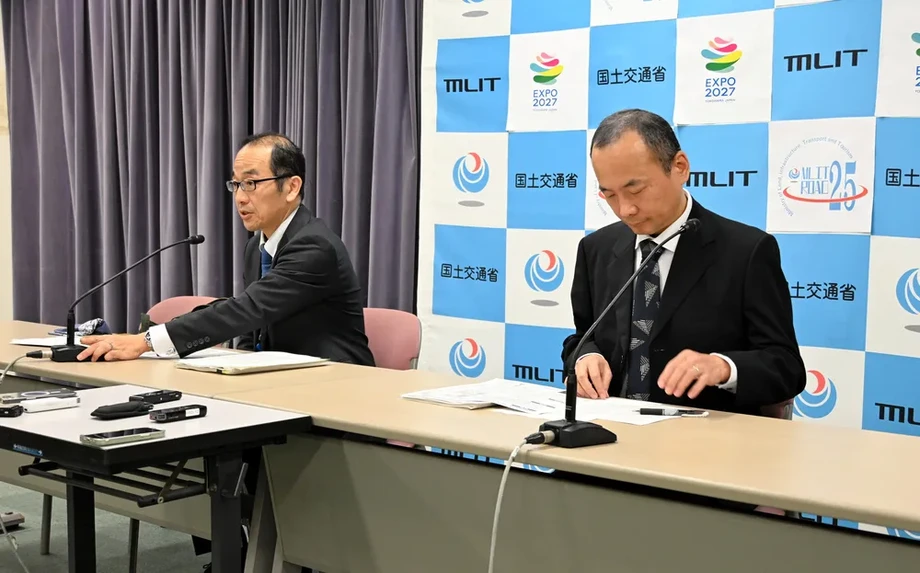
The extension of the Hokkaido Shinkansen from Shin-Hakodate-Hokuto to Sapporo is now expected to cost approximately ¥3.413 trillion, or about $21.4 billion. An expert panel at Japan's Ministry of Land, Infrastructure, Transport and Tourism said on November 27, 2026 that the project would require ¥1.0978 trillion more than the cost approved in March 2023. The panel submitted its findings to the ministry after months of examining construction prices, difficult ground conditions and possible savings.
Contents
- A smaller increase leaves a much larger bill
- How the estimate more than doubled
- What is driving the extra spending
- How excavated soil became a source of savings
- Why three tunnels matter to the opening date
- Approval and local explanations come next
- Hokkaido and Sapporo press for clarity on who pays
- What the revision changes for communities and taxpayers
- Key Points
The new projection trims roughly ¥100 billion from the maximum estimate presented in December 2025 by the Japan Railway Construction, Transport and Technology Agency, known as JRTT. That organization is building the section. Its earlier calculation allowed for an increase of as much as ¥1.2 trillion, which would have taken the total to around ¥3.5 trillion. The panel instead put the increase at ¥1.0978 trillion and the total at approximately ¥3.413 trillion.
The saving offers only limited relief when set against the project's original finances. The estimate was ¥1.67 trillion when construction began in 2012. The new projection is about 2.04 times that amount, representing growth of approximately ¥1.743 trillion. Measured against the more recent March 2023 approval, the project still requires more than ¥1 trillion in additional funding.
Panel members discussed a draft containing cost reduction measures at a closed meeting on November 26 before finalizing the report the following day. Their review retained the end of fiscal 2038 as the working assumption for opening. It also called for another examination of the construction schedule once engineers can see a clearer route to completing the remaining tunnels.
How the estimate more than doubled
The ¥1.0978 trillion increase uses the approximately ¥2.3159 trillion approved in March 2023 as its starting point. A longer timeline shows how repeated delays, rising prices and geological problems have changed the project since its original plan.
- 2011 and 2012: The original plan put the cost at about ¥1.67 trillion. Construction started in 2012 with that estimate, and the opening target was the end of fiscal 2030.
- 2022 to March 2023: The estimated cost rose to roughly ¥2.3 trillion in 2022. The revised approval in March 2023 subsequently set the authorized amount at approximately ¥2.3159 trillion.
- December 2025: JRTT calculated that a longer construction period and poor geological conditions could add as much as ¥1.2 trillion, bringing the total to around ¥3.5 trillion.
- November 26 and 27, 2026: The ministry's expert panel discussed its draft report in private, then finalized and submitted a projection of approximately ¥3.413 trillion.
- During fiscal 2026: JRTT is expected to apply for a formal revision of the project cost, with approval required from the transport minister.
Two comparisons therefore describe different stages of the increase. The ¥1.0978 trillion figure measures the latest proposed revision from the March 2023 approval. The roughly ¥1.743 trillion difference measures growth since the original ¥1.67 trillion estimate. The opening timetable has also moved by eight fiscal years, from the end of fiscal 2030 to the end of fiscal 2038 or later.
What is driving the extra spending
Higher prices for construction materials form the largest listed component of the latest increase, at approximately ¥570 billion. Responses to unexpected natural conditions account for about ¥197.5 billion. That category includes the removal of rock masses encountered during tunnel excavation. Higher labor and machinery expenses add another approximately ¥171 billion. These are major components rather than a complete itemization of every cost in the project.
JRTT's earlier maximum estimate gives a useful comparison. It assigned between ¥500 billion and ¥550 billion to rising material prices and related expenses, and between ¥200 billion and ¥250 billion to unexpected natural conditions. The expert panel then examined actual construction progress, updated the figures and searched for places where spending could be reduced.
The latest calculation assumes that material and labor costs will rise by 2% a year. The report says a faster increase could push the total higher again. It also recognizes expenses connected with failed or unsuccessful tenders. A failed tender can leave a construction package without an acceptable contractor, requiring another attempt and potentially weakening price competition. Those procurement risks sit alongside the remaining geological uncertainty.
How excavated soil became a source of savings
The most tangible saving concerns the soil and rock removed from tunnels. Excavated material must be transported to places authorized to receive it. Longer journeys add transport expense, while limited disposal capacity can complicate construction planning. The panel made lower soil transport costs a central part of its cost reduction plan.
The report calls for receiving sites to be secured closer to construction locations. It also proposes transferring excavated soil for use in other projects where practical. Reuse can reduce the amount of material requiring disposal, while nearby receiving sites can shorten journeys. These measures helped the panel conclude that approximately ¥100 billion could be removed from JRTT's maximum estimate.
Construction progress provided another reason for the smaller projected increase. As more work is completed, estimators have better information about actual conditions and less unfinished work in which some earlier risks might occur. The saving therefore comes from both specific measures, such as changing soil transport arrangements, and a more informed assessment of the remaining work. Future prices, tendering and the unfinished tunnels will still influence the final bill.
Why three tunnels matter to the opening date
Tunnel construction was described as 94% complete, yet three tunnels still had no clear prospect of breakthrough. A high completion percentage can coexist with such a serious delay because the remaining excavations may be exceptionally difficult and can determine when the entire section is ready. Trains cannot use the extension simply because most of the other work has advanced.
The original plan called for opening at the end of fiscal 2030. That expectation later moved to the end of fiscal 2038 or later as tunnel work proved more difficult and the construction period grew longer. Japan's fiscal 2038 ends in March 2039, so the current planning assumption points to a date around eight years later than the original target, which corresponded to March 2031.
For its cost calculation, the expert panel retained an opening at the end of fiscal 2038 and said that assumption did not need to be changed at this stage. It also recommended examining the full schedule again once there is a clearer prospect of tunnel breakthrough. A more definite timetable depends on that engineering review.
The November 27 announcement gave no opening month or day. It also gave no date for the subsequent schedule examination, because that review is tied to tunnel progress rather than a calendar deadline. For now, the end of fiscal 2038 remains the assumption used for financial planning.
Approval and local explanations come next
The cost review began after JRTT published its maximum estimate in December 2025. Yasushi Kaneko, who was transport minister at the time, instructed officials to scrutinize the project cost and examine ways to reduce it. The expert panel then considered those measures while keeping the existing opening assumption in place.
Formal revision now requires action by the builder. JRTT must apply to change the project cost on the basis of the panel's report, and the transport minister must approve that change during fiscal 2026, which ends in March 2027. Once approval is granted, approximately ¥3.413 trillion will become the formally revised project cost.
Transport Minister Ibayashi responded to the report with a commitment to continue working toward the opening. He also addressed the need for cooperation among the ministry, the builder and communities along the route.
The Ministry of Land, Infrastructure, Transport and Tourism will continue to work with all concerned parties as one, striving to realize the opening of the Hokkaido Shinkansen as soon as possible.
After receiving the report, the minister instructed the ministry's Railway Bureau and JRTT to explain the cost review promptly to local governments and other parties along the line. That instruction connects the financial decision with a practical concern: municipalities need information before they can assess the effect on their own budgets.
Hokkaido and Sapporo press for clarity on who pays
Hokkaido Governor Naomichi Suzuki warned that another increase in local contributions could affect municipal finances. He called for national measures to reduce the burden and urged the government and JRTT to keep construction moving while providing prompt explanations to local communities.
There remains a possibility that a further increase in the local burden will have a major impact on the fiscal condition of municipalities. Measures by the national government to reduce that burden are needed.
Sapporo Mayor Katsuhiro Akimoto focused on the absence of a clear local contribution figure. Sapporo is the destination of the extension, and its city government is among those seeking a firmer basis for financial planning.
A further increase in the burden could shake the fiscal foundations of municipalities along the line and is truly regrettable. We strongly request that the amount of the local burden be made clear as soon as possible.
The figures announced on November 27 did not specify how much each municipality would ultimately pay. The panel established a new project estimate and identified savings, while the distribution of the burden remains a separate issue for the national government, JRTT and local authorities. Suzuki and Akimoto both made clear that the smaller increase had not removed their fiscal concerns.
What the revision changes for communities and taxpayers
For residents and businesses waiting for the Sapporo extension, the immediate result is a clearer financial plan rather than an earlier train service. The opening assumption is unchanged, and the most difficult tunnel work still controls the timetable. The roughly ¥100 billion saving reduces part of an anticipated increase, but the total remains more than ¥1 trillion above the March 2023 approval and more than twice the original estimate.
For national and local governments, the next decisions concern formal approval and the allocation of costs. The lower projection gives budget planners a revised figure to work with, while the report's 2% annual assumption for material and labor prices leaves a visible source of risk. Faster price growth, further tendering problems or additional geological difficulties could require another examination.
The next verifiable milestones are JRTT's application, the transport minister's decision during fiscal 2026 and the later engineering review tied to tunnel breakthrough. Municipalities along the route and the business community continue to look toward the economic benefits of opening, but their immediate demands are prompt explanations, a clear statement of local contributions and national measures to limit the fiscal burden.
Key Points
- The expert panel put the Shin-Hakodate-Hokuto to Sapporo project cost at approximately ¥3.413 trillion on November 27, 2026.
- The stated increase is ¥1.0978 trillion from the March 2023 approval, and about ¥100 billion below JRTT's December 2025 maximum estimate.
- The new total is approximately 2.04 times the original ¥1.67 trillion estimate from the start of construction in 2012.
- Higher material prices, labor and machinery costs, and difficult natural conditions are driving the increase.
- Closer receiving sites for excavated soil and reuse of tunnel material are central to the proposed savings.
- Tunnel construction is 94% complete, but three tunnels still lack a clear breakthrough timetable.
- The end of fiscal 2038 remains the opening assumption, subject to another schedule review as tunnel progress becomes clearer.
- JRTT must seek formal approval during fiscal 2026, while Hokkaido and Sapporo are demanding national burden relief and prompt disclosure of local contributions.