A rare Ferrari in the company car park
A Ferrari Dino used for commuting by Kotaro Fukuda, the 81-year-old former chairman of Fukuda Denshi, became an early clue in a governance scandal that eventually cost him his board positions and brought in an independent committee. The medical equipment manufacturer's shareholders crowded into its annual meeting in Bunkyo, Tokyo, on June 26, 2026, ten days after Fukuda resigned. They wanted to know how a founding family leader had been able to mix private activities with company resources for so long without effective challenge.
Contents
- A rare Ferrari in the company car park
- Why did the car park dominate the shareholder meeting?
- A resignation that left ownership questions unresolved
- An independent committee with a broad assignment
- Two draft announcements for one committee departure
- What the investigation found about private use
- The key dates in the Fukuda Denshi scandal
- The founder's ideals and a chairman beyond supervision
- What has changed, and what remains unfinished
- Key Points
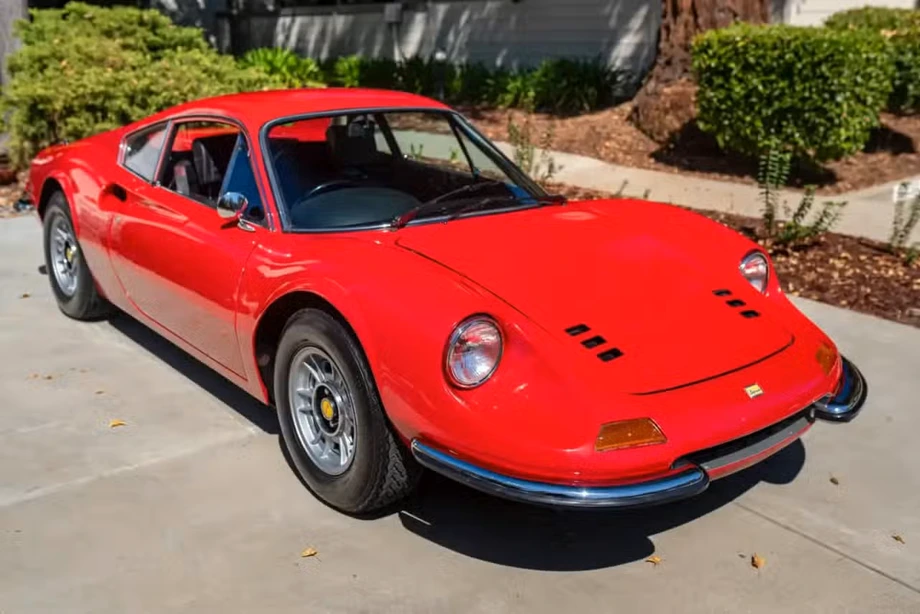
Toby Rose, 58, chief investment officer of the US investment fund Kaname Capital, first became suspicious about seven years earlier. During his initial visit to Fukuda Denshi, he noticed an unusual sports car in its surface car park. It was a Ferrari Dino, and he was surprised to learn that it belonged personally to Fukuda and was used to travel to work rather than kept solely as part of a collection. That encounter helped prompt Rose to examine the chairman's expenses and the company's supervision of him.
The Dino carries a particularly evocative name. Enzo Ferrari gave it the nickname of his son, who died young, and the model also became known as a car owned by Rolling Stones guitarist Keith Richards. Kaname is an activist investor, meaning that it buys shares and actively presses management and directors for changes instead of simply waiting for the share price to rise. For Rose, the rare car opened a much wider examination of executive privilege at Fukuda Denshi.
Why did the car park dominate the shareholder meeting?
The annual meeting on June 26 turned the parking issue into a public test of the board's explanation. Fukuda had already resigned, but shareholders still wanted an account of the years during which directors and employees had worked around him. According to people who attended, one shareholder asked a question that went beyond the vehicle itself and addressed the organisation's apparent inability to intervene.
Why did the company leave the former chairman's improper use of the parking lot unaddressed for so long?
Daijiro Shirai, the 75-year-old company president, responded by describing areas that many personnel did not ordinarily enter. He also acknowledged that some people knew about Fukuda's parking without taking particular action.
For many directors and employees, it was not a place they normally entered.
Some officers and employees knew that the former chairman was parking there, but did not take particular care to warn him.
Shirai's answer placed part of the responsibility on the distance between ordinary staff and the chairman's private spaces. It also conceded that knowledge alone had not produced a warning. Fukuda Denshi subsequently decided that Shirai and other directors would voluntarily return part of their compensation. No amount for those returns was given with the account of the meeting.
A resignation that left ownership questions unresolved
Fukuda Denshi announced on June 16, 2026 that Kotaro Fukuda was resigning as representative director and chairman with immediate effect. The board's later decision to create an independent committee also recorded his resignation as a director on the same date. His departure removed the founding family veteran from day-to-day corporate leadership just before shareholders gathered.
Two important circumstances remained. Fukuda was still the company's largest shareholder, and people close to him remained on the board. Kaname Capital treated the resignation as a first step rather than a complete renewal of governance. Its argument was that directors should have confronted his management responsibility directly and drawn a firm line through dismissal.
The distinction matters to other shareholders. Resignation changes who holds an executive title, while continued share ownership preserves considerable economic influence. The proximity of remaining directors to the former chairman also kept attention on whether the board could independently assess conduct that had taken place during its own watch.
An independent committee with a broad assignment
On June 25, one day before the shareholder meeting, Fukuda Denshi's board resolved to establish an independent third party committee. The company said its Audit and Supervisory Board had already investigated with assistance from external experts, but directors decided that a more objective examination was needed to establish the facts, analyse the causes and develop effective measures against repetition.
The committee consisted of Seiichi Fusamura, an attorney at Matsui Law Office; Koji Nishimura, an attorney at Matsuo General Law Office; and Mihoko Nasu, a certified public accountant at PwC Risk Advisory LLC. Fukuda Denshi described all three as independent from the company and its management.
Their remit covered the details of the improper acts, weaknesses in governance, the underlying causes and recommendations for preventing a recurrence. The company committed to cooperate fully and disclose the investigation results promptly. It also said it would continue refining preventive measures with its Audit and Supervisory Board and outside experts. That made the committee's freedom to determine the extent of its inquiry central to its credibility.
Two draft announcements for one committee departure
The committee's independence came under pressure within weeks. In late August, two draft announcements were prepared inside Fukuda Denshi concerning the departure of one committee member. Plan A described acceptance of the member's resignation. Plan B described dismissal.
People familiar with the discussions said the company had asked the member to resign but had not obtained agreement. They also said management and the member could not reconcile their positions over how far the investigation should extend. The member was an experienced participant in independent examinations of corporate misconduct, including work connected with accounting wrongdoing.
On August 31, Fukuda Denshi announced that the member had resigned for personal reasons. The existence of the alternative drafts, together with the disagreement over investigative scope, turned the departure into part of the governance story itself. A committee created to examine deference to powerful executives was now facing scrutiny over its own relationship with management.
What the investigation found about private use
Fukuda Denshi later published the committee's findings and announced measures intended to prevent similar conduct. In its official notice on the investigation report, the company described a failure to separate public and private matters involving the former chairman. The specific examples included his private use of underground parking, the lounge on the eighth floor and a driver.
These findings broaden the picture beyond the Dino first seen by Rose on a surface lot. Parking, a company lounge and staff driving services became parts of a private routine even though they belonged to the corporate environment. Findings associated with the report also referred to private cars kept within the company and a secretary searching for a villa for the former chairman.
The committee traced the persistence of such conduct to a corporate culture it described using the Japanese words for anticipating a superior's wishes and remaining silent. The first concept, sontaku, means guessing what a powerful person wants and acting accordingly without waiting for a direct instruction. Combined with silence, it can leave employees trying to accommodate a leader while avoiding an uncomfortable challenge.
Fukuda Denshi said it was implementing preventive measures alongside publication of the report. The notice did not provide a total yen figure for the expenses at issue. That leaves the nature of the private use and the governance response described in greater detail than the financial scale.
The key dates in the Fukuda Denshi scandal
The confrontation developed through a sequence of visits, resignations and investigative decisions rather than a single disclosure.
- 1939: The business that became Fukuda Denshi was founded.
- About 2019: Toby Rose first visited the company and noticed Fukuda's Ferrari Dino in the car park.
- June 16, 2026: Kotaro Fukuda resigned as representative director, chairman and director, while remaining the largest shareholder.
- June 25, 2026: The board approved an independent committee comprising two attorneys and one certified public accountant.
- June 26, 2026: Shareholders questioned management about the former chairman's expenses and parking at the annual meeting in Bunkyo.
- Late August 2026: The company prepared alternative drafts describing either a committee member's resignation or dismissal.
- August 31, 2026: The company announced that the member had resigned for personal reasons.
- By late November 2026: The committee's findings had identified a culture of anticipating the chairman's wishes and staying silent, while the company had announced preventive measures.
The dates also explain why the shareholder meeting could not settle the affair. Directors had approved the independent inquiry only one day earlier, and the most contentious episode involving a committee member was still two months away.
The founder's ideals and a chairman beyond supervision
The committee's cultural findings contrast sharply with the philosophy recorded by Fukuda Denshi's late founder, Takashi Fukuda. A history published in 1989 to mark 50 years since the company's creation said he viewed employees as a community sharing both destiny and profits. His explanation rejected the idea that ownership made the business one person's property.
The company does not belong only to me as its owner. It is the property of all the employees who participate in it.
Takashi Fukuda served as president until 1985. He visited development and manufacturing workplaces himself, greeting employees and thanking them for their efforts. A former employee remembered him as exceptionally humble. His commercial motto was that there could be no business without sales.
Beginning in the 1960s, he developed branches into regional sales subsidiaries and gave local operations considerable responsibility. Managers were promised compensation and status commensurate with their performance. That approach helped create a network of more than 220 sales locations across Japan, through which Fukuda Denshi built relationships with hospitals and doctors in private practice.
Those relationships make credibility a practical business asset for a medical equipment supplier. The committee's description of a chairman whose position appeared beyond anyone's supervision therefore reaches further than personal expenses. It raises a direct question for employees about whether they can object to improper conduct, and for directors about whether they can monitor someone whose family history and shareholding carry great weight.
What has changed, and what remains unfinished
Several concrete consequences are already visible. Kotaro Fukuda no longer holds his chairman or director positions. Shirai and other directors are returning compensation voluntarily. An independent investigation has identified specific uses of company facilities and staff, and Fukuda Denshi has publicly committed to measures intended to stop a recurrence.
The ownership and board issues remain separate from those steps. Fukuda's status as the largest shareholder was unchanged by his resignation, and individuals close to him remained directors. The committee member's departure also means that confidence in the inquiry depends not just on its final findings, but on whether investigators can set their own scope without pressure from the people whose organisation they are examining.
Fukuda Denshi has not supplied a total for the expenses or the returned compensation with the measures described above, and no date has been given for another shareholder decision on board composition. For shareholders, employees and the hospitals served by its sales network, the immediate benchmark is the company's implementation of the preventive measures and its handling of the remaining concentration of influence.
Key Points
- A Ferrari Dino used for commuting helped prompt Kaname Capital's scrutiny of former chairman Kotaro Fukuda.
- Fukuda resigned from his chairman and director roles on June 16, 2026 but remained the largest shareholder.
- Shareholders challenged management at the June 26 annual meeting over years of improper parking use.
- An independent committee of two lawyers and an accountant was approved on June 25.
- The investigation identified private use of underground parking, an eighth floor lounge and a driver.
- One committee member's departure was preceded by draft announcements covering either resignation or dismissal.
- The committee blamed a culture of anticipating the chairman's wishes and remaining silent.
- President Daijiro Shirai and other directors decided to return compensation voluntarily, while the company announced preventive measures.