A furniture advert becomes a test of acceptable housing
A post on X has turned adverts for compact furniture into a wider argument about how Singapore treats the migrant domestic workers who live and work in its homes. On Wednesday, Nov 25, user enfpderys shared screenshots of products advertised by local business nanasmith_sg, also known as Nana Smith. The caption read 'this isnt normal'. By Thursday evening, the post had attracted more than 645,000 views.
Contents
- A furniture advert becomes a test of acceptable housing
- Two furniture accounts reveal the demand for compact rooms
- What manpower rules require inside the home
- Shelter rules ask a different question from housing rules
- Why advocates say the debate is about dignity
- An earlier conversion shows the same practical dilemmas
- The key dates and what remains undecided
- What households can take from the rules
- Key Points
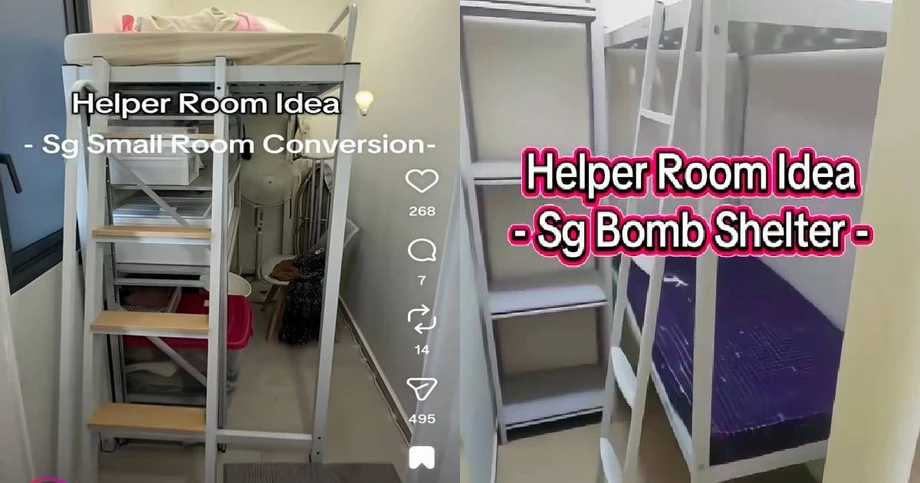
The screenshots showed customised beds, loft beds and storage furniture intended for small spaces, including household shelters in Housing and Development Board (HDB) flats and rooms used by domestic helpers. A household shelter is a reinforced room designed to protect occupants during an emergency. In everyday life, its solid walls and protected door can make it look like just another small storage room, but its original purpose brings additional safety rules.
The X user described the sleeping spaces shown as 'small inhumane and cramped conditions' and questioned whether they were practical bedrooms. Another person asked how the business could advertise the products 'without feeling shame'. Someone else initially thought the room was intended for a student with little money, then expressed disbelief that it could house a domestic worker who lived with the employer. That commenter suggested that households without enough room should consider engaging help that does not live in the home.
Other reactions showed why the issue is not always a simple choice between a shelter and a spacious bedroom. One person recalled a former helper sharing a bedroom with them and their brother because the family shelter was used for storage. Another called shelter bedrooms inhumane and described employers who used them as despicable. That commenter said their own helper had a bedroom and argued that someone who lives and works alongside a family should be treated as part of it.
Two furniture accounts reveal the demand for compact rooms
Nana Smith said it supplies customised furniture and storage designed to save space in Singapore homes. Its designs are adapted to room dimensions and homeowner requirements. Enquiries concern rooms for domestic helpers, children and elderly relatives, as well as utility rooms and studies. The business said its loft and bunk bed products start at about $350, with the final price depending on the design, height, mattress size, storage arrangement and installation.
The company clarified that it supplies furniture rather than designing or furnishing entire rooms. It said it considers 'comfort, safety and privacy', alongside the client's requirements and the limits of the available space. Those assurances address the furniture itself. The condition of the room around it, including ventilation, privacy and the ability to use the shelter in an emergency, still matters under the applicable housing and shelter rules.
A separate Instagram account, @anniewang675, has also attracted criticism over this practice. A video posted on Oct 12 carried the caption 'Helper room loft bed with shelf'. The bed filled almost the entire shelter, leaving little room to walk around it. One viewer asked, 'You call this a room?', while another pointed out that the space was a bomb shelter.
Annie, 38, the sales manager behind that account, said she formally started the business in 2021 after receiving many requests for furniture made for small rooms. During busy periods, she said, it receives between 10 and 30 enquiries a day, mostly from employers seeking customised furniture for helpers. A basic loft bed costs about $560. Designs with stairs and storage incorporated into the structure can cost between $1,500 and $1,800. The account has more than 374 reviews on Carousell, with most customers appearing satisfied.
Annie said space limitations can leave helpers without a sense of belonging while depriving children of privacy. She also said the business had consulted the Singapore Civil Defence Force (SCDF) and HDB and had found that installing its beds did not breach the rules. She defended the company's records in these words:
All installation procedures for our products have been properly documented.
Her products are also bought for family members and other small rooms, so an enquiry or purchase does not by itself establish who will use a bed. Her prices and Nana Smith's starting price cover different accounts and designs. The $350 figure should therefore not be read as the price of the premium installations shown elsewhere.
What manpower rules require inside the home
The Ministry of Manpower (MOM) says employers should give a migrant domestic worker a separate room where possible. When that cannot be done, the accommodation must still have adequate space and privacy, sufficient ventilation and basic sleeping amenities. The sleeping environment must be safe. A domestic worker must also not sleep in the same room as a male adult or teenager.
The wording matters. A separate room is preferred, but the guidelines do not say that every home without one automatically fails every requirement. At the same time, placing a bed inside a shelter does not answer the remaining tests. A cramped room with poor airflow, little privacy or unsafe furniture can fall short even when the worker has four walls and a door.
MOM's official page on employer's housing responsibilities, last updated on March 14, 2024, sets out broader duties under the Employment of the Foreign Manpower Act. Employers must provide proper housing that meets ministry requirements, pay rent on time and renew an expiring housing contract promptly or find alternative accommodation. Where caterers are engaged, employers must make sure cooked meals are safe to eat and delivered on time.
Employers must register a migrant worker's residential address and mobile number through the Online Foreign Workers Address Service, known as OFWAS. This must be done before a Work Permit is issued for both new applications and renewals. Any change of address or mobile number must be entered within five days. OFWAS gives the authorities a declared location at which they can check housing arrangements.
MOM says it conducts regular inspections at declared residential addresses. Employers who fail in their responsibilities can face prosecution, bans on future Work Permit applications and renewals, and forfeiture of security bonds. Forfeiture means the authorities can claim the bond money. These enforcement provisions give the housing duties consequences beyond online criticism.
Shelter rules ask a different question from housing rules
HDB's renovation guidelines protect the structural parts of a household shelter. Homeowners must not tamper with its reinforced walls, floor slab, ceiling or steel door. Fixtures that cannot be removed easily during an emergency should not be installed there. An SCDF advisory also says repair, alteration or renovation work on a household shelter is not permitted, citing drilling into or painting its walls as examples.
Household shelters are regulated under the Civil Defence Shelter Act. Additional works must be submitted to the Building and Construction Authority (BCA) for approval. This is why a furniture company's statement that it only installs beds cannot settle every regulatory question. The method of installation, any drilling, the treatment of the protective door and whether the finished arrangement can be cleared quickly all affect the shelter's condition.
Senior Minister of State for Home Affairs Goh Pei Ming addressed the use of these rooms in Parliament on Sept 8. He clarified that there is no ban on people occupying household shelters over long periods. The shelters must nevertheless remain usable during emergencies and cannot contain permanent fixtures. Permanent installations that obstruct emergency access are prohibited.
His statement separates two questions that often become merged in online arguments. The first is whether a person sleeps in the shelter. The second is whether the room and everything placed in it still allow the shelter to serve its protective purpose. A household must consider those issues together with MOM's requirements for space, privacy, ventilation, amenities and safety.
Why advocates say the debate is about dignity
More than 286,300 migrant domestic helpers form the workforce at the centre of this discussion. For a helper who lives with an employer, the place of rest is also the workplace. That can make housing conditions especially important: a worker cannot simply leave a cramped or poorly ventilated bedroom behind at the end of a working day.
Jaya Anil Kumar, director for Casework and Legal at the Humanitarian Organisation for Migration Economics (HOME), said the organisation regularly assists helpers who have been made to sleep in storerooms or bomb shelters. HOME has encountered cluttered storerooms and poorly ventilated spaces that create safety risks and compromise privacy. She described such living conditions as 'lacking dignity'.
Ms Jaya said MOM's terms remain broad and open to interpretation, allowing exploitative arrangements. She also said cases are likely underreported because of the imbalance of power between employer and helper. In practical terms, a worker who depends on an employer for both work and accommodation may find it difficult to object, even when a sleeping space is uncomfortable or feels unsafe.
The difficult comparison is often not between a shelter and a large private bedroom. It may be between a shelter with a door and a mattress in a kitchen, or between a small separate space and sharing a room with other family members. A shelter conversion can appear to improve privacy while still leaving problems with airflow, storage, walking space or the worker's ability to personalise the room.
That makes the helper's own preferences central. Asking whether a worker can fit into a room is different from asking whether the worker finds the arrangement acceptable and can rest there safely. Ms Jaya suggested temporary rented accommodation for helpers as one option, alongside dedicated living facilities for helpers and caregivers over a longer period. Those proposals would move part of the discussion beyond furniture and towards alternative housing arrangements.
An earlier conversion shows the same practical dilemmas
A similar dispute documented on July 30, 2024, involved a TikTok video from a local retailer. A bunk bed had been installed inside a shelter, with the helper's mattress on the upper level. The conversion included a small shelf, a ventilation gap, ventilation holes above the bed and a louvred sliding door. After the footage was reposted on Reddit, a user questioned whether it was 'livable'.
Many viewers condemned the cramped conditions and ventilation. Some suggested that the homeowner should spend three months living in the converted shelter. The retailer said the customised furniture, including the bunk bed, bookshelf and sliding door, cost about $2,900. That figure covered a larger package than a basic loft bed.
The retailer also said many homeowners requested similar conversions and frequently encountered ventilation difficulties. In that case, the homeowner chose a more customised arrangement to improve air circulation. The retailer regarded the spending as evidence of a willingness to improve the worker's accommodation, while critics focused on the room that remained after the work was completed.
Two property agents discussed the practical treatment of shelter doors and rentals. Mr Xiao Wenyu, 48, an agent with more than a decade of experience, said using shelters as rooms for domestic helpers was common. He gave this warning about a different use:
Homeowners cannot rent out bomb shelters as separate rooms.
Mr Xiao also said that if the original protective door had been removed, it had to be reinstalled before the property was sold because the specially designed door had to be retained. Richard, another agent aged 62, regarded a shelter room as more humane than some improvised sleeping arrangements elsewhere in a flat, provided the regulations were followed. He said an arrangement was not illegal simply because it was used for a helper, but SCDF might recommend reinstating the original door during an inspection.
The key dates and what remains undecided
Several episodes have contributed to the current debate, each adding a different piece of information:
- July 30, 2024: A converted shelter containing a bunk bed, bookshelf and sliding door drew criticism, with the furniture package reported to cost about $2,900.
- Sept 8: Goh Pei Ming told Parliament that occupancy over long periods was not banned, but shelters had to remain usable in emergencies and could not contain permanent fixtures.
- Oct 12: The @anniewang675 account posted its Helper room loft bed with shelf video, showing a bed occupying almost the whole shelter.
- Nov 25: X user enfpderys posted screenshots of Nana Smith's products with the caption 'this isnt normal'.
- Thursday evening: The post passed 645,000 views, widening the argument beyond furniture adverts to housing standards and dignity.
HDB, BCA, SCDF and MOM were contacted for comment about Annie's installations. No new enforcement decision, regulatory amendment or deadline for further guidance was given. The existing position therefore remains a combination of manpower accommodation standards, shelter renovation restrictions and the requirement to preserve emergency use.
What households can take from the rules
For an employer reviewing an existing arrangement, the first checks concern the person sleeping there. The room needs adequate space, privacy, ventilation, basic sleeping amenities and a safe bed. A domestic worker cannot share a room with a male adult or teenager. Where a separate room is available, MOM says it should be provided.
The next checks concern the shelter. Its reinforced structure and steel door must remain intact, permanent fixtures are prohibited, and anything installed must not prevent the room from being used in an emergency. Additional works can require BCA approval. Employers also need to keep residential address and contact information current through OFWAS where the registration requirements apply.
The online argument has exposed a gap that measurements and prices alone cannot close. A bed may fit, an installation may be documented and a family may believe it has created privacy, while the worker still experiences the room as cramped or poorly ventilated. HOME's criticism and its housing proposals place the worker's experience alongside those technical checks.
Key Points
- An X post about Nana Smith's furniture adverts passed 645,000 views after criticising the use of HDB household shelters as bedrooms for domestic helpers.
- Nana Smith said its products start at about $350 and that it supplies furniture rather than designing entire rooms.
- A separate business run by Annie reported 10 to 30 daily enquiries during busy periods, with basic loft beds at about $560 and premium designs reaching $1,800.
- MOM requires adequate space, privacy, ventilation, basic sleeping amenities and safe sleeping conditions when a separate room cannot be provided.
- HDB and SCDF rules protect shelter structures and doors, while permanent fixtures and obstructions to emergency use are prohibited.
- Goh Pei Ming told Parliament that there is no ban on occupying a shelter over long periods, provided emergency use and fixture rules are respected.
- HOME said it regularly assists helpers sleeping in storerooms or shelters and described some conditions as lacking dignity.
- No new enforcement decision, regulatory change or deadline for additional guidance was announced.