A rule that changes who carries the risk
Japan's Ministry of Land, Infrastructure, Transport and Tourism published draft guidelines on 20 November 2026 for unattended parcel delivery, including parcels left at an entrance, placed in a parcel box or collected at a convenience store. The draft says a parcel is handed over when a courier puts it in the place chosen by the recipient. Damage, theft or loss after that point is generally outside the delivery company's compensation duty. The ministry opened public comments the same day and aims to finalize the guidelines by the end of the year. Comments close on 11 December at 23:59.
Contents
- A rule that changes who carries the risk
- What the draft guidelines say
- Why Hiroyuki sees a household risk
- Timeline: from draft plan to April 2027
- Why 5.16 billion parcels make this rule matter
- The driver shortage behind the push
- Redelivery is falling, but cities remain hard
- What households should do when a parcel goes missing
- Lockers, bags and the limits of convenience
- Robots and drones make the rules more important
- What remains unsettled before April 2027
- Key Points
Unattended delivery, called okimotodori in Japanese, means a courier leaves a package without meeting the customer. The handover point is like the finish line in a race. Before that line, the carrier, meaning the delivery company, handles loss or damage before handover. After that line, the customer generally carries the management risk. The ministry says carriers should still tell customers the delivery date and time in advance, explain risks and compensation rules, and switch to direct handover when rain could soak a parcel.
The issue reaches far beyond one parcel. Japan is trying to reduce repeat delivery trips, known as redelivery, because drivers cannot keep making second visits at the current pace. At the same time, customers worry about theft, damage and the feeling that a package left outside tells others nobody is home. The draft tries to settle who is responsible, but it also asks households to take a more active role in receiving goods.
What the draft guidelines say
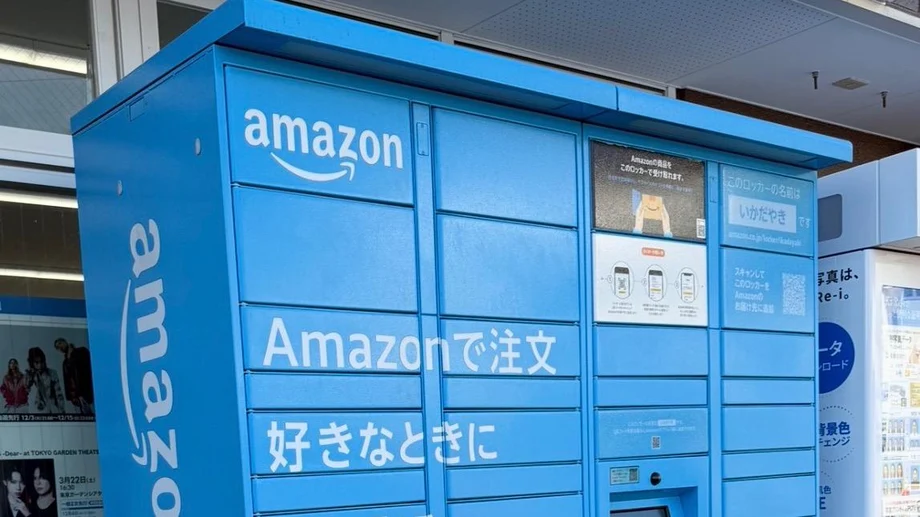
The guidelines set out a common handover point for each method. For a parcel left at a front door or another chosen place, delivery is complete when the courier places it there. For a parcel box, a doorstep delivery bag or a locker at a station, delivery is generally complete when the courier puts the parcel inside. The recipient is then expected to collect it promptly because theft, rain, loss and damage become more likely once the parcel sits unattended.
Actual compensation can still depend on several documents, including the Standard Parcel Delivery Service Contract Terms, the sales contract for the item, a service's terms of use and any individual agreement. Some carriers may compensate customers after handover under their own rules. The draft also says bad delivery to the wrong place and damage before handover should be handled by the delivery side. The Standard Parcel Delivery Service Contract Terms, the common rulebook used by parcel companies, are also being revised to include unattended delivery, with implementation planned for April 2027.
Transport Minister Tatsunori Imai told reporters on 20 November that direct handover remains the default and that other methods must be chosen by recipients. He said the draft keeps face to face delivery as the principle and treats the customer's choice as the basic condition for using other options. In translation:
Face to face handover remains the principle, and the basic premise is that recipients choose methods such as unattended delivery and parcel lockers.
The wording matters because the ministry is not ordering every household to use unattended delivery. It is building a rulebook for people who do. Carriers are encouraged to leave proof, including photos and notices, and the ministry plans an explanatory leaflet. The draft also says customers should understand the risks before selecting a place or device.
Why Hiroyuki sees a household risk
Hiroyuki, 50, the founder of 2channel and an entrepreneur whose real name is Hiroyuki Nishimura, posted about the draft on X by 23 November. He argued that the guidelines shift risk toward households and could make companies less willing to offer unattended delivery if parcels disappear. His remarks focused on apartment entrances, where residents, delivery workers, contractors and guests may all pass through the same space.
Hiroyuki said that even an auto lock apartment building is not a closed world. He pointed to sole proprietor delivery workers and guests at private lodging services as examples of people who may enter and leave without being known to residents. He said a stolen parcel could become the household's problem. In translation:
If an unattended parcel is stolen, it is personal responsibility. Even in an auto lock apartment building, this is an age when an unspecified number of people whose identities are not known, such as sole proprietor delivery workers and private lodging guests, come and go. If an unattended parcel is taken, it looks as though the household will be responsible. If unattended delivery falls, the transport industry will be in even more trouble over labor shortages.
His warning links two parts of the same problem. If customers expect to bear the loss after a parcel is placed outside, some may avoid unattended delivery. If fewer people choose it, drivers return to more face to face attempts and more redeliveries. That outcome would work against the ministry's goal of reducing the workload that has built up across the parcel industry.
Timeline: from draft plan to April 2027
The policy moved quickly from preparation to public consultation. The dates also show that the new rules have two tracks: guidance for behavior and a later change to the contract terms used in parcel services.
- 18 November 2026: The ministry signals it will publish unattended delivery guidelines by the end of the year and says current rules are set by individual companies.
- 20 November 2026: The draft guidelines are published and public comments open. Comments are also sought on changes to the Standard Parcel Delivery Service Contract Terms.
- By 23 November 2026: Hiroyuki posts his criticism on X.
- 11 December 2026, 23:59: The public comment deadline.
- By the end of 2026: The ministry aims to formally decide the guidelines.
- April 2027: The revised Standard Parcel Delivery Service Contract Terms are scheduled to take effect.
A short consultation window leaves limited time for consumer groups, online sellers, carriers and local governments to test how the rules would work in real buildings. The ministry's plan to prepare a leaflet shows that it expects confusion over handover points, collection and compensation.
Why 5.16 billion parcels make this rule matter
The scale of Japan's parcel system explains why a handover definition can matter to millions of people. Carriers handled 5,161,780,000 parcels in fiscal 2025, up 2.5 percent from the previous year and the 11th consecutive record. That equals about 14.14 million parcels a day. Even a small shift in delivery practice can change daily work on a national scale.
Online retail has grown into a huge market, though its pace has slowed. A Ministry of Economy, Trade and Industry survey published on 21 October 2026 put the 2025 goods related online retail market at 15.8233 trillion yen, up 3.97 percent. The online share of goods retail reached 9.80 percent, only 0.02 points above the 2024 figure of 9.78 percent, with statistical revisions affecting comparison. Long term forecasts vary widely: Fuji Economic projected an 18.9 percent online share in 2035, while Mizuho Bank has suggested 39 percent by 2050. Those figures rest on their own assumptions, and recent growth has been slower.
Parcel volume can keep rising even when online sales growth slows, because online shopping is already woven into daily life. If the 7.6 percent redelivery rate measured in April 2026 were applied to the daily average of 14.14 million parcels, about 1.07 million parcels a day would need another visit. That is arithmetic based on the two figures, not a separate count of visits.
The driver shortage behind the push
From April 2024, truck drivers in Japan became subject to an annual overtime cap of 960 hours. The change is part of what is commonly called the 2024 logistics problem. Put simply, the industry has less room to solve delivery demand by asking drivers to work longer hours.
The government's first estimate said that without measures, transport capacity would fall short by 14 percent in fiscal 2024 and 34 percent in fiscal 2030. Capacity means the ability to move goods, including drivers, vehicles and time. Public and private measures largely avoided the 2024 shortfall, but a later reassessment still found a possible fiscal 2030 gap of about 7 percent on average and as much as 25 percent at peak times.
Aging adds another pressure. Many experienced drivers are nearing retirement, and younger workers have not replaced them at the same pace. That makes repeat trips more costly in human terms, because each failed delivery uses time that cannot simply be created by extending shifts. Unattended delivery, parcel boxes and store pickup are meant to turn one failed visit into one successful stop.
Redelivery is falling, but cities remain hard
Redelivery means a second trip after the first attempt fails. Ministry data show the rate at about 15 to 16 percent around 2018 and 2019. It dropped to 8.5 percent in April 2020 as more people stayed home during the pandemic, then returned to the 11 percent range. The latest figure, 7.6 percent in April 2026, shows clear improvement. A six company series also fell from 9.0 percent in October 2024 to 8.4 percent in April 2025, 8.3 percent in October 2025 and 7.6 percent in April 2026, though the covered companies and methods changed over time.
Place still matters. In April 2026, the redelivery rate was 8.5 percent in urban areas, 7.2 percent in nearby suburban areas and 6.0 percent in rural areas. Apartment buildings and absent households make city delivery harder. The 2023 government package aimed to halve the redelivery rate to 6 percent by fiscal 2024, but that target was missed. An earlier logistics outline set a fiscal 2025 target of 7.5 percent, close to the April 2026 reading of 7.6 percent.
The newest outline, approved by the cabinet in March 2026 for fiscal 2026 to 2030, changes the focus. It aims to raise the use of diverse receiving methods to about 50 percent by fiscal 2030. That measure stood at 25.6 percent in February 2025, 29.9 percent in October 2025 and 31.0 percent in April 2026. If the rate keeps falling by 0.5 to 1 point a year, 6 percent could arrive around 2028 or 2029. That is a simple calculation from the recent pace, not a government forecast.
What households should do when a parcel goes missing
The draft gives customers a clear first step: check the delivery notice and collect quickly. Carriers are being encouraged to photograph the parcel and notify the customer, so a photo or completion notice can show where it was placed. If a notice says delivery is complete but the parcel is gone, customers should confirm the location with the carrier. When theft is suspected, contacting police is one option. The online seller may also be the right contact, depending on the sales contract and service terms.
The type of damage affects who should answer questions. If both the packaging and the contents are damaged, the delivery company is a starting point. If only the contents are damaged, the seller may be the right contact. Misdelivery and damage before handover also point back to the carrier. These steps matter because the new draft does not give one answer for every dispute.
Consumer complaints have grown as unattended delivery has spread. Tokyo's consumer consultation service received 75 cases about unattended delivery in fiscal 2016 and 550 in fiscal 2025, more than seven times as many. A private survey of 647 people found that 17.9 percent had experienced trouble with unattended delivery. Among those people, 46.2 percent reported misdelivery and 42.9 percent reported damaged or dirty parcels. The two sets of numbers measure different things, but both point to the same daily worry: a parcel can be inconvenient, late, misplaced or exposed.
Lockers, bags and the limits of convenience
Parcel boxes can reduce repeat trips. In a trial run by Awara city and Panasonic from November 2016 to March 2017, 106 households with working adults used parcel boxes and saw the redelivery rate fall from 49 percent to 8 percent, a drop of 41 points. The trial was small and took place almost a decade ago, so it cannot predict every neighborhood. It does show why the ministry wants more customers to choose a secure place before a driver arrives.
Convenience store pickup offers another route. A driver can drop several parcels at one store, and the customer can collect at a chosen time. It is useful for people who are away during the day. The limits are practical: not every online store, carrier or parcel size qualifies. Station lockers and doorstep delivery bags work in some buildings but not others.
The guidelines also separate parcels by type. Ordinary unattended delivery is generally not meant for frozen or chilled goods, high value items or valuables. Parcel boxes with temperature control can be an exception for some goods. Customers who receive medicine, expensive electronics or items that must stay cold may need direct handover or a special locker. Point rewards for choosing unattended delivery are one way to share the efficiency gains with customers, but no nationwide rule making face to face delivery paid has been decided.
Robots and drones make the rules more important
Unattended delivery is also a step toward machines carrying parcels. An amended Road Traffic Act took effect in April 2023, allowing certain small, low speed delivery robots to travel on public roads under set conditions. In January and February 2025, a trial had one operator monitoring and controlling 10 delivery robots at the same time. Japan Post carried out a Level 4 drone delivery in Okutama, Tokyo, in March 2023. Level 4 means flight beyond the pilot's direct line of sight without a support observer.
Robots and drones still face limits in payload, weather, routes and cost, so they are unlikely to replace drivers soon. For now, they are more likely to help with the final stretch near homes. The same handover question returns wherever the parcel stops: is delivery complete when the machine places the parcel at a door, and who manages it afterward? The new guidelines are therefore about current doorstep disputes and the rules needed for future machines.
What remains unsettled before April 2027
The guidelines are still a draft. Public comments close on 11 December 2026 at 23:59, and the final text is expected by the end of the year. The revision to the Standard Parcel Delivery Service Contract Terms is also open for comment before it takes effect in April 2027. Compensation details will still depend on carrier rules and the contracts attached to each purchase.
Some practical points remain open. The ministry plans a leaflet to explain the system, but no distribution date was given. Companies and households will need to work out how photos, notices and collection reminders fit into daily practice. Direct handover remains the principle, and the final rules are meant to preserve choice for people such as older residents and people with disabilities who need help receiving parcels. For now, the clearest advice is also the simplest: choose a receiving method with the risks in mind, read the compensation terms and collect the parcel as soon as the notice arrives.
Key Points
- The Ministry of Land, Infrastructure, Transport and Tourism published draft unattended delivery guidelines on 20 November 2026.
- Public comments close on 11 December at 23:59, and final guidelines are expected by the end of the year.
- The draft treats a parcel as handed over when it is placed at the chosen spot or inside a locker or parcel box.
- After handover, management risk generally falls on the recipient, though compensation still depends on contracts and carrier terms.
- Revised Standard Parcel Delivery Service Contract Terms are planned to take effect in April 2027.
- Japan handled 5,161,780,000 parcels in fiscal 2025, about 14.14 million a day.
- The redelivery rate was 7.6 percent in April 2026, with urban areas at 8.5 percent.
- Tokyo consultations about unattended delivery rose from 75 cases in fiscal 2016 to 550 in fiscal 2025.
- Hiroyuki warned that household responsibility for stolen parcels could reduce unattended delivery and deepen the labor shortage.
- Direct handover remains the principle, and no nationwide paid face to face delivery rule has been decided.