Thailand Shifts Auto Expertise Toward the Global Satellite Supply Chain
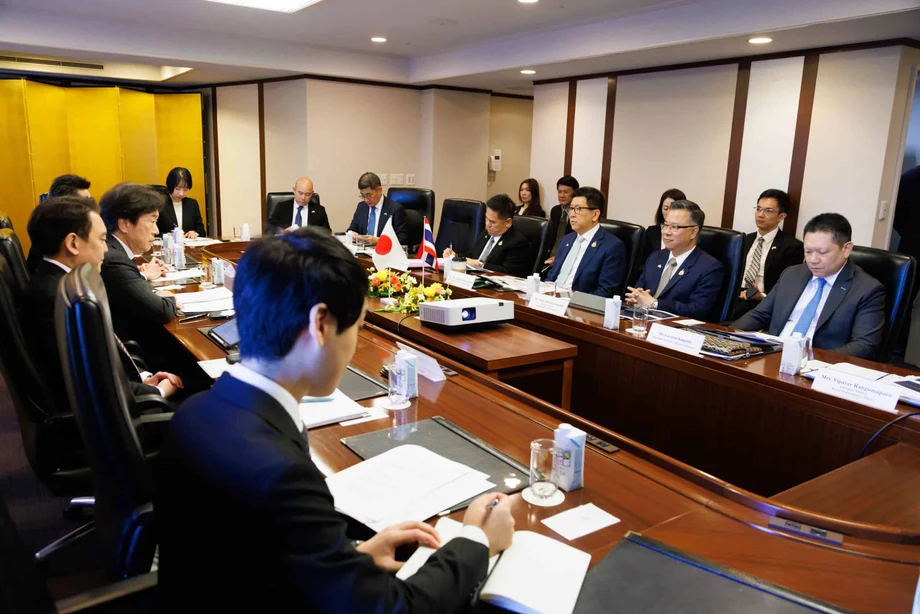
Government officials and industrial leaders from Thailand traveled to Tokyo to negotiate a historic partnership that aims to integrate local auto parts manufacturers into the global space industry. Led by Dr. Ekniti Nitithanprapas, Deputy Prime Minister and Minister of Finance, alongside Industry Minister Varawut Silpa-archa, the Thai delegation held strategic talks with Japanese authorities and space corporations on November 18 and 19, 2026. The initiative addresses the mounting pressures faced by traditional combustion engine suppliers as the global automotive sector transitions rapidly toward electric mobility.
Contents
- Thailand Shifts Auto Expertise Toward the Global Satellite Supply Chain
- Bilateral Talks with Japanese Government and Space Agencies
- Transforming Small and Medium Enterprises for the Space Age
- Direct Engagement with Japanese Satellite Pioneers
- Comprehensive Bilateral Agreements and Strategic Roadmaps
- The Essentials
The collaborative effort seeks to leverage decades of Thai precision engineering expertise, traditionally rooted in the automotive sector, and redirect those high precision manufacturing skills toward the production of high-value satellite components. By aligning local industrial capabilities with Japan's advanced space sector, the strategy intends to secure a sustainable future for millions of domestic small and medium-sized enterprises. The discussions culminated in formal agreements designed to translate high-level policy frameworks into tangible purchase orders and joint manufacturing ventures ahead of the 140th anniversary of diplomatic relations between Thailand and Japan in 2027.
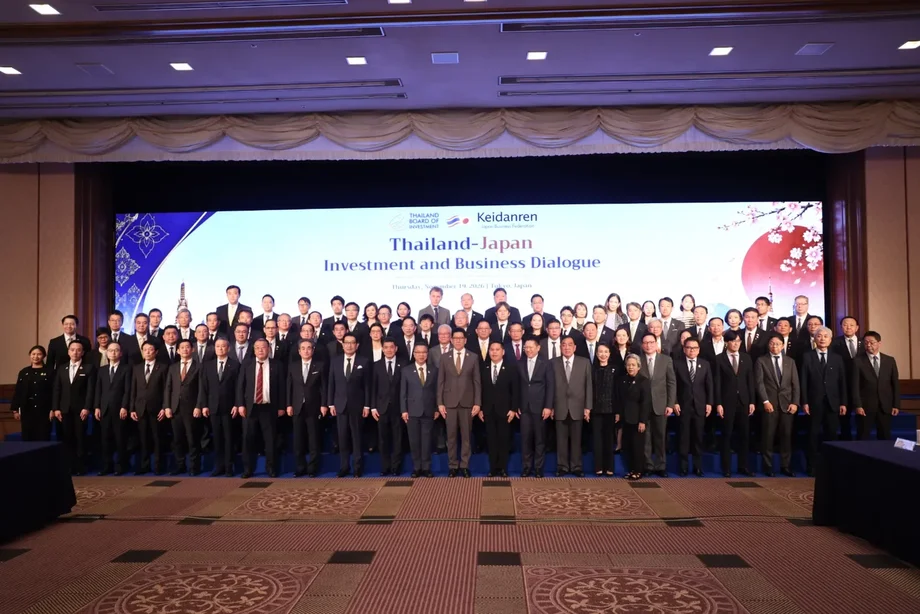
During the official visit to Tokyo's Imperial Hotel, the Federation of Thai Industries participated in high-level dialogues hosted alongside the Japan Business Federation, known as Keidanren. The discussions focused on expanding industrial cooperation beyond traditional manufacturing into emerging technological frontiers. Thai representatives emphasized the transition from the familiar Made in Thailand manufacturing concept to a collaborative Made with Thailand framework, which encourages joint research, technology transfer, and deeper integration into international supply chains.
Bilateral Talks with Japanese Government and Space Agencies
The high-stakes mission involved direct engagements with key decision-makers across Japanese ministries and trade promotion organizations. Deputy Prime Minister Ekniti met with Ryosei Akazawa, Minister of Economy, Trade and Industry, to discuss comprehensive economic cooperation and advanced technological integration. Japanese counterparts proposed specific tax measures to support investors who manufacture and utilize local components within Thailand, while reinforcing strategies to manage end-of-life vehicle recycling and circular economy initiatives.
Subsequent meetings with Norihiko Ishiguro, President and Chief Executive Officer of the Thailand Board of Investment partnering network counterpart Japan External Trade Organization, further solidified commitments to connect Japanese investors with emerging opportunities in Southeast Asia. Officials reviewed investment data showing that Japanese investors submitted 192 project applications worth 45,478 million baht between January and September 2026, demonstrating sustained confidence in the Thai market. The strategic dialogue also explored advanced fields such as optical quantum computing, artificial intelligence infrastructure, and semiconductor manufacturing.
Industry Minister Varawut highlighted the practical realities driving the pivot toward aerospace technology. He explained that satellite manufacturing requires exceptionally tight tolerances at the micrometer and nanometer scales, a domain where Thai manufacturing workers already possess strong foundational skills. Japanese space companies experience high demand for precision components while facing domestic labor shortages, creating a natural synergy for knowledge transfer and supply chain integration.
Our goal is not to launch a Thai astronaut into orbit, but to ensure that components manufactured inside Thai factories find their way onto satellites operating across the globe.
That observation underscored the pragmatic approach adopted by the Thai delegation, shifting the national conversation from national space exploration to concrete manufacturing contracts for local suppliers. Manufacturing a satellite requires far fewer total units than producing consumer automobiles, but each individual part carries an exceptionally high financial and technological value.
Transforming Small and Medium Enterprises for the Space Age
Thailand currently hosts a massive automotive component ecosystem encompassing roughly three million small and medium-sized enterprises that supply thousands of parts for internal combustion engine vehicles. The transition toward electric vehicles drastically reduces the number of required mechanical components, threatening countless suppliers with obsolescence if they fail to adapt. To counter this vulnerability, the industrial sector launched a targeted transformation strategy to redirect precision tooling capabilities toward six emerging industries, with aerospace standing out as a primary high-value frontier.
The shift relies heavily on the proliferation of small satellites, particularly low Earth orbit constellations used for agricultural weather forecasting, environmental monitoring, and broadband internet communications. Modern small satellites utilize standardized commercial platforms and modular components, opening up accessible entry points for capable tier-two and tier-three suppliers. Thai factories possess advanced capabilities in metal stamping, precision machining, and electronics assembly, which position them favorably to supply solar panels, structural metal frames, printed circuit boards, and sensitive sensor housings.
To formalize this industrial pivot, the Federation of Thai Industries signed a landmark letter of intent with the Federation of Thai Industries and associated agencies, establishing a structured framework for supply chain collaboration. The agreement focuses on workforce upskilling, technical standard alignment, and direct business matchmaking between Thai component makers and Japanese space enterprises.
Direct Engagement with Japanese Satellite Pioneers
During the itinerary in Tokyo, Thai officials and industrial delegates conducted site visits and focused discussions with four prominent Japanese small satellite enterprises. These included Synspective Incorporated, the Institute for Q-shu Pioneers of Space, Axelspace Corporation, and ArkEdge Space. These companies design and operate advanced synthetic aperture radar constellations that monitor infrastructure changes, urban development, and natural disaster impacts in real time.
Executives from the Institute for Q-shu Pioneers of Space presented their ongoing development of small radar satellites and discussed the rigorous technical specifications required for orbital hardware. Representatives from Synspective detailed how orbital data assists governments in managing flood crises and assessing environmental risks, demonstrating the practical applications of space technology for developing nations. Discussions also examined global supply chain economics, exploring manufacturing cost controls and local content requirements by reviewing case studies from international launch service providers.
Assistant Minister to the Prime Minister Thanatit Raktabut noted that Japanese space firms expressed enthusiastic interest in collaborating with Thai software developers and hardware fabricators. Japanese technical teams outlined areas where local suppliers can contribute immediately, including thermal-resistant wiring harnesses, shock-resistant electronic modules, and specialized structural assemblies. The Board of Investment reported that Japanese investments in aerospace ventures reached significant milestones, including approved projects totaling 2,589 million baht in the first three quarters of 2026.
Comprehensive Bilateral Agreements and Strategic Roadmaps
The intensive diplomatic and industrial mission resulted in the execution of three major cooperative agreements designed to solidify economic ties across digital infrastructure, supply chain development, and international standards. These accords bridge government policy with private sector execution, ensuring continuous momentum toward the 2027 anniversary milestones.
- A digital infrastructure agreement between Amata B.Grimm Power and NTT Global Data Centers to study sustainable power ecosystems and artificial intelligence data centers in Thailand, backed by a potential investment potential of approximately 113,000 million baht.
- A supply chain development agreement uniting the Federation of Thai Industries alongside space exploration and trade promotion agencies to facilitate technology transfer and supplier matchmaking.
- A standards harmonization agreement between GS1 Thailand and GS1 Japan to implement international product identification codes, two-dimensional barcodes, and digital traceability passports across supply chains.
The broader economic dialogue also addressed traditional automotive resilience, with industry groups exploring tax incentives for hybrid vehicle components and advanced driver assistance systems. By maintaining strong domestic volume requirements for high-tech vehicle parts alongside emerging space initiatives, economic planners aim to secure high-skill employment and sustainable manufacturing growth across the entire industrial ecosystem.
The Essentials
- Deputy Prime Minister Ekniti Nitithanprapas led a Thai delegation to Tokyo on November 18 and 19, 2026, to forge strategic industrial partnerships with Japanese government agencies and technology firms.
- The Federation of Thai Industries signed cooperation agreements with the Japan Aerospace Exploration Agency and the Japan External Trade Organization to integrate Thai auto parts suppliers into the global satellite supply chain.
- Japanese small satellite developers, including Synspective Incorporated and the Institute for Q-shu Pioneers of Space, met with Thai officials to discuss precision manufacturing requirements and technology transfer.
- Board of Investment figures indicated that Japanese investors submitted 192 project applications valued at 45,478 million baht between January and September 2026.
- The collaborative strategy aims to future-proof millions of Thai small and medium-sized enterprises by diversifying manufacturing capabilities from combustion engine vehicles into aerospace and advanced electronics.