A Major Milestone for International Railway Engineering
South Korean railway companies have secured a major agreement to help design a massive high-speed railway across Vietnam. An international alliance including Korea National Railway, Sambo Engineering, and Yooshin Engineering won a contract worth approximately $416 million to handle feasibility studies and preliminary designs for the route. This agreement follows earlier preparatory work such as Spain's Ineco consultancy deal signed in early 2026 to study initial project costs and technical standards. The newly selected consortium also includes French design firm SYSTRA and Vietnamese design firm TEDI. The contract represents the largest overseas railway design project ever awarded to a team involving South Korean companies.
Contents
Vietnam plans to build a 1,541-kilometer double-track railway connecting its capital city of Hanoi in the north with Ho Chi Minh City in the south. Trains on the new line will run at a design speed of 350 kilometers per hour. A design speed is the maximum safe speed that engineers use to plan curves, slopes, and signaling systems for a new transportation route. The entire railway project carries an estimated total investment of around $67.3 billion to $68.4 billion. The route will start at Ngoc Hoi Station in Hanoi and end at Thu Thiem Station in Ho Chi Minh City, passing through 15 provinces and cities along the way.
Diplomatic Efforts and Government Support
Securing this design contract required extensive high-level diplomacy between South Korea and Vietnam over many months. The project was discussed as a core agenda item during bilateral summit meetings held in August 2025 and April 2026. South Korea dispatched a contract support delegation led by its Second Vice Minister of Land, Infrastructure and Transport to Vietnam in June 2026. In July 2026, the South Korean Minister of Land, Infrastructure and Transport traveled personally to Vietnam carrying a handwritten letter from the South Korean president to advance the bid.
The Ministry of Land, Infrastructure and Transport announced the successful bidding result on November 22, 2026. Industry leaders and government officials believe that participating in the early design phase gives South Korean firms a distinct advantage in competing for later phases of the project. Those follow-on phases include main civil construction, railway vehicle supply, and long-term operations. The winning consortium will spend the next 30 months evaluating economic viability, reviewing technical requirements, and preparing preliminary designs.
Minister of Land, Infrastructure and Transport Hong Ji-sun highlighted the collaborative nature of the achievement in an official statement. He explained that public institutions and private companies combined their strengths alongside presidential diplomacy to secure the agreement. Minister Hong Ji-sun stated:
This contract is an achievement made by combining the capabilities of public institutions and private companies with the government's continuous efforts, including the delivery of a presidential letter.
Minister Hong Ji-sun also outlined future intentions for supporting domestic firms in overseas markets, adding:
We will actively support Korean companies to demonstrate their competitiveness in follow-up projects, including the main Vietnam North-South high-speed railway project.
Timeline and Construction Plans
Vietnamese authorities have laid out a structured schedule to move the massive transportation initiative from planning into physical reality. The National Assembly of Vietnam has already approved the overarching policy framework for the North-South high-speed railway. The Management Unit of Thang Road Projects under Vietnam's Ministry of Construction is overseeing the rollout. The timeline for development involves several specific milestones across the coming years:
- June 2026: Selection of the consortium to handle the feasibility study and basic design.
- June 2027: Expected completion of the mid-term report for the feasibility study dossier.
- Fourth quarter of 2028: Target completion window for land clearance projects managed by local provincial authorities.
- Fourth quarter of 2026 to fourth quarter of 2028: Planned window for finalizing feasibility reports and initiating main construction work.
- 2035: Target date for the basic completion of the entire high-speed railway network.
Land clearance will be handled as separate independent projects overseen by the provincial people committees of the 15 regions along the path. These regions include Hanoi, Ninh Bisnh, Thanh Hoa, Nghe An, Ha Tinh, Quang Tri, Thua Thien Hue, Danang, Quang Ngai, Gia Lai, Dak Lak, Khanh Hoa, Lam Dong, Dong Nai, and Ho Chi Minh City. By separating land clearance from the main engineering contracts, local governments can begin acquiring the necessary property ahead of actual track laying.
Technical Specifications and Train Operations
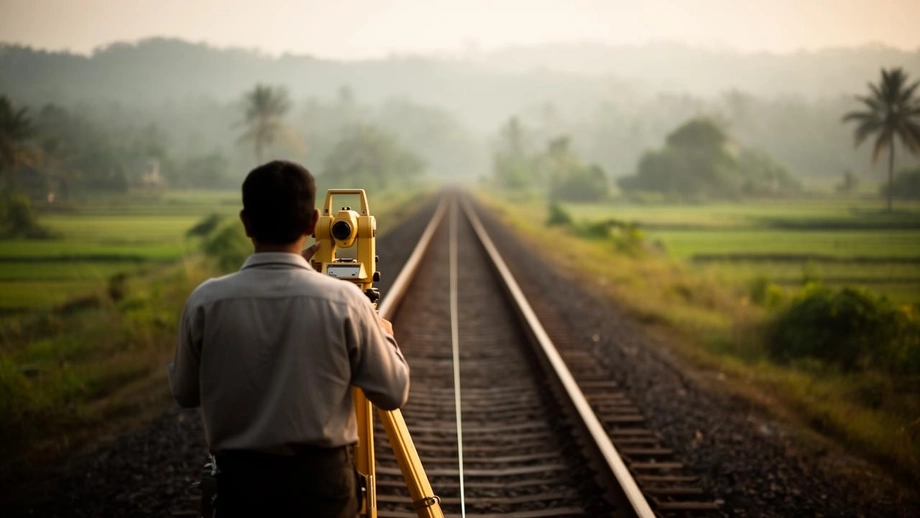
The new rail line will be built as a brand new double-track system with a standard gauge of 1,435 millimeters. Track gauge is the distance between the two parallel rails of a railway track, and standard gauge is the most widely used width around the world. Engineers have set the maximum axle load at 22.5 tons. Axle load refers to the total weight transmitted to the railway tracks by the wheels attached to a given axle.
The route will feature 23 passenger stations and 5 freight stations equipped with synchronized electrical and mechanical systems. While the primary mission of the corridor is passenger transport, the system is also designed to serve dual defense and security requirements. When necessary, the railway can accommodate freight transport to support national logistics. The technology relies on electric-powered trains running on conventional steel rails, chosen for safety, reliability, and efficiency under local climatic and geographical conditions.
Financing Challenges and Capital Mobilization
Financing a multi-billion dollar transportation corridor presents a complex puzzle for Vietnam as state budget resources remain limited. Traditional official development assistance loans have also become more difficult to secure in recent years. To address these financial realities, the Vietnamese government is actively establishing new mechanisms to gather resources. The Ministry of Finance took a decisive step in mid-November 2026 when Minister Ngo Van Tuan signed a decision to establish a dedicated 30-member task force.
Deputy Minister of Finance Ta Anh Tuan chairs this new task force, while Le Thanh Quan serves as the permanent vice chairman. The group includes representatives from various ministries, state banks, and municipal departments in Hanoi and Ho Chi Minh City. Their primary assignment is drafting policies to mobilize financial resources for both high-speed rail and urban railway networks. The task force will submit its final proposal directly to the prime minister before dissolving.
Urban rail development in Vietnam's largest metropolitan areas faces similar funding and scheduling hurdles. Hanoi operates under a 100-year Capital Master Plan aiming to build 18 urban railway lines spanning roughly 979 kilometers. The capital city targets completing about 500 kilometers of metro lines by 2035, with the rest finished by 2045. Meanwhile, Ho Chi Minh City currently operates three urban railway lines and prepares to start construction on five more to reach a 255-kilometer network by 2030.
Private Investment and Industry Ecosystem
Attracting private capital into railway projects remains difficult due to long payback periods, modest initial financial efficiency, and high operational risks. Developers often struggle to make immediate profits from ticket sales alone. To make projects viable, planners are exploring transportation-oriented development models. This approach captures added economic value from real estate and commercial properties built around railway stations and along the transit corridor.
Building a successful high-speed rail network requires more than just laying tracks and purchasing trains. Developing the domestic railway industry demands substantial resources for acquiring advanced technology and training skilled workers. Vietnam aims to build a robust local supply chain ecosystem so that domestic companies can participate in manufacturing components and maintaining equipment over the decades-long lifespan of the railway.
Uncertainties and Future Steps
Several important details regarding the project remain undecided as the consortium begins its 30-month study period. Exact station locations within each of the 15 localities are still undergoing detailed technical review. Financial structures and loan agreements for the main construction phase have not yet been finalized by the Ministry of Finance task force. Furthermore, winning the initial design contract does not guarantee that the South Korean firms will automatically be chosen to build the tracks or supply the rolling stock.
The upcoming feasibility study results will dictate the final project schedule and determine whether the Vietnamese government proceeds with tenders for construction. If the 30-month study stays on track, the comprehensive findings will guide future procurement decisions. For now, the successful partnership between South Korean, French, and Vietnamese designers marks the official starting point for one of the largest infrastructure projects in modern Southeast Asian history.
At a Glance
- A consortium including Korea National Railway won a $416 million design contract for Vietnam's high-speed railway on November 21, 2026.
- The North-South railway will span 1,541 kilometers between Hanoi and Ho Chi Minh City with a design speed of 350 kilometers per hour.
- Total project investment is estimated between $67.3 billion and $68.4 billion, with completion targeted by 2035.
- A newly established Ministry of Finance task force is working to solve capital mobilization challenges for national rail projects.
- The winning consortium will spend 30 months conducting feasibility studies and preparing basic designs starting in mid-2026.